

Savory Oatmeal — The Breakfast That Sounds Wrong and Tastes Right
Almost everyone’s first reaction to savory oatmeal is skepticism, occasionally disgust. Oats are sweet. Oats go with brown sugar and cinnamon and blueberries. Oats do not go with soy sauce and a runny egg and chili crisp.
And then people try it and they become evangelists.
The TikTok Conversion Pipeline
Savory oatmeal existed in Asian cuisine long before TikTok — congee, which is rice cooked in broth until porridge-like, is a close relative, and some East Asian breakfast traditions use oats in savory preparations as a lower-carb congee substitute. Western food creators started posting savory oatmeal videos in 2024 framing them as grain bowl upgrades, and the combination of beautiful presentation and the “wait, what?” factor drove enormous engagement.
The videos all follow the same structure: creator explains they were skeptical, makes the bowl on camera, takes a bite, makes a face that could only be described as revelation. Comments fill with two factions — people who have been eating savory oatmeal for years saying “welcome to the club” and newcomers saying “I made this for dinner and my life is changed.”
Both groups are right.
Why It Works Culinarily
Oats are essentially a neutral grain. When you cook them in water with nothing added, the faint nuttiness comes through and your brain fills in the expected sweetness from memory and context. When you cook them in chicken or vegetable broth with soy sauce, the brain has no sweetness frame of reference — it just receives a creamy, slightly chewy, deeply savory base that tastes like the best parts of risotto and congee combined.
The key is broth concentration. Low-sodium broth produces the most balanced result — full-sodium broth can make the oats aggressively salty before you’ve even added soy sauce. You want the oats to taste richly flavored but not brackish.
Building the Bowl in Layers
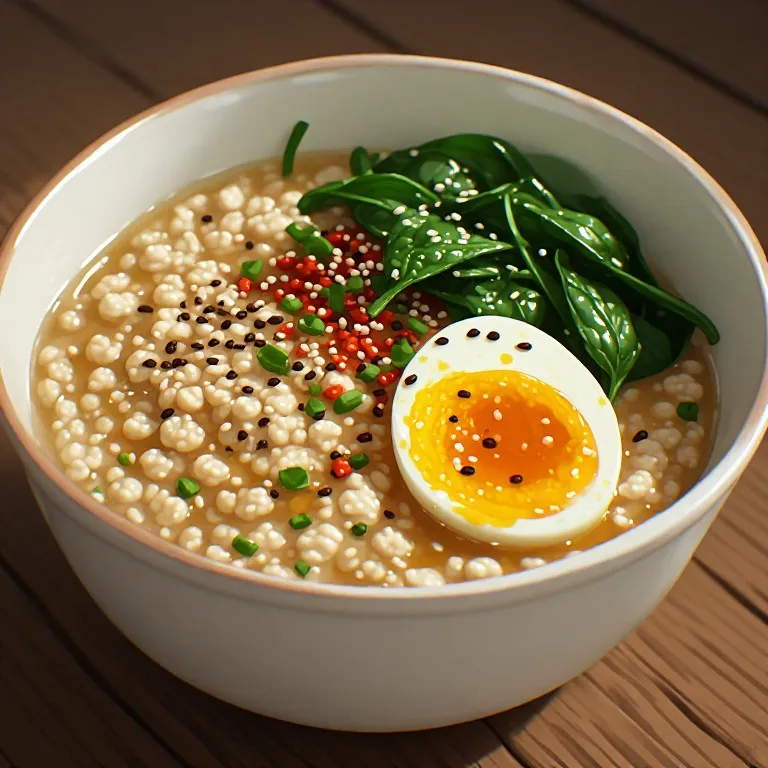
Oats first, warm. The base needs to be hot enough to slightly wilt whatever greens you place on top and to soften the cold chili crisp when it hits.
Greens second. Spinach is the easiest — it wilts in under two minutes and almost disappears visually while adding iron, folate, and texture. Kale takes longer and retains more structure. Both are correct choices.
Egg on top. The egg is structural: it sits above the greens and creates a dramatic centerpiece. Poached or fried both work. Runny yolk is strongly preferred — the yolk runs down through the layers and creates a third sauce alongside the broth-cooked oats and the chili crisp.
Chili crisp last. Add it at the table, not during cooking. The crispy bits in chili crisp lose their texture quickly if they sit in moisture. Added at the last second, they stay crunchy through the first several bites.
Serving and Variations
Break the yolk at the table — it’s a satisfying visual moment and distributes richness through the bowl. Eat quickly; savory oatmeal is best in the first five minutes before the oats thicken further and the egg continues to carry over.
Miso and scallion version: Stir a teaspoon of white miso into the oats in the last minute of cooking instead of soy sauce. Top with soft-boiled egg, furikake, and thinly sliced scallions. This version is particularly popular in Japan-adjacent food communities.
Western version: Cook oats in chicken broth, top with a fried egg, crispy pancetta, fresh thyme, and a handful of grated parmesan. Think breakfast risotto. It sounds less exotic but converts people who are skeptical of the Asian-flavor profile version.
High-protein meal prep: Double the recipe, refrigerate, and reheat with a splash of broth in the morning. Add a fresh egg each day. The oats keep well for four days and reheat faster than cooking fresh.
Savory oatmeal is proof that most breakfast rules are just habits. Once you break one, the rest become negotiable.