
Pin It

The Steam Method for Perfect Hard Boiled Eggs

The Steam Method for Perfect Hard Boiled Eggs
Jump to Recipe
Prep 2 min Cook 13 min (plus 5 min ice bath) Serves 6
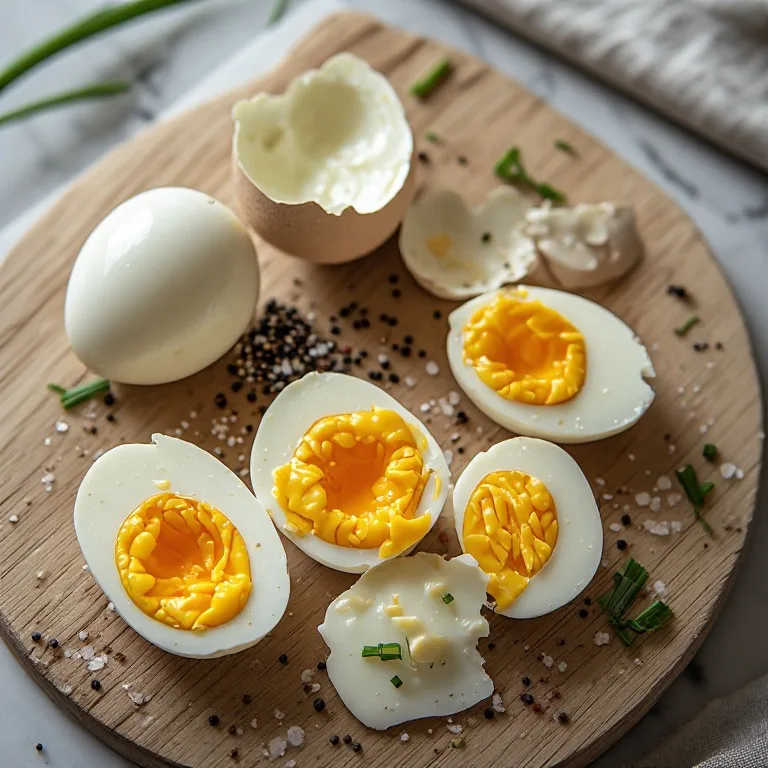
Quick answer: How to make perfect hard boiled eggs: fill a saucepan with 1 inch of water, place a steamer basket inside, and bring to a full rolling boil over high heat. Using tongs, add cold eggs directly from the refrigerator to the basket in a single layer. Cover with a tight lid and steam for 13 minutes over steady high heat. Transfer immediately to an ice bath — a bowl of cold water filled with ice — and soak for at least 5 minutes. To peel, tap the wide end firmly on the counter, then peel under a thin trickle of running water. The shell comes off in large clean sheets. Total time: about 20 minutes. Six eggs from a $3 carton vs. $7–12 for a restaurant-style egg plate.

Shop the tools

Gear matched to this recipe. These are Amazon affiliate links — we may earn a small commission if you buy, at no extra cost to you.

As an Amazon Associate, Copycat Spices earns from qualifying purchases. Product images are generic illustrations, not the exact item listed.

The Steam Method for Perfect Hard Boiled Eggs

How to make hard boiled eggs that peel cleanly every time: the viral TikTok steam method. Instead of boiling eggs in water, you steam them over 1 inch of boiling water for 13 minutes, then straight into an ice bath. The result peels in clean sheets — no torn whites, no cratered eggs.

Easy Prep: 2 min Cook: 13 min (plus 5 min ice bath) Total: 15 min6 servings ~$2.80/serving
Prep2 min
Cook13 min (plus 5 min ice bath)
Total15 min
Servings
6
At home~$2.80/serving
vs
Restaurant~$12.60/serving
You save ~78%

The Story Behind the Recipe

The steam method for hard boiled eggs went viral on TikTok around 2022 when food creators started posting side-by-side peeling videos: a traditional boiled egg on the left tearing and sticking to the white, a steamed egg on the right sliding off the shell in clean sheets. The difference is real and has a concrete explanation. When you drop a cold egg into actively boiling water, the outer white proteins experience a near-instant temperature spike that bonds the inner egg membrane tightly to the white — that membrane is what you're fighting when you peel a boiled egg and it tears into the surface. Steaming is different: the eggs sit above the water in a humid, slightly lower-temperature environment, the heat rises more gradually into the white, and the membrane stays distinct from the white instead of fusing to it.

The ice bath immediately after steaming does two things. First, it halts carryover cooking — without it, a 13-minute steamed egg will continue cooking from residual heat and the yolk will tighten past the creamy stage. Second, the sudden cold causes the egg white to contract slightly away from the shell, opening a thin gap that makes the first tap-and-peel much easier. The combination is why cooks who switch to the steam method almost never go back: the peel is consistently clean on eggs that would have been a disaster the old way, including fresh-from-the-farm eggs that are notoriously sticky. A dozen eggs from the grocery store runs $3–5 and makes 12 servings; a hard boiled egg plate at brunch runs $7–12.

Nutrition Facts

Per serving (6 servings)
Calories155
Total Fat11g
Total Carbs1g
Dietary Fiber0g
Sugars1g
Protein12g
Sodium124mg

* Estimated values based on standard recipe preparation. Actual values may vary.

Ingredients

  • For the eggs
  • For the ice bath
  • To serve (optional)

Instructions

💡
Pro tip: This recipe tastes even better the next day. The flavors need time to meld together in the fridge.
❄️
Storage: Keeps in an airtight container in the fridge for up to 2 weeks. Freezer-friendly for up to 3 months.
🎃 Free Halloween cookbook — download now The Copycat Halloween Cookbook A ready-made, photo-illustrated PDF of our best halloween copycat recipes — free to download, no building required. Pay what you want to support if you love it.

Free PDF — instant download. We'll also send new seasonal copycat recipes now and then; unsubscribe anytime. Or just download it →

The Steam Method for Perfect Hard Boiled Eggs

Prep time: 2 min | Cook time: 13 min (plus 5 min ice bath) | Makes: 6 eggs | Cost: under $1 of eggs vs. $7–12 for a brunch plate

How to make hard boiled eggs that peel cleanly every single time: the viral TikTok steam method. Instead of submerging eggs in boiling water — the method that bonds the inner membrane to the white and causes tearing — you steam them above the water for 13 minutes, then transfer immediately to an ice bath. The result is a fully set, creamy-centered yolk and a shell that comes off in large, clean pieces.

Steam vs. Boil: What Actually Changes
Steam method (this recipe)Traditional boiling
PeelabilityShell comes off in large sheetsOften tears and sticks
Yolk texture at 13 minCreamy-centered, no green ringGreen ring possible at 12–15 min
Works on fresh eggs?Yes — membrane stays separateVery difficult (membrane fuses)
Equipment neededPot + steamer basket + bowlJust a pot
Active time~2 min prep + timer~2 min prep + timer

The boiling method works fine on eggs that are 1–2 weeks old (more developed air pocket, easier membrane separation). The steam method works on any egg, fresh or older.

The Technique

Bring 1 inch of water to a full rolling boil in a covered saucepan with a steamer basket inside. Add cold eggs, cover, and steam for exactly 13 minutes. Move to ice water immediately and leave for 5 minutes. Peel from the wide end under a thin trickle of running water.

That’s the entire method. The timing variations — 10 minutes for jammy, 13 for creamy-hard, 15 for fully firm — scale predictably for large eggs from the refrigerator at any altitude up to 5,000 feet.
🥗

Make It Healthier

Love The Steam Method for Perfect Hard Boiled Eggs but want a lighter version? Try these simple swaps:

  • ✓Skip the salt entirely — a large egg has only 62mg of sodium on its own, and the flaky finishing salt on a halved egg is a seasoning choice, not a structural one. If you're watching sodium, a squeeze of lemon juice on the cut yolk gives the same brightness as salt without any.
  • ✓Use 2 eggs per serving instead of 3 if watching fat and calories: two large eggs give 10g protein for 155 calories and 11g fat — the same ratio, a smaller portion. Two eggs plus a slice of toast is a complete protein-forward snack under 300 calories.
  • ✓Use the 10-minute timing for a jammy, softer yolk — the slightly less-set yolk is lower in calories per gram (the cooking process doesn't change macros, but the softer yolk often leads to smaller portions feeling more satisfying on toast).
  • ✓For a high-protein meal-prep component, steam 12 eggs at once in two batches and store unpeeled in the carton for the week — a cold hard boiled egg is one of the fastest grab-and-go protein sources at 6g per egg with no prep at mealtime.

Frequently Asked Questions

Why does the steam method make hard boiled eggs easier to peel?

When eggs are submerged in boiling water, the white proteins on the outer edge of the egg heat almost instantly, and the egg's inner membrane — a thin, papery layer between the shell and the white — bonds tightly to the white protein as they cook together. That bonded membrane is what causes tearing and cratering when you peel. In the steam method, the eggs sit above the boiling water in a humid, slightly lower-temperature steam environment. The heat transfers more gradually through the shell and into the white, which keeps the membrane from fusing to the white. The membrane stays as a separate layer, and when you crack the shell, it peels away cleanly with the shell rather than staying embedded in the white. Fresh eggs — which have less air pocket development and tighter membranes — are notoriously difficult to peel when boiled but peel well when steamed, for exactly this reason.

What are the steam times for soft boiled, jammy, and hard boiled eggs?

For large eggs steamed over a full rolling boil, with a tight lid, straight from the refrigerator: 6–7 minutes gives a fully set white with a liquid center (soft boiled, ideal for ramen). 9–10 minutes gives a set white and a jammy, slightly runny center that spreads when cut (popular on toast with flaky salt). 12 minutes gives a fully set yolk with a creamy, pale yellow center — hard boiled but still moist. 13 minutes gives a fully set hard yolk with a slight creaminess at the very center. 14–15 minutes gives a completely firm, chalky yolk (overdone for most purposes). Altitude affects timing: above 5,000 feet, add 1 minute to each stage. If your eggs are room temperature rather than refrigerator-cold, reduce times by 1–2 minutes.

Do the eggs need to be straight from the refrigerator for this method?

Yes — cold eggs are actually important for consistent results with the steam method, and it's one of the counterintuitive advantages. Cold eggs have a well-defined temperature starting point, which makes the timing predictable and repeatable. If you start with room-temperature eggs, the initial temperature varies (58°F vs. 72°F changes the heat-penetration math), and the timing window for a perfect yolk narrows. Starting cold is also safer: there's no risk of a shell crack from thermal shock during the steam phase (you're not submerging them in boiling water, just placing them in steam). The same timing — 13 minutes for fully hard boiled — works reliably for any large egg pulled straight from the refrigerator.

Is the ice bath actually necessary, or can I just let the eggs cool?

The ice bath is necessary if you want both a perfect yolk texture and easy peeling — skipping it compromises both. On the yolk side: a 13-minute steamed egg, left to cool at room temperature or under room-temperature water, will carry over cook from its own residual heat for several minutes after leaving the steam. The surface of the yolk continues cooking even after the egg leaves the steamer, which can push a creamy-centered hard boil into a firm, dry one with a slightly greenish sulfur ring on the outer yolk. Plunging into ice water stops that carryover almost instantly. On the peeling side: the sudden cold causes the egg white to contract slightly, creating a small gap between the white and the membrane-shell layer that makes the first crack-and-peel noticeably easier. Five minutes in a properly iced bath is enough; longer doesn't hurt.

Can I steam eggs without a steamer basket?

Yes, several alternatives work. A metal colander set inside a large pot works if the pot's lid fits over it tightly enough to trap steam; the lid doesn't have to be perfect, just close. A small wire rack elevated on two heatproof ramekins in a pot with a lid works the same way. A bamboo steamer basket set over a wok of boiling water is ideal because the bamboo absorbs some excess moisture and the tight-fitting lid traps steam efficiently. If you have none of these, you can use a tight-lid pot with just 1 inch of water — place the eggs directly on the bottom; they won't be 'steamed' in the traditional sense but the combination of steam above and just a bit of simmering water contact at the base replicates the steam environment. The basket keeps results more consistent because the eggs never contact the water, but any of these approaches will outperform the classic boiling method for peelability.

How long do steam-method hard boiled eggs keep in the refrigerator?

Unpeeled, steam-method hard boiled eggs keep in the refrigerator for up to 1 week. Store them in the carton or an airtight container — the shell keeps them from drying out and from picking up refrigerator odors. Peeled hard boiled eggs should be stored submerged in cold water in a sealed container; change the water daily and use within 5 days. The water submersion is important: a peeled egg exposed to refrigerator air dries and toughens on the surface within a day, developing a slightly rubbery texture. For meal prep, peel and store submerged in water so they're ready to grab and go. Hard boiled eggs do not freeze well — the white turns watery and rubbery on thawing; only the yolks freeze acceptably (in an airtight container for up to 3 months).

How do I make hard boiled eggs with a green yolk ring?

The greenish-gray ring around the yolk of a hard boiled egg is ferrous sulfide, formed when the sulfur compounds in the egg white react with iron in the yolk at high temperature. It's harmless but visually unappealing and usually signals overcooking. It happens when eggs are cooked at too high a temperature for too long, or when they're not cooled quickly after cooking and carryover heat pushes the yolk surface above the threshold. The steam method significantly reduces the chance of a green ring because the steam temperature is slightly lower than boiling water (~200°F ambient rather than 212°F), and the ice bath stops carryover. If you want to guarantee no ring: use 13 minutes, not 15+, and move directly to an ice bath the moment the timer goes off.

What is the best way to serve and season a steam-method hard boiled egg?

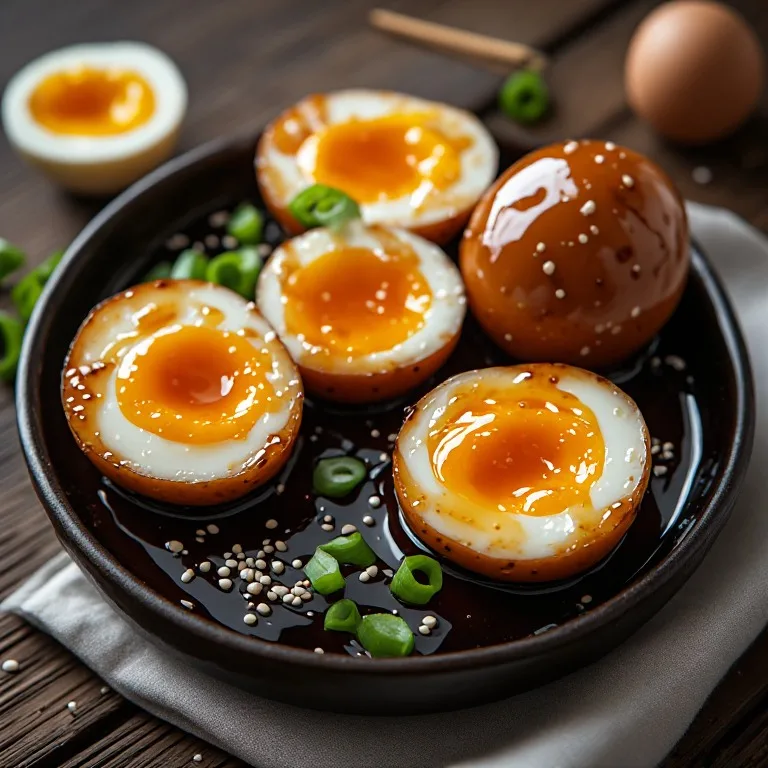
The simplest and most satisfying: halve the egg lengthwise, sprinkle with flaky sea salt (Maldon or similar — the flakes adhere to the white better than fine salt) and a tiny crack of black pepper. A few drops of good olive oil on the cut yolk is excellent. For deviled eggs, the cleaner peel and intact white make steam-method eggs significantly better looking in the final dish. For egg salad, the fully set but creamy 13-minute yolk blends into the dressing better than a chalky overcooked yolk. For ramen, use the 10-minute version, then marinate the peeled, halved eggs in a mix of soy sauce, mirin, and water for at least 2 hours for classic soy-marinated ramen eggs (ajitsuke tamago). For a quick protein-forward snack, a sliced hard boiled egg on a rice cake with a swipe of sriracha mayo takes 30 seconds to assemble.

Love this recipe? Share it!

Free PDF: our 12 most-wanted copycat recipes — instant download.

Made it? Buy us a coffee

Every recipe here is free, with no paywalls. If this one was a hit at your table, a small tip keeps new copycats coming.

$

Ratings & Reviews

—
No ratings yet

Rate this recipe

Click a star to rate

Leave a Review

0/500

CS

Copycat Spices Editorial

Researched + fact-checked. Every recipe on Copycat Spices is built from published sources — official ingredient lists, brand-published recipes, interviews and food-science references — and fact-checked before it goes live, then written as clear, step-by-step instructions for home cooks of all skill levels.

Learn more about our mission →