


Why It Went Viral
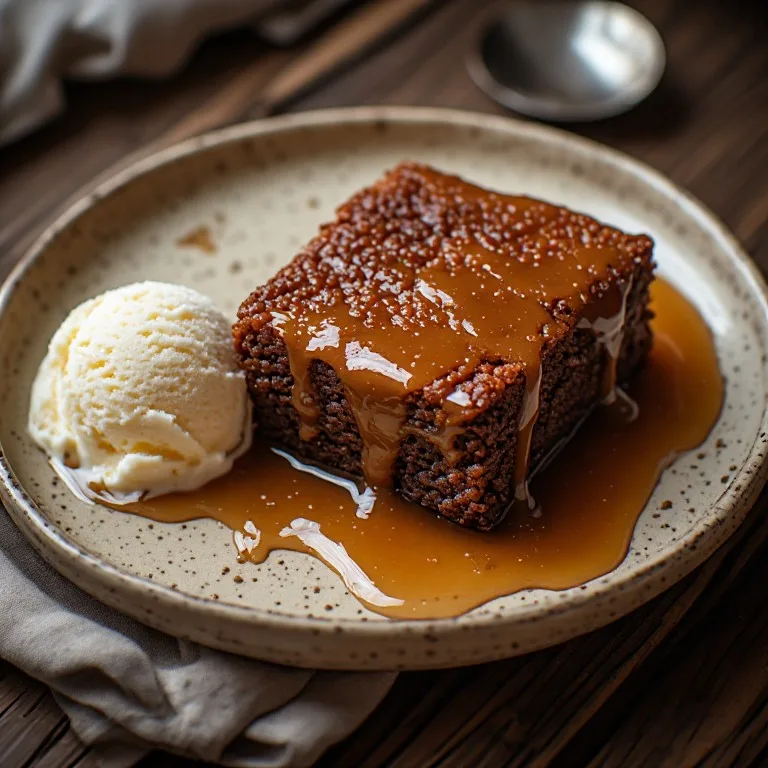
The pour is the reason. Warm, glossy toffee sauce — genuinely flowing, genuinely amber — pouring over a dark sponge and seeping into the holes is one of the most aesthetically satisfying cooking shots on TikTok. The dish has been on British pub menus since the 1980s, but American home cooks largely encountered it for the first time via social media, and the visual combined with the promise of a genuinely easy recipe drove it to millions of views.
The substance behind the video is real. Sticky toffee pudding is legitimately excellent: the Medjool dates give the sponge a caramel-adjacent sweetness that isn’t just “sweet cake with sauce,” and the toffee sauce soak transforms the crumb texture in a way that makes this feel like a different category of dessert than American-style layer cakes. British chefs who grew up eating it are mildly baffled that it took the US this long to discover it.
The Baking Soda Trick (The Step That Matters)
Most people have heard of soaking dates in hot water before baking. Fewer know why baking soda goes in the soaking liquid.
Dates contain pectin — the same gelling compound in fruit that makes jam set. When you add baking soda (an alkali) to the hot soaking water, it raises the pH and breaks down the pectin, turning the dates from individual chewy pieces into a smooth, spreadable paste within 10 minutes. Without bicarb, you’d need to cook the dates longer, blend them separately, or accept a chunkier batter.
The result after soaking and mashing: a mixture that looks like date jam, which folds invisibly into the batter. You won’t taste “dates” in the finished sponge — you’ll taste a deep, warm sweetness that is distinct from brown sugar and from vanilla, and is the reason the dish doesn’t need any added spice to be flavorful on its own. (The ground ginger in the recipe is traditional and adds a subtle warmth; it’s not mandatory.)
The Sauce Soak (The Other Step That Matters)
Sticky toffee pudding is defined by what happens immediately after it comes out of the oven.
While the sponge is still hot, you poke 20 to 30 deep holes across the surface. You pour warm toffee sauce into those holes. You wait 5 to 10 minutes. The sauce enters the sponge through the holes, wicks through the crumb via capillary action, and saturates the interior. The result is a cake that is wet — not in a bad way, not raw, but genuinely saturated — throughout.
This is also why the recipe calls for making more sauce than seems necessary. Half goes into the sponge during the soak. The other half is served warm at the table, poured fresh over each square just before eating. You want both: the baked-in soak changes the texture, and the tableside pour is the visual moment and the additional hit of warm toffee flavor.
What the Sauce Actually Is
The toffee sauce for STP is not butterscotch, not hard toffee, and not caramel. They’re on a continuum and the differences are worth knowing:
Butterscotch is made by cooking brown sugar and butter until the butter melts and the sugar begins to darken, then finishing with cream at the end. It’s lighter in color and has a more candy-like, slightly floral flavor.
Toffee sauce (what this recipe uses) cooks butter, brown sugar, and cream together from the start, producing a deeper, darker, pourable result that stays loose even when warm. It’s richer than butterscotch without the intensity of caramel.
Caramel starts with white sugar cooked to amber without any dairy, then cream and butter are added off the heat. More complex, slightly bitter at the edges.
Hard toffee is cooked to a much higher temperature (300°F+) until the sugar candies and sets brittle. Nothing like the sauce.
The toffee sauce for STP should pour slowly but continuously at room temperature. If it sets solid in the refrigerator, that’s fine — reheat with a splash of cream over low heat.
Serving Notes
Vanilla ice cream is the standard British restaurant pairing. The contrast between the warm, sticky-sweet sponge and cold, slowly melting ice cream is deliberate and genuine — the melt creates a puddle of warm-toffee-plus-cold-cream that is its own thing and is arguably the best bite.
Clotted cream is more traditional in some regions of the UK. If you can find it (Trader Joe’s usually stocks it), a small dollop on the warm square is excellent.
Crème fraîche is the best substitute for clotted cream in the US — similar fat content and tang, widely available, and the slight acidity cuts the sweetness in a way that plain whipped cream doesn’t.
Temperature matters. Cold STP is significantly less good than warm STP. If you’re serving leftovers, reheat in the microwave (45 to 60 seconds per portion) and pour fresh, reheated sauce over the top. Cold toffee sauce poured over cold sponge is the one version of this dish that doesn’t live up to its reputation.