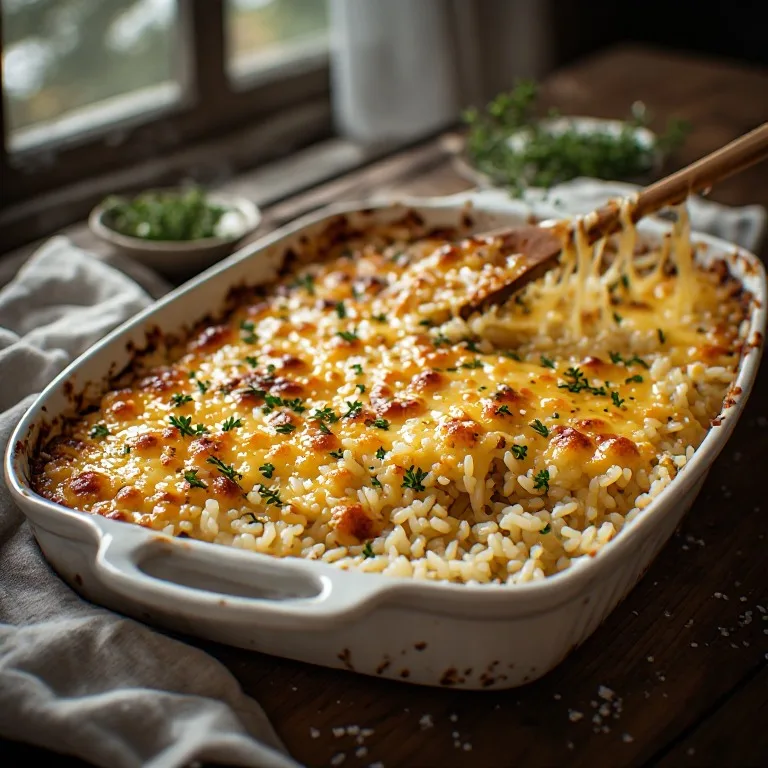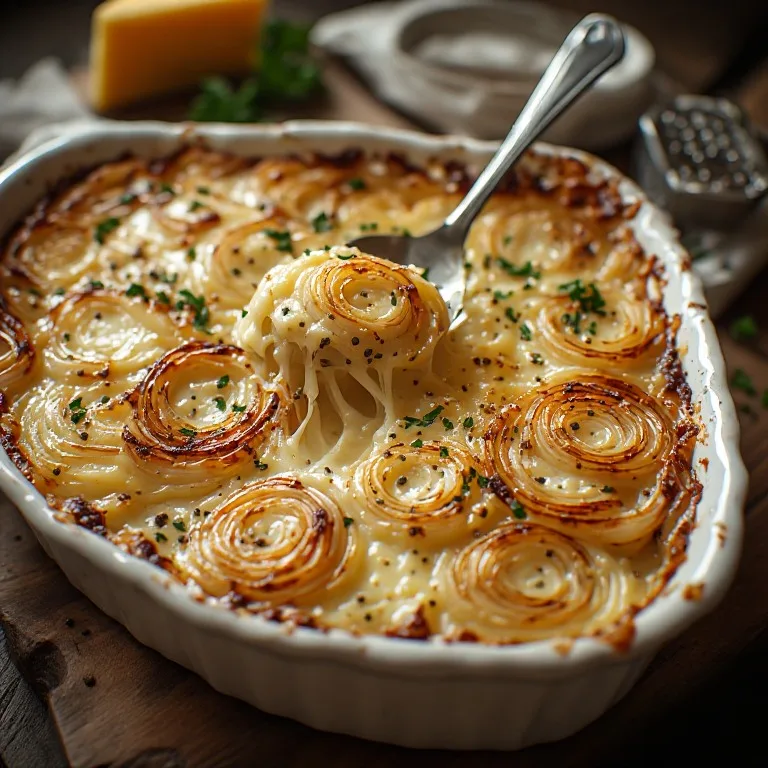

Tennessee Onions took over TikTok for one simple reason: the before-and-after is almost unbelievable. You layer what looks like a pile of raw onion rings into a dish, cover it with foil, and 45 minutes later pull out a bubbling, almost-caramelized onion foundation that smells like French onion soup. Add another 30 minutes uncovered with a blanket of cheddar, smoked Gouda, and Parmesan, and you have a golden-topped casserole that tastes like it took three hours and considerable skill.
It took 15 minutes of prep and two common techniques: steam-braising under foil, then browning over open heat. That’s it.
Three Things Most TikTok Versions Get Wrong
1. Using regular yellow onions. Yellow onions soften and turn translucent after 75 minutes in a hot oven. They will not, however, turn silky. Yellow onions have significantly more sulfur compounds than sweet onions — those compounds create sharpness, and they survive long cooking times. Vidalia, Walla Walla, and Maui onions grow in low-sulfur soils specifically because that lack of sulfur produces more natural sugar in the bulb. When you bake a Vidalia ring for 75 minutes, the sugar caramelizes and the cell walls collapse completely — the result is a ribbon that’s almost sweet-savory jam, tender enough to cut with a spoon. A yellow onion baked the same way will be soft but still faintly sharp. In a dish with nothing but onions, butter, and cheese, that difference is everything.
2. Skipping the foil cover. The foil tent for the first 45 minutes is not optional. As onions heat, they release moisture — roughly 89% of a raw onion’s weight is water. That moisture turns to steam inside the sealed dish and creates a braising environment that cooks the onions evenly from all sides simultaneously. The onions on the bottom of the dish are submerged in their own released liquid; the ones on top are bathed in steam. Both become fully tender at the same time. Remove the foil and bake the whole 75 minutes uncovered, and you get a very different result: the cheese on top browns perfectly, but the onion rings underneath remain slightly undercooked and toothsome rather than collapsing into ribbons. The two-phase technique — cover, then uncover — is what produces both a fully softened onion base and a properly browned cheese top.
3. Pre-shredded cheese. Bagged shredded cheese is coated in cellulose or potato starch to prevent the shreds from clumping together during packaging and storage. This coating does its job perfectly — and then keeps doing it in the oven, slowing and partially preventing full emulsification. In the relatively gentle, moist environment of a covered casserole, pre-shredded cheese melts unevenly: some shreds fuse, others stay sandy, and the finished top has a grainy, clumped texture instead of a smooth, cohesive pull-apart layer. The caramelized patches — the golden-brown spots that make the finished dish look so appetizing — don’t develop as clearly because the coated shreds can’t fully liquefy and re-solidify into a glossy, lacy crust. Shredding cheddar and Gouda from blocks with the large holes of a box grater takes three minutes. The difference in the finished dish is visible and edible.
The Cheese Blend
The three-cheese formula is deliberate, not arbitrary.
Mild cheddar melts easily, provides the base orange-gold color, and delivers the familiar, accessible flavor that anchors the dish. Sharp cheddar works but can separate and become slightly greasy at 350°F for 30+ minutes — mild cheddar is more forgiving.
Smoked Gouda is the sleeper ingredient. It melts into long, smooth strands and its slightly smoky, nutty sweetness plays directly against the natural sweetness of caramelized Vidalia onions. The pairing tastes more complex than it looks on paper. If you don’t have smoked Gouda, regular Gouda, Gruyère, or fontina are the best substitutes.
Parmesan on top isn’t for melt — it’s for crust. Finely grated Parmesan has very low moisture and high protein, which means it browns aggressively under dry oven heat. It’s the reason the top of the finished casserole gets those darker, almost crackly golden patches rather than staying uniformly pale yellow.
The Seasoning
Salt, garlic powder, dried oregano, dry mustard, and cayenne is a tight, Southern-spiced profile. The dry mustard isn’t for mustard flavor — it’s a bitterness balancer that cuts through the richness of butter and melted cheese without making the dish taste like a hot dog. The cayenne is background heat, not foreground — 1/4 teaspoon across a 9x13 dish serving eight people adds a faint warmth at the back of each bite, not a spicy dish. Double it if you want it perceptible.
Serving
Tennessee Onions are technically a side dish, but they work in three contexts:
Side with a protein. The classic use: next to steak, pork chops, grilled chicken thighs, or a whole smoked bird. The onion sweetness cuts the fat in red meat particularly well.
On a burger. Scoop a generous spoonful directly onto the patty instead of separate onions and cheese — it replaces both, with more flavor than either.
As a dip. Set the casserole in the center of the table with a board of sliced sourdough or crusty bread. The onions hold together enough on a spoon to land on a bread slice cleanly. This is especially good as an appetizer or alongside a charcuterie spread.
Make-Ahead and Storage
Assemble the casserole up to 24 hours ahead, cover, and refrigerate unbaked. Bake from cold, extending the covered phase to 55 minutes. Leftovers keep in the refrigerator for up to 4 days. Reheat covered in a 325°F oven for 20 minutes, then uncovered for 5 to re-crisp the cheese. Microwave reheating works but produces a softer, less visually appealing top.