Viral TikTok Whole Roasted Cauliflower
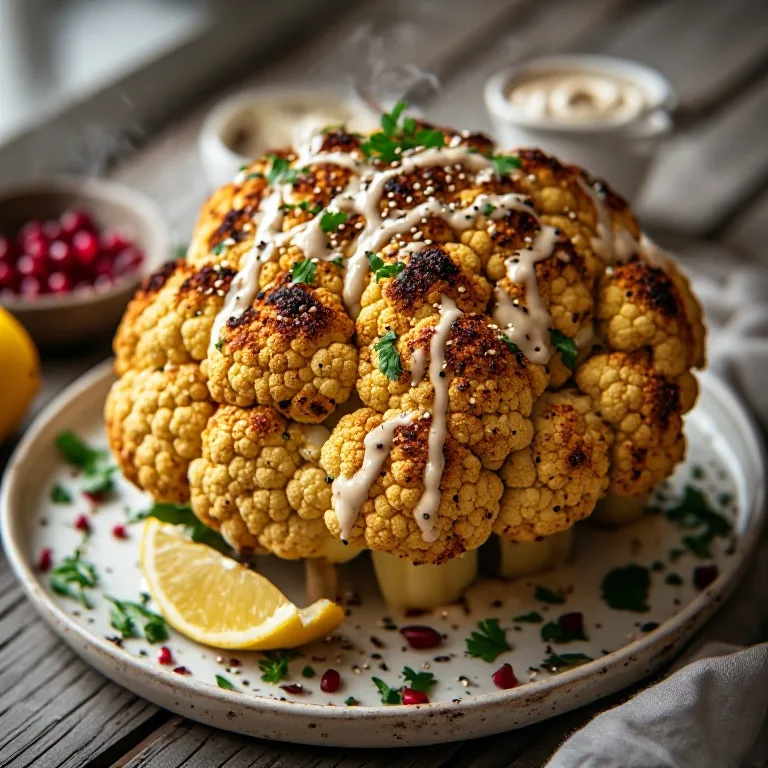
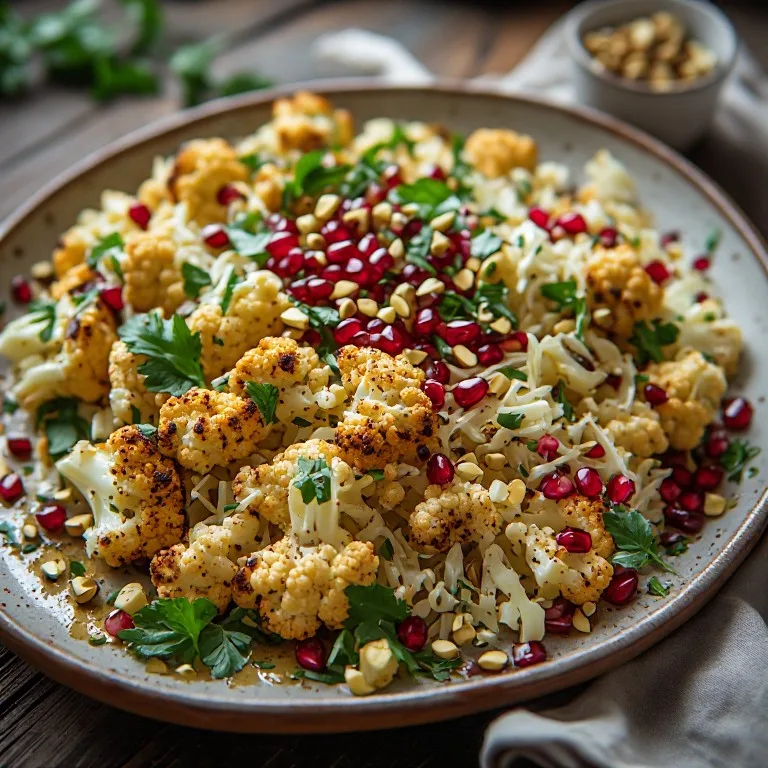
Quick answer: Bring a large pot of heavily salted water to a boil. Trim the stem flat so the cauliflower sits level, remove outer leaves. Lower the whole head into the boiling water and cook for 12 minutes until a skewer meets moderate resistance. Drain and let rest on a rack for 10 minutes to release steam. Mix 3 tablespoons olive oil with 1 teaspoon each smoked paprika and cumin, ½ teaspoon each coriander and turmeric, and 3 minced garlic cloves. Coat the entire cauliflower in the spice paste, pushing it between florets. Roast at 425°F on a parchment-lined baking sheet for 30–35 minutes until deeply golden. Meanwhile, whisk ¼ cup tahini with 3 tablespoons lemon juice, 2 tablespoons water, and a pinch of salt. Drizzle over the cauliflower before serving. Finish with fresh parsley and pomegranate seeds.
Shop the tools
Gear matched to this recipe. These are Amazon affiliate links — we may earn a small commission if you buy, at no extra cost to you.
 Illustrative imageNordic Ware Half Sheet PanCommercial-quality aluminum, bakes dead evenCheck price on Amazon →
 Illustrative imageWire Cooling Rack (Half-Sheet Size)Keeps fried and baked things crisp, never soggyCheck price on Amazon →
 Illustrative imageLodge 6 Qt Enameled Dutch OvenDeep-frying, braising, soups — the workhorse potCheck price on Amazon →
 Illustrative imageSilicone Pastry BrushBrushes butter and egg wash onto rolls, crusts, and biscuitsCheck price on Amazon →
As an Amazon Associate, Copycat Spices earns from qualifying purchases. Product images are generic illustrations, not the exact item listed.
Viral TikTok Whole Roasted Cauliflower
The TikTok vegetarian showstopper: a whole head of cauliflower poached, coated in a Moroccan spice rub, and roasted until deeply caramelized gold, then drizzled with lemon tahini and served tableside like a roast. Under $6 to make and more dramatic than any meat centerpiece.
Easy
Prep: 15 min
Cook: 45 min
Total: 1h 0m4 servings
~$4.50/serving
At home~$4.50/serving
vs
Restaurant~$20.25/serving
You save ~78%
The Story Behind the Recipe
Israeli chef Eyal Shani turned a whole head of cauliflower — just the vegetable, salt, olive oil, and a blistering oven — into one of the most discussed dishes in contemporary Middle Eastern cooking; it became the signature at his Tel Aviv restaurant North Abraxas. Alon Shaya brought a version to his New Orleans restaurant Domenica, where it went on Bon Appétit's radar and then Food52's, and the technique slowly entered the Western cooking conversation. Then TikTok happened.
A clip from chef Margie Nomura — cauliflower rubbed with spiced yogurt, roasted gold, then drizzled with tahini and chimichurri — has passed 1.7 million views and 108,000 likes. The Thai peanut variation from food creator Brittany Angell racked up hundreds of thousands of views of its own. The appeal is the transformation: what goes into the oven is a plain white vegetable; what comes out looks like a golden crown worthy of a holiday table. It serves four generously, costs $4–6 to make, and — critically — can be brought to the table whole and carved like a roast. No meat required.
Nutrition Facts
Per serving (4 servings)Calories240
Total Fat18g
Total Carbs14g
Dietary Fiber5g
Sugars5g
Protein7g
Sodium480mg
* Estimated values based on standard recipe preparation. Actual values may vary.
Ingredients
- For the cauliflower
- For the Moroccan spice paste
- For the lemon tahini drizzle
- To finish
Instructions
Pro tip: This recipe tastes even better the next day. The flavors need time to meld together in the fridge.
Storage: Keeps in an airtight container in the fridge for up to 2 weeks. Freezer-friendly for up to 3 months.
Free PDF — instant download. We'll also send new seasonal copycat recipes now and then; unsubscribe anytime. Or just download it →
🎉 Your Thanksgiving Cookbook is ready!
It's free — but if it's worth something to you, you can pay what you want. It keeps the recipes coming.
$
✓ Downloading your free Thanksgiving Cookbook — check your downloads folder. Happy cooking!
Make It Healthier
Love Viral TikTok Whole Roasted Cauliflower but want a lighter version? Try these simple swaps:
- ✓Cut the oil to 1½ tablespoons — the spice paste will be thicker, but press it into the florets with your hands rather than brushing, and the coverage stays complete. You save roughly 60 calories per serving with no loss in color or caramelization.
- ✓Use low-sodium vegetable broth instead of water for the poaching step, and omit the extra table salt — the broth seasons the cauliflower from within, and the sodium count drops by about 120mg per serving while the flavor actually improves.
- ✓For a lighter tahini drizzle, thin it with extra lemon juice rather than water — the acidity opens the tahini flavor, so you use less of it for the same perceived richness. One tablespoon of drizzled tahini instead of two saves about 45 calories.
- ✓Add a handful of chickpeas (from a drained can, roasted on the same pan alongside the cauliflower for the last 20 minutes) to boost the protein to roughly 12g per serving without changing the dish — they caramelize in the spice rub drippings and become the best crouton you've ever eaten.
Frequently Asked Questions
What is the viral TikTok whole roasted cauliflower recipe?
It is a whole head of cauliflower — leaves trimmed, stem leveled — poached briefly in salted water to cook it through from the inside, then coated in a spiced olive oil paste and roasted at high heat until the outside is deeply caramelized gold. It is served whole at the table and carved like a roast. The TikTok versions that went most viral (Margie Nomura's garlic-yogurt-and-tahini version, with 1.7M views and 108K likes; the Thai peanut version with hundreds of thousands more) share this technique: pre-cook so the interior is tender, high heat so the exterior is almost charred. The spice coating changes; the method doesn't.
Why do you poach the cauliflower before roasting?
Cauliflower is dense. In a 425°F oven, the outside would blister and char before the core ever reached the internal temperature needed to become tender — you'd get a burnt shell around a raw center. The poach cooks the interior from the start: 12 minutes in heavily salted boiling water brings the whole head to a soft-but-still-firm state, with even heat throughout. The subsequent roast then focuses entirely on the exterior — building color, crisping the floret tips, caramelizing the spice paste — without any pressure to also cook the inside. The result is uniformly tender flesh under a deeply caramelized crust.
How do I know when the cauliflower is done poaching?
Insert a thin metal skewer or a paring knife into the thickest part of the stem from the bottom. After 12 minutes, it should meet moderate resistance — like pushing through a firm potato, not a raw turnip. You want it to yield with some effort, not slide through freely. If it slides through freely, the interior will turn mushy during the roasting stage. If it barely penetrates, give it another 3 to 4 minutes. The visual cue: the florets will have brightened to a vivid white-green and the head will look slightly glossy. Let it drain and rest on a rack for at least 10 minutes after poaching — the surface needs to be dry before it hits the spice paste or the paste won't adhere.
Can I skip the poaching step?
Technically yes — but the result is noticeably worse. Without pre-cooking, the cauliflower needs 60 to 75 minutes in the oven at a lower temperature to cook through, and the outside either dries out and becomes leathery before the inside is tender, or you cover it with foil and steam it, which prevents the caramelized crust from forming. The 12-minute poach is the single technique that makes this dish work as a centerpiece. Every version that has gone viral — the Eyal Shani original, the Alon Shaya version published in Bon Appétit, the TikTok clips — uses a pre-cook step.
What is the best spice rub for whole roasted cauliflower?
The Moroccan blend used here — smoked paprika, cumin, coriander, turmeric, garlic — is the most versatile and the one that photographs best (the turmeric gives the finished cauliflower a deep golden hue rather than just orange-brown). Other versions that work well: harissa paste (rose harissa rubbed all over gives vivid color and heat — omit the garlic powder since harissa contains it); spiced yogurt (full-fat Greek yogurt with the same spices, the yogurt acting as a binder that chars beautifully); or the simplest Eyal Shani style — just kosher salt and olive oil, cooked until almost blackened, letting caramelization do all the work. The Thai peanut version that went viral uses a thin paste of peanut butter, soy sauce, ginger, lime, and sesame oil.
How do I make the lemon tahini drizzle?
Whisk together ¼ cup (60g) tahini, 3 tablespoons fresh lemon juice, 2 tablespoons cold water, 1 small minced or grated garlic clove, and ½ teaspoon kosher salt. The mixture will seize and clump initially — keep whisking vigorously and it will smooth out within 30 seconds into a pourable, creamy sauce. If it's too thick, add water one teaspoon at a time until it drizzles easily from a spoon. Taste for salt and lemon — it should be bright, slightly tart, and just salty enough. Make it up to 3 days ahead and refrigerate; bring to room temperature before using and thin with a few drops of water if needed.
Can I make this ahead for a holiday dinner?
Yes, in parts. Poach the cauliflower and coat it in the spice paste up to 6 hours ahead — cover and refrigerate. Make the tahini sauce up to 3 days ahead. For service, bring the coated cauliflower to room temperature for 30 minutes, then roast as directed — cold from the fridge will add 5 to 8 minutes to the roasting time. The tahini drizzle should be added at the table, not before. The finished roasted cauliflower reheats well (350°F for 15 minutes, covered with foil) but won't regain the same crust quality as the day it was made.
What does whole roasted cauliflower taste like?
The interior is tender and nutty — cauliflower's natural sweetness concentrates as it cooks. The exterior is where the transformation happens: the floret tips and exposed edges caramelize to deep golden-brown, developing flavors that don't exist in raw or steamed cauliflower. With the Moroccan spice paste, the outer layer is faintly smoky, slightly earthy from the cumin, and complex in a way that's difficult to trace to any single spice. The tahini drizzle — bitter, rich, and acidic from the lemon — ties it together. The overall effect is substantial and savory, not the faint steamed-vegetable flavor most people expect from cauliflower.
Love this recipe? Share it!
Made it? Buy us a coffee
Every recipe here is free, with no paywalls. If this one was a hit at your table, a small tip keeps new copycats coming.
$
💛 Support checkout is coming soon — the cookbook stays free either way.
Ratings & Reviews
Rate this recipe
Click a star to rate