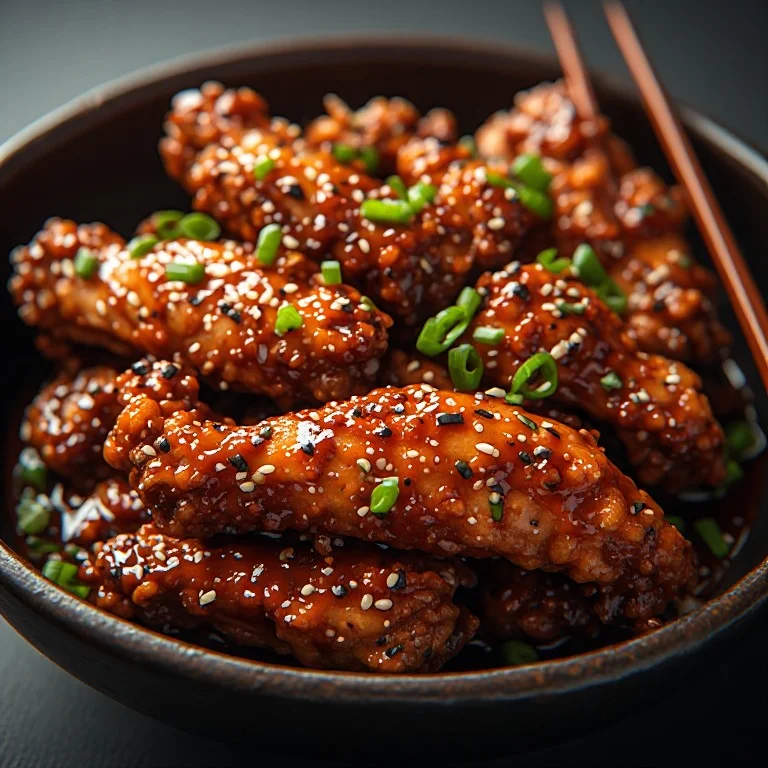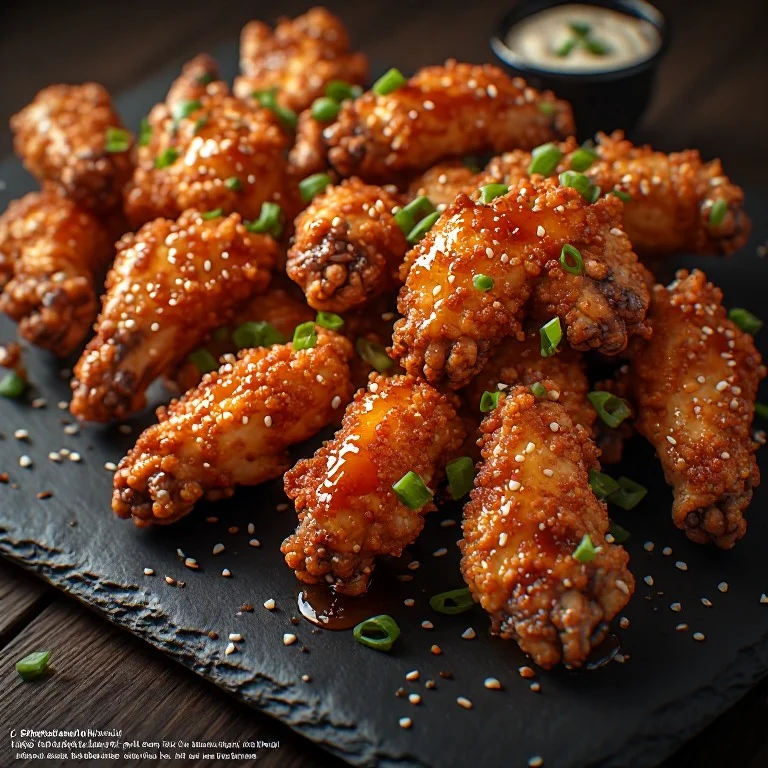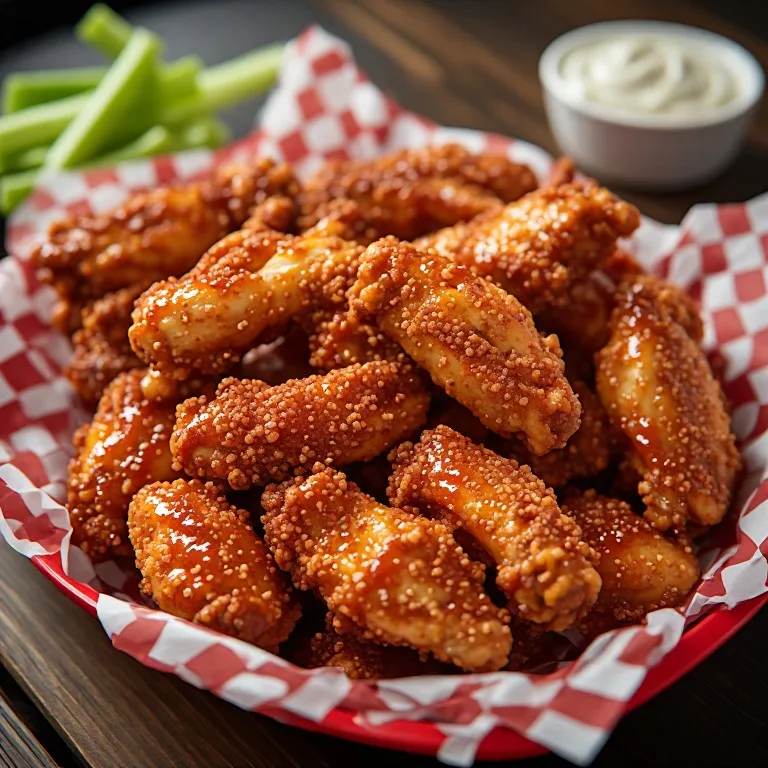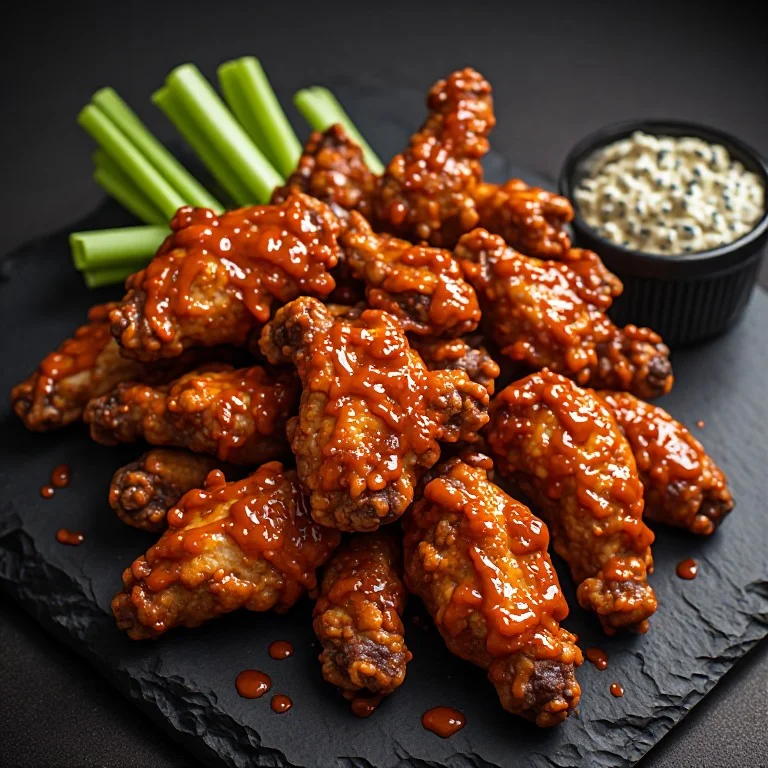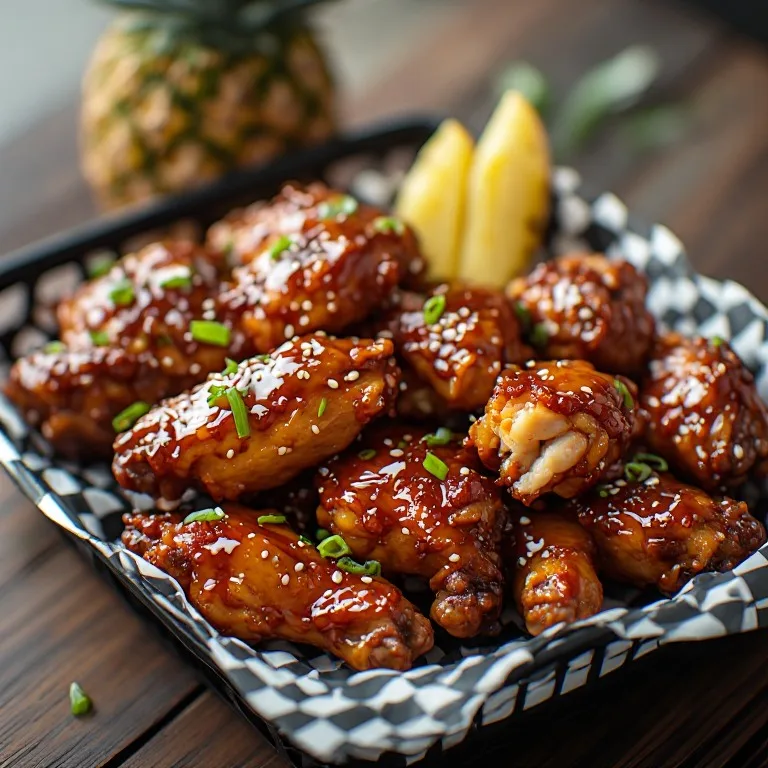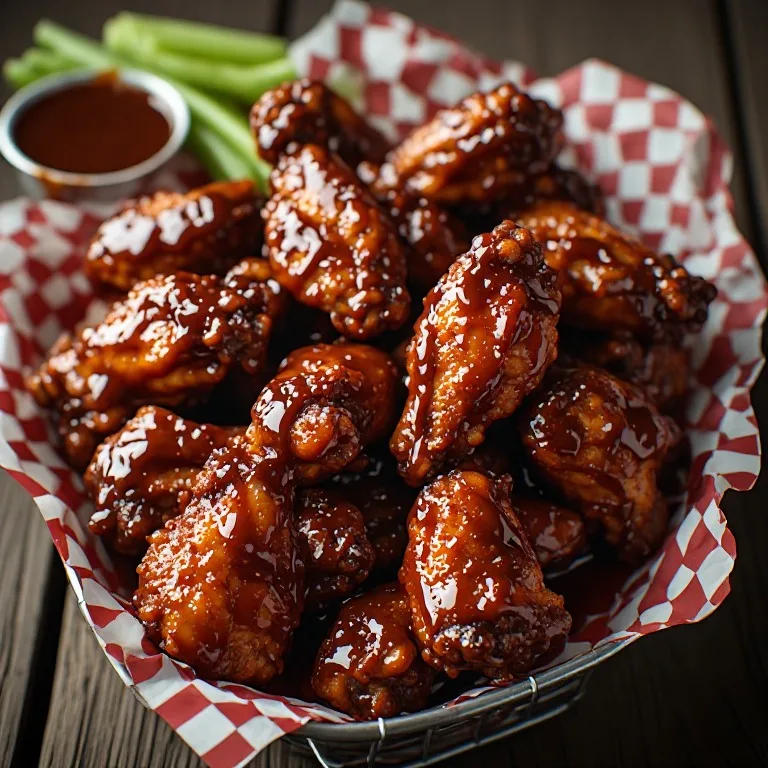


Wingstop Hickory Smoked BBQ Wings
Wingstop has 13 flavors, and most of them carry at least some heat. Hickory Smoked BBQ is one of the few with essentially none — and the only one built on a sweet BBQ base: a molasses-and-ketchup sauce with a pronounced hickory character that most wing places can’t pull off without an actual smoker. Garlic Parmesan, Lemon Pepper, and Mild are the other low-heat options, but this is the one that tastes like a backyard smoker instead of butter or citrus.
The short version of what makes this work: the molasses creates a deep sweetness that doesn’t taste like sugar, and liquid smoke made from real hickory wood provides the smoke character without any equipment. Simmer the two together with a ketchup base and a small supporting cast, apply to freshly fried wings while they’re still crackling hot, and the sauce glazes rather than drips.
Why Molasses, Not Just Sugar
Most home BBQ wing recipes use ketchup + brown sugar + some hot sauce and call it done. The result is thin, sweet, and one-dimensional.
Molasses is chemically different from refined sugar in a way that matters for a sauce. It’s a by-product of the sugar refining process — the minerals, trace compounds, and color are left behind when sugar is crystallized out. This means molasses adds:
- A roasted, slightly bitter undertone that balances the sweetness
- An earthy depth that sugar alone can’t create
- A thicker body that helps the sauce cling to a wing surface
Grandma’s Original and Brer Rabbit Full Flavor are the correct products here. Do not use blackstrap molasses — it’s extracted from the third boiling of sugar cane, which removes most of the sweetness and concentrates the bitterness into something that tastes closer to a health supplement than a wing sauce.
At 1/4 cup per batch, the molasses is the defining flavor note of the sauce alongside the hickory smoke.
Liquid Smoke: Why It Works
Skepticism about liquid smoke is understandable, but it’s misplaced here. Liquid smoke is made by burning actual hardwood, capturing the smoke in water vapor, and condensing it into a liquid. The compounds that produce real smoke flavor — guaiacol and syringol in particular — are present in both actual smoke and liquid smoke because they come from the same source material.
What you’re avoiding with liquid smoke is burning flavor, which is what you get when smoke sits on food too long or when a fire runs too hot. Liquid smoke filtered and concentrated correctly delivers the good parts (the compounds that read as smoky-sweet and wood-forward) without the acrid edge you can get from improperly managed real smoke.
Colgin and Wright’s Hickory are the two widely available retail brands. At 2 tablespoons per batch, the smoke is deep and assertive. At 3 tablespoons it becomes the dominant note; at 1 tablespoon it’s background. The Wingstop sauce reads as forward-smoke, so 2 tablespoons is the target.
Where This Sits in the Wingstop Lineup
Wingstop’s flavors for reference, grouped from no-heat to hottest:
| Flavor | Heat | Style |
|---|---|---|
| Hickory Smoked BBQ | No heat | Sweet molasses-and-hickory glaze |
| Garlic Parmesan | No heat | Savory butter-garlic |
| Lemon Pepper | No heat | Citrus-pepper, wet-dry |
| Mild | Very mild | Light buffalo butter |
| Hawaiian | Mild, sweet | Sweet island glaze |
| Hot Honey Rub | Mild–medium | Sweet honey with a gentle kick |
| Louisiana Rub | Medium | Cajun-style dry rub |
| Cajun | Medium | Buffalo with Cajun seasoning |
| Original Hot | Medium | Classic buffalo |
| Spicy Korean Q | Medium–hot | Sweet-savory gochujang glaze |
| Mango Habanero | Hot | Sweet, then real habanero heat |
| Atomic | Hottest | Maximum heat |
(Plain is also available, unsauced — 13 flavors in all.)
Among the no-heat options, Hickory Smoked BBQ is the only sweet-and-smoky one: Garlic Parmesan is savory, Lemon Pepper is citrus-forward, and Hawaiian leans fruity. If you want the full wing experience with zero burn, this is the pick.
On the site: try the Wingstop Atomic copycat for the maximum-heat opposite of this sauce, the Wingstop Garlic Parmesan copycat for the other no-heat crowd-pleaser, and the Wingstop Lemon Pepper copycat for the citrus-forward zero-heat alternative.
The Double-Fry Technique
Wingstop uses a double-fry method for all its bone-in wings, and it’s the right call for any wing that will be tossed in a wet sauce. A single fry produces a crust that softens quickly when it contacts liquid. A double fry produces a crust with a different structure — drier, shatter-crisp — that holds up to sauce long enough to serve.
The mechanics: first fry cooks the wing through and establishes initial browning (9–10 minutes). The 2–3 minute rest allows surface steam to escape and the crust to firm slightly. The second fry (2–3 minutes) dries and hardens the outer surface. This is different from just frying longer — a single 13-minute fry burns the outside before the inside is fully set.
For BBQ wings specifically, the double-fry crust is important because the glaze is thicker and heavier than a thin hot sauce: molasses-based BBQ has real body, and a weak crust will go limp under it within 2–3 minutes. A double-fried crust holds for 8–10 minutes after glazing, which is enough to eat comfortably.
Oven and Air Fryer Alternatives
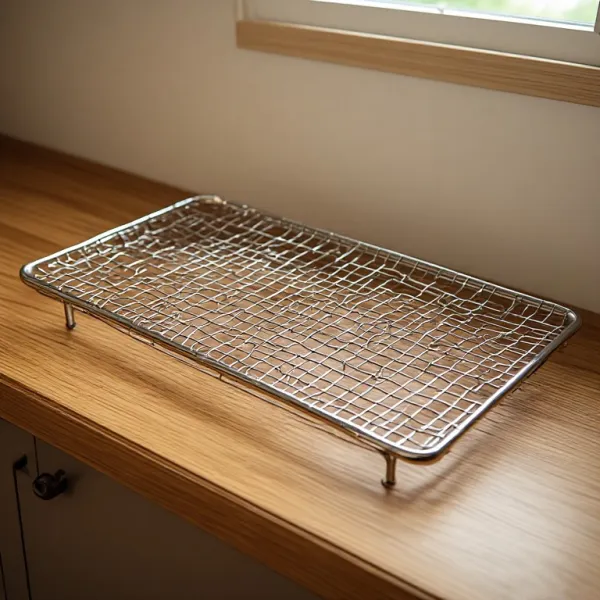
Oven method: Toss wings with 1 teaspoon of aluminum-free baking powder mixed into 1 teaspoon salt. The baking powder reacts with the wing surface during baking to create micro-bubbles that crisp like fried skin. Arrange on a wire rack over a rimmed baking sheet — the rack is essential (resting on the pan itself steams the bottom and softens it). Roast at 250°F for 30 minutes to render subcutaneous fat, then raise to 425°F without opening the oven for 25 minutes. Brush or toss with BBQ sauce in the last 5 minutes of the 425°F stage, then broil 2–3 minutes to caramelize. The low-then-high approach produces a better oven wing than straight-to-425 because the fat renders first.
Air fryer method: The air fryer is the best non-fry option for BBQ wings because the glaze step works well. Spray basket and wings with cooking spray, air fry at 400°F for 22–25 minutes flipping once. Toss in sauce, return to air fryer for 3 minutes at 400°F. The second air-fry sets the glaze and prevents dripping. You lose some crust shatter compared to deep-frying, but the BBQ sauce caramelizes in a way that looks and tastes like a restaurant finish.
Cost Comparison
| Wingstop (6-piece combo) | Home (16–18 wings) | |
|---|---|---|
| Price | ~$11–14 | ~$9–12 total |
| Per piece | ~$1.80–$2.00 | ~$0.50–$0.70 |
| Sauce control | Fixed recipe | Adjustable smoke/sweetness |
| Freshness | 15–25 min wait | Fresh off the fryer |
Home cost breakdown: 2 lbs of split wings ($7–10 at grocery), ketchup + molasses + liquid smoke ($2 for the quantity used per batch), Worcestershire + spices ($0.50). The molasses and liquid smoke are pantry items with many uses; the per-batch cost drops after the first batch.