


Copycat Wingstop Louisiana Voodoo Fries
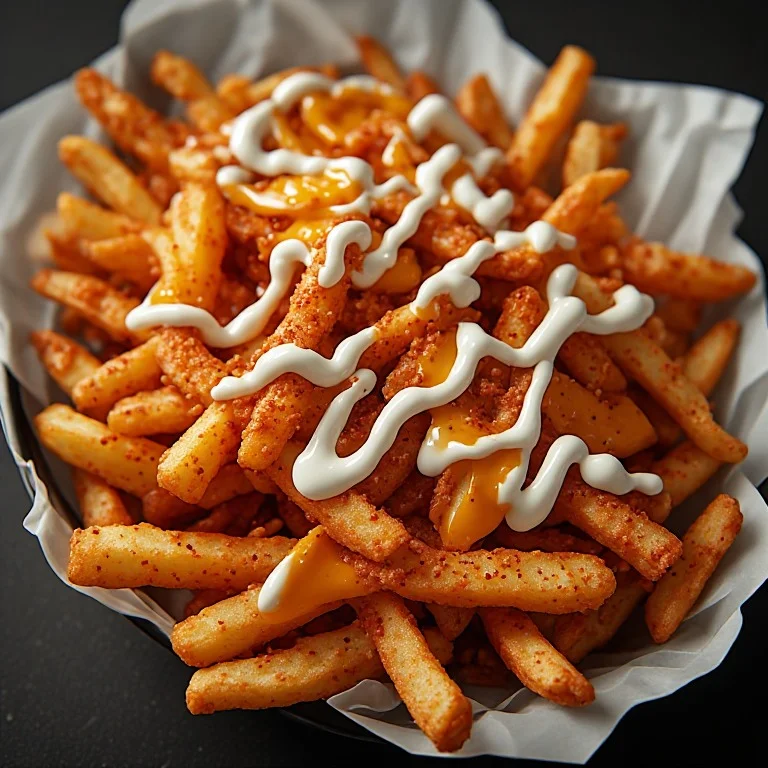
Wingstop’s Louisiana Voodoo Fries are three things stacked in the right order: sweet-spicy Cajun seasoning tossed on hot fresh-cut fries, then a cheddar cheese sauce drizzle, then a ranch drizzle on top. Getting the order wrong — or letting the fries cool before seasoning — produces a noticeably inferior result.
The “Voodoo” in the name refers to the seasoning. The fries are a permanent Wingstop menu item — one of the chain’s signature sides, not a limited-time drop. What makes the blend distinct from both plain Cajun seasoning and Wingstop’s regular fry seasoning is the dual-sugar base: both granulated sugar and brown sugar appear near the top of the ingredient list. That sweetness doesn’t make the fries dessert-forward — it rounds the edges of the cayenne and chili powder, producing sweet heat rather than sharp heat. Drizzle cheese sauce and tangy ranch on top and the result is a more interesting fry than anything from the standard menu.
What Sets the Voodoo Seasoning Apart
Wingstop’s Cajun seasoning for these fries is sugar-forward in a way standard Cajun blends are not. The ingredient list runs: granulated sugar, brown sugar, black pepper, paprika, chili powder, garlic powder, and salt. The sugars precede the spices — that ratio tells you the heat is secondary to the sweet-smoky base.
Most Cajun seasoning blends (Old Bay, Zatarain’s, Tony Chachere’s) lead with salt and dried herbs — celery seed, thyme, bay leaf — and treat sugar as incidental or absent. Wingstop’s Voodoo blend skips the dried herbs entirely and doubles down on both sugar forms. Granulated sugar provides immediate sweetness; brown sugar adds a slight molasses note that reads as warmth rather than literal sweetness when combined with the smokier spices.
This is also why the Voodoo Fries seasoning is not the same as Wingstop’s Louisiana Rub wings seasoning. Louisiana Rub is an herb-forward smoky dry rub — smoked paprika, garlic, oregano, cumin, cayenne, small amount of brown sugar. It produces savory-smoky heat. The Voodoo blend produces sweet-spicy heat. If you used Louisiana Rub on the fries, the result would taste noticeably more savory and less distinctive than the restaurant version. See Wingstop Louisiana Rub Wings for that separate recipe.
The Cheese Sauce: Why Block Cheddar Only
The most common failure in home cheese sauces is using pre-shredded cheese. Pre-shredded cheddar contains anti-caking agents — usually cellulose powder and potato starch — that prevent the cheese proteins from bonding into a smooth sauce. The starch stays separated and the sauce seizes into a lumpy, grainy texture that no amount of whisking fixes.
Block cheddar melts cleanly because the proteins are intact. Shredding right before use keeps the surface area fresh and the moisture distributed evenly.
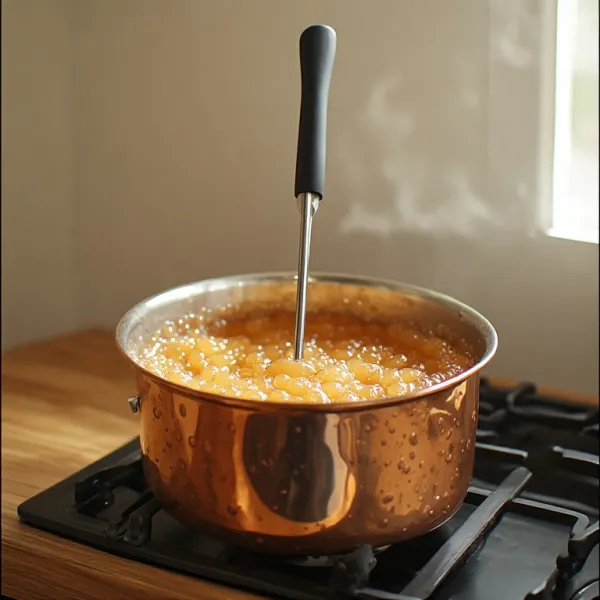
The second failure is adding cheese to a sauce that’s still on the heat. At high temperatures, the proteins in cheese tighten and squeeze out the fat, breaking the emulsion. The correct sequence: build the béchamel base, remove from heat, wait 30 seconds, then add the cheese in two additions off the burner. The residual heat from the thickened milk sauce is sufficient to melt the cheese without breaking it.
A sharper cheddar (aged 2 years or more) gives a stronger cheese flavor at a lower quantity. Extra-sharp cheddar lets you use 4 oz instead of 6 oz and still get a pronounced cheese taste — which reduces the sauce’s overall calorie contribution without diluting flavor.
The Ranch Component
Wingstop’s house-made ranch is a buttermilk-based dressing significantly more herb-forward and tangy than Hidden Valley or other shelf-stable products. It uses dried dill, dried parsley, garlic powder, onion powder, and a buttermilk-sour cream base. For the most accurate Voodoo Fries result, use the Copycat Wingstop Ranch recipe or a good-quality store-bought buttermilk ranch (Ken’s Steakhouse or Marzetti are closest in texture).
The ranch doesn’t need to be warm — drizzling cold ranch over the hot cheese sauce and fries is correct. The contrast in temperature is part of the eating experience.
Assembly Order Matters
Fries first, seasoning second, cheese third, ranch last. This order is non-negotiable for a specific reason: the Cajun seasoning needs to adhere to the hot, slightly oily surface of freshly fried potatoes. If you add cheese sauce before seasoning, the sauce acts as a barrier and the dry spices sit on top of the cheese instead of adhering to the fry surface — they slide off with the first bite.
After tossing the hot fries in seasoning, apply the cheese sauce immediately while the fries are still hot enough to keep it fluid. Cheese sauce begins to set as it cools; a thin, warm drizzle covers evenly while a cooled sauce glops unevenly and pools at the bottom of the basket.
Ranch goes last and cold — it’s both a flavor layer and a visual contrast against the yellow cheese sauce.
Cost vs. Wingstop
| Wingstop Regular (~10 oz) | Home Batch (4 large servings) | |
|---|---|---|
| Price | $5.49–$6.99 | ~$4–6 total |
| Per serving | $5.49–$6.99 | ~$1.00–$1.50 |
| Fries | Fresh-cut russet | Fresh-cut russet (same) |
| Cheese sauce | Proprietary | Homemade block cheddar |
| Ranch | House-made | Copycat or store-bought |
More Wingstop and Wing Chain Sides
- Copycat Wingstop Seasoned Fries — the base fry without the cheese/ranch topping, and the full double-fry technique explained
- Copycat Wingstop Ranch — the house-made buttermilk ranch that goes on top of the Voodoo Fries
- Wingstop Lemon Pepper Wings — the most popular Wingstop wing flavor to pair with Voodoo Fries
- Wingstop Mango Habanero Wings — sweet tropical heat that contrasts with the Cajun fries
- Wingstop Atomic Wings — Wingstop’s maximum-heat wing; Voodoo Fries with their cooling cheese sauce are the intended pairing