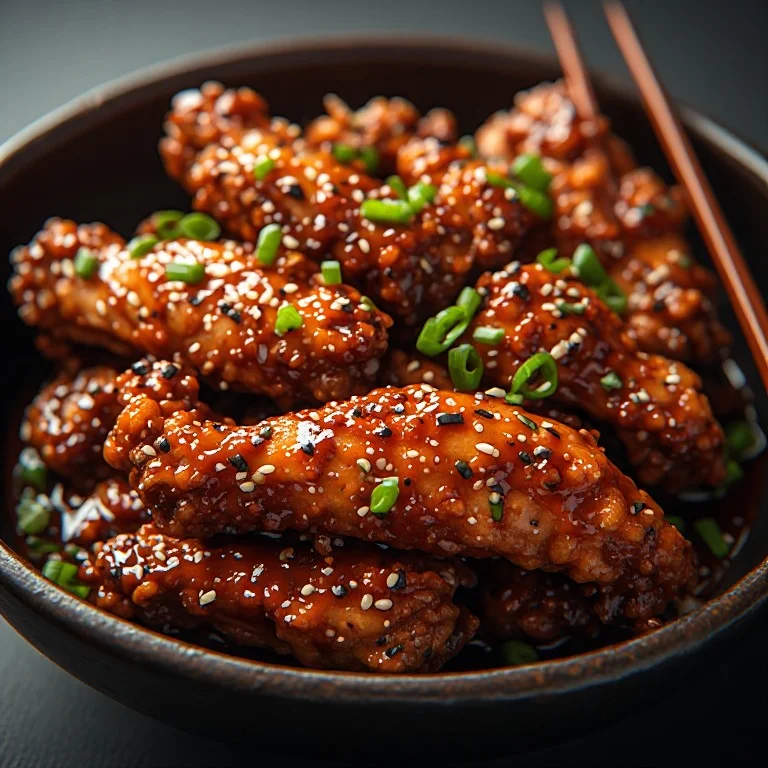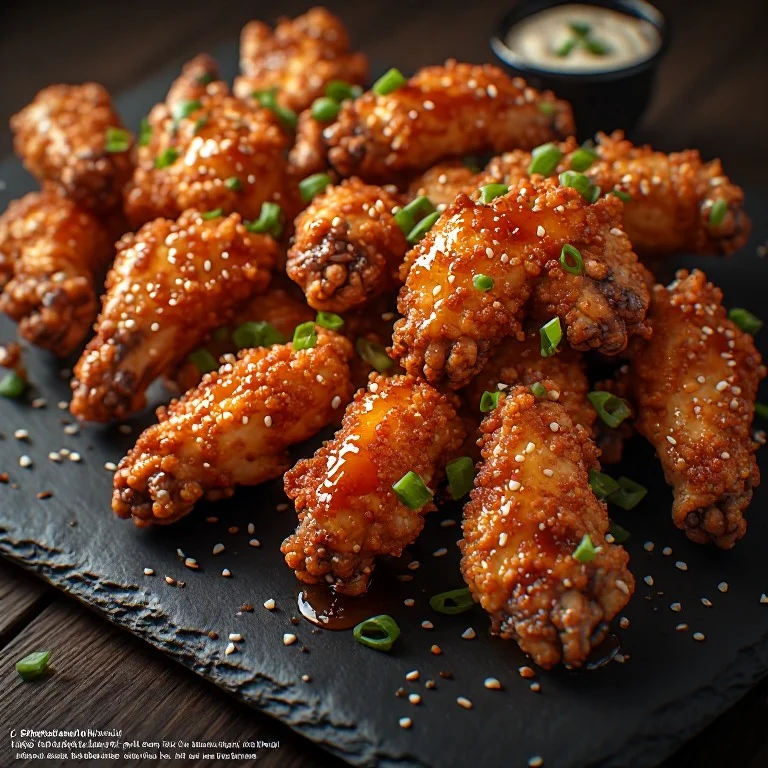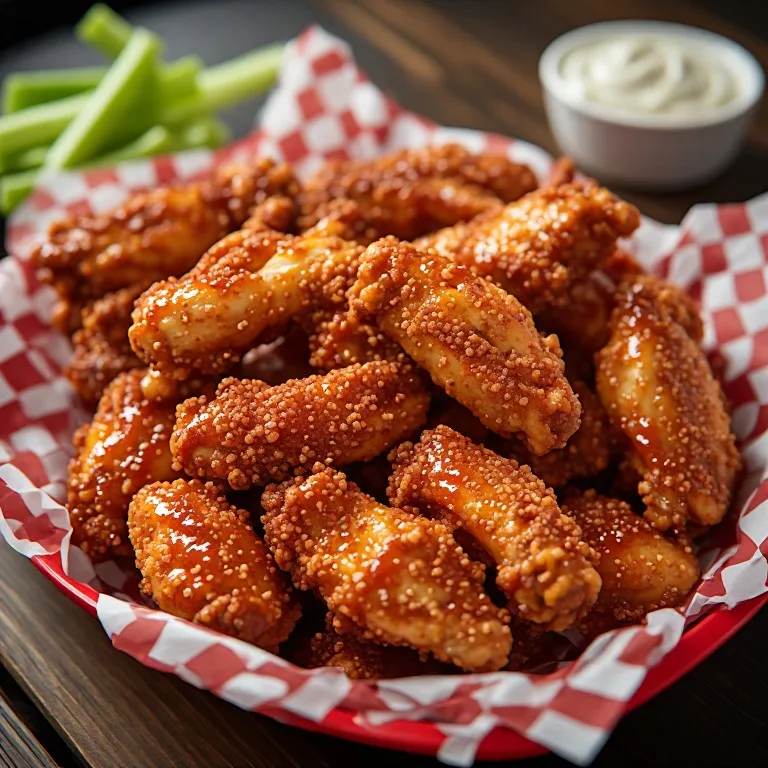



Wingstop Original Hot Wings
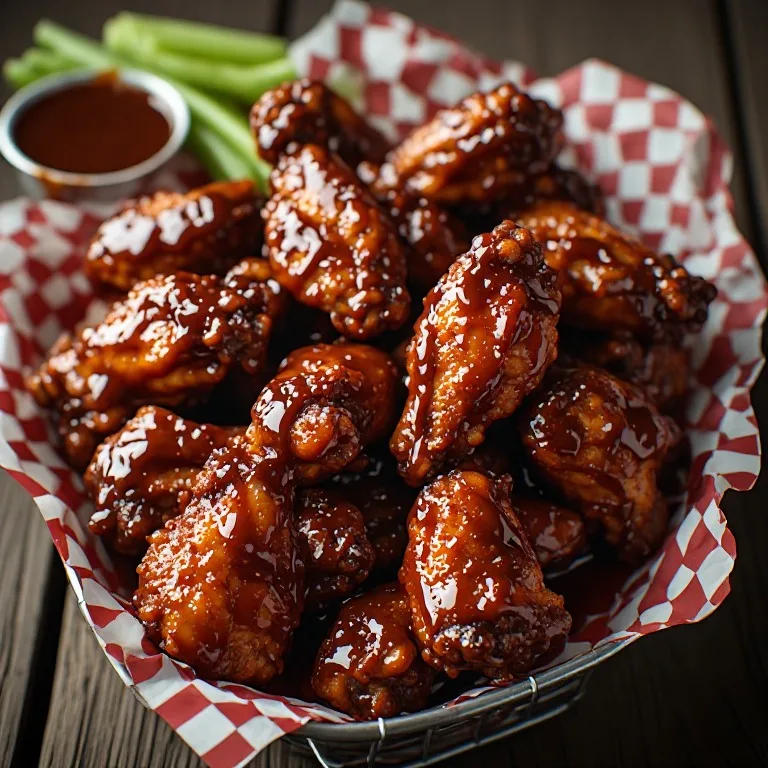
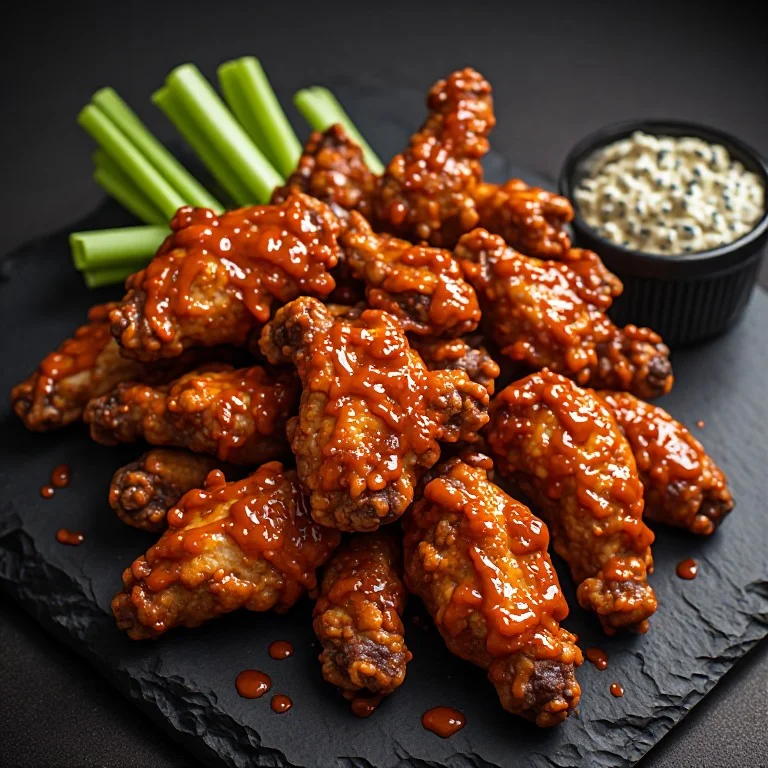
Original Hot is one of Wingstop’s core classic-buffalo flavors — a straightforward Louisiana-style hot sauce coating from the same aged-cayenne platform that defines American buffalo wing culture, calibrated to sit at 3/5 on Wingstop’s heat scale: measurably hotter than Mild, squarely in the center of the lineup.
The technical difference between Original Hot and Wingstop Mild is the butter ratio. Mild uses roughly 3 parts butter to 1 part hot sauce, which produces a creamy, round, low-heat coating. Original Hot inverts that: more sauce than butter, which makes the coating thinner, brighter red, more acidic, and noticeably hotter. If you’ve made buffalo wings before and found them too buttery and mild, you’ve been making Mild-style sauce without knowing it. Original Hot is the classic ratio.
The Butter Ratio: Why It Changes Everything
Wingstop Mild is a butter-forward sauce — that’s why it’s rated 2/5 flames. When you add fat to capsaicin, you blunt the heat: fat-soluble capsaicin molecules bind to the butter rather than spreading across your palate, and the dairy proteins in butter coat the mouth slightly, physically reducing how much capsaicin reaches your heat receptors.
Original Hot reverses this. With more hot sauce than butter, the sauce is thinner and less fatty, so capsaicin spreads across the palate more freely. The result is a classic buffalo-wing bite: the heat hits quickly, the acidity from the vinegar in the hot sauce is front-and-center, and the butter is present as a smoothing agent rather than a dominant ingredient.
The ratio for this recipe is approximately 2:1 hot sauce to butter (1/2 cup Louisiana Brand to 3 tablespoons butter). If you want more heat, reduce the butter to 2 tablespoons. If it’s still too hot, add a fourth tablespoon of butter — you’re essentially sliding the dial between Original Hot and Mild.
Why Louisiana Brand Hot Sauce
Todd Wilbur’s Top Secret Recipes analysis — the most rigorous published reverse-engineering of Wingstop’s sauce lineup — identifies The Original Louisiana Brand Hot Sauce as the closest match for Original Hot. The reasons come down to color and flavor:
Color: Louisiana Brand is a deeper, darker red than Frank’s RedHot. Wingstop’s Original Hot is noticeably darker than a standard Frank’s + butter buffalo sauce; Louisiana Brand gets you closer without extra paprika compensation. (This is the same finding the site’s Wingstop Mild recipe uses — Louisiana Brand is the recommended base across both Wingstop wet sauces.)
Flavor: Louisiana Brand is slightly more cayenne-forward and vinegar-sharp than Frank’s, which produces the tangy, acidic bite that characterizes Wingstop’s sauce. Frank’s is rounder and a touch less sharp; both work, but Louisiana Brand’s more direct heat-and-acid profile is the closer match.
| Sauce | Color | Notes |
|---|---|---|
| Louisiana Brand Hot Sauce | Darker red | Best match; correct color and tang |
| Frank’s RedHot Original | Orange-red | Good substitute; rounder, slightly less accurate color |
| Crystal Hot Sauce | Medium red | Tangier, works well |
| Tabasco Original | Dark red, thinner | Much hotter per teaspoon; reduce by 25% |
The Smoked Paprika and Worcestershire Detail
Standard Louisiana Brand + butter is a fine buffalo sauce. It’s not exactly what Wingstop’s Original Hot tastes like.
The two additions that close the gap:
Smoked paprika adds an earthy, mildly smoky undertone that deepens the sauce’s flavor beyond pure cayenne-vinegar heat. It also further darkens the color — smoked paprika has a deep reddish-brown pigment that reinforces the depth of Louisiana Brand’s darker red. Use smoked paprika (not sweet paprika) — the smoke note is the point.
Worcestershire sauce adds umami depth and a subtle savory complexity. It contains tamarind, anchovies, molasses, and vinegar — none of which are individually detectable in a small quantity, but collectively add the “something else” in the background that distinguishes a good buffalo sauce from a basic one. Use just 1/4 teaspoon; more starts to compete with the hot sauce flavor.
The Double-Fry: Why It Matters for Sauced Wings
Sauced wings face a structural challenge that dry-rubbed wings don’t: the sauce adds moisture to the exterior post-fry. A single-fried wing coated in sauce has a crispy shell that softens as the sauce absorbs in the 3–4 minutes before you eat it. The double-fry builds a thicker, more desiccated crust that resists sauce absorption longer.
The mechanism: the first fry at 375°F for 8 minutes cooks the interior and sets the exterior structure. The 10-minute rest allows residual steam to escape and the crust to dehydrate slightly. The second fry at 375°F for 5 minutes then crisps a shell that is already partially dry — it browns faster and goes deeper before softening.
| Single Fry | Double Fry |
|---|---|
| Thinner crust | Thicker, more developed crust |
| Softens within 2–3 min of saucing | Holds texture for 4–6 min after saucing |
| Adequate for dry rubs | Better for wet sauces like Original Hot |
The resting step between fries is not optional. Going straight from first fry to second fry without resting produces uneven results — the interior is still steaming outward, which limits how crispy the second fry can make the exterior.
Wingstop Heat Ladder: Where Original Hot Sits
Wingstop rates 14 flavors on a 0–5 flame scale. Original Hot anchors the middle:
| Flavor | Heat Level | Style |
|---|---|---|
| Lemon Pepper | 1/5 | Dry rub, no chili heat |
| Garlic Parmesan | 1/5 | Dry rub, no chili heat |
| Mild | 2/5 | Butter-dominant buffalo |
| Original Hot | 3/5 | Classic buffalo, sauce-forward |
| Louisiana Rub | 3/5 | Dry rub, Cajun |
| Cajun | 3/5 | Dry rub, spicy |
| Mango Habanero | 4/5 | Habanero-sweet, fruity heat |
| Atomic | 5/5 | Habanero max-heat, no sweetness |
Original Hot is the first flavor in the lineup where the heat is actually present as a primary flavor note, not just a background element. Mild’s heat is secondary to the butter; Original Hot’s heat is central.
Sauce Off Heat — The Critical Step
The most common home mistake with buffalo sauces: saucing wings in a hot pan or putting the sauce-coated wings back into a hot vessel.
Heat breaks the emulsification between the butter and the hot sauce. A properly emulsified buffalo sauce is glossy, coats evenly, and clings to the wing surface. When heat is applied after emulsification, the water and fat in the sauce separate — the fat pools on the wing surface and the water steams off, leaving a greasy, patchy coating.
The correct sequence: fry the wings, make the sauce separately, let it cool slightly (it can be warm, just not simmering), pour it over the wings in a bowl, toss immediately. The residual heat from the just-fried wings is enough to keep the sauce fluid for tossing without breaking the emulsification.
Cost Comparison
A 6-piece classic combo at Wingstop runs approximately $10–$13 depending on location (2026 pricing, with regional variation). A 3-pound batch of wings at home (roughly 18–20 pieces) using this recipe costs $14–$18 for the wings plus under $3 for sauce ingredients — about $0.85–$1.00 per wing at home versus $1.70–$2.20 per wing at the restaurant.
Pairing and Serving
The standard Wingstop pairing is their ranch dressing — a notably thick, herb-forward version that’s quite different from standard grocery-store ranch. The Wingstop ranch copycat covers the exact formula.
Celery is the traditional heat-diffusion side. The water content and bitterness of celery actively cut capsaicin; the physical action of chewing crunchy celery also shifts your sensory focus away from the heat.
For a comparison across the Wingstop heat ladder: Garlic Parmesan is the zero-heat rich option; Lemon Pepper is the zero-heat bright citrus option; Atomic is where you go when Original Hot is too mild.