

The most-copied recipe from Jean-Georges Vongerichten’s ABC Kitchen is built on one counterintuitive step: instead of dressing the finished salad with fresh citrus juice, you set orange and lemon halves cut-side down on top of the carrots before they go in the oven, and you use the caramelized juice left behind as your dressing. That warm, jammy, slightly bitter roasted citrus — whisked with just a little olive oil — is the whole recipe. The rest is assembly.
What Makes the ABC Kitchen Carrot Salad Different
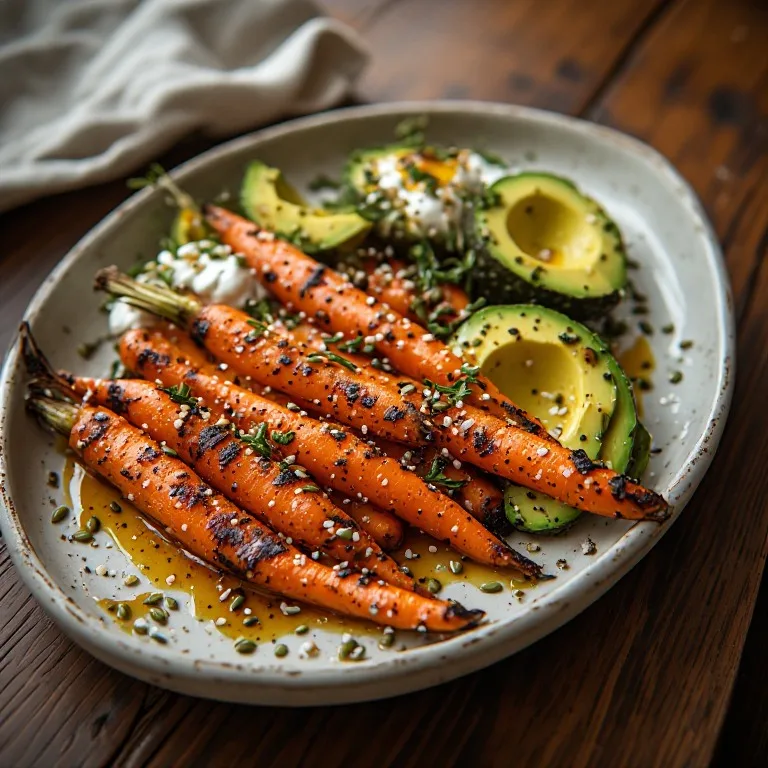
At its core this is a four-component dish: roasted carrots, sliced avocado, cool Greek yogurt, and a citrus dressing. Every element is a deliberate counterpoint. The carrots come out hot, sweet, and earthy. The avocado is cool, fatty, and silky. The yogurt is tangy and cold. The roasted citrus dressing is warm, concentrated, and slightly jammy.
The dish was not designed to be fancy — ABC Kitchen’s entire philosophy is restraint with technique, not complexity. Jean-Georges built the recipe for his farm-to-table restaurant because carrots were always coming in from the farm truck, and this was the preparation that made regulars stop what they were eating and ask for the recipe.
The version he published in his 2011 cookbook “Home Cooking with Jean-Georges” uses the same method he serves at the restaurant. It costs about $22 at ABC Kitchen. Made at home, the ingredients run about $8 for four people.
The Roasted Citrus Dressing: Why It Works
The load-bearing technique in this recipe is so simple it’s easy to overlook: place orange and lemon halves cut-side down directly on the carrots before they go in the oven. At 400°F over 45 minutes, two things happen. First, the exposed cut surface of each citrus half caramelizes against the heat coming off the pan, browning the sugars on the flat face. Second, the juice inside the fruit slowly bakes and concentrates, losing the sharp volatile top notes you get from fresh citrus and developing a sweeter, rounder character.
When you squeeze those caramelized halves after roasting, what comes out is thicker and more complex than raw citrus juice — still bright and acidic, but with a warmth and depth that raw juice doesn’t have. It clings to the carrots and coats the avocado. Whisked with ¼ cup of olive oil it makes a dressing that tastes like something that took hours, from two pieces of citrus and no effort.
How to Read Doneness on the Carrots
The carrots are done when a paring knife slides in with zero resistance and the thinner tips are beginning to color at their edges. That’s usually 40 to 45 minutes at 400°F for medium carrots. The citrus halves will have collapsed and shrunken — their cut surfaces will look dark amber and slightly charred at the edges.
Don’t rush this. Underroasted carrots are firm in the center and mild; fully roasted carrots are sweet all the way through with a slightly chewy outer surface from Maillard browning. The 5 to 10 extra minutes matter.
Assembling for the Best Presentation
ABC Kitchen serves this on a wide shallow platter, not in a bowl. The arrangement matters: fan the carrots loosely, tuck the avocado wedges in the gaps rather than piling them on top, and spoon the yogurt in distinct pools rather than spreading it in a uniform layer. The goal is that every forkful picks up a bit of everything — a carrot edge that’s slightly charred, a cool piece of avocado, a smear of tangy yogurt, a seed or two for crunch.
Dress generously with the roasted citrus dressing right before serving. The dressing runs down into the yogurt pools and picks up carrots as it goes — this is intentional.
Make-Ahead Notes
The spice paste keeps refrigerated for a week. The carrots can be roasted up to 2 hours ahead and held at room temperature — they’re best warm but work at room temp. The roasted citrus dressing can be made up to a day ahead; reheat gently before drizzling or use at room temperature. Slice the avocado just before serving and coat immediately with dressing to prevent browning. Do not assemble more than 30 minutes before serving.