


Pin It

Barbuto JW Chicken with Salsa Verde (The Dish That Defined a West Village Era, Made at Home)

Barbuto JW Chicken with Salsa Verde (The Dish That Defined a West Village Era, Made at Home)
Jump to Recipe
Prep 20 min (plus optional overnight salt-rest) Cook 55 min Serves 2 to 4
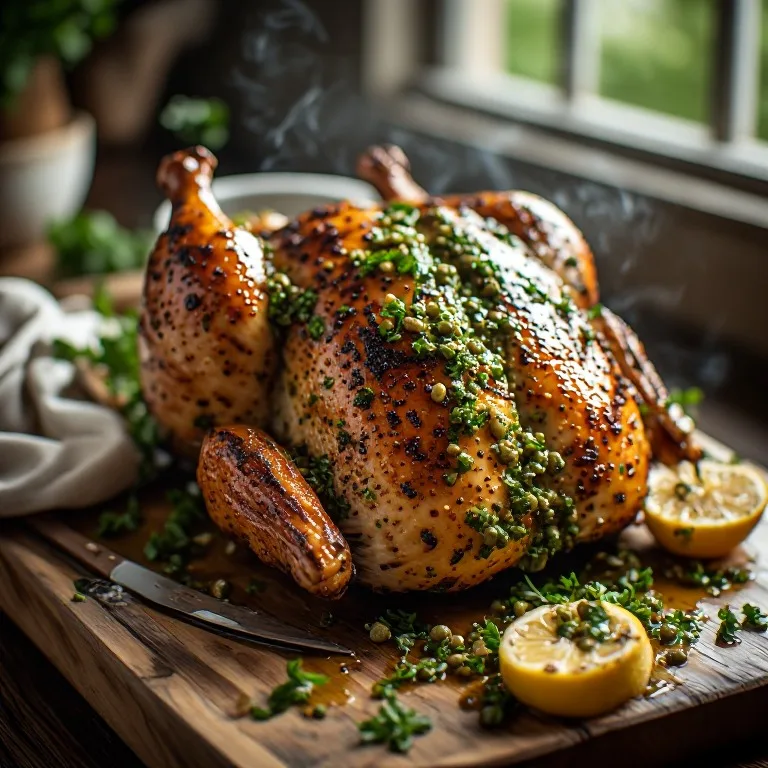
Quick answer: Pat a 3½ to 4 lb whole chicken completely dry with paper towels and season aggressively with coarse salt all over — cavity, skin, everywhere. If time allows, leave it uncovered on a rack in the fridge for at least 4 hours or overnight; the air-drying is what gives the skin its shatter. Pull the chicken from the fridge 45 minutes before roasting. Heat a large cast-iron skillet or heavy ovenproof pan in a 475°F oven for 10 minutes until the pan is smoking-hot. Drizzle the chicken with 2 tablespoons of good olive oil, rubbing it under the breast skin if you can. Carefully lower the chicken breast-side up into the screaming-hot pan — it will sear on contact. Roast at 475°F until the juices run clear and an instant-read thermometer reads 165°F at the thigh joint, about 45 to 50 minutes for a 3½ lb bird (start checking at 40 min). The skin should be deeply lacquered, dark gold, and crackling. Rest the chicken on a board for 10 to 15 minutes — this step is not optional. While it rests, make the salsa verde: pulse or finely chop 1½ cups tightly packed flat-leaf parsley leaves, 3 tablespoons rinsed and roughly chopped capers, 2 minced garlic cloves, 1 tablespoon fresh lemon juice, and 1 teaspoon finely grated lemon zest together until the herbs are roughly broken down but still textured. Stir in ½ cup good extra-virgin olive oil and season with salt. The salsa should be loose and vivid green, not smooth. Carve the chicken into pieces — two breasts, two thighs, two drumsticks, two wings — and spoon the salsa verde generously over the top. At Barbuto in New York, the JW Chicken runs around $42. This version, with a good bird, costs about $18 and serves four.

Barbuto JW Chicken with Salsa Verde (The Dish That Defined a West Village Era, Made at Home)

Jonathan Waxman's JW Chicken is the dish that made Barbuto famous: a whole roasted chicken cooked in a scorching oven with nothing but coarse salt and olive oil, served with a bright Italian salsa verde built from flat-leaf parsley, capers, garlic, and lemon. This is the full recipe, including the technique that makes the skin crackle and the salsa verde that gives it a reason to exist.

Medium Prep: 20 min (plus optional overnight salt-rest) Cook: 55 min Total: 1h 15m2 to 4 servings ~$4.50/serving
Prep20 min (plus optional overnight salt-rest)
Cook55 min
Total1h 15m
Servings
2
At home~$4.50/serving
vs
Restaurant~$20.25/serving
You save ~78%

The Story Behind the Recipe

Jonathan Waxman's JW Chicken is the dish that made Barbuto famous: a whole roasted chicken cooked in a scorching oven with nothing but coarse salt and olive oil, served with a bright Italian salsa verde built from flat-leaf parsley, capers, garlic, and lemon. This is the full recipe, including the technique that makes the skin crackle and the salsa verde that gives it a reason to exist.

Nutrition Facts

Per serving (2 to 4 servings)
Calories580
Total Fat40g
Total Carbs3g
Dietary Fiber1g
Sugars0g
Protein52g
Sodium680mg

* Estimated values based on standard recipe preparation. Actual values may vary.

Ingredients

  • The chicken
  • Italian salsa verde

Instructions

💡
Pro tip: This recipe tastes even better the next day. The flavors need time to meld together in the fridge.
❄️
Storage: Keeps in an airtight container in the fridge for up to 2 weeks. Freezer-friendly for up to 3 months.
🎃 Free Halloween cookbook — download now The Copycat Halloween Cookbook A ready-made, photo-illustrated PDF of our best halloween copycat recipes — free to download, no building required. Pay what you want to support if you love it.

Free PDF — instant download. We'll also send new seasonal copycat recipes now and then; unsubscribe anytime. Or just download it →

Copycat Barbuto JW Chicken with Salsa Verde (The Dish That Defined a West Village Era, Made at Home)

Prep time: 20 min (plus optional overnight salt-rest) Cook time: 55 min Servings: 2 to 4

Jonathan Waxman opened Barbuto in 2004 in a converted garage on Washington Street in New York’s West Village. The roll-up glass doors opened the dining room to the street in warm weather. The restaurant was named for the Italian word for “bearded.” The menu was simple in the way only a cook with very strong opinions about simplicity can make it: good vegetables, whole roasted things, olive oil and salt doing the work that most restaurant kitchens assign to cream sauces and butter finishes.

The JW Chicken has been on the menu since the first week. The initials are Waxman’s. Sixteen years and hundreds of thousands of plates later, when the building landlord redeveloped the Washington Street property and the original Barbuto had to close in 2020, the JW Chicken was what people mourned specifically. The restaurant reopened at 113 Jane Street in 2021. The chicken is still on the menu.

It is a whole chicken, salt, olive oil, and an Italian salsa verde. That is the complete list of ingredients.

Why the Simplest Dish Is Also the Hardest to Copy

The JW Chicken looks approachable because the ingredient list is short. Most home cooks who try to replicate it from the description produce a perfectly serviceable roast chicken that does not taste like Barbuto. The gap is almost entirely technique, and the technique has two components: temperature and dryness.

Temperature first. Barbuto roasts the chicken at 475°F — meaningfully hotter than most home recipes suggest. At 350°F to 400°F, chicken skin renders slowly. The result can be pleasant, but the skin is often pale or soft even when the interior is properly cooked. At 475°F, the fat in the skin hits its rendering threshold quickly, browning chemistry starts immediately, and the skin lacquers to a deep gold that shatters when you cut into it. The oven must also be fully preheated, and the cast-iron skillet must go into the oven with it — the bird lands on a screaming-hot surface, searing the underside on contact, before the oven even needs to intervene.

Dryness second. Surface moisture is the enemy of browned skin. Chicken straight from a refrigerator or package carries enough surface moisture to create a thin layer of steam in the first minutes of roasting — the window when browning should be happening. Waxman’s overnight (or minimum four-hour) uncovered rest in the refrigerator allows the fridge’s cold, circulating air to evaporate that surface moisture. The skin that goes into the oven is genuinely dry, and browning starts the moment the bird touches the pan.

The salsa verde is the third element. It is not a condiment in the conventional sense — it is the flavor argument of the dish. The chicken could exist without it, but it would be only half the idea. The salsa verde is why a piece of crackling roasted bird tastes like something specific rather than just something good.

The Salsa Verde

Italian salsa verde is not chimichurri. They share a color. That is approximately the extent of their relationship.

Chimichurri is built on vinegar. The Argentine version uses red wine vinegar as its acidic base, which gives it a sharp, aggressive quality that cuts through charcoal-grilled beef. The Italian salsa verde uses lemon: juice for brightness, zest for the resinous aromatic layer underneath it. The Italian version is softer in its acidity, greener and more herbaceous, built to complement rather than contrast.

Waxman’s version uses flat-leaf parsley as the base herb — a large quantity of it, tightly packed. The capers add brine and a faint bitterness that plays against the richness of the roasted chicken skin. Anchovies, if included, add umami depth and a savory baseline that does not read as fish-forward when they’re finely minced into the herbs. Garlic is present but restrained: enough to give the sauce body, not enough to dominate.

The key instruction is to make the salsa verde by hand and to make it textured. A blender or food processor reduces everything to a uniform paste, losing the variation — a bit of whole caper here, a slightly larger herb fragment there — that gives the salsa its character in the mouth. Use a knife, chop everything together, then stir in the oil. The sauce should pool on the plate rather than sit in a mound. It should be loose enough to run into the carved cuts of the chicken.

Make it right before you serve it. Salsa verde oxidizes: the parsley darkens from bright green to a duller olive over the course of a few hours. It tastes fine the next day, but it looks like something that has been sitting. The point of the dish is that nothing looks tired.

On Waxman and the California Influence

Waxman cooked at Chez Panisse under Alice Waters in the 1970s and 1980s, during the formation of what became California cuisine. The core principle — that very good ingredients prepared simply and honestly are better than elaborate preparations of mediocre ones — runs through everything he has built since. Barbuto is an Italian-American expression of that principle, not a French one. The olive oil over butter. The roasted-whole rather than the broken-down-and-plated. The salsa verde rather than the pan sauce.

He has said in interviews that the JW Chicken is fundamentally a technique argument: this is how you roast a bird. It is not a recipe in the conventional sense, because the variables (oven, pan, specific bird) matter more than any particular measurement. The 475°F target, the hot pan, the dry skin — these are the principles. The execution is yours.

That is also what makes this dish worth studying. Most restaurant dishes you cannot reproduce at home because the restaurant has equipment or scale or supply chain you don’t. This one you can reproduce because it is built from principles that transfer directly to a home kitchen. A cast-iron skillet and a hot oven are all it requires.

How to Get the Skin Right

The skin on the JW Chicken is not incidental. At a restaurant where most things are understated, the skin crackles audibly when you cut into it. That is intentional. Here is the specific sequence that produces it:

The chicken goes into the refrigerator uncovered on a wire rack for at least four hours, overnight ideally. This step is worth planning for and worth remembering the morning of dinner or the night before. Skipping it is the most common reason a home cook’s high-heat roast chicken is good but not great.

The oven preheats to 475°F with the cast-iron pan already inside. Both take time — do this at least 20 minutes before the chicken goes in, ideally 30. A lukewarm pan placed into a 475°F oven will reach temperature eventually, but the first five minutes of contact matter, and a cold pan cannot produce the immediate sear that a preheated one does.

The chicken goes into the hot pan breast-side up. It will spit and sear on contact; this is correct. Do not move it after it is in. Open the oven as few times as possible during the first 30 minutes.

Rest the chicken for at least 10 minutes after it comes out. The skin will continue to crisp as it moves from oven heat to ambient heat. Carve immediately and the skin deflates. Wait, and it holds.

Carving and Serving

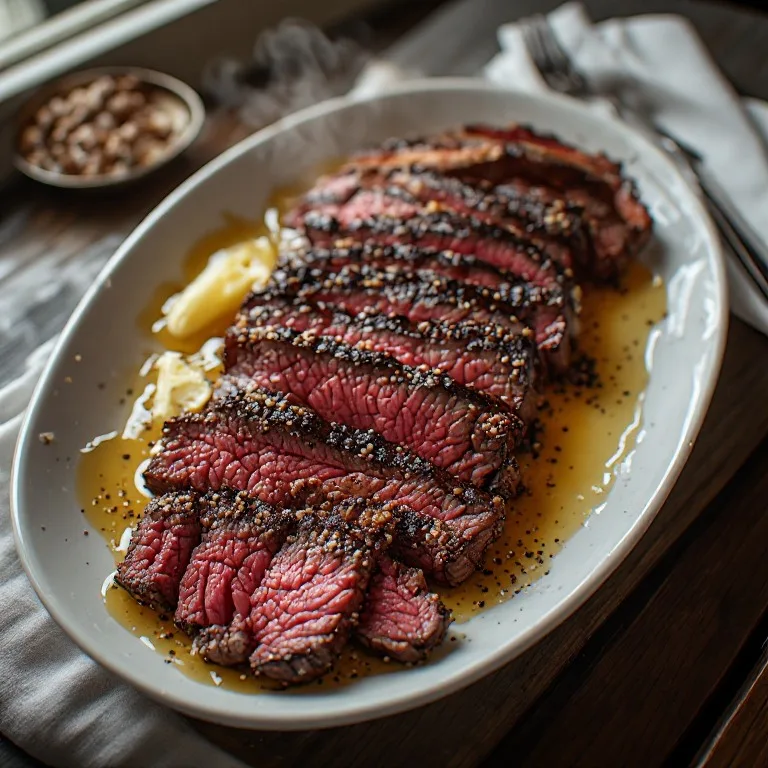
Barbuto serves the chicken in pieces, not whole. The standard breakdown: two breasts (bone-in or off, your preference), two thighs, two drumsticks, two wings. Separate the leg from the thigh at the joint. Remove the breast by cutting along the breastbone and following the ribcage. The goal is pieces that will hold the salsa verde in their cuts and crevices rather than letting it run off a flat surface.

Spoon the salsa verde over the plated pieces — enough that it puddles and reaches the plate. Bring extra to the table. Most people will use more than they expect.

The chicken costs roughly $42 at Barbuto. It costs about $18 at home for a good bird, and it produces the same dish — not a reasonable facsimile of it, but the same dish — if the technique is right.
🥗

Make It Healthier

Love Barbuto JW Chicken with Salsa Verde (The Dish That Defined a West Village Era, Made at Home) but want a lighter version? Try these simple swaps:

  • ✓Remove the skin before eating to cut fat by roughly 40% — but do roast it skin-on; the skin bastes the meat during cooking and removing it before roasting produces dry, flavorless breast meat.
  • ✓The salsa verde can be made lighter by reducing olive oil to ¼ cup and adding 1 to 2 tablespoons of water to loosen it — you lose some of the rich mouthfeel but keep all the herb and lemon flavor.
  • ✓Serve with roasted vegetables instead of starchy sides — the chicken and salsa verde carry the meal on their own.

Frequently Asked Questions

What is Barbuto, and why is the JW Chicken famous?

Barbuto opened in 2004 at 775 Washington Street in New York City's West Village, in a converted garage space with roll-up glass doors that opened the dining room to the street in warm weather. Jonathan Waxman — a James Beard Award winner who trained at Chez Panisse under Alice Waters and has been credited with helping pioneer California cuisine — designed a menu that was almost aggressively simple: roasted meats, good vegetables, Italian-inflected cooking that did not try to impress. The JW Chicken (the initials are his) was on the menu from the first week and never came off. The dish became a shorthand for the restaurant's entire philosophy: a whole chicken, coarse salt, olive oil, 475°F, and a salsa verde that does not apologize for being simple. For twenty years of New York food journalism, a lunch at Barbuto with the JW Chicken was a form of pilgrimage. The restaurant closed temporarily in 2020 when the landlord converted the space to office use, then reopened at 113 Jane Street in 2021. The chicken is still on the menu.

Why does the chicken roast at 475°F instead of the standard 350°F?

Most home roast chicken recipes call for 350°F to 400°F because it is forgiving — the chicken cooks evenly without burning before the inside is done. The trade-off is skin. At 350°F, chicken skin renders slowly, and the result is pale and soft unless you raise the heat at the end to color it. At 475°F, the skin is hit with enough immediate heat to render the fat quickly and develop a Maillard reaction — the same browning chemistry that makes a steak sear and a bread crust form. The skin lacquers, browns deeply, and crisps to a level that 350°F cannot reach. Waxman has said the critical thing is that the oven and the pan must both be genuinely hot before the chicken goes in — a cold cast-iron pan placed into a 475°F oven will not generate the same skin contact heat as a pan that has been preheating for 10 minutes. The high heat is also why the bird must be thoroughly dry: water on the surface creates steam, which inhibits browning and produces a steamed, pale skin rather than a crackling one.

What is salsa verde and how does Waxman's version differ from chimichurri?

Salsa verde is a broad category: the term simply means 'green sauce' and appears in Italian, Spanish, and French cooking with different ingredients and purposes. The Italian version — which Waxman uses — is typically built from flat-leaf parsley, capers, garlic, olive oil, and lemon. Some Italian versions include anchovies and hard-cooked egg yolk for body and richness; Waxman's Barbuto version tends to be clean and herb-forward. Argentine chimichurri is a different tradition: parsley, oregano, garlic, red wine vinegar, red pepper flakes, and olive oil. The vinegar in chimichurri makes it sharper and more acidic; the Italian salsa verde uses lemon juice and zest for acidity and brightness. Neither is cooked. The Italian version is more delicate and meant to drape over delicate proteins (vitello tonnato, boiled meats, whole roasted birds); chimichurri is more aggressive and is built for charcoal-grilled beef. Waxman's is the Italian version: parsley-forward, lemon-bright, a few capers for brine, and good olive oil as the carrier.

Do I have to dry the chicken in the fridge overnight?

No, but the skin will not be as good if you skip it. The overnight or minimum 4-hour uncovered rest in the fridge does one thing: it evaporates surface moisture from the skin. Chicken skin is mostly water trapped in collagen. If you roast a bird straight from the package or even after patting it dry with paper towels, there is enough residual moisture on the surface to create steam in the hot oven during the first 15 to 20 minutes of cooking — the period when browning chemistry needs to be happening, not steaming. A bird that has air-dried for several hours (the fridge's cold, circulating air accelerates the process) starts the oven with genuinely dry skin, and the browning begins immediately. The difference in skin texture is material, not subtle. If you have no time to dry overnight, at minimum pat the bird vigorously dry with paper towels and let it sit at room temperature for 45 minutes while the oven preheats. You will not get the same shatter, but you will get a better result than going straight from the package.

Why does Waxman not stuff or truss the chicken?

Stuffing the cavity slows the internal cooking of the thickest part of the bird — the thigh joint — while the breast can overshoot. Not trussing allows hot air to circulate around the thighs and drumsticks, so the legs (which are dark meat and need more heat) cook faster and more evenly relative to the breast. Waxman's approach, in line with his whole philosophy, is to let the bird be a bird: do not add things to it, do not reshape it, do not slow it down. The oven and the heat do the work. The only additions are salt (applied with genuine generosity — Waxman seasons chicken the way you should season all proteins, not cautiously) and a small amount of olive oil for the skin. The result is a bird that is structurally honest and almost impossible to overcook if you use a thermometer.

Does the salsa verde need anchovies?

It depends which version of Waxman's recipe you are using. Published versions vary: some include 2 to 3 anchovy fillets finely minced into the salsa verde, which add umami depth and a savory baseline without tasting fish-forward. Others omit them entirely and are vegetarian-friendly. If you include anchovies, mince them very finely with the salt before adding them to the herbs — you want them distributed, not in chunks. The version with anchovies is richer and more complex in a way that stands up to the charred, fatty chicken skin particularly well. The version without them is brighter and greener. Both are correct. If you are anchovy-averse, the salsa verde without them is still very good; the capers and lemon carry the savory-acid dimension.

What chicken should I buy?

Buy the best whole bird you can reasonably afford. For a dish this stripped-down — where the chicken is the only ingredient, seasoned with nothing but salt and oil — the quality of the bird is the dish. At Barbuto, Waxman uses well-raised birds from quality suppliers. For home cooks: air-chilled chickens have less retained water than water-chilled birds, which helps the dry-brine work more efficiently and produces a crispier skin. Bone-in, skin-on is non-negotiable — the bones conduct heat and keep the meat moist, and the skin is half of why anyone orders this dish. A 3½ to 4 lb bird is the right size for a hot oven at this temperature: large enough to have real presence and serve four, small enough to cook through at 475°F without the breast overshooting before the thigh is done.

Can I use a regular baking sheet instead of cast iron?

Yes, but the first few minutes of skin contact will differ. A heavy cast-iron skillet or a stainless-steel roasting pan preheated for 10 minutes in a 475°F oven will sear the underside of the chicken on contact — that immediate heat builds a deep color and crispness on the back and thigh skin before the oven has to do all the work. A cold sheet pan will not sear the chicken; it heats up gradually, and the skin on the underside steams slightly before it begins to brown. If you are using a baking sheet, preheat it along with the oven on the lower rack for at least 5 minutes, and elevate the chicken on a wire rack placed over the sheet pan — this allows hot air to circulate underneath, which partially compensates for the lack of direct pan-contact searing. The result will not be as crackly on the back and bottom, but the top of the bird will still be excellent.

What goes with the JW Chicken?

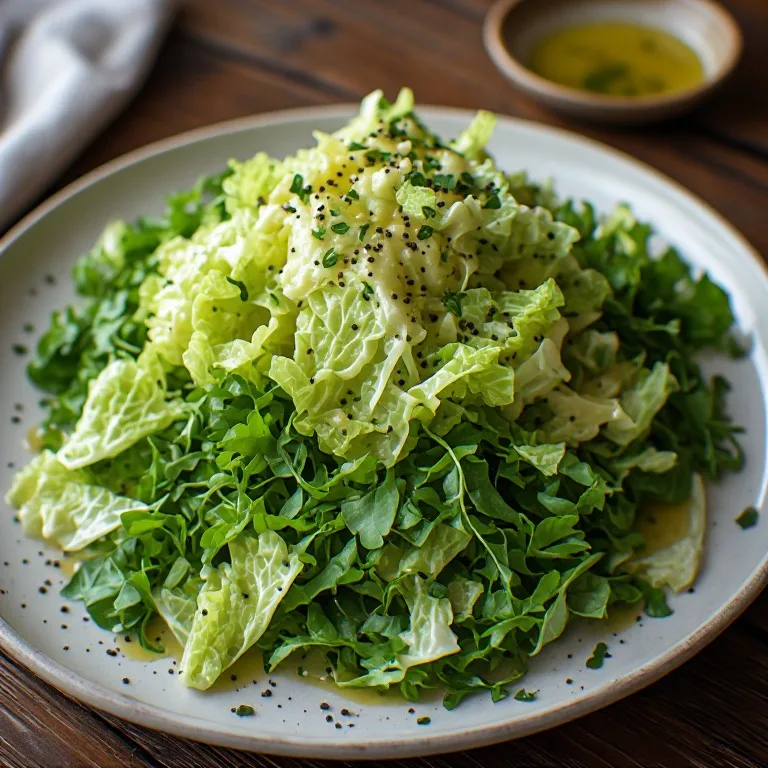
At Barbuto, the chicken arrives with the salsa verde and nothing else — the sauce is assumed to carry the meal. Side dishes at the restaurant tend to be roasted vegetables, simple pastas, or bean dishes that share the Italian frame of the menu. At home, simple is right: a great salad dressed with lemon and olive oil (something bitter like escarole or radicchio is ideal against the salsa verde), roasted potatoes made in the same cast iron before the chicken (remove them first, rest them in a warm oven while the chicken finishes), or a white bean preparation. Avoid anything rich or heavy — the chicken is fat and rendered and the salsa verde is already acidic, so the table needs lift rather than more richness.

How does Barbuto now compare to the original location?

The original Barbuto at 775 Washington Street operated for sixteen years in a garage space with rollup glass walls that dissolved the boundary between the dining room and Washington Street on warm evenings. That specific physical quality — the open-air feeling, the light from the street, the sense that you were inside and outside at once — was inseparable from the restaurant's character and many people's strongest memories of it. The new location at 113 Jane Street (a few blocks north, also in the West Village) is a more traditional dining room. Waxman has said the move was difficult but that he was committed to keeping the restaurant alive. The chicken is the same. The salsa verde is the same. Whether the room is the same in spirit is something people who know both spaces will debate; the food, by all accounts, has not changed.

Love this recipe? Share it!

Free PDF: our 12 most-wanted copycat recipes — instant download.

Made it? Buy us a coffee

Every recipe here is free, with no paywalls. If this one was a hit at your table, a small tip keeps new copycats coming.

$

Barbuto is a trademark of its owner, used here only to describe the dish this recipe recreates. This is an independent copycat written in our own words — Copycat Spices is not affiliated with, endorsed by or sponsored by Barbuto.

Ratings & Reviews

—
No ratings yet

Rate this recipe

Click a star to rate

Leave a Review

0/500

CS

Copycat Spices Editorial

Researched + fact-checked. Every recipe on Copycat Spices is built from published sources — official ingredient lists, brand-published recipes, interviews and food-science references — and fact-checked before it goes live, then written as clear, step-by-step instructions for home cooks of all skill levels.

Learn more about our mission →