

Copycat Beard Papa’s Cream Puffs (The Double-Shell Technique That Makes Them Crispy)
Prep time: 45 min Cook time: 35 min + 1 hr chill for cream Servings: 12 cream puffs
A Beard Papa’s cream puff at a US mall location costs $4–5. The ingredient cost to make 12 at home is about $10 total — roughly $0.85 each. The technique is the reason people buy them instead of making them, not the ingredients.
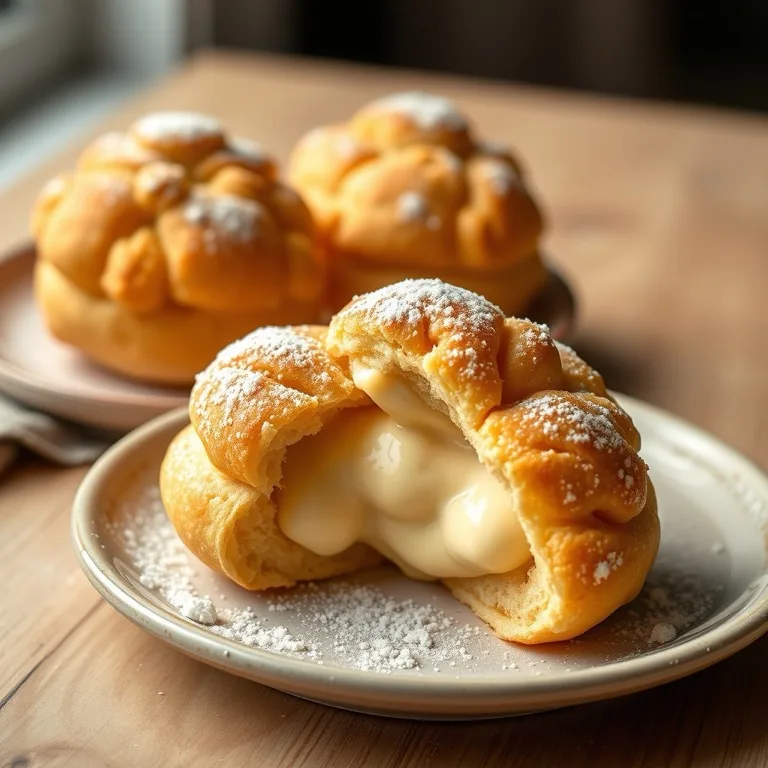
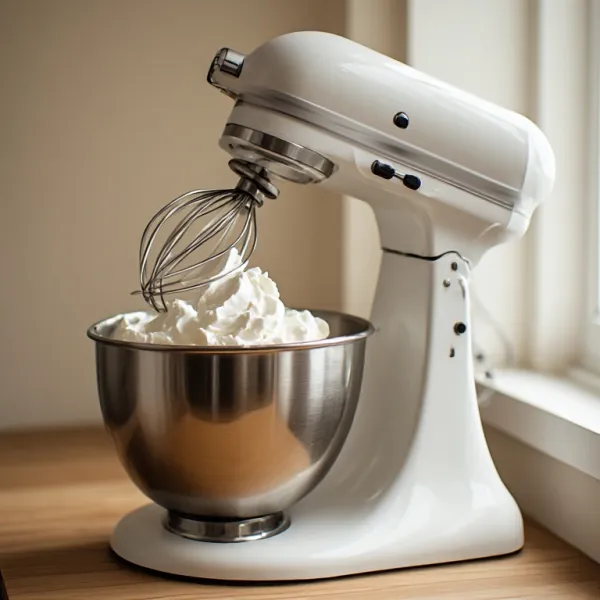
The shell is two layers of dough baked into one: choux pastry on the inside, buttery pie dough pressed over the top before baking. In the oven the pie crust caramelizes into a shattery, crackly exterior while the choux creates the hollow cavity inside. No other cream puff chain builds the shell this way. The filling is diplomat cream — pastry cream folded with freshly whipped heavy cream — piped in through the bottom right before you eat it. Filling ahead of time collapses the crust.
Why the Shell Has Two Layers
Yuji Hirota opened Beard Papa’s in Osaka’s Namba district in 1999 and named the shop after his own white beard. His technical contribution was the double-shell construction — choux baked inside a pie-crust wrapper — which he called pai shu (パイシュー, a portmanteau of pie + choux). Every other cream puff shop before and since uses plain choux. The pie dough wrapper is what makes Beard Papa’s distinct.
Choux pastry alone produces a shell that has good puff and an airy hollow, but the exterior is soft and slightly egg-y to the touch. The butter-flour pie dough pressed over each mound adds a structural, crackly outer layer that turns almost biscuity as it caramelizes. When you bite in, you pass through two textures before reaching the cream: first the shattery pie crust, then the tender choux underneath.
The Fill-to-Order Model
Beard Papa’s never pre-fills shells. A hollow baked shell can sit at room temperature for hours with no quality loss — the interior is bone dry. The moment cream is piped in, moisture begins migrating from the filling into the shell walls. Within 30 minutes the crust is noticeably less crispy. Within an hour it’s soft throughout.
The shop model is built around this: every puff is filled the instant the order is placed. At high-traffic locations the filling happens at a pace that means the puff is consumed before any softening occurs.
Replicate this at home and you get the same result. Make shells the day before, make diplomat cream up to a day ahead, keep both refrigerated separately, and fill to order right before serving.
What Can Go Wrong
Opening the oven door during the first 15 minutes. The steam inside the choux shell is what inflates the hollow cavity. Any drop in oven temperature during that phase collapses the structure before it sets. Keep the door closed.
Underbaking the shells. Choux must be dry all the way through, not just browned on the outside. Undercooked shells collapse as they cool because the interior is still wet-doughy rather than dry and structural. The shells should be a deep amber, not pale golden. The drying phase (oven off, door cracked, 10 more minutes) is not optional.
Making the pie dough wrapper too thick. More than ⅛ inch of pie dough on top of the choux acts as a lid that prevents the choux from expanding upward during baking. The wrapper should drape over the mound, not sit on top like a heavy cap. Roll thin and use cold dough so it doesn’t stretch and shrink.
Filling too far ahead. The 30-minute window is real. If you fill shells an hour before a party, the crispness is gone by the time people eat them.
Flavor Variations
The classic is vanilla — diplomat cream with 1 teaspoon pure vanilla extract or ½ vanilla bean scraped into the pastry cream base. For matcha: whisk 1½ teaspoons culinary-grade matcha into the sugar-cornstarch mixture before the eggs; the result is a green-tinted, grassy-sweet cream that pairs particularly well with the buttery shell. For chocolate: add 2 ounces of chopped dark chocolate (65–70% cacao) to the hot pastry cream immediately after removing from heat and whisk until melted and smooth before chilling. For strawberry: fold 2 tablespoons of well-drained strawberry jam (or reduced fresh strawberry puree) into the finished diplomat cream.
Flavor the pastry cream component before folding in the whipped cream — it’s easier to control concentration at that stage and you avoid deflating the whipped cream with extended mixing.