
Pin It

Pear Frangipane Tart (Tarte Bourdaloue)

Pear Frangipane Tart (Tarte Bourdaloue)
Jump to Recipe
Prep 45 min Cook 40 min Serves 8
Quick answer: Make the shell first: beat 1 stick (115g) softened butter with ½ cup powdered sugar until smooth. Mix in 1 egg yolk and ½ tsp vanilla. Add 1⅓ cups AP flour and ¼ tsp salt; mix just until a dough forms. Press flat, wrap, refrigerate 1 hour. Roll to ⅛ inch, line a 9-inch tart pan, trim the edge flush, prick the base with a fork, and freeze 20 minutes. Blind bake at 325°F with parchment and pie weights for 15 minutes; remove weights and bake 5 more minutes until dry but barely colored. Cool completely. Make the almond cream: beat 1 stick (115g) softened butter with ½ cup plus 2 tablespoons granulated sugar until pale, 3 minutes. Beat in 2 eggs one at a time. Fold in 1 cup plus 2 tablespoons almond flour, 2 tablespoons AP flour, ½ tsp vanilla, and 1 tablespoon pear brandy or rum (optional). Poach the pears: bring 2 cups water, 1 cup sugar, 1 vanilla bean (split), and juice of ½ lemon to a simmer. Add 4 peeled, halved, cored Bosc pears. Simmer 15 to 20 minutes until a knife enters with light resistance — just tender. Cool in the syrup, then remove and pat dry. Assemble and bake: spread the almond cream in the cooled shell. Arrange 7 or 8 pear halves cut-side down across the top, pressing them gently into the cream. Optional: fan each half with vertical cuts two-thirds through, then press lightly to spread. Bake at 350°F for 35 to 40 minutes until the frangipane is set — golden, springs back when touched, no jiggle. Immediately brush with 3 tablespoons apricot jam warmed with 1 teaspoon water. Cool on a wire rack before slicing.

Shop the tools

Gear matched to this recipe. These are Amazon affiliate links — we may earn a small commission if you buy, at no extra cost to you.

As an Amazon Associate, Copycat Spices earns from qualifying purchases. Product images are generic illustrations, not the exact item listed.

Pear Frangipane Tart (Tarte Bourdaloue)

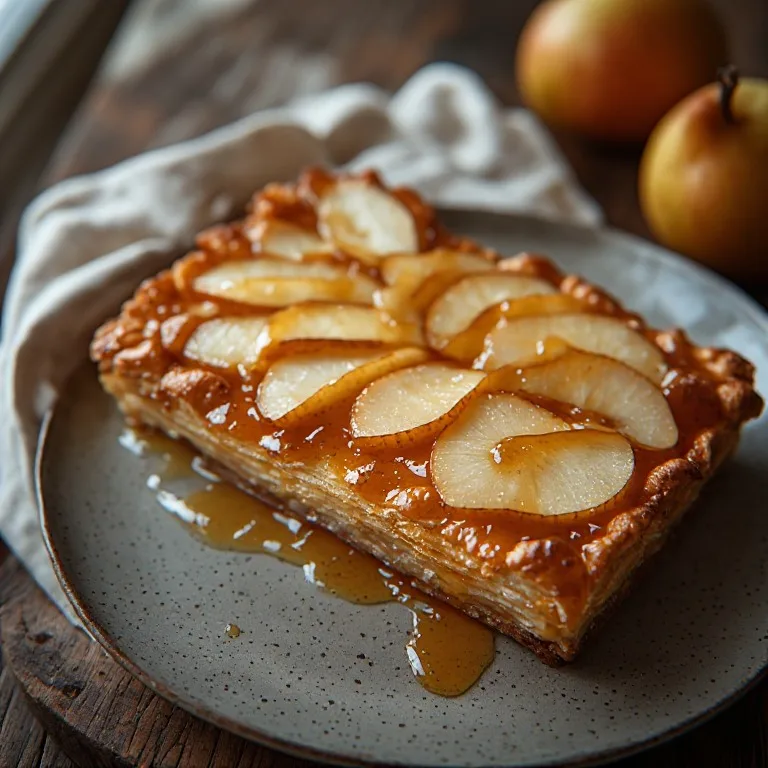
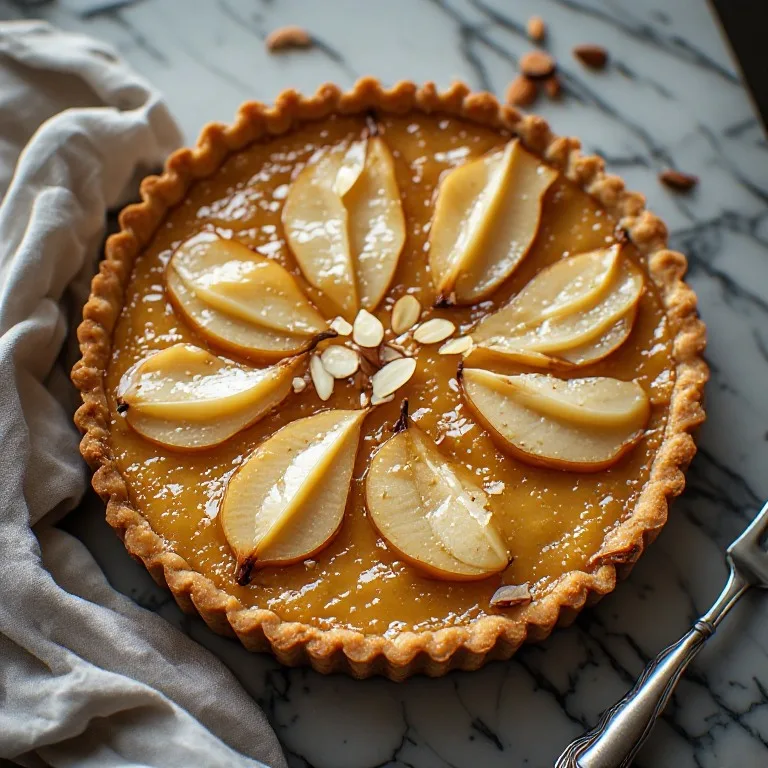
The tarte bourdaloue made at home: vanilla-poached Bosc pears pressed into almond cream inside a crisp butter shell, baked until golden, finished with an apricot glaze. The recipe from La Pâtisserie Bourdaloue in Paris that every upscale restaurant's fall dessert menu traces back to. Perfect for Thanksgiving.

Intermediate Prep: 45 min Cook: 40 min Total: 1h 25m8 servings ~$4.50/serving
Prep45 min
Cook40 min
Total1h 25m
Servings
8
At home~$4.50/serving
vs
Restaurant~$20.25/serving
You save ~78%

The Story Behind the Recipe

La Pâtisserie Bourdaloue has occupied 7 Rue Bourdaloue in Paris's 9th arrondissement since the late 19th century. The street — and the tart — take their name from Louis Bourdaloue, a 17th-century French Jesuit preacher so famous for his sermons at Versailles that crowds waited in the street outside for hours, and street vendors reportedly sold small cups to the waiting crowd (giving rise, apocryphally, to the bourdaloue as both a portable vessel and a pear dessert). Whether the legend is fully true, the pâtisserie at that address created the tarte bourdaloue — vanilla-poached pears pressed into almond cream in a butter shell — and the recipe traveled from that one shop into every serious French patisserie, cooking school, and upscale restaurant's fall menu. A slice at the original Paris address runs €6 to €9. In the United States, Bouchon Bakery documented it in their 2012 cookbook; Daniel, Le Bernardin, and Per Se rotate versions seasonally. The whole tart at an American restaurant costs $60 or more.

Two things make or break this tart. First: poach the pears. Raw pears contain enough moisture that they steam the almond cream beneath them during baking, making it wet and dense and extending the bake time well past when the surface looks done. Poached pears — even just overnight in a simple vanilla syrup — have released most of that moisture, turned fragrant, and softened exactly as much as the oven requires. Second: the almond cream must be just set. The window between underdone (jiggly in the center, raw tasting) and overdone (dry, crumbly) is about five minutes. Pull the tart when the top is uniformly golden, the cream springs back when you press it lightly, and the center barely moves when you shake the pan. Bosc pears are the right variety: firmer than Bartlett or Anjou, they hold their shape through both the poach and the oven and don't collapse to mush against the almond cream.

Nutrition Facts

Per serving (8 servings)
Calories510
Total Fat31g
Total Carbs53g
Dietary Fiber3g
Sugars32g
Protein7g
Sodium90mg

* Estimated values based on standard recipe preparation. Actual values may vary.

Ingredients

  • Pâte Sucrée (sweet tart shell)
  • Vanilla-Poached Pears
  • Almond Cream
  • Apricot Glaze

Instructions

💡
Pro tip: This recipe tastes even better the next day. The flavors need time to meld together in the fridge.
❄️
Storage: Keeps in an airtight container in the fridge for up to 2 weeks. Freezer-friendly for up to 3 months.
🦃 Free Thanksgiving cookbook — download now The Copycat Thanksgiving Cookbook A ready-made, photo-illustrated PDF of our best thanksgiving copycat recipes — free to download, no building required. Pay what you want to support if you love it.

Free PDF — instant download. We'll also send new seasonal copycat recipes now and then; unsubscribe anytime. Or just download it →

Pear Frangipane Tart (Tarte Bourdaloue)

Prep time: 45 min (plus 1 hr chill for the dough) Cook time: 40 min Servings: 8

The tarte bourdaloue is the pear frangipane tart that La Pâtisserie Bourdaloue in Paris put on the map in the late 19th century — vanilla-poached Bosc pears pressed into almond cream inside a crisp butter shell, baked until golden, glazed with warm apricot jam. Every French patisserie case carries a version. Every upscale restaurant’s fall dessert menu traces it back to this one Parisian address. It is the pear dessert recipe people search for when they want something genuinely special for Thanksgiving.

The technique is not difficult, but it rewards the two steps that matter: poaching the pears before they go into the oven, and pre-baking the shell so the bottom stays crisp. Both take 20 to 30 minutes of mostly hands-off time, and both are what separate the restaurant version from a home tart that is soggy at the bottom and watery around the pears.

TL;DR: Blind bake a pâte sucrée shell until dry and barely colored. Poach four halved Bosc pears in a vanilla-lemon syrup until just tender, then cool and pat them bone-dry. Beat a simple almond cream — butter, sugar, almond flour, eggs — and spread it in the cooled shell. Press the dried pear halves cut-side down into the cream, bake at 350°F for 35 to 40 minutes until the frangipane is uniformly golden and springs back, and brush with warm apricot jam the moment it comes out. The two steps that cannot be skipped are poaching the pears (so they don’t flood the almond cream with water) and blind baking the shell (so the bottom crisps). Cool fully before slicing.

What makes a tarte bourdaloue different from other pear tarts

Most pear tarts are either a thin fruit tart — pears fanned over pastry cream — or a rustic galette. The bourdaloue is neither. Its defining feature is that the pears sit in a bed of almond cream, not on top of a custard, and the two bake together into one set, cake-like layer that still reads as a tart because of the crisp pastry underneath. The almond cream puffs gently around the pears as it bakes, cradling them, so each slice has three distinct textures in one bite: shatter-crisp shell, dense moist frangipane, and soft fragrant pear. That contrast — not any single flavor — is what the dish is famous for, and it is why the pears have to be poached and the shell has to be pre-baked. Get either wrong and the three textures collapse into one soggy one.

Why you have to poach the pears first

Raw pears are roughly 84 percent water. Bury them in almond cream and bake, and that water leaves as steam after the frangipane has started to set — steaming the cream from below, leaving it wet and pudding-like in the center, and pushing the bake time 15 minutes past the point where the top already looks done. Poaching drives off much of that water in advance, under your control, and does two other things at once: it softens the dense Bosc flesh to exactly the right give, and it carries vanilla and lemon into the fruit so the pear tastes seasoned rather than bland. You can poach the pears up to three days ahead — they actually improve sitting in their syrup overnight. The only non-negotiable after poaching is to pat them completely dry; surface syrup is just as damaging as raw-pear water.

Why the shell must be blind baked

The almond cream is wet and heavy. Spread it into a raw shell and the bottom crust never gets a chance to crisp — it sits under an inch of moist batter for 40 minutes and comes out pale and doughy. Blind baking (pre-baking the empty shell with weights, then a few minutes without) dries and firms the base before the filling goes in, so by the time the cream is set the bottom is already a crisp, flaky layer. Pull the blind-baked shell when it looks dry but is still barely colored — it picks up its final color during the second bake, and a shell that browns twice turns bitter and hard.

Almond cream or frangipane — what the name actually means

In strict French pastry terms, crème d’amandes (almond cream) is butter, sugar, almond flour, eggs, and a little flour beaten together; true frangipane is that almond cream cut with an equal part of pastry cream for a smoother, richer set. Nearly every bakery and home version of the tarte bourdaloue — including the Bourdaloue original — uses the plain almond cream, which is what most people mean when they say “frangipane” in everyday cooking. This recipe uses the almond cream. If you want the fuller, more custardy version, fold an equal weight of warm pastry cream into the almond cream once it’s smooth; it’s richer but adds a second component to make.

What the finished tart should look like

The surface should be uniformly golden brown across the whole top, including the almond cream between the pear halves — not pale in the center with browned edges, which signals underbaked frangipane. Press the center lightly and it should spring back with no jiggle; a toothpick slid into the cream between pears comes out clean. The glazed top has a faint, even sheen rather than a sticky gloss. Let it cool completely in the pan on a rack before unmolding: the almond cream needs the full cooling time to finish setting, and a warm tart will slump when you cut it. Served at room temperature the day it’s baked, or — better — the next day, once the flavors have deepened.

Restaurant price vs. making it at home

A single slice at the original Paris pâtisserie runs €6 to €9, and an American fine-dining restaurant will charge $60 or more for a whole tart when one is on the fall menu. Made at home, the entire tart — a stick and a half of butter, four pears, a cup of almond flour, a few pantry staples — costs roughly $10 to $14 depending on almond flour prices, and feeds eight. The only specialty item is a 9-inch tart pan with a removable bottom, a one-time purchase under $15 that you’ll reuse for every tart you ever make.
🥗

Make It Healthier

Love Pear Frangipane Tart (Tarte Bourdaloue) but want a lighter version? Try these simple swaps:

  • ✓Use a gluten-free shell: combine 1½ cups almond flour, 2 tablespoons coconut sugar, 3 tablespoons melted butter, and 1 egg; press into the pan and bake at 325°F for 12 to 15 minutes until just set. Saves roughly 70 calories and all the AP flour from the crust.
  • ✓Reduce the almond cream's butter and sugar each to 90g and add 1 tablespoon plain Greek yogurt to compensate for texture — saves about 50 calories per serving without significantly changing the finished tart.
  • ✓Use 3 pears instead of 4: the almond cream carries the dessert's flavor and richness, and the poaching syrup contributes added sugar that is largely in the pears. Three halves per tart still cover the surface visually.
  • ✓Skip the apricot glaze: the frangipane surface has natural golden sheen and the tart is visually beautiful without it, saving about 10 grams of sugar per serving.

Frequently Asked Questions

What is almond cream (crème d'amandes) and how is it different from frangipane?

Almond cream and frangipane are often used interchangeably, but there is a technical distinction in classical French pastry. Crème d'amandes (almond cream) is the straightforward mixture: butter, sugar, almond flour, eggs, and a small amount of AP flour, beaten together and baked. Frangipane in its strict definition is almond cream mixed with an equal part of pastry cream (crème pâtissière) — the richer, custard-thickened version used in high-end patisserie for its smoother texture. In practice, most restaurant and home versions of the tarte bourdaloue use the plain almond cream; the version with pastry cream is more luxurious but requires making two components. This recipe uses the almond cream version, which is what most people mean when they say frangipane in everyday cooking and what the Bourdaloue original is built on. If you want to make the fuller frangipane, fold in an equal weight of warm pastry cream after the almond cream is smooth.

Can I use canned pears instead of poaching fresh ones?

Canned pears work as a shortcut with one important step: drain them completely and then pat them thoroughly dry with paper towels. Canned pears are already soft — they have been cooked and packed in syrup — so they will not firm up further during baking. That softness is acceptable, but any residual moisture from the packing syrup will wet the almond cream. The bigger issue is flavor: canned pears taste sweeter and somewhat one-dimensional compared to vanilla-poached fresh pears, which absorb the syrup's fragrance and develop a concentrated pear character. If fresh Bosc or Anjou pears are available, use them; canned pears produce an acceptable result when fresh pears are not an option or when you are short on time. Avoid pears packed in heavy syrup — drain them and rinse briefly to reduce the sweetness.

How do I know when the frangipane is done baking?

The almond cream is done when it is uniformly golden brown across the entire surface (including between the pear halves), springs back slightly when you press it with a fingertip, and shows no visible jiggle when you shake the pan gently. The tart will pull slightly from the pan sides when set. A toothpick inserted into the almond cream between the pears should come out clean — no wet batter on it. The color is the most reliable visual cue: pale cream that looks set in the center but pale is almost always underdone. Pull it only when the top is genuinely golden. The 35- to 40-minute window in this recipe assumes a 325°F blind-baked shell and room-temperature almond cream; if your oven runs hot or the cream was cold from the refrigerator, check at 32 minutes. Overbaking by 5 or 10 minutes produces a dry, crumbly frangipane that tastes more like almond cake than almond cream — better to check early and return to the oven than to pull it too early.

Can I make this ahead for Thanksgiving?

This tart is excellent made one day ahead and is actually better at room temperature than straight from the oven, once the almond cream has had time to fully set and the flavors have deepened. Poach the pears up to 3 days ahead and refrigerate them in their syrup; drain and pat dry just before assembling. Blind bake the shell the day before and store it at room temperature, covered. Make the almond cream the morning of assembly or up to 1 day ahead (refrigerate, then bring to room temperature before spreading). Assemble and bake the day of, or the night before — the tart holds well at room temperature for up to 24 hours. Do not refrigerate the finished tart unless your kitchen is very warm; refrigeration firms the butter in the almond cream and dulls the texture. Bring to room temperature for 30 minutes before serving if it has been chilled.

Why do I blind bake the shell, and can I skip it?

Blind baking (pre-baking the empty shell with weights) is not optional here. The almond cream is wet and dense — if you add it to a raw shell, the moisture from the cream prevents the bottom from crisping and the bottom crust stays doughy, pale, and soft even after 40 minutes in the oven. Blind baking dries and sets the bottom, so it has a head start on the baking by the time the cream goes in. The result is a tart with a crisp, fully baked bottom and the proper textural contrast between flaky shell and soft almond cream. The 15 minutes with weights plus 5 minutes without is enough to dry and barely set the shell without browning it — you want it dry but still pale, because it will pick up additional color during the final bake.

What is the apricot glaze for, and can I skip it?

The apricot glaze does two things: it seals the surface and gives the tart a professional sheen (the glossy finish you see in French patisserie cases), and it adds a faint, fruity-tart note that brightens the sweetness of the pears and almond cream. It is applied hot, immediately after the tart comes out of the oven, when the jam melts into the surface. You can skip it — the tart tastes complete without it, and the frangipane has a natural golden sheen of its own. If you want the glaze, use smooth apricot jam (not chunky preserves, which leave visible fruit pieces); warm it in the microwave with a teaspoon of water until it is pourable and brush it on while the tart is still hot. The glaze sets as the tart cools and creates a translucent, not sticky, finish.

What type of pears should I use?

Bosc pears are the preferred variety for this tart. They are the firmer, longer-necked pears with russeted brown skin, and their flesh holds up well through both the poach and the oven without collapsing. Bartlett (Williams) pears are the next-best choice — good flavor, slightly softer, need more careful poaching to stay intact. Anjou pears (green or red) work, though they are milder-flavored. Avoid Comice pears (too soft, they turn to mush) and canned pears packed in juice rather than syrup (too waterlogged). Whatever variety you use, buy them slightly underripe — firm but not hard. Fully ripe pears are too soft to poach without falling apart and release too much liquid into the almond cream during baking.

Love this recipe? Share it!

Free PDF: our 12 most-wanted copycat recipes — instant download.

Made it? Buy us a coffee

Every recipe here is free, with no paywalls. If this one was a hit at your table, a small tip keeps new copycats coming.

$

La Pâtisserie Bourdaloue is a trademark of its owner, used here only to describe the dish this recipe recreates. This is an independent copycat written in our own words — Copycat Spices is not affiliated with, endorsed by or sponsored by La Pâtisserie Bourdaloue.

Ratings & Reviews

—
No ratings yet

Rate this recipe

Click a star to rate

Leave a Review

0/500

CS

Copycat Spices Editorial

Researched + fact-checked. Every recipe on Copycat Spices is built from published sources — official ingredient lists, brand-published recipes, interviews and food-science references — and fact-checked before it goes live, then written as clear, step-by-step instructions for home cooks of all skill levels.

Learn more about our mission →