


Pin It

The Beatrice Inn Rack of Lamb (The Orange-Apricot Glaze, Made at Home)

The Beatrice Inn Rack of Lamb (The Orange-Apricot Glaze, Made at Home)
Jump to Recipe
Prep 20 min Cook 25 min Serves 4
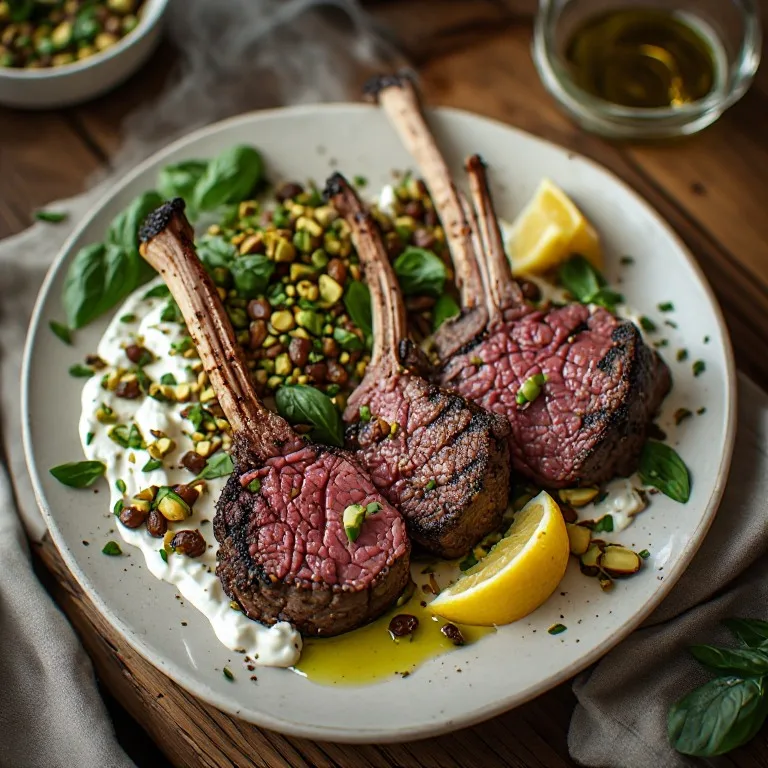
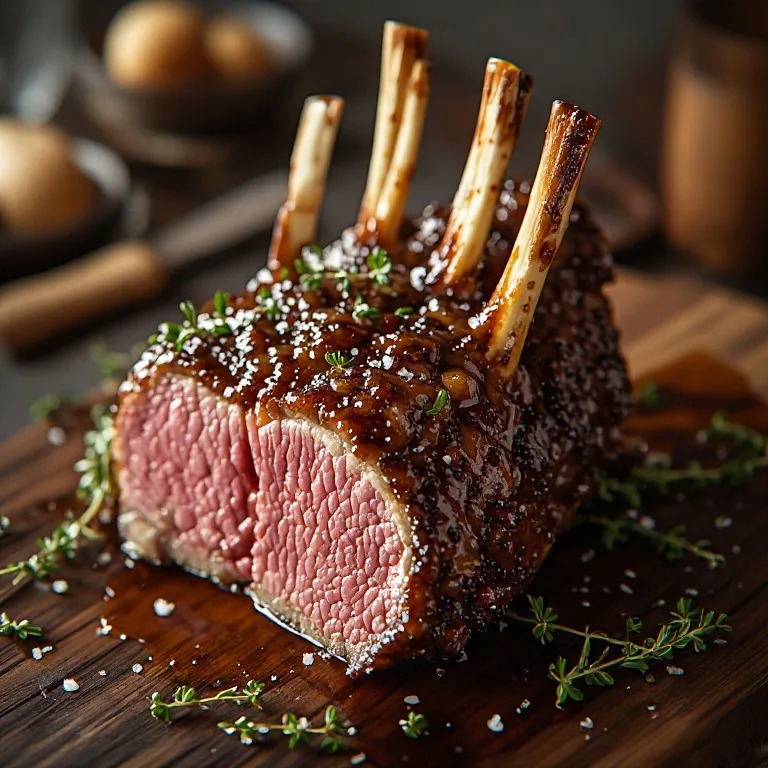
Quick answer: Bring 2 frenched racks of lamb (about 1½ lbs each) to room temperature for 30 minutes, then season all surfaces generously with kosher salt and pepper. Heat 1 tablespoon of neutral oil in a cast-iron skillet over high heat until smoking. Set the racks fat-side down and sear undisturbed for 3 to 4 minutes until the fat cap is deeply golden and most of the exterior fat has rendered. Flip and sear the meat side for 1 minute, then sear both short ends for 30 seconds each. Transfer fat-side up to a roasting rack set over a rimmed sheet pan. Preheat the oven to 425°F. While the oven heats, combine 3 tablespoons of orange marmalade, 3 tablespoons of apricot jam, 1½ tablespoons of Dijon mustard, and 1 tablespoon of sherry vinegar in a small saucepan over medium heat, stirring until the jams melt into a unified glaze, about 2 minutes. Remove from heat and add 1 teaspoon of fresh thyme leaves. Roast the racks at 425°F for 12 minutes. Pull them out and brush a generous layer of glaze over the fat cap and ends. Return to the oven for 5 to 8 minutes more, until an instant-read thermometer at the thickest part of the loin (away from the bone) reads 125°F for medium-rare or 130°F for medium. The glaze should be darkly caramelized, with sticky amber patches where it has candied against the rendered fat. Rest the racks on the rack for 10 minutes before carving — they will rise another 3 to 5 degrees during rest. Carve between the ribs into individual chops, scatter torn fresh mint leaves over the top, and finish with a pinch of flaky salt.

The Beatrice Inn Rack of Lamb (The Orange-Apricot Glaze, Made at Home)

Angie Mar's famous orange-glazed rack of lamb from the Beatrice Inn — the West Village meat restaurant she ran until it closed at the end of 2020 — made at home. A frenched rack seared fat-side down to render the cap, finished in a hot oven, and glazed with orange marmalade and apricot jam until the crust candies dark and jammy. Inspired by the backyard orange-marmalade glaze that became one of the city's most talked-about meat dishes.

Medium Prep: 20 min Cook: 25 min Total: 45 min4 servings ~$4.50/serving
Prep20 min
Cook25 min
Total45 min
Servings
4
At home~$4.50/serving
vs
Restaurant~$20.25/serving
You save ~78%

The Story Behind the Recipe

The Beatrice Inn at 285 West 12th Street in the West Village had three lives. The first was as a speakeasy during Prohibition, operating below street level in the brick-lined basement. The second was as a mid-century celebrity bar. The third began in 2016, when chef Angie Mar — who had run the kitchen there since 2013 — bought the restaurant outright. She focused the menu entirely on meat and turned a party address into one of the most talked-about serious dining rooms in New York, until she closed it at the end of 2020 amid the pandemic and a lease dispute. Food & Wine named her a Best New Chef in 2017; her 2019 cookbook, Butcher and Beast (Clarkson Potter, written with Jamie Feldmar), documented the kitchen's dry-aged, often-smoked, uncompromisingly rich approach.

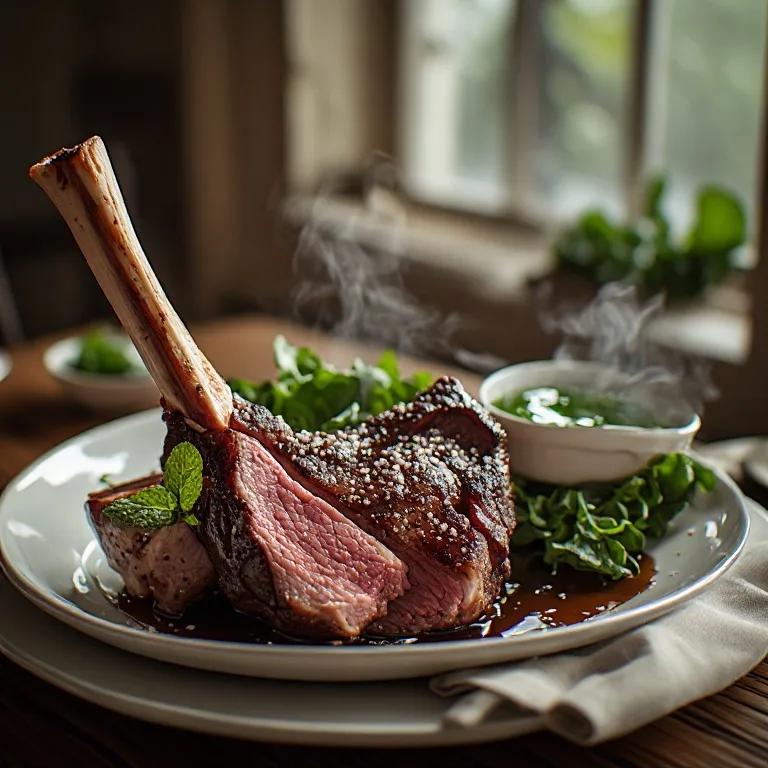
The rack of lamb grew out of a family memory, not a culinary school lesson. In a 2019 Maxim feature, Mar described her father glazing lamb with orange marmalade at summer barbecues in Seattle, reapplying the glaze as the meat cooked so the top turned crisp and almost brûléed. At the Beatrice Inn she served the dish as "Roast Rack of Lamb with Orange and Summer Mints," finishing dry-aged lamb with a reduced orange glaze and fresh mint. Our make-at-home version keeps that orange-and-mint character but builds a jammier glaze from orange marmalade and apricot jam — the apricot is our own addition, for stickiness and body on a home rack that isn't dry-aged or smoked — balanced with Dijon and sherry vinegar so it candies without turning cloying. At home the ingredient cost comes to roughly $35 to $45 for two racks feeding four.

Nutrition Facts

Per serving (4 servings)
Calories375
Total Fat24g
Total Carbs14g
Dietary Fiber0g
Sugars12g
Protein28g
Sodium490mg

* Estimated values based on standard recipe preparation. Actual values may vary.

Ingredients

  • For the racks
  • For the orange-apricot glaze
  • For serving

Instructions

💡
Pro tip: This recipe tastes even better the next day. The flavors need time to meld together in the fridge.
❄️
Storage: Keeps in an airtight container in the fridge for up to 2 weeks. Freezer-friendly for up to 3 months.
🦃 Free Thanksgiving cookbook — download now The Copycat Thanksgiving Cookbook A ready-made, photo-illustrated PDF of our best thanksgiving copycat recipes — free to download, no building required. Pay what you want to support if you love it.

Free PDF — instant download. We'll also send new seasonal copycat recipes now and then; unsubscribe anytime. Or just download it →

The Backyard Glaze That Became a New York Institution

The Beatrice Inn sat at 285 West 12th Street from the 1920s, when it opened as a speakeasy during Prohibition. The vaulted brick basement held a different kind of clientele in each decade before settling into a long stretch as one of the harder-to-get-into celebrity bars in Manhattan. By 2013, Angie Mar was running the kitchen.

Mar grew up in Seattle, a grandniece of Ruby Chow — the restaurateur who once employed Bruce Lee and a significant figure in the history of Chinese food in America. Her path into professional cooking ran through culinary school and time at Balthazar and the Spotted Pig before the Beatrice Inn. In 2016 she bought the restaurant outright, focused the menu entirely on aged and smoked meat, and built a dining room around serious technique and recipes that could take two or three days to execute at the restaurant level. She closed the Beatrice Inn at the end of 2020, amid the pandemic and a lease dispute, and later opened Les Trois Chevaux nearby — reworked and reopened as Le B in September 2023.

The rack of lamb traces back to a memory Mar described in a 2019 Maxim feature: her father glazing lamb with orange marmalade at Seattle barbecues, painting the glaze on in layers as the meat cooked until the top turned crisp and almost brûléed. At the Beatrice Inn she dry-aged the lamb, finished it over hickory smoke, and plated it with a reduced orange glaze and fresh mint — published as “Roast Rack of Lamb with Orange and Summer Mints.” Our make-at-home version keeps that orange-and-mint character but swaps the restaurant’s reduction for a jammier glaze of orange marmalade and apricot jam (the apricot is our own addition, for stickiness and body on a home rack that isn’t dry-aged or smoked). The ingredient cost for two racks at home comes to roughly $35 to $45.

What Makes the Glaze Work

The combination of orange marmalade and apricot jam is not decorative — each component does something specific. Marmalade brings bitterness from the peel and a more complex citrus character than juice or zest alone; that bitterness keeps the glaze from reading as simply sweet. Apricot jam contributes a rounder, stone-fruit sweetness and a high pectin content that helps the glaze set into something jammy and sticky rather than running off the fat as a thin liquid. The Dijon mustard adds body, a low heat, and a slight emulsifying quality that keeps the marmalade and jam together. The sherry vinegar is the acidic cut — without it, the lamb’s fat and the glaze’s sweetness become too similar in register and the dish tastes flat.

Applied to a properly rendered fat cap, this glaze caramelizes rather than steaming. The rendered fat underneath provides a textured, slightly crisped surface that grips the glaze; raw or underrendered fat is slick and the glaze slides off. This is the primary reason the recipe starts fat-side down in a very hot cast-iron pan rather than just seasoning and roasting — the 3 to 4 minutes of direct contact renders roughly half the fat from the cap, creating the surface the glaze needs to adhere and caramelize against.

Buying the Right Rack

A frenched rack of lamb for this recipe should be American or Australian, 8 ribs, about 1¼ to 1½ lbs per rack. Most grocery stores carry them in the meat case or can order them; a butcher is the better source if you want to specify the breed (Dorset or Southdown for domestic; Merino cross for Australian). New Zealand spring lamb is common and works well; it tends to be slightly milder in flavor than American and slightly smaller in rib size.

The rack should arrive already frenched — bones clean, fat cap trimmed to about ½ inch. If the fat cap is more than ¾ inch thick, ask the butcher to trim it or trim it yourself with a sharp knife; too thick a cap takes too long to render and the outer meat overcooks waiting for it. If the rack is unfrenched, ask the butcher to do it when you buy it. The bones themselves are not eaten but are natural carving guides — you always cut straight down between them, and each chop should have exactly one bone.
🥗

Make It Healthier

Love The Beatrice Inn Rack of Lamb (The Orange-Apricot Glaze, Made at Home) but want a lighter version? Try these simple swaps:

  • ✓Ask your butcher to french and trim the racks for you — removing the thick fat cap to about ¼ inch rather than the full ½ inch saves roughly 40 calories per serving without changing the technique.
  • ✓Cut the marmalade and apricot jam from 3 tablespoons each to 2 tablespoons each and add 1 extra teaspoon of sherry vinegar — same glaze structure with 20 percent less added sugar.
  • ✓Serve two chops per person instead of three alongside a simple green salad or roasted asparagus to round out the plate without competing with the lamb's richness.
  • ✓The rendered fat from the sear is excellent for roasting potatoes or root vegetables — collect it from the pan rather than discarding it.

Frequently Asked Questions

What does 'frenched' mean, and does it matter for this recipe?

A frenched rack has had the meat and fat scraped away from the exposed rib bones, leaving clean, bare bones that extend above the loin. It does not change the flavor or technique, but it serves two purposes: the bones become natural handles for carving individual chops, and the visual effect — the cleaned bones fanning out above the seared meat — is what makes a rack of lamb one of the most visually striking things you can put on a table. Most butchers sell racks already frenched. If yours is not, ask them to do it when you buy it; it takes about five minutes with a boning knife and is tedious to do at home. The recipe works the same either way.

Why sear the rack fat-side down first instead of meat-side?

Two reasons specific to rack of lamb. First, the fat cap on a rack is thick — about ½ inch on an untrimmed rack — and it needs rendering to be edible. Starting fat-side down gives the fat 3 to 4 minutes of direct, sustained heat to melt and render, which improves both the texture and the flavor of the finished crust. Fat that is not properly rendered comes out waxy and unpleasant. Second, a rendered fat cap takes the glaze much better than raw fat — the caramelized, slightly crisped surface grips the orange-apricot glaze and caramelizes it further, rather than letting it slide off a slick, unrendered surface. The meat-side sear is brief (1 minute) because the goal is browning, not cooking through — the oven handles that.

What temperature should I pull the lamb from the oven?

125°F for medium-rare (the most common preference for rack of lamb — pink throughout, rosy and yielding); 130°F for medium (a small pink center, firmer texture at the edges). Do not go above 135°F — rack of lamb at well-done becomes chalky and loses the fat's succulence entirely. The lamb will rise 3 to 5 degrees during the 10-minute rest, so pulling at 125°F will land at 128 to 130°F after resting. Always use an instant-read thermometer placed at the thickest part of the loin, with the probe tip away from any bone, which reads hotter than the meat. The color of the juices is not a reliable guide for lamb — they often run pink even when the meat is properly cooked.

Can I substitute orange marmalade for the apricot jam, or skip one?

You can use all marmalade and no apricot, or all apricot and no marmalade — both produce a good glaze, just with a different character. Straight marmalade gives a more bitter, complex glaze with citrus peel throughout; straight apricot jam is sweeter and rounder with a faint stone-fruit flavor. The combination is our home adaptation: the marmalade's bitterness and the apricot's sweetness balance each other, and the apricot's higher pectin helps the glaze set jammy on a rack that hasn't been dry-aged. Mar's own inspiration was her father's straight orange-marmalade glaze, so all-marmalade reads closest to that original. Avoid grape or strawberry jams, which fight with the lamb's flavor. Do not substitute orange juice — it has too much water and will not caramelize.

How long should the rack rest at room temperature before cooking?

30 minutes is the minimum; 45 minutes is better. A cold rack pulled straight from the refrigerator has a steep gradient from cold center to warm surface. When it hits the hot skillet, the exterior sears while the center stays cold, which means by the time the center reaches 125°F, the outer inch of meat has overcooked. A rack at room temperature has a much flatter temperature curve: the center is warmer to begin with, the meat cooks more evenly, and the surface does not have to overbrown to compensate. This is especially important for a rack because the loin is thick enough that the gradient matters. Set the rack out when you start heating the oven.

Can I make the glaze ahead, and how long does it keep?

Yes. The orange-apricot glaze keeps refrigerated in an airtight jar for up to 2 weeks. Make a double batch — it is also excellent on pork tenderloin, grilled chicken thighs, and roasted duck breast. Reheat it gently in a small saucepan or in a microwave for 30 seconds before using, just until it loosens to a pourable consistency.

What should I serve alongside this?

The glaze is sweet and jammy, so the best pairings are things that balance richness and sweetness with acidity or bitterness. Roasted asparagus with lemon, sautéed bitter greens (broccoli rabe, escarole) with olive oil and garlic, or a sharp arugula salad with shaved Parmesan and red wine vinegar all work well. For a starchy accompaniment, white bean purée is a classic French pairing with rack of lamb — the mild beans absorb the pan drippings and do not fight with the glaze. Roasted fingerlings or crushed new potatoes are also good. Avoid cream-heavy gratins, which tip the plate too rich.

What is The Beatrice Inn, and why is it famous?

The Beatrice Inn was a meat-focused restaurant at 285 West 12th Street in the West Village of Manhattan, in a basement-level space that had operated since the 1920s — first as a Prohibition speakeasy, then as a mid-century celebrity bar. Chef Angie Mar bought it in 2016 and rebuilt it around dry-aged and smoked meat; Food & Wine named her a Best New Chef in 2017, and she published her cookbook Butcher and Beast (Clarkson Potter, 2019). Mar closed the Beatrice Inn at the end of 2020, then opened Les Trois Chevaux nearby in 2021, which she reworked and reopened as Le B in September 2023. While it was open, the Beatrice Inn was known for being hard to book and for dishes — like this rack of lamb — that were deliberately rich, heavily seasoned, and built for a special occasion.

Love this recipe? Share it!

Free PDF: our 12 most-wanted copycat recipes — instant download.

Made it? Buy us a coffee

Every recipe here is free, with no paywalls. If this one was a hit at your table, a small tip keeps new copycats coming.

$

The Beatrice Inn is a trademark of its owner, used here only to describe the dish this recipe recreates. This is an independent copycat written in our own words — Copycat Spices is not affiliated with, endorsed by or sponsored by The Beatrice Inn.

Ratings & Reviews

—
No ratings yet

Rate this recipe

Click a star to rate

Leave a Review

0/500

CS

Copycat Spices Editorial

Researched + fact-checked. Every recipe on Copycat Spices is built from published sources — official ingredient lists, brand-published recipes, interviews and food-science references — and fact-checked before it goes live, then written as clear, step-by-step instructions for home cooks of all skill levels.

Learn more about our mission →