


Pin It

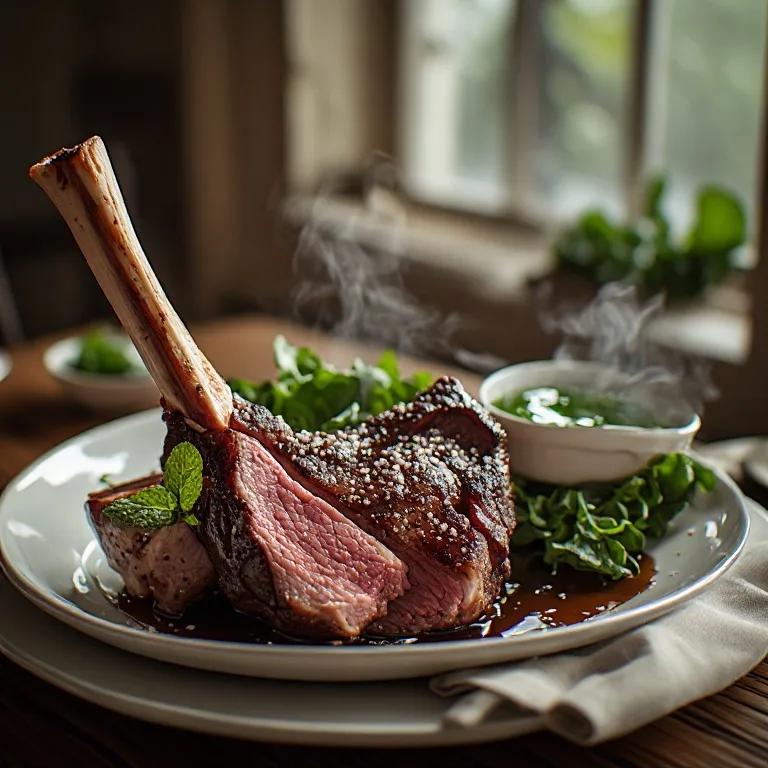
Keens Steakhouse Mutton Chop (The Famous One, Made at Home)

Keens Steakhouse Mutton Chop (The Famous One, Made at Home)
Jump to Recipe
Prep 20 min Cook 20 min Serves 2
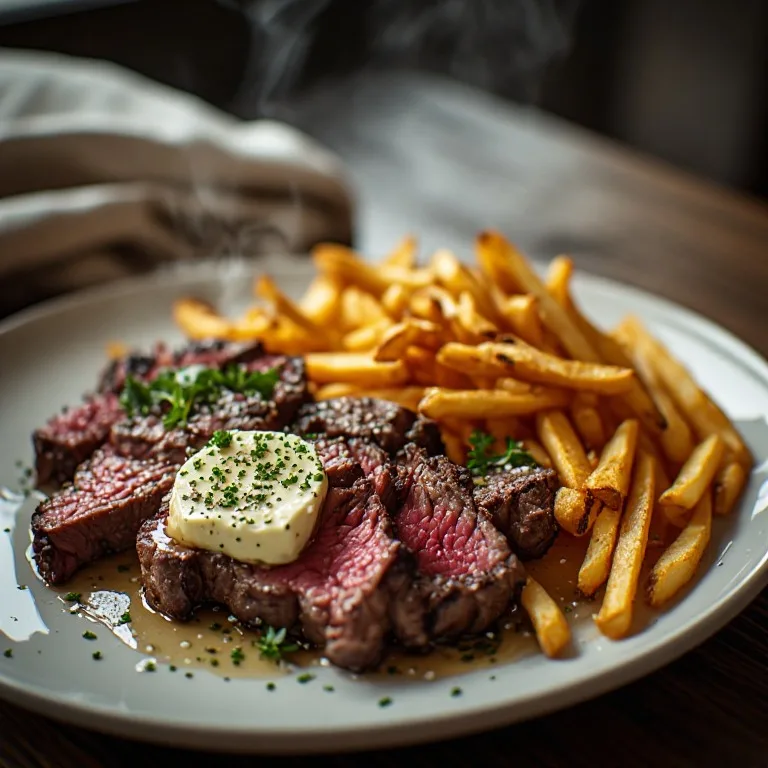
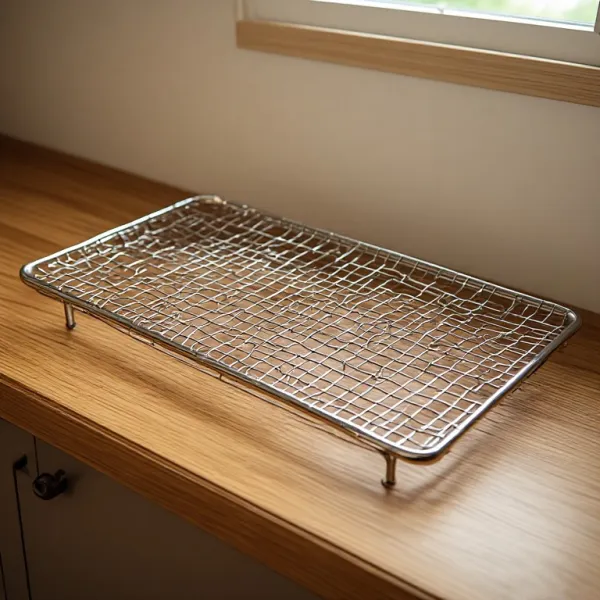
Quick answer: Twenty-four hours before cooking, generously salt a 2-inch-thick mutton loin chop (or saddle chop if you can source it) on all sides with 1 teaspoon of Diamond Crystal kosher salt per pound, set on a wire rack over a sheet pan, and refrigerate uncovered overnight. One hour before cooking, pull the chop and bring it to room temperature. Heat a large oven-safe cast-iron skillet on your highest burner for 5 full minutes until smoking. Lay the mutton chop flat in the dry, ungreased skillet and sear undisturbed for 3 minutes per side until a deep brown crust forms. Transfer the skillet to your oven under the broiler, rack positioned 4 to 5 inches from the element, and broil 5 to 7 minutes per side until an instant-read thermometer reads 130°F in the thickest part away from the bone. Rest 5 minutes. Serve with a small dish of mint jelly or a quick mint sauce: bring 1/4 cup white wine vinegar and 2 tablespoons sugar to a simmer until dissolved, remove from heat, stir in 1/4 cup of finely chopped fresh mint leaves, and let steep 10 minutes. The Keens chop is $73 at dinner (about $51 at lunch) — a single 26-ounce saddle chop. At home, a 1.5 to 2 lb mutton chop from a specialty butcher runs $25 to $45 total — less than the restaurant charges for one seat.

Keens Steakhouse Mutton Chop (The Famous One, Made at Home)

The legendary Keens Steakhouse mutton chop, made at home: sourcing true mutton (not lamb), a 24-hour salt brine, screaming-hot cast iron, and the broiler finish that has made this dish famous since 1885. The most iconic single chop in New York City.

Medium Prep: 20 min Cook: 20 min Total: 40 min2 servings ~$4.50/serving
Prep20 min
Cook20 min
Total40 min
Servings
2
At home~$4.50/serving
vs
Restaurant~$20.25/serving
You save ~78%

The Story Behind the Recipe

The legendary Keens Steakhouse mutton chop, made at home: sourcing true mutton (not lamb), a 24-hour salt brine, screaming-hot cast iron, and the broiler finish that has made this dish famous since 1885. The most iconic single chop in New York City.

Nutrition Facts

Per serving (2 servings)
Calories680
Total Fat44g
Total Carbs3g
Dietary Fiber0g
Sugars2g
Protein65g
Sodium820mg

* Estimated values based on standard recipe preparation. Actual values may vary.

Ingredients

  • The mutton chop
  • For the mint sauce (quick version, makes about 1/3 cup)
  • Optional — Keens-style creamed spinach (serves 2)

Instructions

💡
Pro tip: This recipe tastes even better the next day. The flavors need time to meld together in the fridge.
❄️
Storage: Keeps in an airtight container in the fridge for up to 2 weeks. Freezer-friendly for up to 3 months.
🎃 Free Halloween cookbook — download now The Copycat Halloween Cookbook A ready-made, photo-illustrated PDF of our best halloween copycat recipes — free to download, no building required. Pay what you want to support if you love it.

Free PDF — instant download. We'll also send new seasonal copycat recipes now and then; unsubscribe anytime. Or just download it →

Copycat Keens Steakhouse Mutton Chop (The Famous One, Made at Home)

Prep time: 20 min (plus 18–24 hours dry-brine) Cook time: 20 min Serves: 2

Keens Steakhouse at 72 West 36th Street opened in 1885 as a chophouse and theatrical club, and it has served the same mutton chop ever since — it sold its one-millionth chop back in 1935. The restaurant nearly closed in the late 1970s and was bought and restored by George Schwarz, reopening in 1981 after a three-year, $1.4 million renovation. It has changed its kitchen equipment several times and watched nearly every other Victorian-era restaurant in Manhattan disappear. The mutton chop, a 26-ounce saddle chop, has not changed.

What makes it famous is not just the age of the recipe. It is the specificity of the cut — a saddle chop from a sheep at least two years old, not a lamb — combined with the extreme heat of Keens’ commercial broilers. The result is a crust that forms in seconds under 800-degree radiant heat while the interior climbs slowly and evenly to medium. At home, you cannot replicate those temperatures. You can close most of the gap with a dry-brine, a screaming-hot cast-iron skillet, and a properly preheated broiler.

The mint sauce is structural, not decorative. British cooks have paired vinegar-and-mint with mutton for at least four centuries for the same reason bartenders pair citrus with dark spirits: the acidity cuts through the fat, making each successive bite feel as clean as the first. Do not skip it.

Why Mutton, Not Lamb

Most Americans under fifty have eaten lamb but not mutton, and many confuse the two. Lamb is from an animal slaughtered before one year old — usually at four to eight months. The meat is mild, the fat is white and light, the flavor is accessible. Mutton is from an animal that has lived at least two years. The meat is darker (more myoglobin from continued muscle use), the fat is yellow-tinged (from carotenoid accumulation in older grass-fed animals), the flavor is several times more intense.

Keens chose mutton in 1885 for flavor. Mutton holds up to high-heat cooking in a way that lamb does not — the stronger flavor survives and deepens under the broiler’s intensity rather than cooking flat. The same logic applies at home: the cast-iron sear and broiler finish that would make a lamb chop slightly aggressive make a mutton chop properly caramelized.

Sourcing is the hardest part of this recipe. Halal butcher shops are the most reliable domestic source. A butcher that handles whole animals (not just pre-cut primals) can cut a saddle chop to order if called a day ahead. Online, Heritage Foods and D’Artagnan have carried mutton at various points; availability varies by season.

The Saddle Chop vs. the Loin Chop

A saddle chop is a cross-section through both loins at once, with the backbone connecting both sides. It is the largest single chop cut from a sheep and looks like a butterfly loin chop, symmetrical around the spine. Keens serves a single saddle chop per person — it is a dramatic plating.

At home, sourcing a saddle chop requires either a whole-animal butcher or a call to a halal shop that breaks down whole sheep in-house. If you cannot find one, two thick double-cut loin chops (from one side of the loin, each at least 1.5 inches thick) give you the same flavor and cooking method, plated overlapping. The experience is the same; only the presentation changes.

The Dry-Brine

Twenty-four hours in the refrigerator, uncovered, on a wire rack with generous kosher salt. The brine serves two purposes. Salt initially draws moisture to the surface by osmosis; that moisture dissolves the salt; the brine is then slowly reabsorbed into the meat as the osmotic pressure equalizes, carrying the dissolved salt with it. This seasons the interior — not just the surface — of a thick chop. The second purpose: the uncovered time in the refrigerator dries the exterior surface, which is the single most important factor in crust formation. A wet surface steams before it sears; a dry surface sears immediately.

The Cook

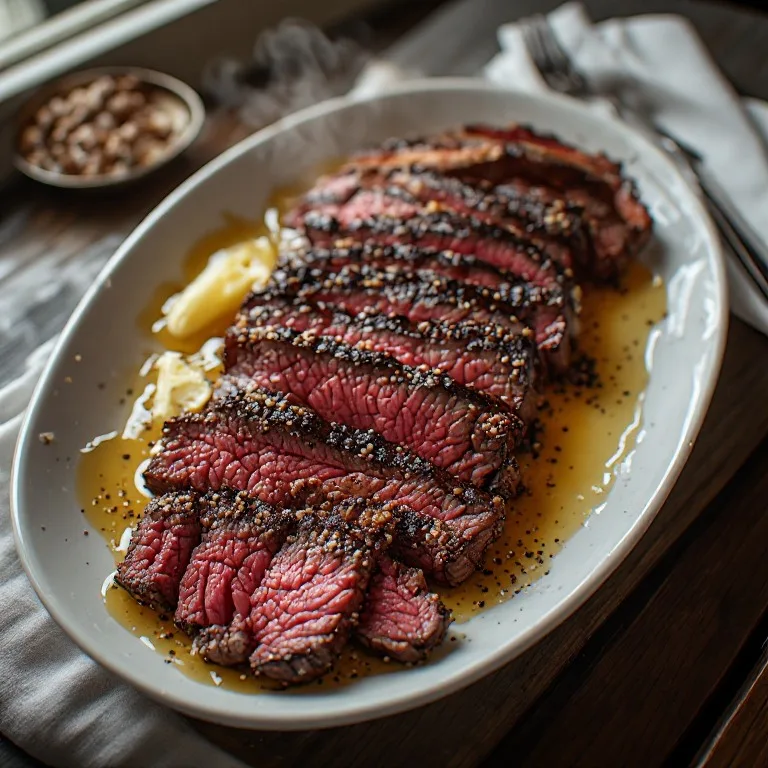
Mutton targets medium, not medium-rare. At medium-rare (130°F), mutton’s high-melting-point fat is still partially solid — waxy and unappealing. At medium (140 to 145°F), the fat has fully liquefied and basted the surrounding lean meat during cooking. Pull at 135°F; carryover heat takes you to 140°F during the five-minute rest.

The sequence is: smoking cast iron for the sear (3 minutes per side) then the broiler for the interior (5 to 7 minutes per side). The cast iron builds the crust at 600°F surface temperature; the broiler develops the top face and finishes the interior with radiant heat from above. Together they approximate what Keens’ commercial equipment does in a single step.

The Mint Sauce

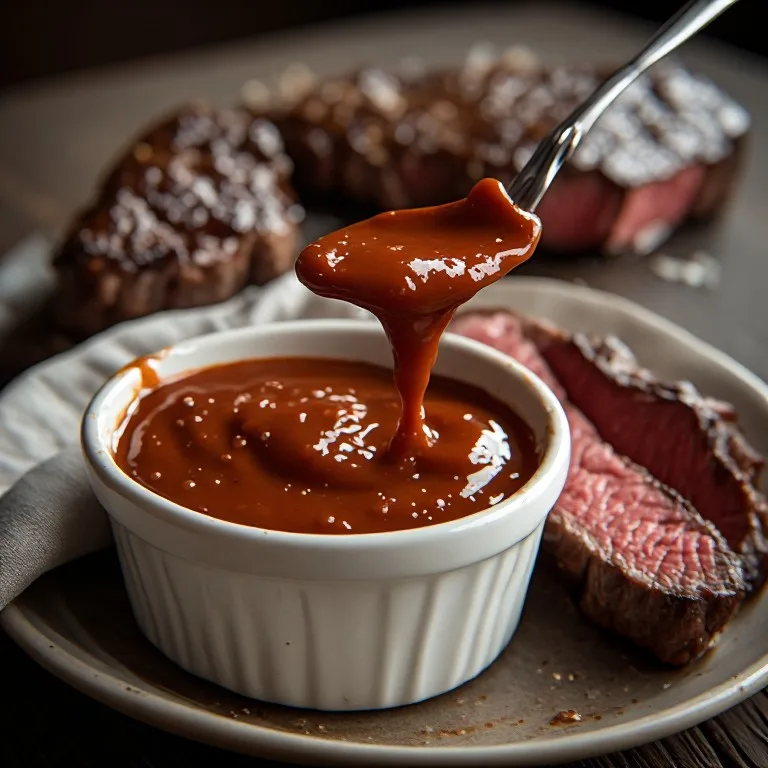
The Keens version is British-style mint sauce — vinegar-based, moderately sweet, steeped with fresh mint — not mint jelly, which is gelatin-set and much sweeter. The quick version: heat white wine vinegar with sugar, remove from heat, steep with finely chopped mint for 10 minutes. The sauce takes longer to describe than to make.

Serve it in a small dish on the side. The proportions are approximately one dip per bite of meat — not poured over the chop, not ladled. Each person calibrates to taste.
🥗

Make It Healthier

Love Keens Steakhouse Mutton Chop (The Famous One, Made at Home) but want a lighter version? Try these simple swaps:

  • ✓Mutton is inherently a richer, fattier protein than lean chicken or fish, and that fat is inseparable from the dish's character. The most practical reduction is portion size: a 1.5 lb saddle chop shared between two people as a main, with a large vegetable side, is the natural Keens portion structure. The restaurant does not serve half portions.
  • ✓The mint sauce is essentially fat-free (vinegar, sugar, herbs) and serves as the primary condiment — it provides acidity that makes each bite feel lighter, even though the meat itself is rich. Use it generously.
  • ✓Serve the creamed spinach on the side rather than as the base — the spinach provides fiber and iron in a form that is somewhat obscured by the cream. If reducing richness further, substitute 3 tablespoons of crème fraîche for the heavy cream; the sauce will be slightly thinner but still coat well.

Frequently Asked Questions

What exactly is mutton, and why is it so different from lamb?

Mutton is meat from a sheep that has lived at least one year, typically two to three years. Lamb is from animals slaughtered before one year old, often at four to eight months. The age difference creates an almost entirely different flavor and texture profile. Lamb is mild, tender, and slightly grassy — the flavor is pleasant but not particularly assertive. Mutton is deeply flavored, complex, and rich, with a minerality and intensity that comes from longer fat development and muscle use. The fat in mutton is yellower (from carotenoid accumulation in older grass-fed animals) and has a higher melting point, which means it crisps and renders differently under high heat. The intramuscular fat distribution in older sheep also differs: the marbling in mutton is more developed, contributing a richness that many people who dislike lamb's 'gamey' flavor actually find more appealing rather than less, because the flavor is deeper and more controlled rather than merely grassy. Keens has been serving mutton specifically since 1885 — not because mutton was all that was available, but because the stronger flavor holds up under the intense broiler heat that defines their cooking method. Lamb, subjected to the same heat, goes slightly flat; mutton caramelizes into something much more interesting.

What is a saddle chop, and is it the same as a loin chop?

A saddle chop is a cross-section cut through both loins simultaneously, with the backbone (spine) running down the center of the chop. When you look at a saddle chop from above, it is a symmetrical piece: loin meat on the left side of the spine, loin meat on the right, with the two sides connected by bone. It resembles a miniature T-bone from both directions at once. A loin chop is cut from a single side only — one loin, one strip of tenderloin (if from the short loin section), and one T-shaped bone. Keens' famous mutton chop is a saddle chop, which is why it is dramatically large when plated: both loins in a single piece. Saddle chops from mutton are extremely difficult to source outside of a specialized butcher who handles whole animals. For home cooks, two large double-cut mutton loin chops (each 1.5 to 2 inches thick, from a single side) are the practical substitute — you get the same flavor and cooking method, and can plate them overlapping to approximate the presentation. Some butchers who handle whole sheep (particularly halal butchers) will cut a saddle chop on request if you call ahead.

Where do I actually find mutton in the United States?

Mutton is deliberately not lamb, and most mainstream grocery stores sell only lamb. Your best options, in order of reliability: (1) Halal butcher shops — many halal markets carry mutton regularly, particularly in cities with large South Asian or Middle Eastern communities. Call ahead and specify you want mutton (mature sheep, not lamb); the distinction matters. (2) Farmers markets with sheep farmers — a farm selling lamb will sometimes have mutton available from older ewes or rams being retired from breeding; ask directly. (3) Online specialty butchers — Heritage Foods USA, D'Artagnan, and Strauss Brands have shipped mutton at various times; availability varies by season. (4) New Zealand or Australian lamb in the 1 to 1.5 lb shoulder range is technically 'lamb' by those countries' standards but is raised to an older age than American lamb; it has a more pronounced flavor that bridges toward mutton. It is not a direct substitute, but it is meaningfully closer than young domestic lamb. Expect to pay $18 to $30 per pound for specialty mutton — the Keens saddle chop is a premium product at home as well as at the restaurant.

How is Keens' cooking technique different from a standard grilled chop?

The Keens kitchen uses commercial broilers — the same equipment category as high-end steakhouses like Peter Luger — that operate at 800 to 900 degrees Fahrenheit. A home broiler tops out around 500 to 550 degrees. The additional 300 to 400 degrees of radiant heat from above creates a crust formation that is qualitatively different: faster (so the exterior chars before the interior overcooks), darker (a deeper Maillard reaction), and drier (the intense heat evaporates surface moisture almost instantly, which concentrates the sear). At home, you can close this gap significantly by searing the chop first in a screaming-hot cast-iron skillet on the stovetop and then finishing under a fully preheated home broiler — the two-step process approximates the commercial broiler's combined effect. The cast iron holds enough heat to form the crust that the commercial broiler would create in seconds; the home broiler then finishes the interior and develops the characteristic charred exterior on the top face. The key errors to avoid are starting in a pan that is not hot enough (you want the pan smoking before the meat goes in) and crowding the broiler by not preheating the element for at least 15 minutes before use.

What is the correct internal temperature for the Keens mutton chop?

Keens serves the mutton chop at medium — not medium-rare, not well-done. Medium for mutton is approximately 140 to 145 degrees Fahrenheit at the thickest point, which for a 2-inch-thick chop means pulling it from the heat at 135 degrees and letting carryover cooking bring it to 140 during the 5-minute rest. This is important for one practical reason: mutton's fat, which has a higher melting point than lamb fat, does not render adequately at medium-rare temperatures (130 degrees). At 130 degrees, mutton fat is still partially solid and waxy — texturally unpleasant. At 140 to 145 degrees, the fat has fully liquefied and pooled into the meat, producing the rich, basting effect that makes the dish satisfying. If you prefer medium-rare, cook to 125 degrees and expect the fat to be firmer on the plate; the flavor will still be excellent but the texture of the fatty portions will differ from what Keens serves. Well-done (160+) is not recommended — the long fat-rendering time dries out the lean portions.

What mint preparation does Keens use, and should I make it or buy it?

Keens serves a classic British-style mint sauce — vinegar-based, slightly sweet, steeped with fresh mint — alongside the mutton chop. This is a very old pairing: mint and mutton have been served together in British cooking for centuries, and the vinegar in the sauce cuts through the fat in the same way that citrus cuts through oily fish. The quick version at home (bring vinegar and sugar to a simmer, add mint, steep) takes under 10 minutes and is noticeably better than jarred mint jelly, which is sweeter and contains gelatin. However, jarred mint jelly (HP Sauce also makes one; many supermarkets carry Crosse & Blackwell or Knott's Berry Farm) is a perfectly acceptable shortcut — Keens serves the same basic balance of vinegar, sugar, and mint, and no one at the restaurant is making sauce from scratch that is dramatically different in character from a good commercial version. The key is not to skip the mint pairing: the acidity against the rich mutton fat is structural to the dish, not optional. A squeeze of fresh lemon over the meat when plated serves a similar purpose if you have neither.

Can I use lamb instead of mutton if I cannot find mutton?

You can make an excellent grilled loin chop with lamb using this same technique, but it will not taste like Keens' mutton chop. Lamb's flavor is milder, its fat renders at a lower temperature, and the overall character of the dish will be closer to a classic French lamb chop preparation than to the Keens experience. If using lamb, reduce the dry-brine time to 12 to 18 hours (lamb needs less time), target medium-rare (130 degrees) rather than medium, and use double-cut rib chops or thick loin chops from a domestic lamb. The cooking method — cast iron sear followed by broiler finish — is equally suited to lamb and produces an excellent result. Just go in knowing you are making a very good lamb chop in the Keens style, not the Keens mutton chop itself. The dish is delicious; it is simply a different dish. The sourcing of mutton is the irreducible step that makes the Keens experience what it is.

What are Keens' other famous dishes, and can I make them at home?

Beyond the mutton chop, Keens is known for three things: an extraordinary collection of approximately 90,000 churchwarden clay pipes hanging from every ceiling (it was originally a theatrical club where members stored their personal pipes), a deep list of American whiskeys, and their prime rib on Sundays. The prime rib uses the same commercial broiler technique as the mutton chop — a standing rib roast cooked to medium-rare and finished under intense overhead heat. Their creamed spinach (butter, heavy cream, reduction, fresh nutmeg) is a straightforward steakhouse preparation that is excellent at home. Their shrimp cocktail is served with a house cocktail sauce. Of these, the mutton chop and the prime rib are the true signatures — the rest are excellent but not unique to Keens. The creamed spinach recipe is a worthwhile project to serve alongside the mutton chop at home: melt 2 tablespoons of butter in a skillet, wilt 2 pounds of fresh spinach in batches, drain very well (press the spinach against a colander), return to the skillet, add 1/2 cup of heavy cream and a finely minced shallot, simmer to a coating consistency, and season with salt, pepper, and freshly grated nutmeg.

Love this recipe? Share it!

Free PDF: our 12 most-wanted copycat recipes — instant download.

Made it? Buy us a coffee

Every recipe here is free, with no paywalls. If this one was a hit at your table, a small tip keeps new copycats coming.

$

Keens Steakhouse is a trademark of its owner, used here only to describe the dish this recipe recreates. This is an independent copycat written in our own words — Copycat Spices is not affiliated with, endorsed by or sponsored by Keens Steakhouse.

Ratings & Reviews

—
No ratings yet

Rate this recipe

Click a star to rate

Leave a Review

0/500

CS

Copycat Spices Editorial

Researched + fact-checked. Every recipe on Copycat Spices is built from published sources — official ingredient lists, brand-published recipes, interviews and food-science references — and fact-checked before it goes live, then written as clear, step-by-step instructions for home cooks of all skill levels.

Learn more about our mission →