


Why the Cold Pan Is the Whole Technique
Most cooks heat a skillet until it shimmers before adding anything. For duck breast, that instinct produces the wrong result: the exterior of the fat cap scorches before the fat inside has time to render, leaving a layer of soft, unrendered fat between the skin and the meat — chewy, greasy, and nothing like what arrives at Frenchette.
The cold-pan method reverses the heat direction. You place the scored duck fat-side down in a cold skillet, turn the burner to medium, and let the pan warm up with the duck already in it. As the temperature rises, the fat cells at the bottom of the cap melt first. That liquid fat runs off into the pan. The cells above them render next. By the time the skin is deeply golden and crackling — about 12 minutes in — the fat cap has compressed from 3/8 inch down to about 1/8 inch, and what remains is almost all skin: thin, taut, and crackly.
Frenchette’s version gets extra help from the Moulard duck: a foie gras breed with a dramatically thicker fat cap and more deeply flavored, burgundy-red flesh than a standard Pekin breast. At home, Pekin works beautifully with the same cold-pan technique — just reduce the skin-side time to 8 to 10 minutes since the fat cap is thinner.
Making Béarnaise That Won’t Break
Béarnaise is a warm emulsion: egg yolks whisked into a stable suspension with clarified butter, flavored with a tarragon-and-shallot reduction. It is the same architecture as hollandaise, swapping lemon juice for the tarragon vinegar reduction and adding the herb.
The two moments where it fails:
Overheated yolks. If the water in your bain-marie is actively boiling, the bowl’s bottom runs too hot and the yolks begin to scramble instead of thicken smoothly. The water should be barely simmering — a few small bubbles, not a rolling boil. You should be able to hold your bare hand against the side of the bowl for 3 seconds. If you cannot, remove the bowl from the heat and let it cool slightly before continuing.
Butter added too fast. The emulsion depends on the egg yolk proteins and lecithin coating each fat droplet as butter is incorporated. If you pour in a full stream before the emulsion is established, the droplets clump instead of dispersing. Add the first tablespoon drop by drop. Once the sauce looks glossy and thick rather than separated, you can increase to a thin stream. The rest of the butter can go in faster, but never as a pour.
If the sauce breaks anyway: remove from heat immediately. In a clean bowl, whisk 1 teaspoon of cold water. Add the broken sauce in very small drops while whisking hard. Most broken béarnaises can be pulled back this way.
The Frites: Two Fries for One Crunch
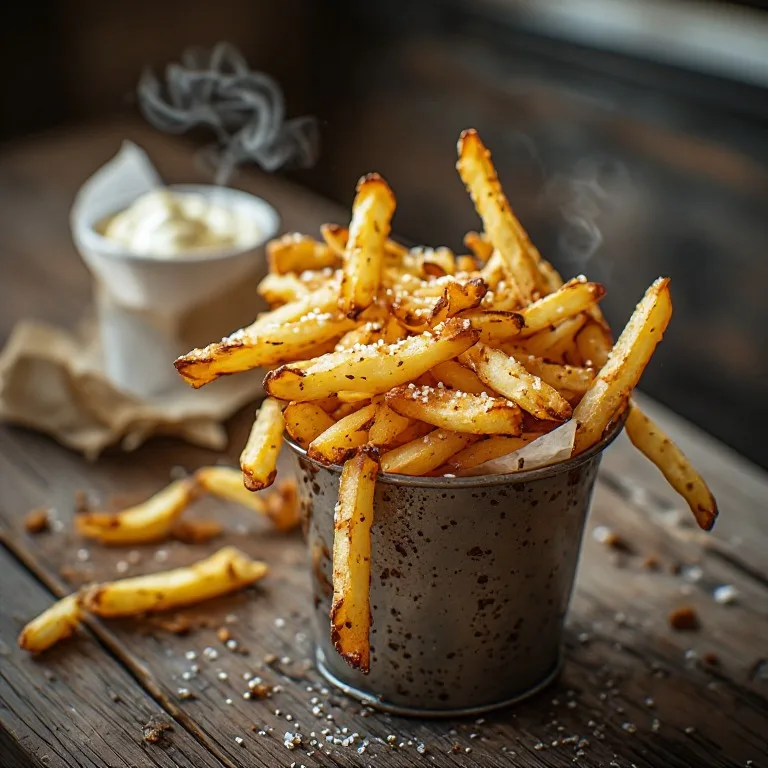
Double-frying is the reason restaurant frites stay crispy and most home-fried potatoes go limp.
The first fry (325°F, 4 to 5 minutes) cooks the potato interior through without browning the surface — it sets the starch structure inside. At this stage the frites look pale and slightly translucent. They can be held at room temperature for hours.
The second fry (375°F, 2 to 3 minutes) hits the surface at high heat after the interior is already cooked, producing rapid moisture evaporation and Maillard browning at the surface. Because the interior is already done, the second fry is entirely about texture. The result is a crispy shell over a fluffy, steam-free interior — exactly the opposite of what happens when you fry a raw potato all the way through in a single pass.
Soaking in cold water before the first fry removes surface starch that would otherwise brown prematurely in the oil and cause uneven color. Drying completely after soaking prevents oil splatter.
Putting All Three Together
The duck takes longest — 15 to 18 minutes of cooking plus 5 minutes rest. The second fry takes 3 minutes. The béarnaise takes 8 minutes once the reduction is made. The sequence:
- Make the béarnaise reduction (can be days ahead). Par-cook the frites (can be hours ahead).
- Score and season the duck, rest 20 minutes at room temperature.
- Start the duck in the cold pan. Set a bain-marie ready for the sauce.
- At the 8-minute mark of duck cooking, start whisking the béarnaise.
- When the duck finishes and starts its rest, bring the frying oil to 375°F for the second fry.
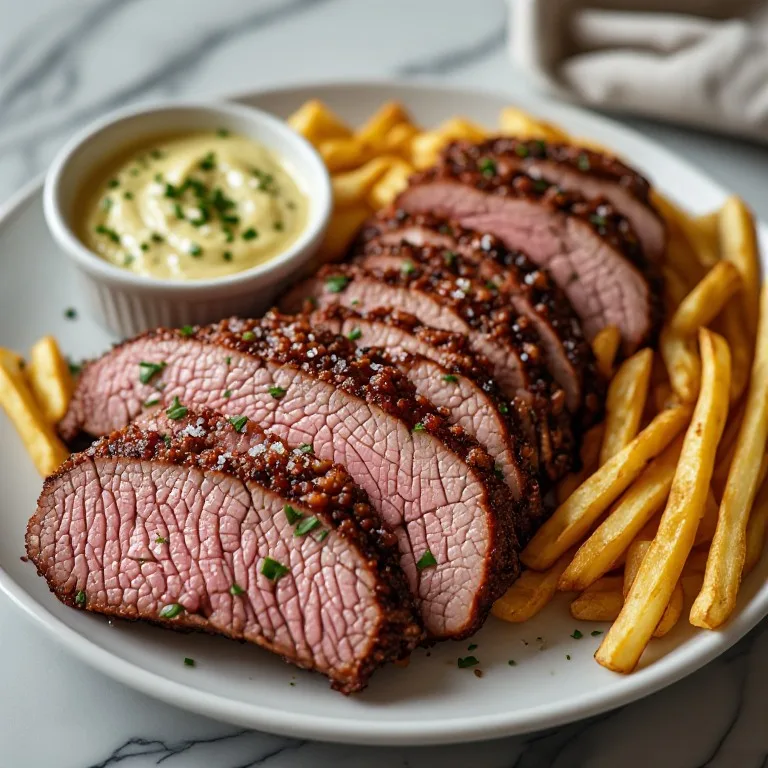
- Second-fry the frites. Slice the duck. Plate and serve immediately.
The béarnaise is the most time-sensitive component — it must stay warm. If it thickens too much on the bain-marie, whisk in a few drops of warm water to loosen it.
Frequently Asked Questions
What cut of duck does Frenchette use — Magret or Pekin? Moulard (Magret) duck breast — from a foie gras breed, significantly larger and fattier than standard Pekin. A single Moulard breast serves two. Pekin works at home and is much easier to find. Use two Pekin breasts (one per person) and reduce the skin-side rendering time to 8 to 10 minutes.
Why do you start the duck skin-side down in a cold pan? Duck’s fat cap must render from beneath before the skin crisps — a hot pan burns the surface before the fat melts. The cold-start method lets the fat render gradually from the bottom up, producing even, glass-crispy skin rather than a burnt exterior over soft unrendered fat.
My béarnaise keeps breaking. Either the yolks overheated (water too hot — barely simmering, not boiling) or the butter was added too fast (drops at first, stream once established). To rescue a broken sauce: add 1 teaspoon of cold water to a clean bowl and whisk the broken sauce in drop by drop.
What internal temperature for duck breast medium-rare? 130°F to 133°F at the thickest part of the flesh. Frenchette serves it at approximately this temperature with a 5-minute rest. The USDA recommends 165°F for poultry; Frenchette and traditional French technique treat duck breast as red meat.
What does Frenchette’s duck frites cost at the restaurant? Approximately $42 per plate as of fall 2026, at 241 W Broadway in Tribeca. At home: roughly $16 to $18 per serving using Pekin duck breasts.