


Pin It

Silver Palate Chicken Marbella (The Original Make-Ahead Dinner Party Chicken)

Silver Palate Chicken Marbella (The Original Make-Ahead Dinner Party Chicken)
Jump to Recipe
Prep 20 min Cook 55 min Serves 6
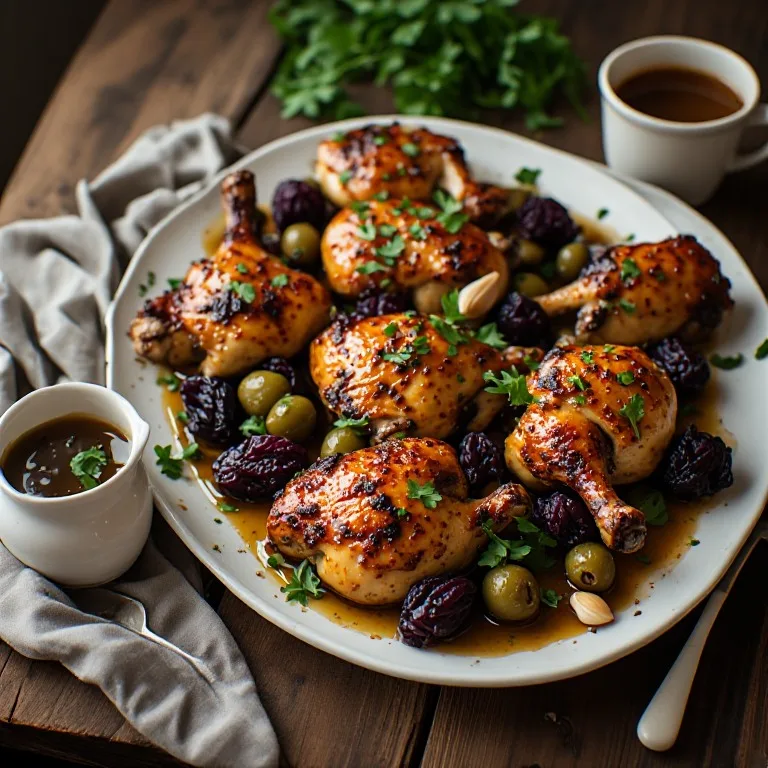
Quick answer: Combine ½ cup olive oil, ½ cup red wine vinegar, 10 minced garlic cloves, 1 tablespoon dried oregano, ¼ cup capers with 2 tablespoons of their brine, 12 pitted prunes, 16 pitted green olives, 3 bay leaves, and 1½ teaspoons kosher salt in a large bowl or zip-top bag. Add 3½ to 4 lbs of bone-in, skin-on chicken pieces (thighs and drumsticks work best), turn to coat thoroughly, and refrigerate overnight or up to 24 hours. When ready to cook, preheat the oven to 350°F. Arrange the chicken skin-side up in a single layer in a large roasting pan or 9x13 baking dish. Pour the marinade and all its contents over the top. Scatter ½ cup packed brown sugar evenly over the chicken, then pour ½ cup dry white wine around the base of the pan (not over the chicken, so you don't wash off the sugar). Roast uncovered at 350°F for 50 to 55 minutes, basting two or three times with the pan juices, until the skin is deep golden brown and an instant-read thermometer inserted into the thickest part of a thigh (away from the bone) reads 165°F. Transfer the chicken to a platter and spoon the prunes, olives, and capers over the top. Pour the pan juices into a small bowl and serve alongside as a sauce. Scatter 2 tablespoons of fresh flat-leaf parsley over the top and serve immediately — or let cool to room temperature and serve within 2 hours; it is excellent both ways.

Shop the tools

Gear matched to this recipe. These are Amazon affiliate links — we may earn a small commission if you buy, at no extra cost to you.

As an Amazon Associate, Copycat Spices earns from qualifying purchases. Product images are generic illustrations, not the exact item listed.

Silver Palate Chicken Marbella (The Original Make-Ahead Dinner Party Chicken)

Chicken Marbella from The Silver Palate Cookbook — the 1982 recipe by Sheila Lukins and Julee Rosso that made sweet-savory dinner-party cooking mainstream. Bone-in chicken marinated overnight in olive oil, red wine vinegar, garlic, dried oregano, capers, green olives, and prunes, then roasted with white wine and brown sugar until the skin caramelizes and the pan juices reduce into a glossy, intensely flavored sauce.

Easy Prep: 20 min Cook: 55 min Total: 1h 15m6 servings ~$4.50/serving
Prep20 min
Cook55 min
Total1h 15m
Servings
6
At home~$4.50/serving
vs
Restaurant~$20.25/serving
You save ~78%

The Story Behind the Recipe

The Silver Palate opened at 274 Columbus Avenue on New York's Upper West Side in July 1977, when Sheila Lukins and Julee Rosso turned a small corner retail space into the specialty food shop that defined a generation of American home cooking. The shop sold house-made prepared foods — roasted chickens, pâtés, salads, cakes, vinaigrettes — to the neighborhood's professional class, people who had both money and ambitions but very little time. When Lukins and Rosso published The Silver Palate Cookbook in 1982 with Workman Publishing, they were simply writing down what they already cooked. The book sold millions of copies, spent years on the New York Times bestseller list, and is counted among the best-selling cookbooks of all time. The shop itself closed in 1993, but the recipes lived on.

Chicken Marbella is the cookbook's most celebrated recipe — a combination so counterintuitive it sounds wrong until you taste it: prunes, green olives, capers, garlic, and red wine vinegar in the same marinade, finished with brown sugar and white wine. The sweet-savory-briny contrast was unlike anything most American home cooks had encountered in 1982, and it was so reliably delicious, so easy to make a day ahead, and so forgiving to reheat and serve to a crowd that it spread from Upper West Side dinner parties to church potlucks to hotel conference catering. The dish has had multiple TikTok and food-media revivals; it remains one of the most-searched recipes in America every November and December. A batch serving six costs roughly $20 to $28 in ingredients.

Nutrition Facts

Per serving (6 servings)
Calories465
Total Fat24g
Total Carbs22g
Dietary Fiber2g
Sugars16g
Protein38g
Sodium680mg

* Estimated values based on standard recipe preparation. Actual values may vary.

Ingredients

  • For the marinade
  • For the chicken
  • For roasting
  • For serving

Instructions

💡
Pro tip: This recipe tastes even better the next day. The flavors need time to meld together in the fridge.
❄️
Storage: Keeps in an airtight container in the fridge for up to 2 weeks. Freezer-friendly for up to 3 months.
🦃 Free Thanksgiving cookbook — download now The Copycat Thanksgiving Cookbook A ready-made, photo-illustrated PDF of our best thanksgiving copycat recipes — free to download, no building required. Pay what you want to support if you love it.

Free PDF — instant download. We'll also send new seasonal copycat recipes now and then; unsubscribe anytime. Or just download it →

Chicken Marbella is the recipe that made The Silver Palate Cookbook famous — the sweet-savory dinner party chicken that spread from Upper West Side tables to homes across the country after Sheila Lukins and Julee Rosso published it in 1982. Bone-in chicken marinates overnight in a combination of olive oil, red wine vinegar, garlic, dried oregano, capers, green olives, and prunes. When it goes into the oven, brown sugar and white wine join the marinade in the pan and reduce to a glossy, almost-jammy sauce as the skin caramelizes. The result is simultaneously rich and bright, savory and sweet — unlike anything most people expect from a recipe this easy. It serves six comfortably, can be made a day ahead, and reheats beautifully.

The Overnight Marinade: Why Each Ingredient Matters

The marinade looks unconventional because it is unconventional. In 1982, combining prunes and olives and capers in a single chicken dish was genuinely unusual for an American home-cooking audience.

Olive oil and red wine vinegar form the base, contributing richness and acidity. The vinegar is strong enough to gently begin tenderizing the surface of the chicken, which helps the aromatics penetrate.

Garlic and dried oregano are the aromatic spine of the dish. Dried oregano (rather than fresh) holds up through a long marinade without turning bitter and gives the final dish that distinctly Mediterranean character.

Capers and their brine provide concentrated salt and a sharp, briny counterpoint to everything sweet. The brine is as important as the capers themselves — do not drain it away.

Green olives (Castelvetrano or Manzanilla) add a firm, buttery brine note. They soften slightly during roasting and absorb the pan juices.

Prunes are the ingredient that surprises first-timers and converts them permanently. After spending 8 to 24 hours in the garlic-vinegar marinade and an hour at 350°F, dried plums do not taste like prunes. They become dense, jammy, and almost savory — soaking up the pan juices and providing exactly the kind of round sweetness that makes the brine-forward flavors less sharp.

Brown sugar and white wine are added at the roasting stage, not the marinating stage. The brown sugar settles onto the skin and caramelizes as the chicken roasts, producing the deep amber color and sticky glaze that makes this dish visually striking. The wine loosens the fond from the bottom of the pan, thins the marinade into a pourable sauce, and adds brightness.

Make-Ahead Notes

Chicken Marbella improves when made 24 hours ahead. Cook it completely, cool, and refrigerate in the pan juices. The prunes and olives continue to absorb the sauce. Reheat covered at 325°F for 20 to 25 minutes, then uncover for 5 minutes to re-crisp the skin. The dish is also excellent at room temperature, which makes it a natural choice for a buffet or a party where timing is unpredictable.
🥗

Make It Healthier

Love Silver Palate Chicken Marbella (The Original Make-Ahead Dinner Party Chicken) but want a lighter version? Try these simple swaps:

  • ✓Use skinless bone-in thighs and trim any visible fat before marinating — saves about 70 calories per serving with minimal flavor loss, since the overnight marinade penetrates the meat.
  • ✓Cut the brown sugar from ½ cup to 3 tablespoons — the skin still caramelizes, the pan juices still reduce to a glossy sauce, and you lose roughly 30 calories per serving.
  • ✓Swap the prunes for dried apricots if you want a brighter, more tart sweetness with slightly less natural sugar.
  • ✓Serve over cauliflower rice or alongside a large bitter green salad to balance the sweetness in the pan sauce without adding more starch.

Frequently Asked Questions

Do I really have to marinate overnight, or can I shorten it?

You can get away with 4 to 6 hours, but overnight (8 to 24 hours) is meaningfully better. The marinade contains enough acid from the red wine vinegar and the olive brine to begin gently breaking down the surface of the chicken, which helps the garlic and herb flavors penetrate rather than just coat the exterior. After 24 hours the benefit levels off, and beyond 48 hours the acid can make the outer layer of meat slightly mushy — so overnight is both the minimum and the sweet spot. If you're genuinely short on time, marinate on the counter for 30 to 45 minutes while you preheat the oven; the surface flavor will be there even if the depth isn't.

What chicken pieces work best, and can I use boneless?

Bone-in, skin-on thighs and drumsticks are ideal: the bones add flavor to the pan juices, the skin crisps and caramelizes under the brown sugar, and the dark meat stays moist through the full 50-minute roast without drying out. Bone-in breasts also work but benefit from a slightly shorter roast time (check at 45 minutes) since white meat dries faster. Boneless, skinless thighs are a reasonable substitute — reduce the oven time to 35 to 40 minutes — but you lose the caramelized skin, which is one of the dish's best features. A whole cut-up chicken works well too. Avoid boneless, skinless breasts: they turn dry and bland in this preparation.

What is Chicken Marbella named after?

Marbella is a resort city on the Costa del Sol in southern Spain, known for its Mediterranean climate and the region's cooking — olives, capers, and cured meats are all hallmarks of Andalusian cuisine. Lukins and Rosso named the dish for that flavor profile: the olive-caper-garlic combination is rooted in the food of southern Spain and North Africa, even though the recipe itself was developed in a New York kitchen. There is no specific restaurant in Marbella that the dish is traced to.

Can I make Chicken Marbella ahead, and how do I reheat it?

Yes — it is one of the best make-ahead main dishes in American home cooking. Cook it completely, let it cool, and refrigerate in the pan juices for up to 2 days. Reheat covered with foil at 325°F for 20 to 25 minutes (or until the internal temperature reaches 165°F again), then uncover for the last 5 minutes to re-crisp the skin. The dish also tastes excellent at room temperature — many hosts serve it that way at parties to avoid last-minute heating. The overnight marinade and the richness of the pan juices protect the chicken from drying out during reheating in a way that most simply roasted chickens do not.

The prunes sound wrong to me — will the dish actually taste good?

This is the question every first-time maker asks. The prunes are the secret. They don't taste like prunes when roasted with garlic, vinegar, and olive brine — they soften to a jammy, almost savory-sweet bite that balances the sharp saltiness of the capers and olives. If you're skeptical, taste a prune after it has spent an hour in the marinade, before cooking: it is already transformed. The combination of prunes + olives + capers + brown sugar is what makes this dish different from every other roast chicken; any one of those components alone would be unremarkable. Together, they produce a pan sauce with unusual depth. This is the recipe that introduced many American home cooks to sweet-savory cooking in 1982 and is still the best argument for it.

What should I serve with Chicken Marbella?

The original Silver Palate Cookbook suggests serving it over white rice, which is still the most common pairing — the rice absorbs the sweet-savory-briny pan juices beautifully. Egg noodles and orzo work just as well. For vegetables, a simple bitter green salad (arugula, endive, or watercress) with a light lemon vinaigrette provides exactly the right contrast to the rich pan sauce. Roasted potatoes are excellent alongside. The dish is substantial enough on its own that you only need one starchy side and one fresh green — do not over-accessorize.

What is The Silver Palate Cookbook and why is it famous?

The Silver Palate Cookbook was published in 1982 by Workman Publishing and written by Sheila Lukins and Julee Rosso, who ran a specialty food shop of the same name at 274 Columbus Avenue on Manhattan's Upper West Side from 1977 to 1993. The book sold millions of copies, became a long-running New York Times bestseller, ranks among the best-selling cookbooks of all time, and influenced an entire generation of American home cooks — encouraging them to cook in a more generous, ingredient-forward way that felt sophisticated without requiring classical training. It introduced many American kitchens to sun-dried tomatoes, fresh herbs in vinaigrettes, Mediterranean ingredients, and the style of cooking associated with upscale 1980s New York. Chicken Marbella is the most famous recipe from the book; it appears in virtually every retrospective of the most important American recipes of the 20th century.

Love this recipe? Share it!

Free PDF: our 12 most-wanted copycat recipes — instant download.

Made it? Buy us a coffee

Every recipe here is free, with no paywalls. If this one was a hit at your table, a small tip keeps new copycats coming.

$

The Silver Palate is a trademark of its owner, used here only to describe the dish this recipe recreates. This is an independent copycat written in our own words — Copycat Spices is not affiliated with, endorsed by or sponsored by The Silver Palate.

Ratings & Reviews

—
No ratings yet

Rate this recipe

Click a star to rate

Leave a Review

0/500

CS

Copycat Spices Editorial

Researched + fact-checked. Every recipe on Copycat Spices is built from published sources — official ingredient lists, brand-published recipes, interviews and food-science references — and fact-checked before it goes live, then written as clear, step-by-step instructions for home cooks of all skill levels.

Learn more about our mission →