

Pin It

Bouchon Bistro Macaroni au Gratin (The French Mac and Cheese)

Bouchon Bistro Macaroni au Gratin (The French Mac and Cheese)
Jump to Recipe
Prep 20 min Cook 50 min Serves 8 (side dish)
Quick answer: This is the recipe Saveur published from Thomas Keller's Bouchon Bistro — a French mornay-based mac and cheese his staff makes for his annual Yountville Thanksgiving dinner for veterans. The two-part onion technique is what separates it from every other version: half the onion is minced and cooked into the roux (it disappears into the béchamel, adding depth without texture); half is studded with 6 whole cloves and steeped in the milk with two bay leaves (it infuses a quiet spice warmth into the sauce base). Cook 1 lb of elbow macaroni al dente and drain. Build the roux: melt 12 tbsp butter over medium heat, add half a minced onion and cook until soft, then add 1 cup flour and cook 2 minutes until the roux smells faintly nutty. Gradually whisk in 8 cups of the clove-steeped strained milk. Simmer 10 minutes until thick. Remove from heat and stir in 1 lb (about 5 cups) of freshly grated Comté until smooth; season with nutmeg, salt, and white pepper. Combine pasta and sauce, pour into a buttered gratin dish, top with buttered breadcrumbs, and bake at 375°F for 40–45 minutes until golden and bubbling.

Shop the tools

Gear matched to this recipe. These are Amazon affiliate links — we may earn a small commission if you buy, at no extra cost to you.

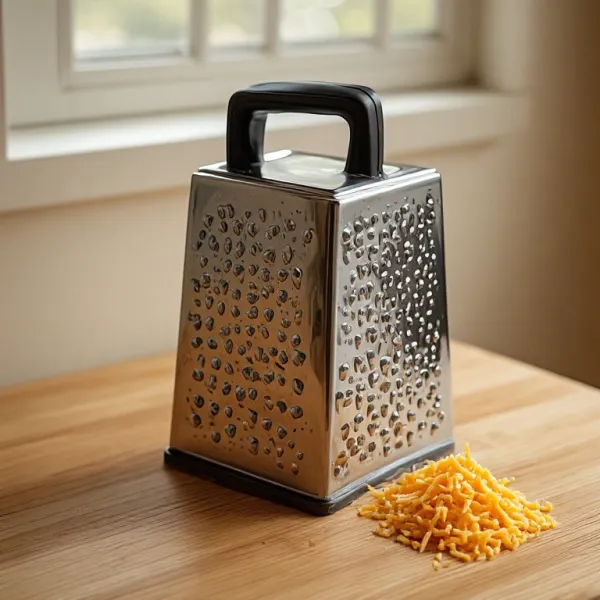
As an Amazon Associate, Copycat Spices earns from qualifying purchases. Product images are generic illustrations, not the exact item listed.

Bouchon Bistro Macaroni au Gratin (The French Mac and Cheese)

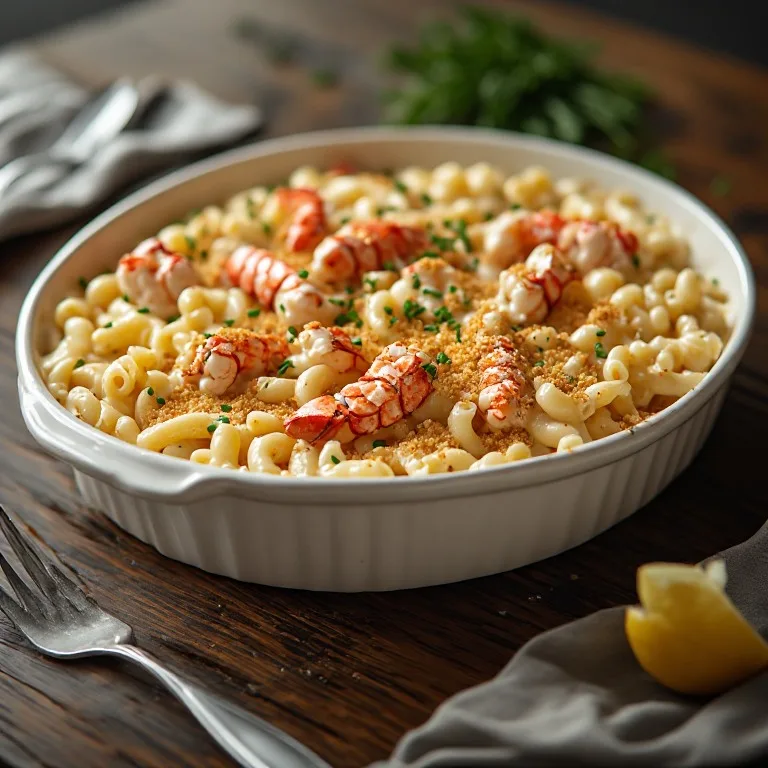
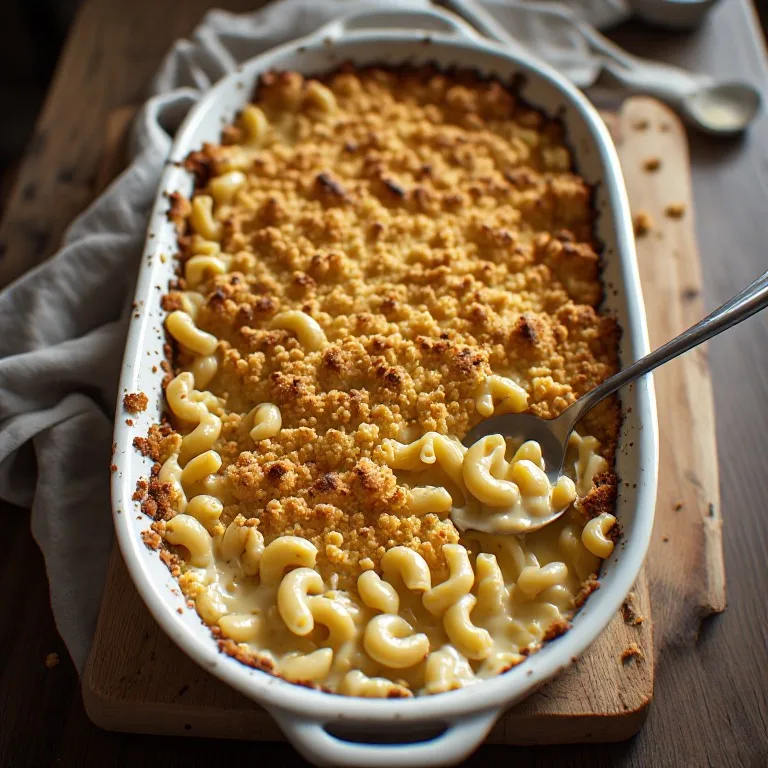
Thomas Keller's Bouchon Bistro macaroni au gratin at home — the dish from Saveur's Thanksgiving veterans story: a clove-and-bay infused béchamel with minced onion cooked into the roux, finished with Comté and a golden breadcrumb crust. The technique that explains the gap between French and American mac and cheese. Serves 6–8 as a Thanksgiving side.

Intermediate Prep: 20 min Cook: 50 min Total: 1h 10m8 (side dish) servings ~$4.50/serving
Prep20 min
Cook50 min
Total1h 10m
Servings
8
At home~$4.50/serving
vs
Restaurant~$20.25/serving
You save ~78%

The Story Behind the Recipe

Thomas Keller opened Bouchon Bistro in Yountville, California in 1998, directly across from The French Laundry, as a deliberately casual counterpart — a traditional Lyonnaise bouchon (a workers' tavern) where simple food is executed with the same precision as his multi-course tasting menus. Yountville is a small town with deep military ties; Keller has written that former servicemen make up more than a third of its roughly 3,000 residents. When The Pathway Home — a recovery program in town for veterans of the Iraq and Afghanistan wars — asked Keller and his staff to cook a Thanksgiving dinner for its residents, they said yes, and the meal became an annual tradition. Keller's own father was a Marine, which gave the gesture added resonance. Saveur documented the dinner in a 2014 essay, "Holiday for the Heroes," and later ran a companion piece, "We Can't Stop Thinking About Thomas Keller's Mac and Cheese." The recipe comes from the Bouchon cookbook. A single side portion at Bouchon Yountville runs roughly $18–22; the entire recipe at home serves eight for about that same $18–22 in ingredients total — a few dollars a serving.

The gap between this and American mac and cheese is the sauce architecture. American versions use cheddar — sometimes Velveeta or cream cheese for stability — producing a sharp, saucy coating. Keller's version builds a proper French mornay: béchamel made from a clove-steeped aromatic milk, with half a minced onion cooked directly into the roux so it dissolves completely. The cheese is Comté — an aged French Alpine mountain cheese with a nutty, slightly crystalline flavor that melts seamlessly without the greasy separation cheddar produces at high heat. The result is a sauce that is simultaneously lighter and more complex than American mac: it coats the pasta rather than drowning it. The breadcrumb crust bakes to a deep amber rather than a pale golden, because the French technique demands it be genuinely browned, not merely warmed.

Nutrition Facts

Per serving (8 (side dish) servings)
Calories865
Total Fat49g
Total Carbs74g
Dietary Fiber2g
Sugars11g
Protein32g
Sodium900mg

* Estimated values based on standard recipe preparation. Actual values may vary.

Ingredients

  • For the infused milk
  • For the béchamel and mornay
  • For the gratin

Instructions

💡
Pro tip: This recipe tastes even better the next day. The flavors need time to meld together in the fridge.
❄️
Storage: Keeps in an airtight container in the fridge for up to 2 weeks. Freezer-friendly for up to 3 months.
🦃 Free Thanksgiving cookbook — download now The Copycat Thanksgiving Cookbook A ready-made, photo-illustrated PDF of our best thanksgiving copycat recipes — free to download, no building required. Pay what you want to support if you love it.

Free PDF — instant download. We'll also send new seasonal copycat recipes now and then; unsubscribe anytime. Or just download it →

Bouchon Bistro Macaroni au Gratin (The French Mac and Cheese)

Prep time: 20 min Cook time: 50 min Servings: 8 (side dish) Difficulty: Intermediate

This is the recipe Thomas Keller’s staff makes for his annual Yountville Thanksgiving dinner for veterans — and the one Saveur ran twice because they could not stop thinking about it. It comes from the Bouchon cookbook and the technique is different enough from American mac and cheese that it deserves its own category: a French mornay-based gratin built on clove-infused aromatic milk, with Comté as the cheese and a genuine breadcrumb crust baked to deep amber.

The Two-Onion Technique

Half the onion is minced and cooked directly into the roux — it dissolves completely into the béchamel, adding a savory base depth you cannot identify as onion but that plain béchamel lacks. The other half is studded with whole cloves and steeped in the milk, which transfers the quiet warmth of the cloves into the sauce base. Neither technique alone does both jobs. Together, they are the detail that makes a restaurant béchamel taste different from a home one.

The Cheese

Comté is the right cheese here: an aged French Alpine mountain cheese that melts without the greasy separation American cheddar produces at high oven heat. Gruyère is the closest substitute and works nearly identically. Do not use pre-shredded cheese of either type — the anti-caking starch makes the mornay grainy. Buy a block and grate it fresh.

The Crust

Bake until the crust is golden and the sauce bubbles at the edges — Keller’s benchmark is “golden and bubbly,” and a deep amber crust beats a pale one. Pale crumbs usually mean the gratin came out early, before the top crisped and the sauce finished setting underneath. Give it the full 40–45 minutes and judge by color, not the clock; if the crumbs darken too fast, tent loosely with foil.
🥗

Make It Healthier

Love Bouchon Bistro Macaroni au Gratin (The French Mac and Cheese) but want a lighter version? Try these simple swaps:

  • ✓Use 2% milk in place of whole milk — the sauce is marginally thinner but still holds well; saves roughly 70 calories per serving with no meaningful change to the finished dish.
  • ✓Reduce the Comté to 12 oz (instead of the full pound) and add 1 tsp Dijon mustard to the mornay sauce when removing from heat — mustard amplifies the perceived sharpness so the sauce tastes fully cheesy with 25% less actual cheese.
  • ✓Serve as a main course with a large bitter greens salad (arugula or frisée, lemon + olive oil) rather than as a side — this cuts the portions naturally and the greens' bitterness cuts the sauce's richness in a way that makes a smaller portion feel complete.
  • ✓Make it for 10 people instead of 8 by adding an extra 4 oz of cooked macaroni to the recipe as written — the sauce is generous enough to stretch, and each serving drops to roughly 730 calories.

Frequently Asked Questions

What makes Bouchon macaroni au gratin different from American mac and cheese?

The sauce is entirely different. American mac uses cheddar (or Velveeta/cream cheese) to build a sharp, saucy coating. Bouchon's uses a French mornay — a béchamel made from clove-steeped aromatic milk, with minced onion cooked into the roux itself (it disappears completely, adding depth without texture). The cheese is Comté, an aged French Alpine mountain cheese that melts without the greasiness cheddar develops at high oven heat. The result is simultaneously lighter and more complex: the sauce coats the pasta rather than drowning it, and the finished dish has a layered, nutty flavor that does not taste like any American mac and cheese you have made before.

What is Comté and can I substitute something else?

Comté is an aged French Alpine mountain cheese, produced in the Jura Massif region and aged 4–18 months — the flavor is nutty, slightly sweet, and becomes more crystalline with age. It melts cleanly without separation, which is why it is the right cheese for mornay. Gruyère is the closest substitute and works nearly identically (same aging method, similar flavor). Fontina is the other substitute Saveur lists — milder and a touch moister, but it melts beautifully. Beaufort, another French Alpine cheese, is excellent if you can find it. What does NOT work: cheddar (breaks the mornay style, wrong flavor), any pre-shredded cheese (anti-caking starch makes the sauce grainy), or fresh mozzarella (too much water). If you can only find Gruyère or fontina, use it in equal amounts — the technique and result are essentially the same.

Why does this recipe use both minced onion in the roux and a clove-studded onion in the milk?

They do different jobs. The minced onion goes into the roux (the butter-flour base) and cooks with it until soft — the goal is to disappear into the béchamel. It contributes a savory base depth that you cannot identify as onion but that plain béchamel lacks. The clove-studded onion half is steeped in the milk and removed before the milk is added to the roux — it transfers the warm, quiet spice character of the whole cloves into the milk without any sharpness. Neither technique alone does both jobs. Together, they are what distinguishes a restaurant béchamel from a home béchamel.

Can I make this ahead for Thanksgiving?

Yes — the full gratin can be assembled up to 48 hours in advance. Complete the recipe through pouring the pasta and sauce into the buttered gratin dish; cover tightly with plastic wrap; refrigerate. Do NOT add the breadcrumb topping until the moment before baking — crumbs added ahead turn soggy. When ready to bake, pull the gratin from the refrigerator 30 minutes ahead so it comes closer to room temperature. Bake covered loosely with foil for the first 20 minutes (to bring the cold interior up to temperature without scorching the surface), then uncover for 20–25 minutes more to brown the crust. This is how Keller's kitchen prepares it for volume Thanksgiving service.

The recipe makes a very large amount. Can I halve it?

Yes — this recipe scales well. Halve every ingredient exactly and use an 8×8-inch or 9×9-inch baking dish instead of 9×13. Reduce the baking time to 30–35 minutes and watch the crust carefully. At half scale the recipe serves 4 generously as a side or 2–3 as a main course. For the sauce, note that the roux-to-milk ratio is important: do not halve the butter and flour separately unless you halve the milk proportionally. The safest approach is to measure all ingredients before starting and keep the ratios exactly as written at half scale.

My mornay sauce turned grainy. What went wrong?

Grainy mornay has one of three causes: (1) the cheese was added while the sauce was still on the heat — mornay requires removing the pan from heat completely before stirring in the cheese; (2) pre-shredded cheese was used (anti-caking starch interferes with melting — always grate blocks fresh); (3) the béchamel was not fully cooked before adding cheese — the sauce needs a full 10-minute simmer after all the milk is incorporated so the starch gelatinizes completely and can hold the emulsion. Recovery: add a splash of cold whole milk and whisk vigorously off the heat. This often restores a just-broken sauce.

What temperature and time for the bake?

375°F for 40–45 minutes is what Keller's Bouchon cookbook specifies. The key indicator is not time but color: the breadcrumb crust should be a deep amber-brown, not pale golden — the difference between properly browned and merely heated. The sauce should be visibly bubbling at the edges. If the crumbs darken before the full time is up, tent loosely with foil. A wooden skewer inserted into the center should come out steaming hot. Rest 5–10 minutes before serving so the sauce sets slightly and portions cleanly.

Is this the recipe Thomas Keller makes for veterans at Thanksgiving?

Yes. The Pathway Home — a recovery program in Yountville, California for veterans of the Iraq and Afghanistan wars — asked Keller and his Bouchon Bistro staff to cook a Thanksgiving dinner for its residents, and it became an annual tradition; Keller has noted that former servicemen make up more than a third of Yountville's roughly 3,000 residents. The macaroni au gratin is a fixture of that meal. Saveur documented the tradition in a 2014 essay titled 'Holiday for the Heroes' and published Keller's recipe from the Bouchon cookbook.

Love this recipe? Share it!

Free PDF: our 12 most-wanted copycat recipes — instant download.

Made it? Buy us a coffee

Every recipe here is free, with no paywalls. If this one was a hit at your table, a small tip keeps new copycats coming.

$

Ratings & Reviews

—
No ratings yet

Rate this recipe

Click a star to rate

Leave a Review

0/500

CS

Copycat Spices Editorial

Researched + fact-checked. Every recipe on Copycat Spices is built from published sources — official ingredient lists, brand-published recipes, interviews and food-science references — and fact-checked before it goes live, then written as clear, step-by-step instructions for home cooks of all skill levels.

Learn more about our mission →