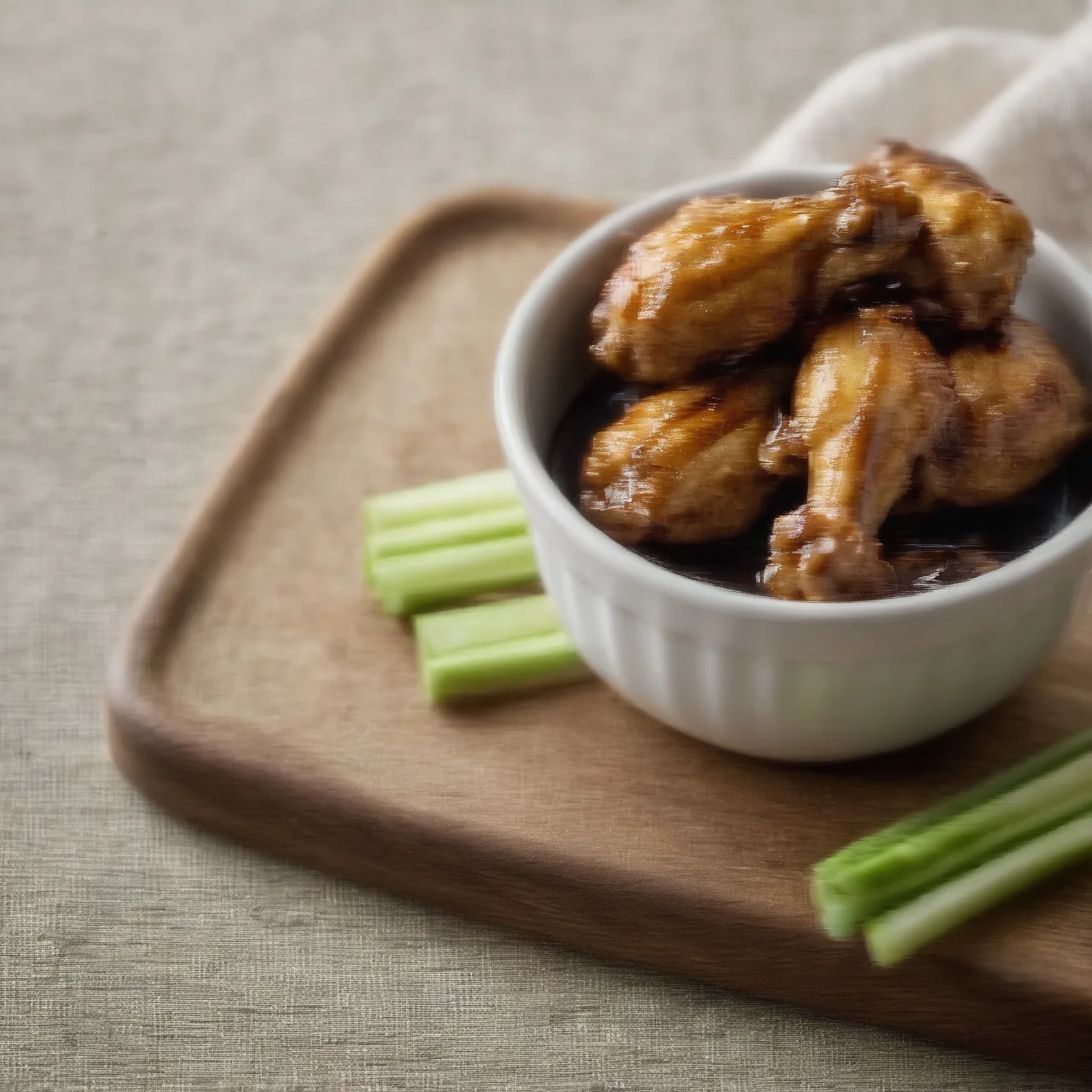
Copycat Buffalo Wild Wings Honey BBQ Sauce
Buffalo Wild Wings Honey BBQ is the chain’s most-ordered no-heat wing sauce — and it’s not hard to understand why. While most of BWW’s menu is built around escalating heat levels, Honey BBQ sits at the zero end of their scale, delivering sweet-smoky flavor without any burn. It’s what people order when they want wings but aren’t interested in heat, and it’s what parents order for kids who want to share wings at the table.
What sets it apart from generic BBQ sauce is the honey-and-molasses combination. Most commercial BBQ sauces use honey as a flavoring note — maybe a tablespoon in a full batch — and rely on granulated sugar or brown sugar for the main sweetness. BWW’s version uses honey and unsulphured molasses as co-leads, which produces a distinctly deep-sweet taste and a thicker, glossier glaze that clings to wings differently than a tomato-dominant BBQ sauce.
Making it at home takes 15 minutes and about $3 in ingredients — less than the cost of a single wing order. For the rest of the Buffalo Wild Wings sauce lineup, see the Asian Zing, Parmesan Garlic, Mango Habanero, and Blazin’ Knockout recipes.
The No-Heat Sauces at BWW
BWW’s full heat-scale breakdown puts Honey BBQ at the bottom (intentionally):
| Sauce | Heat Level | Style |
|---|---|---|
| Honey BBQ | 0 / no heat | Sweet, smoky, honey-forward BBQ glaze |
| Teriyaki | 0 / no heat | Sweet, soy-forward, Japanese-style |
| Parmesan Garlic | 0 / no heat | Savory, creamy, cheese-and-herb |
| Mild | Low | Butter-forward cayenne buffalo |
| Medium | Medium-low | Classic cayenne-vinegar buffalo |
| Wild | Medium | Hot-sauce-forward, sharper burn |
| Nashville Hot | Medium-high | Dry cayenne crust, vinegar finish |
| Blazin’ Knockout | Extreme | Nine peppers including superhots |
Honey BBQ is the sweetest, thickest sauce on the menu. It’s the correct choice if you want wings without any heat build at all.
Why Honey and Molasses Are Both Required
Most BBQ sauces are built on a ketchup-vinegar base with granulated sugar or a tablespoon of honey for sweetness. BWW Honey BBQ uses a different structure: honey and molasses as co-leads, with ketchup providing body rather than carrying the sweetness. This is the most common point where home versions fall short — they use brown sugar (which is just granulated sugar with a small amount of molasses added back) instead of real molasses, and the flavor reads as sweet-generic rather than the deep, specific sweetness that makes Honey BBQ recognizable.
Unsulphured molasses (Grandma’s, Brer Rabbit) is the correct ingredient. Blackstrap molasses — while easy to find — is significantly more bitter and will produce a sauce that tastes medicinal, not caramel-sweet. Regular dark or “original” molasses is what you want.
The liquid smoke is the second key piece. Without it, the sauce is just sweet and tangy. The smoke signal is what pushes it into BBQ territory and makes it taste like something that belongs on wings rather than on a dinner roll. If you don’t have liquid smoke, smoked paprika works, but it produces a milder, more diffuse smokiness.
Getting the Consistency Right
BWW Honey BBQ is notably thick — it clings to wings in a heavy glaze rather than running off like a thin hot sauce. Three factors control this:
Simmer time. 8–10 minutes at medium-low heat is enough to reduce the sauce by about 10–15% and concentrate the flavors. Much longer and you’ll caramelize the honey and lose its floral notes; shorter and the sauce won’t hold together on the wing.
Heat level. Medium-low, not medium or high. Honey scorches quickly on high heat, which adds a bitter note. Keep it at a lazy simmer — small bubbles at the edge, not a rolling boil.
Wing temperature. The sauce thickens further as it cools, so warm wings + warm sauce is the right combination. If the wings are hot out of the fryer and the sauce is just off the burner, the sauce sets perfectly around the wing and doesn’t run off the plate.
Tossing for Maximum Coating
The difference between a well-sauced wing and a sauce-pooled-at-the-bottom-of-the-bowl wing is the tossing technique:
- Pour the sauce over wings while they’re still hot and steaming.
- Use tongs (not a spoon) to toss — you need to lift and turn the wings, not just stir them.
- Let the sauced wings sit undisturbed for 60 seconds before serving. The sauce clings slightly as the wing’s crust cools, producing a thicker coating than you’d get serving immediately.
For extra gloss on the presentation, a 2-minute stint in a 400°F oven or under the broiler after saucing caramelizes the outer honey layer and sets the glaze firm. This also works for leftover wings being reheated — they come out better than the original.
Cost Comparison
| 10-piece order | Per wing | |
|---|---|---|
| BWW restaurant | $14–19 | $1.40–$1.90 |
| Homemade (wings + sauce) | $8–12 | $0.80–$1.20 |
| Sauce only (this recipe) | ~$3 per batch | ~$0.30 |
The sauce itself is the cheapest part of making wings at home. The batch here is enough for 2–3 pounds of wings (roughly 20–24 traditional wings).
Variations
Spicy Honey BBQ. Add 1/2 teaspoon cayenne and 1 teaspoon hot sauce. This is the easiest way to get the sweet-heat combination that makes Honey BBQ appealing to heat seekers who still want the honey flavor front and center. Start with less cayenne and scale up — it’s much easier than dialing it back.
Smoky-forward version. Double the liquid smoke to 2 teaspoons and add 1 teaspoon smoked paprika alongside it. This pushes the sauce into deep, genuine BBQ territory — less honey-pop, more campfire smokiness.
Bourbon Honey BBQ. Add 2 tablespoons of bourbon during the last 2 minutes of simmering. The alcohol cooks off, leaving a vanilla-oak depth that works exceptionally well with chicken. This is the closest home version to the flavors in BWW’s seasonal or regional bourbon-style wings.
Honey mustard BBQ. Swap 2 tablespoons of ketchup for 2 tablespoons of whole-grain or Dijon mustard. The mustard adds sharpness and tang without adding heat. Good on pork ribs or as a dipping sauce beyond wings.