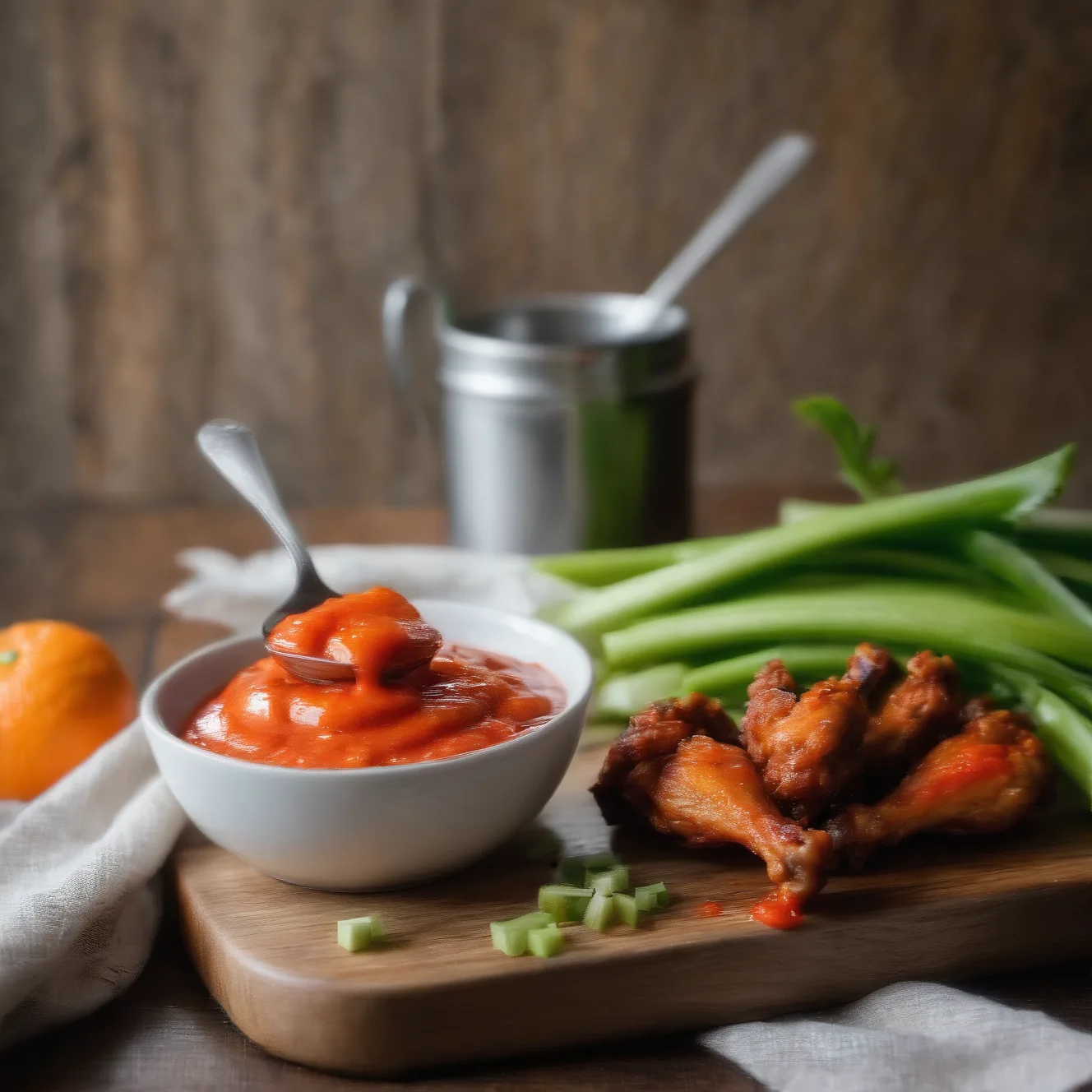
Copycat Buffalo Wild Wings Hot Sauce
Buffalo Wild Wings Hot sauce sits at a specific point in their heat ladder that’s easy to misunderstand. It’s rated 6/10 on their official scale — which sounds like the upper-middle — but it’s actually the hottest of their traditional buffalo sauces. Everything above it (Wild at 7/10, Blazin’ at 9–10/10) either changes the pepper base or goes into superhot territory.
Hot is the top of the pure cayenne-vinegar line. Same Frank’s RedHot as Mild and Medium. Same emulsification technique. What changes is the ratio: roughly 7 parts Frank’s to 1 part butter, compared to Medium’s 4:1. That shift has real consequences for texture and heat.
What the 7:1 Ratio Actually Means
Most people trying to replicate BWW Hot at home use too much butter. A 1:1 or 2:1 ratio produces Mild-level richness, not Hot-level sharpness. The ratio determines three things at once:
Heat intensity. More Frank’s per tablespoon of sauce means more capsaicin per bite.
Texture. Butter adds body. At 7:1, the sauce is noticeably thinner than Medium — it coats wings cleanly but doesn’t cling like a thick buffalo sauce. This is by design, not a mistake to correct.
Flavor character. The vinegar tang in Frank’s is more prominent at higher ratios. BWW Hot hits with an upfront vinegar sharpness before the cayenne burn arrives, then both fade relatively quickly. This is the opposite of Wild, which builds slowly (because habanero capsaicin absorbs differently than cayenne) and lingers.
| Sauce | Ratio | Character | BWW Heat Scale |
|---|---|---|---|
| Mild | ~2:1 | Butter-forward, barely spicy | 1–2/10 |
| Medium | ~4:1 | Balanced tang and heat | 3–4/10 |
| Hot | ~7:1 | Sharp vinegar sting, fast cayenne burn | 6/10 |
| Wild | habanero shift | Fruity heat, slow build, long finish | 7/10 |
| Blazin’ | superhot capsaicin | Sustained burn, extreme heat | 9/10 |
The Cold-Butter Emulsification Rule
This technique matters more in Hot sauce than in richer buffalo recipes. With only 2 tablespoons of butter going into 3/4 cup of Frank’s, each piece of butter needs to fully emulsify before the next one goes in. Rushing it produces greasy pooling at the bottom of your bowl rather than a glossy, unified sauce.
The pan must be off the heat when the butter goes in. Frank’s at a rolling boil will immediately melt cold butter instead of incorporating it — the butter breaks into fat, the emulsion fails. Pull the pan off the burner first, then add butter pieces one at a time, whisking hard.
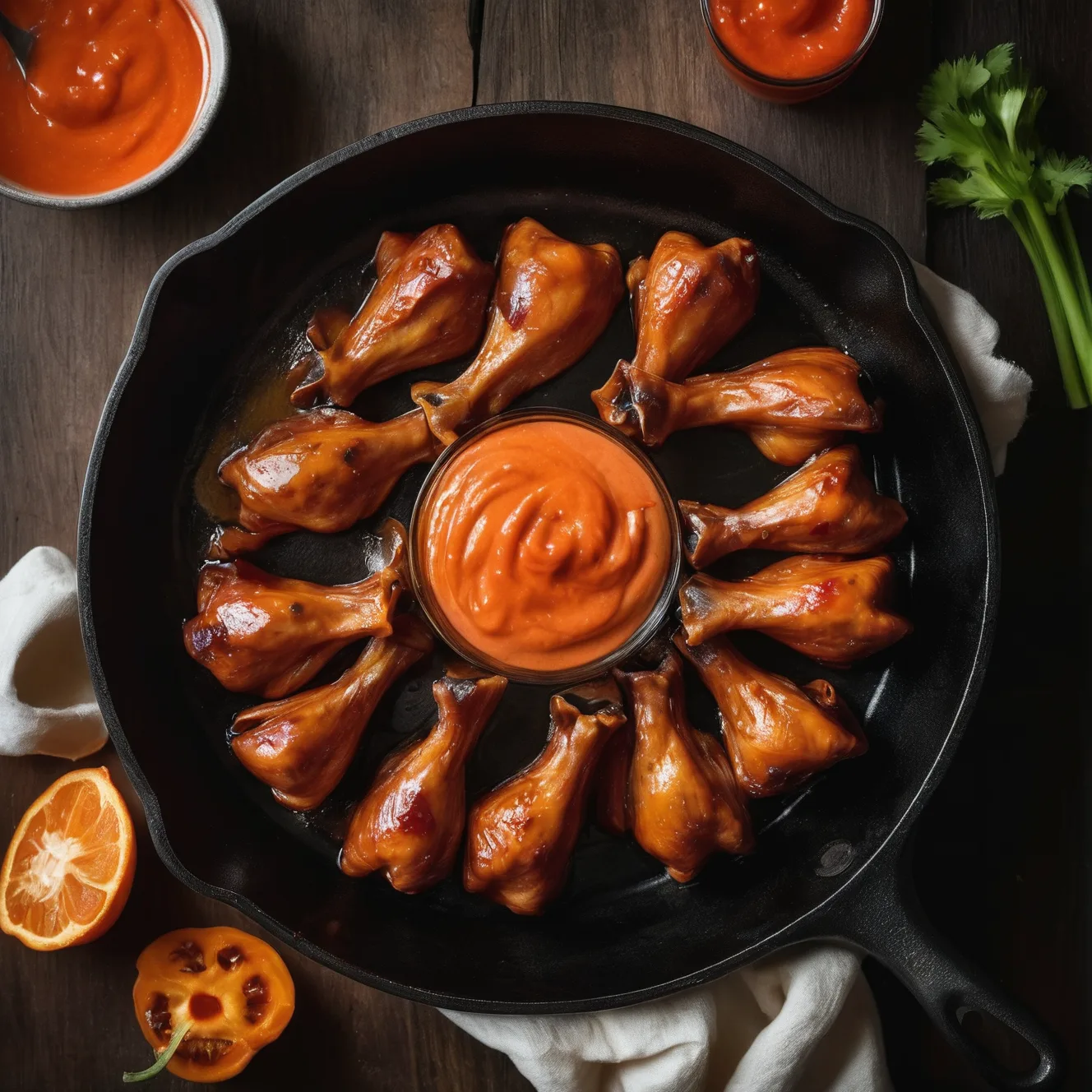
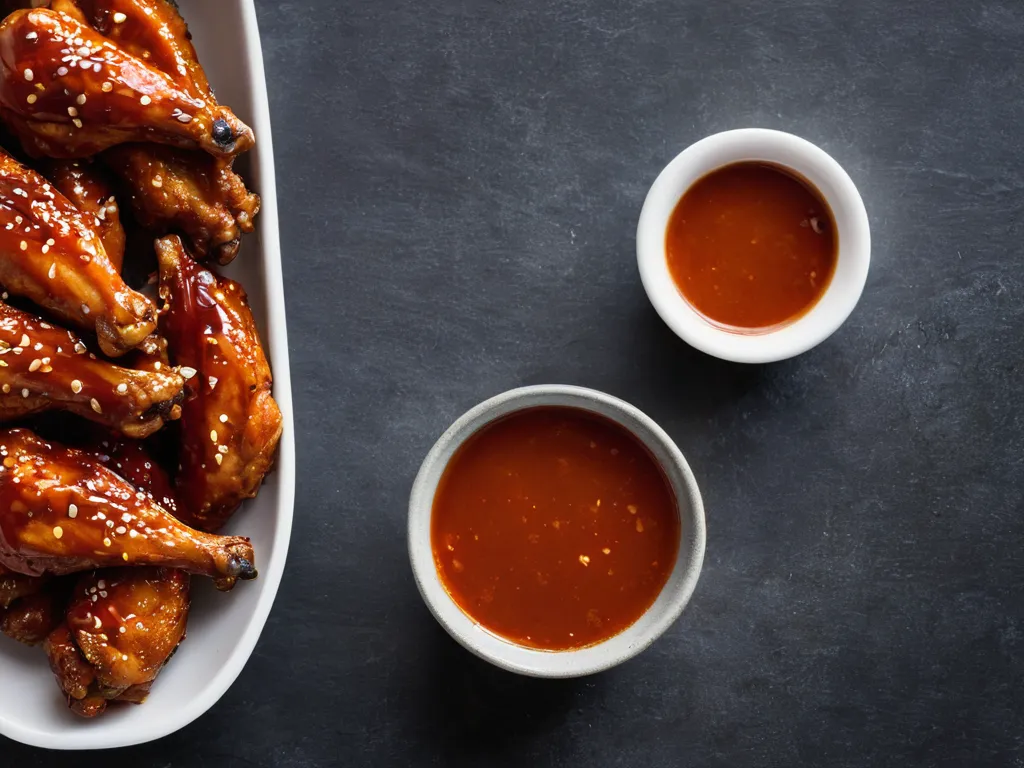
The finished sauce should be glossy and orange — slightly translucent rather than creamy. That’s correct at this ratio.
Calibrating to Your Tolerance
BWW Hot at 6/10 is genuinely spicy for most people who don’t eat hot food regularly — it’s above a jalapeño on Scoville units and the vinegar-forward sting makes it feel hotter on first contact than something like Mango Habanero, which delivers more sustained burn.
If you want to ease into it, reduce Frank’s to 2/3 cup and keep the butter at 2 tablespoons — you land at roughly 5:1, somewhere between Medium and Hot. If you want to push toward Wild without adding habanero, you can drop the butter to 1 tablespoon (close to 12:1, which is very close to straight Frank’s with an emulsion-only butter rinse).
How Hot Fits in the BWW Heat Ladder
The BWW classic buffalo lineup — Mild, Medium, Hot — is a single-sauce family (Frank’s + butter) scaled by ratio. Hot is the ceiling of that family. Wild sauce — which adds habanero — is a genuinely different product, not just “more Hot.”
If you’ve made Medium and want to step up, Hot is the right next move: same base, higher ratio, no new ingredients to source. If you want to go further than Hot without buying habanero hot sauce, you can push the ratio to 10:1 or even 12:1 — you approach the character of straight Frank’s on wings, which is itself a legitimate wing preparation at some restaurants. Wild sauce adds habanero to step beyond what pure cayenne can do.
For context in the full BWW sauce lineup: Asian Zing and Garlic Parmesan sit completely outside the heat-ladder logic — they’re specialty flavor profiles, not escalations of the same base. Blazin’ sauce is in a different category, using superhot pepper extracts with heat more than 10× that of Hot.
Storage and Make-Ahead
The sauce keeps in a sealed jar in the refrigerator for up to 10 days. At the 7:1 ratio, it separates more readily than a richer buffalo sauce — the lower butter content means the emulsion is less stable at fridge temperatures. To reheat: warm gently over low heat while whisking. It comes back together easily. Do not microwave; the uneven heating breaks the emulsion and it won’t fully re-incorporate.