


Pin It

Carbone Veal Parmesan (The $89 Bone-In Chop, Made at Home)

Carbone Veal Parmesan (The $89 Bone-In Chop, Made at Home)
Jump to Recipe
Prep 20 min Cook 25 min Serves 2
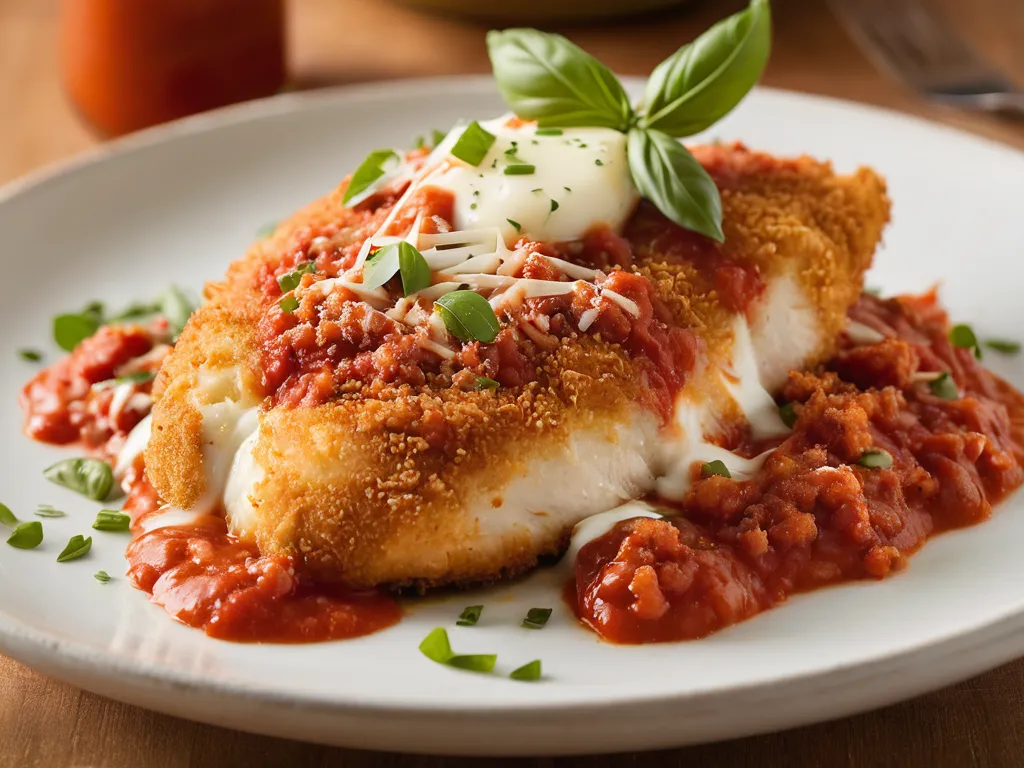
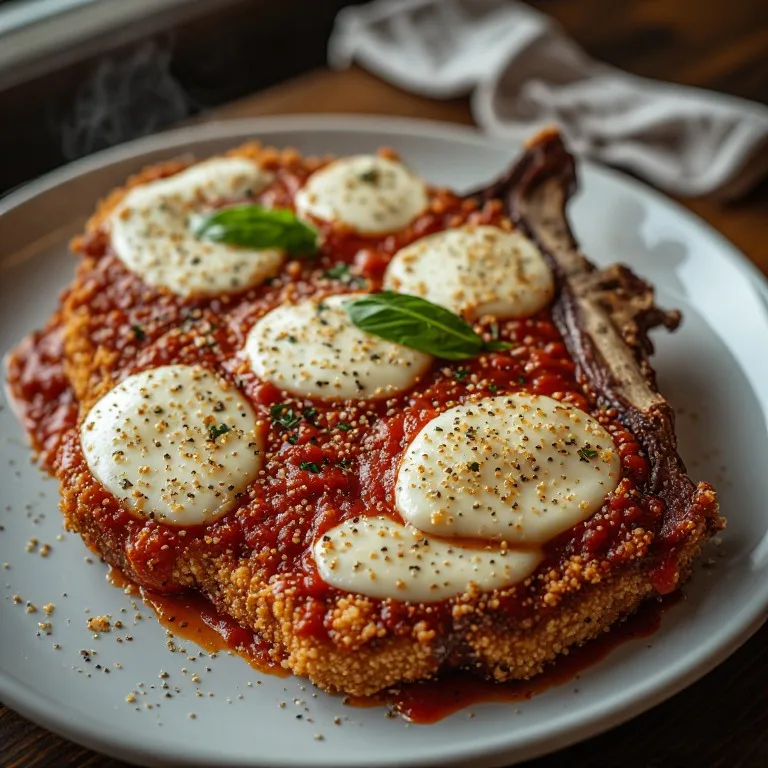
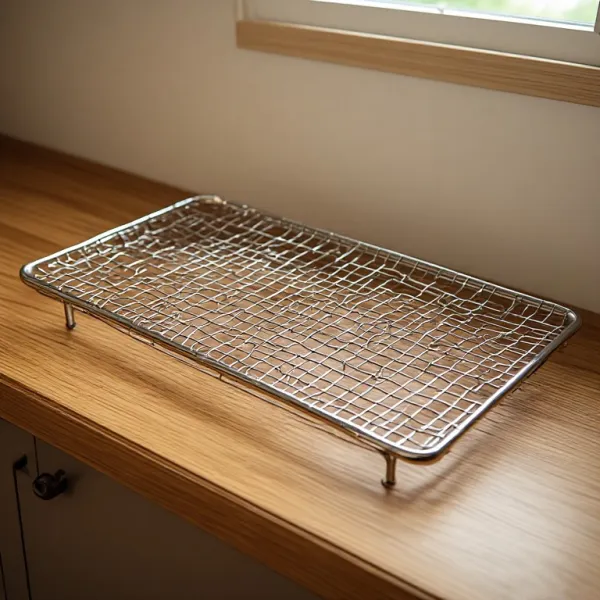
Quick answer: Ask your butcher for two bone-in veal rib chops, each about 14 to 16 oz with the rib bone attached and Frenched. Place each chop between sheets of plastic wrap. Using a flat meat mallet, pound the meat outward from the bone until it is an even 1/4 inch thick throughout — the bone stays attached, giving you the dramatic Flintstone-sized presentation. Season both sides with salt and pepper. Set up a three-stage breading station: flour in one shallow bowl, 2 beaten eggs in a second, and in a third, mix 1 cup Italian breadcrumbs with 1/2 cup finely grated Parmesan. Dredge the pounded veal (not the bone) through flour, then egg, then the Parmesan-breadcrumb mix, pressing firmly. Rest on a wire rack for 10 minutes. Heat 1/4 inch of olive oil in a large heavy skillet over medium-high heat. Fry each chop 2 to 3 minutes per side until deeply golden. Transfer to a wire rack. Spoon 4 tablespoons of warm San Marzano marinara onto the meat portion of each chop, leaving the edges exposed. Lay 4 thin slices of fresh mozzarella over the sauce, overlapping slightly. Grate Parmesan over the top. Slide under a broiler on high, 4 to 5 inches from the element, for 2 to 3 minutes until the cheese is melted, bubbling, and spotted with the first wisps of brown. Serve immediately. At Carbone, this dish costs $89 per chop; the restaurant recommends sharing it. This recipe makes two for roughly $32 in ingredients.

Carbone Veal Parmesan (The $89 Bone-In Chop, Made at Home)

The famous Carbone veal parmesan, made at home: a bone-in veal rib chop pounded Flintstone-thin, fried golden in olive oil, finished with San Marzano marinara and fresh mozzarella. The restaurant charges $89. This recipe makes two for about $32.

Medium Prep: 20 min Cook: 25 min Total: 45 min2 servings ~$4.50/serving
Prep20 min
Cook25 min
Total45 min
Servings
2
At home~$4.50/serving
vs
Restaurant~$20.25/serving
You save ~78%

The Story Behind the Recipe

The famous Carbone veal parmesan, made at home: a bone-in veal rib chop pounded Flintstone-thin, fried golden in olive oil, finished with San Marzano marinara and fresh mozzarella. The restaurant charges $89. This recipe makes two for about $32.

Nutrition Facts

Per serving (2 servings)
Calories810
Total Fat48g
Total Carbs32g
Dietary Fiber2g
Sugars5g
Protein62g
Sodium960mg

* Estimated values based on standard recipe preparation. Actual values may vary.

Ingredients

  • Veal
  • Breading
  • Frying
  • Sauce and cheese (for both chops)
  • Quick marinara (if making from scratch)

Instructions

💡
Pro tip: This recipe tastes even better the next day. The flavors need time to meld together in the fridge.
❄️
Storage: Keeps in an airtight container in the fridge for up to 2 weeks. Freezer-friendly for up to 3 months.
🎃 Free Halloween cookbook — download now The Copycat Halloween Cookbook A ready-made, photo-illustrated PDF of our best halloween copycat recipes — free to download, no building required. Pay what you want to support if you love it.

Free PDF — instant download. We'll also send new seasonal copycat recipes now and then; unsubscribe anytime. Or just download it →

Copycat Carbone Veal Parmesan (The $89 Bone-In Chop, Made at Home)

Prep time: 20 min Cook time: 25 min Servings: 2

Carbone opened in 2013 at 181 Thompson Street in Greenwich Village, in a space that had been an Italian-American institution for half a century. Mario Carbone, Rich Torrisi, and Jeff Zalaznick of Major Food Group designed it as a love letter to mid-century Italian-American cooking — the Sinatra era, the red leather banquettes, the tableside ceremony, the dishes that were served in the Little Italy restaurants where the red sauce tradition was born. The New York Times gave it three stars within months of opening.

The veal parmesan is one of the two dishes you go there to eat. The other is the spicy rigatoni.

At $89 per chop — the restaurant recommends sharing it — the veal parmesan is priced like a special occasion. What arrives is a bone-in veal rib chop that has been pounded until the meat spreads to roughly 10 to 12 inches: an object diners routinely describe as “Flintstone-sized.” It is breaded in a Parmesan-enriched Italian breadcrumb crust and fried deeply golden, then topped with a restrained layer of San Marzano marinara and sliced fresh mozzarella, finished under a hot broiler until the cheese bubbles and browns. The bone sticks out from one side. The effect is theatrical in the exact way Carbone is theatrical — old-school Italian-American showmanship executed with fine-dining precision.

This recipe makes the same dish at home. Two chops, $32 in ingredients.

The Bone-In Chop: Why It Matters

Most veal parmesan recipes use a thin, boneless cutlet — the scaloppine style. This is a fine dish. Carbone’s version uses a bone-in veal rib chop (the same structure as a frenched rack of lamb chop or a bone-in ribeye), pounded until the meat spreads thin while staying attached to the long rib bone. The bone is not an obstacle to eating; it is the handle, and it telegraphs that this is a full chop — a significant piece of meat — rather than a thin medallion of veal hidden under sauce.

Boneless veal top round cutlets are a valid substitution if your butcher doesn’t carry bone-in rib chops, and the recipe works identically. You lose the presentation; everything else is the same.

The Parmesan Breadcrumb Crust

Plain Italian breadcrumbs produce a solid crust. Breadcrumbs with finely grated Parmesan mixed in at a 2:1 ratio produce a crust that is more complex — the cheese adds depth and caramelization, creating small pockets of savory, browned flavor distributed throughout the crust during frying. The Parmesan also slightly accelerates browning in specific spots, giving the crust a more varied, textured surface than plain crumbs alone. Use a Microplane to grate the Parmesan finely; pre-shredded bags contain anti-caking powder that prevents even distribution.

The Mozzarella: Fresh, and Served Immediately

Carbone uses fresh mozzarella, not low-moisture. Fresh mozzarella melts more elegantly and produces a better texture and pull. The caveat: fresh mozzarella contains 52 to 60 percent moisture by weight, and under extended heat it releases water that can steam the breading. The solution is not to switch to low-moisture cheese — it is to keep the oven time very short. Two to three minutes under a hot broiler melts the cheese completely before it releases enough liquid to matter. Go under a 350°F oven for 12 minutes and you will have soggy breading. Go under a screaming broiler for 2 to 3 minutes and you will not.

Serve the moment it comes out. The window of peak crunch is narrow.

The Sauce

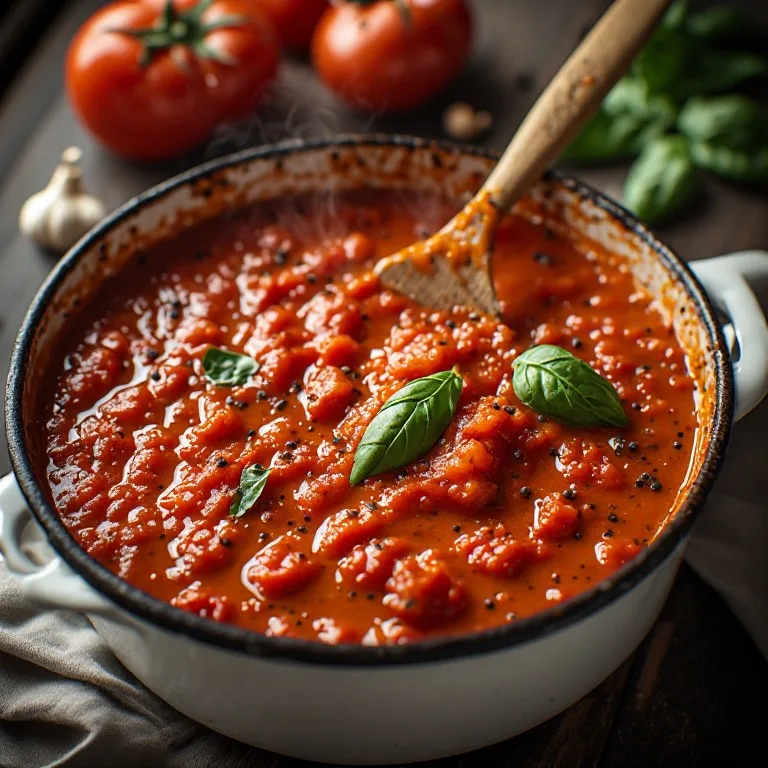
Simple San Marzano marinara — made in-house at Carbone, which means garlic, whole San Marzano tomatoes crushed by hand, olive oil, salt, and basil, simmered 20 minutes. This is the acidic, bright counterpoint to the rich fried meat. Do not overdo the sauce; four tablespoons per chop is enough. The sauce’s job is to be present, not to be the main event. Have it warm before it goes on the cutlet — cold sauce steams the crust as it heats; warm sauce does not.


The restaurant charges $89 for one chop. This recipe makes two for roughly $32.
🥗

Make It Healthier

Love Carbone Veal Parmesan (The $89 Bone-In Chop, Made at Home) but want a lighter version? Try these simple swaps:

  • ✓Air-fry the breaded chops at 400°F for 10 to 12 minutes, flipping once at 6 minutes, instead of pan-frying. Spray lightly with olive oil on both sides before air-frying. The crust is less deeply golden than a pan-fried version but still very good — calorie reduction of roughly 180 per serving.
  • ✓Use part-skim mozzarella (which has similar melt properties to fresh mozzarella) if you want to reduce fat without switching to low-moisture, which changes the character of the cheese pull.
  • ✓Veal is a lean, high-protein meat — the calorie count here is dominated by the breading and oil absorbed during frying and the cheese. The veal itself is a nutritionally solid protein choice.

Frequently Asked Questions

What makes Carbone's veal parmesan different from every other Italian restaurant's?

The bone-in presentation is the first thing: Carbone serves a full veal rib chop — the kind with the long rib bone left attached — that has been pounded until the meat spreads to roughly 10 to 12 inches across. Diners describe it as 'Flintstone-sized.' This is not a thin boneless cutlet buried under sauce; it is a piece of theater, the way the restaurant's mid-century Italian-American identity demands showmanship. The second thing is execution: properly deep-golden breading with Parmesan mixed in, a genuine San Marzano-based marinara made in-house rather than opened from a jar, and fresh mozzarella sliced and laid over the top. The dish is one of the two essential orders at Carbone — alongside the spicy rigatoni — and it is priced accordingly at $89, which the restaurant acknowledges by suggesting customers share it.

What cut should I buy for this recipe?

A bone-in veal rib chop with the Frenched rib bone — meaning the meat is trimmed away from the bottom half of the bone so the bone looks clean and is easy to hold. Each chop should weigh approximately 14 to 16 ounces before pounding. The rib chop is the same cut as a rack of lamb chop or a bone-in ribeye steak, just veal. You can find them at Italian butcher shops, specialty grocery stores (Whole Foods carries them intermittently), or by special order from a quality butcher. Ask for 'bone-in veal rib chop, Frenched, about 1 inch thick before pounding.' If bone-in chops are unavailable, veal top round cutlets (boneless scaloppine) produce a delicious, authentic veal parm — they just lack the dramatic presentation of the bone-in chop.

How do I pound the veal correctly without the meat separating from the bone?

Place the chop between two sheets of plastic wrap or inside a zip-lock bag. Begin pounding from the center of the meat, working outward toward the edges in overlapping strokes — never pound directly at the bone joint where the meat attaches, as that is where the connection is most fragile. Use a flat (not textured) meat mallet; the flat surface spreads the meat without tearing it. You want 1/4-inch thickness throughout the meat portion, which should spread the chop to roughly 10 to 12 inches across. The rib bone will stick out from one edge. Once pounded, you have essentially a large, bone-attached veal scallop — bread and fry the meat portion; the bone stays clean and serves as a handle.

Why mix Parmesan into the breadcrumbs instead of just sprinkling it on top?

Parmesan in the breading distributes savory, slightly caramelized cheese flavor throughout the entire crust rather than concentrating it on the surface. During frying, the cheese particles brown faster than the breadcrumbs surrounding them, creating small, intense pockets of flavor and crunch distributed across the crust. The effect is a more complex, deeply flavored breading rather than a plain crumb shell with cheese added as an afterthought. Use finely grated Parmesan — Microplane-grated or the finely grated style from a block. Pre-shredded Parmesan from a bag contains anti-caking powder that prevents even distribution and can create hot spots in the crust that burn before the surrounding crumbs are done.

Carbone uses fresh mozzarella, not low-moisture. Doesn't fresh mozzarella make the breading soggy?

It can, if you misapply it. Fresh mozzarella is 52 to 60 percent moisture by weight; under prolonged heat, that moisture releases and steams the breading below. The solution is the same approach the restaurant uses: thin slices (1/4 inch or less), a hot finish under a close broiler rather than a long oven bake, and serving immediately. A 2 to 3 minute broil at high heat melts and browns fresh mozzarella before it releases enough liquid to matter. If you bake the cheesed cutlet at 350°F for 10 minutes, the water release is a problem. If you put it under a screaming broiler for 2 to 3 minutes, it is not. Do not stack the mozzarella slices thick — 4 thin, overlapping slices is enough. Serve the moment it comes out of the broiler.

What tomato sauce does Carbone use?

A simple, properly built San Marzano marinara — not jarred, not slow-cooked for hours, not enriched with cream or meat. Olive oil, thinly sliced garlic, a can of good whole San Marzano tomatoes crushed by hand, salt, a pinch of red pepper flake, and fresh basil. Simmered 20 to 25 minutes. The sauce is intended to be a bright, acidic counterpoint to the rich, fried meat — not the main event. The best shortcut if you don't want to make sauce from scratch is the jarred Rao's Homemade Marinara, which is one of the better-quality supermarket options and uses a similar philosophy. Whatever sauce you use, have it warm when it goes on the fried cutlet — cold sauce steams the crust; warm sauce does not.

What oil should I fry the veal in?

Carbone fries in olive oil, and olive oil matters here in a way it doesn't for all fried dishes. The subtle fruitiness of extra-virgin olive oil contributes a flavor layer to the crust that neutral oils (canola, vegetable) do not. Use a light or pure olive oil rather than extra-virgin for frying — extra-virgin has a lower smoke point and a more assertive flavor that can turn bitter at frying temperatures. Pure or light olive oil has a smoke point around 400°F, high enough for the 350°F frying target. If you prefer, a 50/50 blend of pure olive oil and vegetable oil is a reasonable approach that brings some olive flavor at lower cost.

Can I use the same technique for chicken instead of veal?

Yes — the bone-in chicken breast (or boneless chicken breast pounded thin) produces excellent chicken parmesan using the same technique. The pounded-thin approach, the Parmesan in the breadcrumbs, the warm sauce minimally applied, and the quick broiler finish all translate directly. Chicken parmesan made this way — deeply golden, Parmesan-crust, fresh mozzarella, broiler finish — is significantly better than the standard home version most people make, which produces a thick chicken breast buried under sauce and baked until soggy.

Is Carbone worth the price and the reservation difficulty?

The veal parmesan at $89 is not a small number for a single plate of Italian-American food. It is, however, a serious version of the dish at a restaurant that takes its Italian-American heritage as a genuine creative project — not as nostalgia or irony, but as the goal. Carbone has other flagship locations in Las Vegas, Dallas, and Miami with easier reservations and similar pricing. The home version at roughly $16 per plate is the most accessible way to eat this particular dish on a Tuesday. The technique is the same; what you cannot replicate at home is the room itself, which is part of what you are paying for.

Love this recipe? Share it!

Free PDF: our 12 most-wanted copycat recipes — instant download.

Made it? Buy us a coffee

Every recipe here is free, with no paywalls. If this one was a hit at your table, a small tip keeps new copycats coming.

$

Carbone is a trademark of its owner, used here only to describe the dish this recipe recreates. This is an independent copycat written in our own words — Copycat Spices is not affiliated with, endorsed by or sponsored by Carbone.

Ratings & Reviews

—
No ratings yet

Rate this recipe

Click a star to rate

Leave a Review

0/500

CS

Copycat Spices Editorial

Researched + fact-checked. Every recipe on Copycat Spices is built from published sources — official ingredient lists, brand-published recipes, interviews and food-science references — and fact-checked before it goes live, then written as clear, step-by-step instructions for home cooks of all skill levels.

Learn more about our mission →