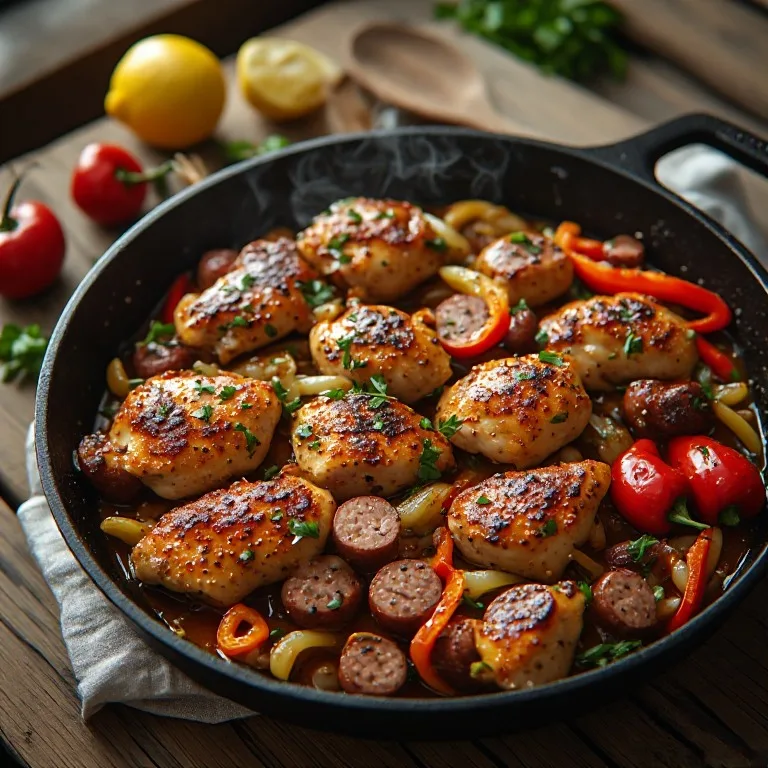



Copycat Rao’s Chicken Scarpiello (Shoemaker’s Chicken, Made at Home)
Prep time: 20 min Cook time: 55 min Servings: 4 to 6 Difficulty: Easy
TL;DR: Two chickens cut into small bone-in pieces and Italian sausage, browned hard in a skillet to develop fond, then braised in white wine, red wine vinegar, chicken broth, and — the ingredient that defines this dish — hot vinegared cherry peppers and their brine. Cover and braise at 375°F for 30 minutes, then uncover for 15 more to concentrate the sauce and re-crisp the skin. The pepper brine (not just the peppers themselves) is what separates real scarpiello from braised chicken with peppers.
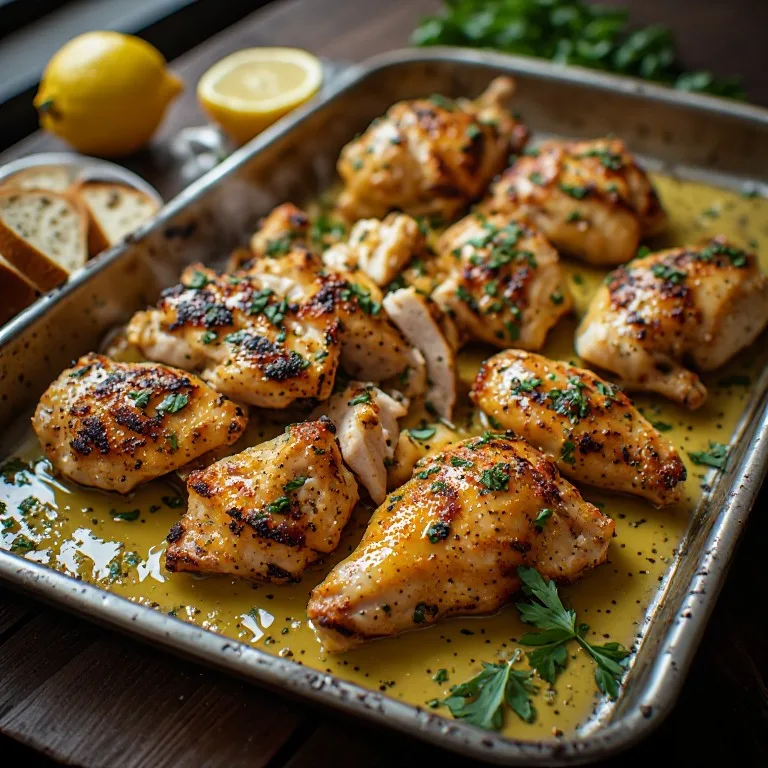
The name means shoemaker’s chicken. Scarpariello comes from the cobbler’s trade — the irregular, rough cuts of chicken and sausage resembling scraps of leather from a workbench. It is a peasant-origin Italian-American dish built on economy: a whole chicken chopped into small pieces, stretched with sausage, made bold by vinegar and pickled peppers, finished in the oven.
At Rao’s on East 114th Street in East Harlem — one of the hardest tables to get anywhere in the world — the scarpiello is one of the dishes regulars come back for alongside the lemon chicken and meatballs. It is also the least understood when home cooks try to recreate it, because most recipes miss the one ingredient that makes it taste right: the brine from the cherry pepper jar.
The Brine Is the Dish
Vinegared cherry peppers are easy to find. What most copycat recipes do is chop the peppers and add them to the braise, then fill in the acid with red wine vinegar. The problem is that the brine in the jar — the liquid the peppers have been sitting in — has been slowly absorbing pepper flavor for months. It is vinegar that tastes like cherry peppers: fruity, hot, deeply tangy. Three tablespoons of it into the braising liquid changes the entire character of the sauce in a way that adding more plain vinegar cannot.
If you have a jar of hot cherry peppers in your kitchen, open it and smell the brine. It smells like cherry peppers, not just vinegar. That flavor is what goes into the braising liquid. Do not pour it down the drain.
The peppers themselves are sliced in half and added to the braise — they soften in the oven and release more flavor into the sauce. The combination of whole-pepper flavor plus concentrated brine is what gives the finished dish its distinctive hot, tangy, slightly fruity character underneath the wine and meat.
The Two-Step Brown
The other thing most home versions skip is the aggressive initial sear. Chicken braised without proper browning produces pale, bland skin and a grey-colored sauce. Chicken browned hard — 5 to 6 minutes skin-side down in a hot pan, undisturbed — builds the dark fond on the pan’s surface that becomes the backbone of every braised dish.
The same applies to the sausage. Brown all sides in the same pan after the chicken comes out — the rendered fat and browned sausage bits add to the fond. When you deglaze with white wine, all of that dissolves into the liquid, and everything that went into building those layers shows up in the final sauce.
| Shortcut version | Rao’s technique | |
|---|---|---|
| Chicken sear | Light or skipped | Hard sear, 5-6 min skin-side, undisturbed |
| Sausage | Added raw to braise | Browned separately in same pan first |
| Cherry peppers | Peppers only | Peppers + brine |
| Acid | Red wine vinegar alone | White wine + red wine vinegar + cherry pepper brine |
| Potatoes | Usually omitted | Added to the braise, absorb the sauce |
Small Pieces Are Important
Rao’s cuts two whole chickens into small bone-in pieces — more pieces than the standard American 8-cut. The neck, back, and rib sections come along, releasing gelatin and collagen into the braising liquid as they cook. The result is a thicker, more unctuous sauce than you get from a standard grocery-store pack of thighs and drumsticks.
If you buy whole chickens and cut them yourself, ask your butcher to do a 10 to 12-piece cut including the back pieces. If using pre-cut grocery store chicken, buy bone-in thighs and drumsticks — the skin-to-bone ratio is close to what the small-cut whole bird achieves.
What Goes Into the Braise
The complete braising liquid:
- 1/2 cup dry white wine — deglazes the pan, provides background sweetness
- 1/2 cup chicken broth — body and roundness
- 1/4 cup red wine vinegar — acid backbone
- 3 tbsp cherry pepper brine — hot, fruity acid that defines the dish
- Dried oregano — the classic Italian-American herb note
The ratio is more acidic than most braises. This is intentional — after 45 minutes in the oven, the acid cooks down and the chicken fat absorbs into the liquid, softening the bite. The sauce you pull from the oven will be sharper than it was going in, but noticeably rounder than the raw braising liquid.
If you are making this ahead (it reheats well), the sauce will continue mellowing overnight in the refrigerator.
The Potatoes
Rao’s adds small potatoes to the braise — quartered Yukon Golds are the best home substitute. They are not a side dish; they are part of the dish. Nestled in around the chicken pieces before the covered braise, they absorb the sauce, become tender, and end up tasting intensely of the cherry pepper braising liquid. They are the best bites on the plate.
This is optional in the sense that the dish works without them, but worth including if you want to make the complete version. Add them in step 6 before covering the pan.
Price Comparison
At Rao’s, chicken scarpiello runs roughly $45 to $55. This batch — two chickens, four sausage links, the cherry peppers, and pantry staples — costs about $22 to $28 in ingredients and feeds six people comfortably.
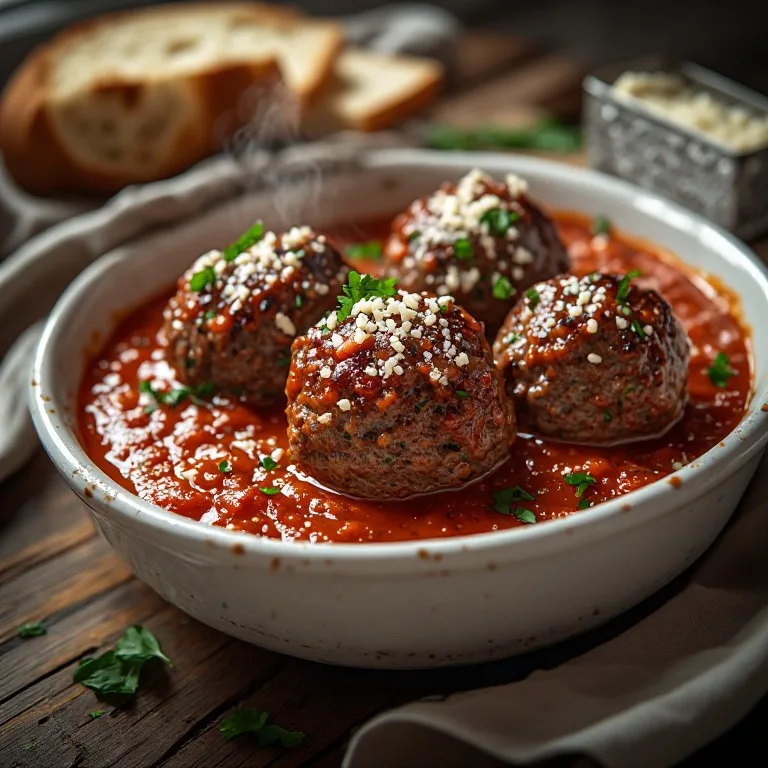
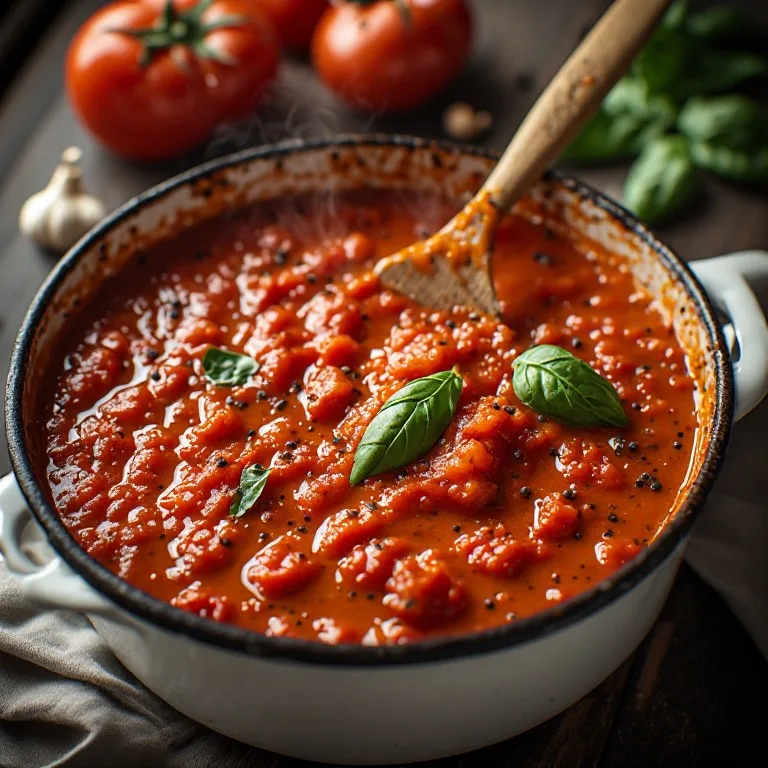
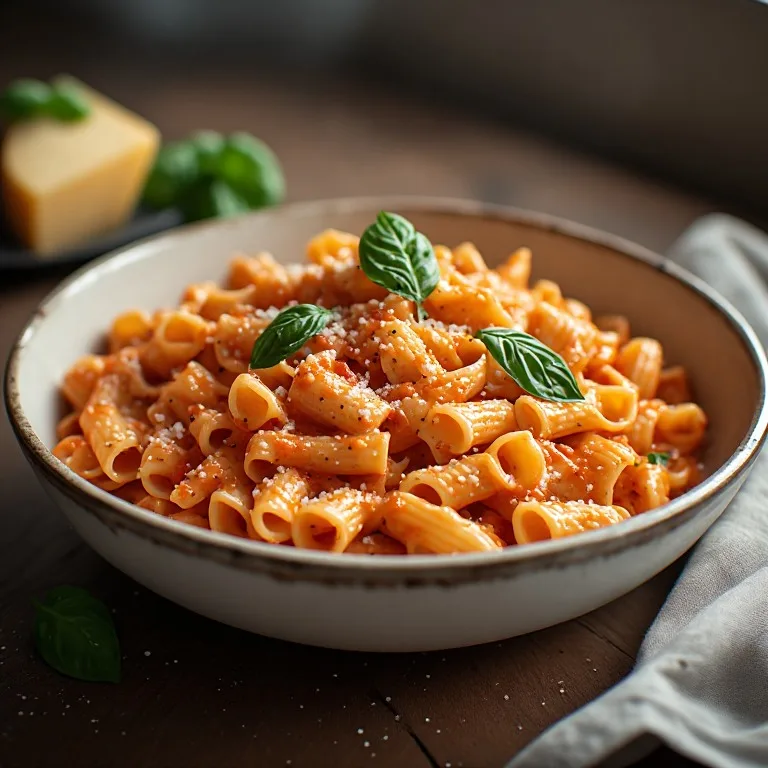
For the full Rao’s dinner, pair it with the famous Rao’s meatballs and the Rao’s marinara sauce. For the same restaurant’s other famous chicken preparation, see the Rao’s lemon chicken — a completely different technique (broiled, not braised, with a two-stage cook and an aggressively lemony sauce). For other NYC Italian-American classics, the Carbone spicy rigatoni shares the same fine-dining-at-home category. Or for the braise-and-sauce technique in a different Italian-American form, Olive Garden chicken marsala uses a similar stovetop-to-oven approach.