


Pin It

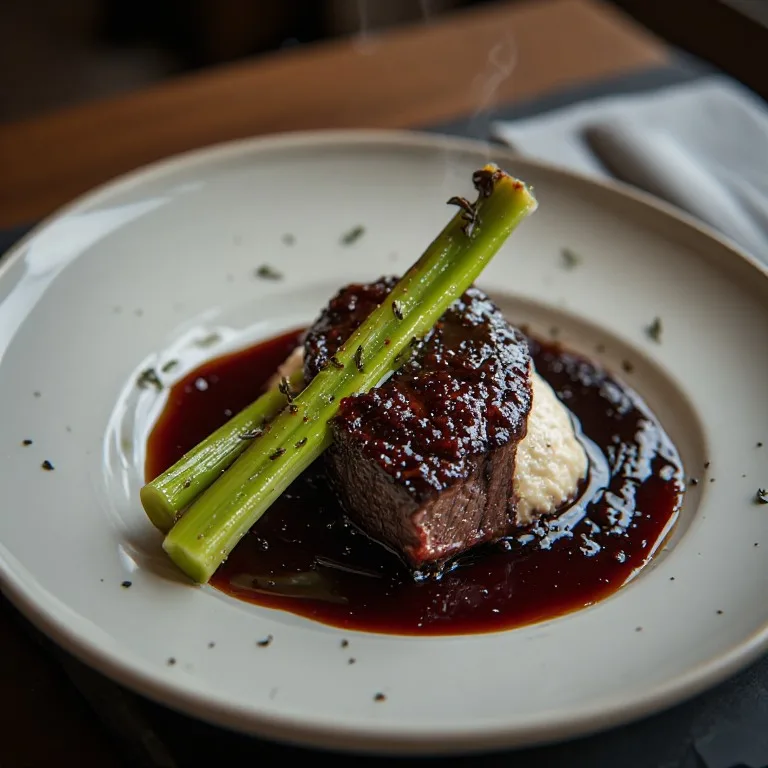
Daniel Boulud's Short Ribs Braised in Red Wine with Celery Duo

Daniel Boulud's Short Ribs Braised in Red Wine with Celery Duo
Jump to Recipe
Prep 30 min active Cook 3 hr Serves 4
Quick answer: Season 4 bone-in English-cut short ribs (about 4 lbs) generously with salt and pepper. Heat 2 tablespoons of neutral oil in a 6-quart Dutch oven over high heat and sear the ribs until deeply browned on all sides, 3 to 4 minutes per side. Set aside. Pour one bottle (750ml) of full-bodied red wine into a saucepan, heat until steaming, then carefully flambé with a long match — let the flames die completely, then reduce the wine by half over high heat, about 12 minutes. Pour off most of the fat from the Dutch oven, leaving a thin film. Cook 1 chopped onion, 2 chopped carrots, 2 chopped celery stalks, 1 leek (cleaned and sliced), 4 smashed garlic cloves, and 2 sliced shallots over medium heat until softened, about 7 minutes. Stir in 2 tablespoons of tomato paste and cook 2 minutes. Return the ribs to the pot, bone-side down. Pour the reduced wine and 2 cups of beef stock over the ribs — liquid should come about two-thirds up the sides. Add 3 sprigs of thyme, 1 sprig of rosemary, and 2 bay leaves. Bring to a boil, cover tightly, and braise in a 325°F oven for 2.5 to 3 hours, skimming fat every 30 minutes, until a fork meets no resistance. Transfer the ribs to a plate, strain the braising liquid, discard the vegetables, and reduce the strained sauce over medium-high heat until it coats a spoon, about 15 minutes. Swirl in 1 tablespoon of cold butter. For the celery duo: simmer 1 peeled, cubed celery root in chicken stock until very tender (20 minutes), then blend smooth with 3 tablespoons butter and a splash of warm cream. Separately, braise peeled inner celery stalks in chicken stock and butter until tender and glazed, about 12 minutes. Plate purée, glazed celery, and short ribs, spoon the sauce over everything.

Shop the tools

Gear matched to this recipe. These are Amazon affiliate links — we may earn a small commission if you buy, at no extra cost to you.

As an Amazon Associate, Copycat Spices earns from qualifying purchases. Product images are generic illustrations, not the exact item listed.

Daniel Boulud's Short Ribs Braised in Red Wine with Celery Duo

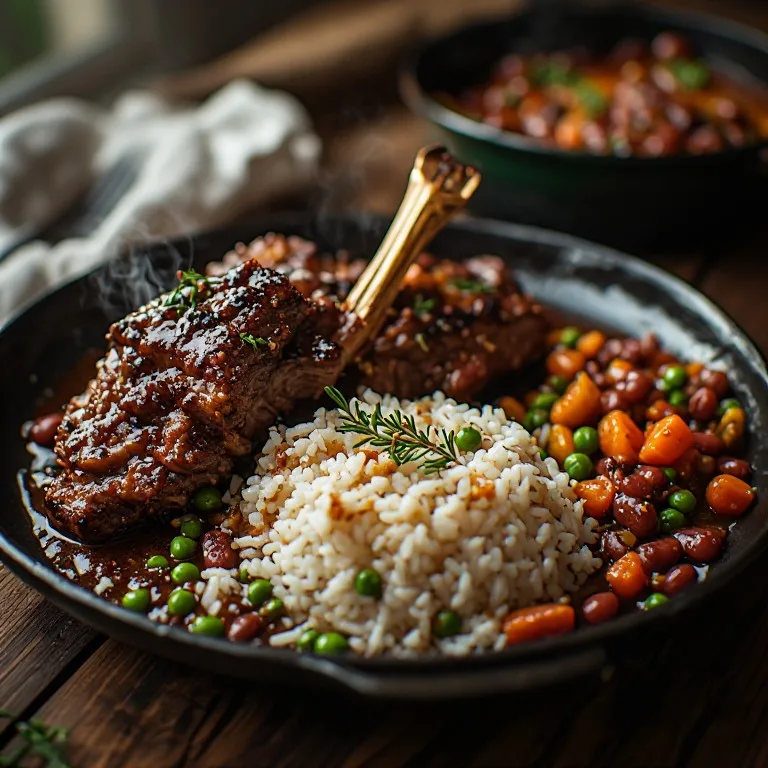
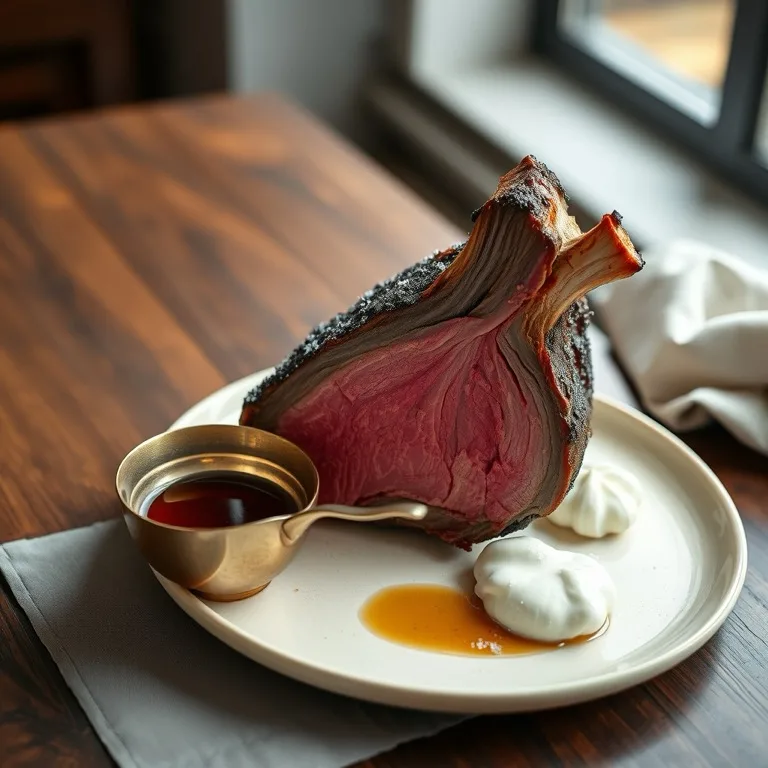
Daniel Boulud's short ribs braised in red wine have been on the menu at Restaurant Daniel since 1993 — bone-in English-cut ribs, a full bottle of flambéed Côtes du Rhône, 3 hours in a 325°F oven, and the restaurant's signature celery root purée alongside glazed celery stalks. The tasting menu at Daniel starts at $295. This recipe makes 4 servings at home for about $35.

Medium Prep: 30 min active Cook: 3 hr Total: 3h 30m4 servings ~$4.50/serving
Prep30 min active
Cook3 hr
Total3h 30m
Servings
4
At home~$4.50/serving
vs
Restaurant~$20.25/serving
You save ~78%

The Story Behind the Recipe

Daniel Boulud was born in 1955 in Saint-Pierre-de-Chandieu, a small commune near Lyon — the city Paul Bocuse called the capital of French gastronomy — and trained under a succession of Michelin-starred kitchens before arriving in New York in 1982. He ran the kitchen at Le Cirque for seven years before opening Restaurant Daniel in 1993 on East 76th Street, then relocating the restaurant to its current address at 60 East 65th Street in 1998. The restaurant earned three Michelin stars, was knocked down to two in 2014, and carries one star in the current MICHELIN Guide after a further demotion in 2024 — a trajectory that has had little visible effect on how hard the table is to get. The braised short ribs appeared on the menu in the restaurant's earliest years, were published in the Café Boulud Cookbook in 1999 (Scribner, with Dorie Greenspan), and have never been removed. Boulud has said the dish reflects his Lyon training directly — long braises, precise sauce reduction, no technique that obscures the ingredient.

The tasting menu at Daniel begins at $295 per person. The short ribs, if ordered à la carte, have historically been priced at $58 to $65. The recipe at home costs roughly $35 total: a $15 bottle of Côtes du Rhône, $20 of short ribs from a butcher, and pantry aromatics. The technique is the same one Boulud applies to every red wine braise — bone-in beef seared until a mahogany crust forms, wine flambéed before it goes into the pot, the oven at 325°F for three hours, then the sauce strained and reduced until it coats a spoon. The celery duo — celery root purée and glazed celery stalks — is the restaurant's pairing: the root vegetable's earthiness cuts through the richness of the wine sauce in a way mashed potatoes don't, and the glazed celery provides contrast in texture.

Nutrition Facts

Per serving (4 servings)
Calories730
Total Fat47g
Total Carbs18g
Dietary Fiber3g
Sugars8g
Protein41g
Sodium940mg

* Estimated values based on standard recipe preparation. Actual values may vary.

Ingredients

  • For the short ribs
  • For the celery root purée
  • For the glazed celery
💡
Pro tip: This recipe tastes even better the next day. The flavors need time to meld together in the fridge.
❄️
Storage: Keeps in an airtight container in the fridge for up to 2 weeks. Freezer-friendly for up to 3 months.
🎃 Free Halloween cookbook — download now The Copycat Halloween Cookbook A ready-made, photo-illustrated PDF of our best halloween copycat recipes — free to download, no building required. Pay what you want to support if you love it.

Free PDF — instant download. We'll also send new seasonal copycat recipes now and then; unsubscribe anytime. Or just download it →

What Makes These Short Ribs Different from Every Other Braise

Daniel Boulud’s braised short ribs recipe has three decisions baked into it that most home braise recipes skip: flambéing the wine before it goes in the pot, searing the ribs until the crust is genuinely dark (not just brown), and skimming the braising liquid on a 30-minute schedule throughout the cook.

Each of these matters. The flambé removes harsh alcohol before it can bitter the sauce. The deep sear builds the flavor base that the three-hour braise can’t create after the fact. The skimming is what separates a silky sauce from a greasy one. Get these three right and the rest is patience.

Sear the Ribs Without Mercy

Preheat your oven to 325°F.

Pat the short ribs completely dry with paper towels — any surface moisture creates steam in the pan and prevents browning. Season generously on all sides with kosher salt and black pepper, then let the seasoned ribs sit at room temperature for 20 minutes.

Heat 2 tablespoons of neutral oil in a 6-quart Dutch oven over high heat until the oil shimmers and just begins to smoke. Add the ribs bone-side up and sear without moving them for 4 to 5 minutes. What you want is a deeply browned, almost mahogany crust — not just light browning. Flip and sear the remaining surfaces, about 2 to 3 minutes each. Work in batches if your Dutch oven isn’t large enough to hold all four ribs without crowding; crowding creates steam and the ribs will braise rather than sear. Transfer the browned ribs to a plate.

The sear is not optional. The fond (the browned bits stuck to the bottom of the pot) and the crust on the ribs carry the flavor that makes this dish taste like Daniel’s version and not like a generic pot roast.

Flambé the Wine

Pour the entire bottle of red wine into a wide saucepan and set over medium heat. When the wine is steaming hot — about 2 minutes — hold a long kitchen match or lighter at the edge of the pan and carefully ignite the alcohol. The flames will be blue-orange and should burn for 1 to 2 minutes before extinguishing on their own. Keep a lid nearby. Once the flames die, increase heat to high and reduce the wine by half, about 12 to 15 minutes, until it looks syrupy at the edges.

This step appears in Boulud’s original Café Boulud Cookbook recipe and is worth taking seriously. Un-flambéed wine in a braise retains a faint sharpness that even 3 hours in the oven can’t fully cook out; flambéed wine contributes fruit and acidity without any of that edge.

Build the Braise

Pour off all but about 1 tablespoon of fat from the Dutch oven. Set over medium heat. Add the onion, chopped carrots, chopped celery, leek, garlic, and shallots. Cook, stirring occasionally, until the vegetables are softened and beginning to brown at the edges, about 7 minutes.

Stir in the tomato paste and cook for 2 minutes, until it deepens from bright red to rust-colored. This brief cooking concentrates the tomato’s umami and removes its raw taste.

Return the seared short ribs to the pot, bone-side down. Pour the reduced wine and beef stock over the ribs — the liquid should come about two-thirds up the sides of the ribs, not covering them entirely (the top stays exposed, which concentrates flavor at the meat’s surface during braising). Add thyme, rosemary, and bay leaves. Bring to a full boil.

Braise for 3 Hours

Cover the pot tightly and transfer to the 325°F oven. Braise for 2.5 to 3 hours, opening the oven every 30 minutes to skim fat and foam from the surface of the braising liquid. Tilt the pot slightly toward you and run a large flat spoon or ladle along the surface — the fat is yellow and pools toward the sides. This takes 45 seconds per skim. Skipping it means the fat emulsifies back into the sauce when you reduce it, producing a heavy, greasy mouthfeel rather than a silky glaze.

The ribs are done when a fork slides into the thickest part and twists with no resistance, and the meat is visibly beginning to pull away from the bone.

Finish the Sauce

Remove the pot from the oven. Carefully transfer the ribs to a rimmed baking sheet and cover loosely with foil. Strain the braising liquid through a fine-mesh sieve into a saucepan, pressing firmly on the vegetables to extract all the liquid. Discard the vegetables — they’ve given everything they have.

Skim any remaining fat from the strained liquid. Bring to a brisk simmer over medium-high heat and reduce until the sauce lightly coats the back of a spoon, about 15 to 20 minutes. Taste and adjust salt. Off the heat, swirl in the cold tablespoon of butter — it adds gloss and rounds the edge of the reduced wine.

Make the Celery Duo While the Ribs Braise

Celery root purée: Place the cubed celery root in a saucepan with 1.5 cups of chicken stock. Bring to a boil, then simmer until the celery root is very soft and a fork meets no resistance, about 20 minutes. Drain, reserving the stock. Transfer the celery root to a blender with the butter and warm cream. Blend on high speed until completely smooth — this takes a full minute in a standard blender. Add reserved stock by the tablespoon if needed to adjust consistency to a thick, pourable purée. Season with salt and white pepper. Keep warm.

Peel your celery root deeply: use a sharp knife, not a peeler, to remove at least a quarter inch of the fibrous outer layer all the way around. The outer skin is too tough and bitter to blend smooth even after cooking.

Glazed celery: Place the peeled, bias-cut inner celery pieces in a wide skillet with the chicken stock and butter. Bring to a boil, then simmer uncovered over medium heat until the celery is just tender and the liquid has reduced to a glossy, sauce-like glaze that coats the pieces, about 12 to 15 minutes. Season with a pinch of salt. Use inner celery stalks (the pale yellow-green ones near the center of the bunch) — they’re more tender and less stringy than outer stalks, and their flavor is sweeter.

Plate and Serve

Spoon a generous mound of celery root purée onto each plate. Arrange 3 to 4 pieces of glazed celery alongside the purée. Set one braised short rib on top of or against the purée. Spoon the reduced red wine sauce over the rib and let it pool around the purée. If you have fleur de sel, finish with a few flakes.

The dish can be held for up to 30 minutes in a low oven (200°F) before serving without losing anything. It reheats without loss the next day — in fact, the flavors concentrate overnight and the removed fat cap (which solidifies in the refrigerator) means day-two sauce is cleaner and more concentrated than the same-day version.
🥗

Make It Healthier

Love Daniel Boulud's Short Ribs Braised in Red Wine with Celery Duo but want a lighter version? Try these simple swaps:

  • ✓Refrigerate the finished braise overnight before serving — the fat solidifies into a solid cap that lifts off in one piece, removing far more saturated fat than hot-skimming alone without affecting the sauce's depth.
  • ✓Serve the celery root purée as your base instead of mashed potatoes — celery root has roughly one-third the carbohydrates of potato at the same volume and adds 2g more fiber per serving.
  • ✓Ask your butcher for ribs cut 2.5 inches wide rather than 3 — slightly smaller pieces keep the serving count at 4 and reduce the per-portion calories by about 80 without reducing sauce richness.
  • ✓Skip the finishing butter in the sauce and add 1 teaspoon of sherry vinegar instead — the acid brightens the sauce and compensates for the lost richness, saving about 50 calories per serving.

Frequently Asked Questions

What wine should I use for Daniel Boulud's braised short ribs?

Any full-bodied red with enough fruit and acidity to survive 3 hours of cooking works well — Côtes du Rhône, Merlot, Cabernet Sauvignon, or a basic Burgundy-style Pinot Noir. The flambé step burns off the harsh alcohol compounds; what stays in the sauce is the wine's fruit and structure. Do not use cooking wine — the sodium content distorts the sauce and the lack of real grape flavor shows. You don't need to spend more than $15 on the bottle. Boulud uses wines from his restaurant's cellar, but the recipe holds with a $12 Côtes du Rhône as long as it's a real wine. Avoid anything too tannic (heavy Cabernet can turn bitter after 3 hours of reduction) and anything too light (Pinot Noir without body becomes watery).

Why does the recipe call for flambéing the wine?

Flambéing burns off ethanol faster and at a lower temperature than simply reducing the wine over heat. The result is a sauce with the wine's fruit and acidity intact, but without the sharp alcoholic edge that comes from reducing un-flambéed wine. Boulud specifies this step in the original Café Boulud Cookbook recipe. Skipping it produces a sauce that tastes faintly boozy and slightly bitter even after hours in the oven. The technique takes 30 seconds: heat the wine in a wide saucepan until steaming, hold a long kitchen match or lighter at the edge of the pan (not the center), and tilt the pan slightly toward the flame. Keep a lid within arm's reach in case the flames climb higher than expected — they typically burn for 1 to 2 minutes and extinguish on their own.

Can I make the short ribs ahead of time?

Yes, and the dish is better made the day before. After braising, let the ribs cool to room temperature in the liquid, then refrigerate overnight. The fat cap solidifies into a solid, removable layer — lift it off the next morning in one piece. This removes far more saturated fat than hot-skimming alone. The cold ribs also absorb the braising liquid overnight, deepening the flavor significantly. To reheat: remove the fat cap, bring the pot to a gentle simmer over low heat for 25 minutes, then pull the ribs out, strain and reduce the sauce, and finish with butter as directed. The texture and sauce concentration will both be better on day two. The dish reheats again well on day three.

What is the celery duo and why does it matter?

The celery duo is Daniel Boulud's signature pairing with the short ribs: a smooth celery root (celeriac) purée alongside braised-and-glazed celery stalks. Celery root is the swollen root of a specific celery plant — nutty, earthy, and slightly sweet, nothing like the fibrous bitterness of raw celery. When puréed with butter and warm cream, it produces a silky base that absorbs the wine sauce differently than mashed potatoes would — the root vegetable's bitterness provides a counterpoint to the richness of the beef and wine reduction. The glazed celery stalks add a textural contrast: tender but still with a slight bite, coated in a reduced chicken-stock glaze. Together they make the dish feel balanced rather than heavy. Mashed potatoes are a fine substitute and many home cooks use them, but the celery root purée is what the restaurant serves and what the dish was designed around.

What's the difference between English-cut and flanken-cut short ribs?

English-cut short ribs are cut parallel to the bone — each piece is one rib bone with the meat running alongside it, producing a thick, rectangular block that holds together over a long braise and presents impressively on the plate. Flanken-cut short ribs are cut across the bones, giving you a thin strip with multiple bone cross-sections — this is the Korean LA-style cut used for galbi. For this recipe, use English-cut, bone-in short ribs. Flanken-cut are too thin for a 3-hour braise; they become stringy and dried-out well before the collagen in English-cut ribs has had time to render into gelatin that makes the sauce silky. Ask your butcher for bone-in English-cut short ribs, each piece about 2.5 to 3 inches wide.

How do I know when the short ribs are done braising?

Insert a fork or the tip of a paring knife into the thickest part of a rib and twist. There should be essentially no resistance — the meat should part easily around the fork. The exterior will be deeply colored, and at least some of the meat will be visibly pulling away from the bone. If you meet any firmness, return the pot to the oven for 20 to 30 more minutes and test again. Underdone short ribs are tough and chewy; properly braised ribs are tender to the point of falling apart but should still hold their shape when you lift them from the pot with tongs. The collagen in the connective tissue takes time to fully convert to gelatin — this is why 2.5 to 3 hours at 325°F cannot be rushed by raising the oven temperature.

What is Restaurant Daniel and why are these short ribs famous?

Restaurant Daniel is Daniel Boulud's Michelin-starred flagship at 60 East 65th Street in the Upper East Side of Manhattan, open since 1993. Boulud grew up near Lyon, trained in French classical kitchens, and ran the kitchen at Le Cirque before opening under his own name. The restaurant earned three Michelin stars at its peak, dropped to two in 2014, and holds one star in the current MICHELIN Guide, and is consistently ranked among the best in New York. The short ribs braised in red wine have been on the menu since the restaurant opened — they were published in the Café Boulud Cookbook in 1999 and are considered the emblematic Daniel Boulud home-cook recipe: technically straightforward (it is a Dutch oven braise, not a tasting-menu preparation), but dependent on a handful of technique decisions — flambéing the wine, very aggressive searing, disciplined skimming — that separate a good result from a great one. The tasting menu at Daniel begins at $295 per person.

Love this recipe? Share it!

Free PDF: our 12 most-wanted copycat recipes — instant download.

Made it? Buy us a coffee

Every recipe here is free, with no paywalls. If this one was a hit at your table, a small tip keeps new copycats coming.

$

Restaurant Daniel is a trademark of its owner, used here only to describe the dish this recipe recreates. This is an independent copycat written in our own words — Copycat Spices is not affiliated with, endorsed by or sponsored by Restaurant Daniel.

Ratings & Reviews

—
No ratings yet

Rate this recipe

Click a star to rate

Leave a Review

0/500

CS

Copycat Spices Editorial

Researched + fact-checked. Every recipe on Copycat Spices is built from published sources — official ingredient lists, brand-published recipes, interviews and food-science references — and fact-checked before it goes live, then written as clear, step-by-step instructions for home cooks of all skill levels.

Learn more about our mission →