

Pin It

Gordon Ramsay's Lobster Risotto

Gordon Ramsay's Lobster Risotto
Jump to Recipe
Prep 25 min Cook 45 min Serves 4
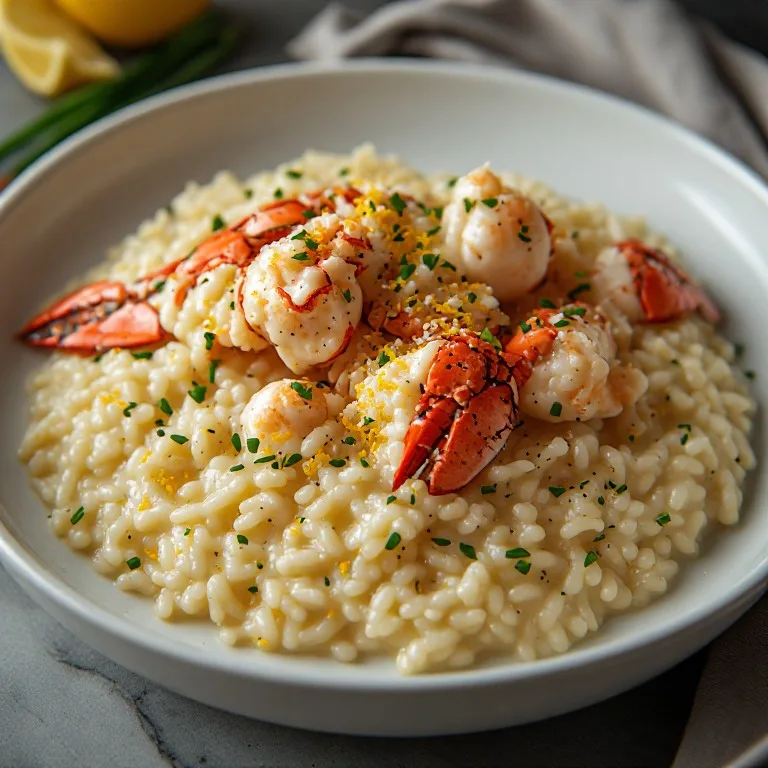
Quick answer: Split 4 lobster tails lengthwise, remove the meat (reserving shells), and pan-sear the shells in 1 tablespoon olive oil for 3 to 4 minutes until bright red. Add 1 halved shallot, 1 crushed garlic clove, a splash of brandy (2 tablespoons), 1 cup dry white wine, and 1 liter water. Simmer 20 minutes, strain, and keep hot — this is your lobster stock. In a wide heavy pan, soften 1 diced shallot in 1 tablespoon olive oil over medium heat, 3 to 4 minutes. Add 1 minced garlic clove and 300g (1½ cups) Arborio rice; toast 2 to 3 minutes, stirring until edges turn translucent. Add 150ml dry white wine and stir until absorbed. Add hot lobster stock one ladle at a time over 18 to 22 minutes, stirring frequently, until the rice is al dente. Meanwhile, season the raw lobster meat, then poach the pieces in 2 tablespoons unsalted butter with 1 tablespoon fresh tarragon and a pinch of saffron over low-medium heat for 2 to 3 minutes per side — remove from heat when barely opaque (it finishes cooking from residual heat). Off heat, finish the risotto with 2 tablespoons cold cubed butter, 50g grated Parmesan, and 2 tablespoons cold mascarpone — beat vigorously until glossy and flowing. Fold in the lobster gently. Plate immediately; finish with a drizzle of the tarragon-saffron butter from the lobster pan, a few extra Parmesan shavings, and chopped chives.

Shop the tools

Gear matched to this recipe. These are Amazon affiliate links — we may earn a small commission if you buy, at no extra cost to you.

As an Amazon Associate, Copycat Spices earns from qualifying purchases. Product images are generic illustrations, not the exact item listed.

Gordon Ramsay's Lobster Risotto

Gordon Ramsay's lobster risotto is the benchmark dish that ends Hell's Kitchen careers — overcooked lobster, rushed mantecatura, and it's over. This is the exact technique: a quick lobster shell stock that replaces store-bought broth, lobster tails poached in tarragon butter kept deliberately apart from the rice until the last moment, and a cold-fat finish that makes the risotto flow like lava. Restaurant price ~$50 per plate; at home, under $30 for four.

Advanced Prep: 25 min Cook: 45 min Total: 1h 10m4 servings ~$4.50/serving
Prep25 min
Cook45 min
Total1h 10m
Servings
4
At home~$4.50/serving
vs
Restaurant~$20.25/serving
You save ~78%

The Story Behind the Recipe

Lobster risotto has appeared on Hell's Kitchen more consistently than almost any other dish. Season after season, Gordon Ramsay serves it as the test that exposes which contestants understand how protein cooks under heat and which ones do not. The failure mode is almost always the lobster: rushed in too early, left in the risotto while the rice finishes, and pulled out overcooked and rubbery just as Ramsay arrives to taste. The risotto itself — even when executed correctly — is always a secondary performance note on the plate. It is the lobster that tells Ramsay everything he needs to know.

At Restaurant Gordon Ramsay at 68 Royal Hospital Road in London (three Michelin stars since 2001), the lobster risotto runs around £38 ($50) and arrives in a shallow bowl with a lobster tail medallion centered on top and a saffron-gold risotto underneath that ripples when the bowl is set down. The home version, built from two to four lobster tails (depending on how luxurious you want to go), costs $25–32 for four people. The two non-negotiables: make a quick stock from the shells rather than using store-bought broth (the difference is enormous), and cook the lobster in tarragon butter separately from the rice and add it only at the very end. Those two decisions are why the restaurant dish tastes the way it does.

Nutrition Facts

Per serving (4 servings)
Calories590
Total Fat22g
Total Carbs58g
Dietary Fiber1g
Sugars2g
Protein32g
Sodium760mg

* Estimated values based on standard recipe preparation. Actual values may vary.

Ingredients

  • For the lobster and quick shell stock
  • For cooking the lobster
  • For the risotto
  • For the mantecatura finish
  • To finish

Instructions

💡
Pro tip: This recipe tastes even better the next day. The flavors need time to meld together in the fridge.
❄️
Storage: Keeps in an airtight container in the fridge for up to 2 weeks. Freezer-friendly for up to 3 months.
🎃 Free Halloween cookbook — download now The Copycat Halloween Cookbook A ready-made, photo-illustrated PDF of our best halloween copycat recipes — free to download, no building required. Pay what you want to support if you love it.

Free PDF — instant download. We'll also send new seasonal copycat recipes now and then; unsubscribe anytime. Or just download it →

Gordon Ramsay’s Lobster Risotto

Prep time: 25 min | Cook time: 45 min | Serves: 4 | Difficulty: Advanced


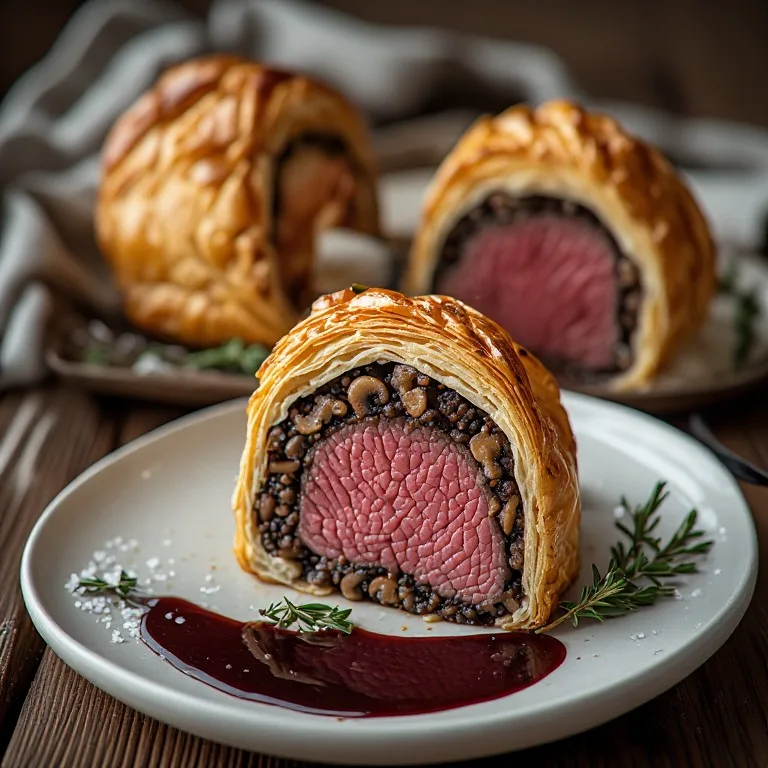
Gordon Ramsay returns to lobster risotto on Hell’s Kitchen more than any other dish except beef Wellington. It functions as a benchmark test: not because the recipe is technically obscure, but because executing two proteins simultaneously at different temperatures while managing a 20-minute risotto is where good line cooks separate from amateur cooks who only think about one thing at a time.

The dish served at Restaurant Gordon Ramsay in London costs around £38 ($50) per plate. The at-home version, built on two to four lobster tails depending on how far you want to push it, runs $25 to $32 for four people. The full $50 experience is achievable. The gap between the restaurant plate and a disappointing home version is almost entirely explained by two decisions: building a real stock from the lobster shells instead of opening a carton, and keeping the lobster completely out of the risotto until the last possible moment.

The Shell Stock: The Step That Separates $10 From $50

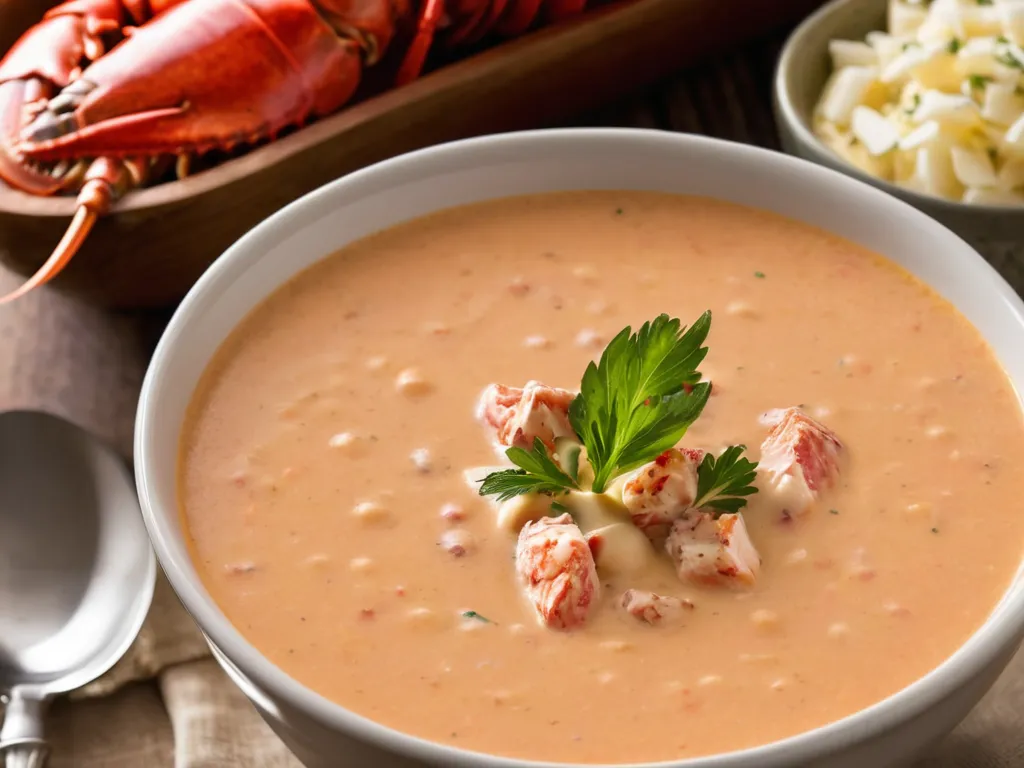
Store-bought seafood stock tastes of salt and mild ocean. The shell stock in this recipe takes 20 minutes and produces something genuinely different: a deep amber liquid that carries the concentrated glutamates, iodine compounds, and Maillard browning products that exist only in the shells, created when you press them against a very hot pan before adding liquid. Every ladle of stock that goes into the risotto carries that depth. The finished dish tastes of lobster in the way the restaurant version does, not the way a seafood pasta with carton broth does.

The technique is simple. Heat olive oil in a saucepan until very hot. Add the reserved shells and press them against the pan for 3 to 4 minutes until they turn bright red and the edges char slightly — the browning is flavor. Add shallot, garlic, a splash of brandy (which deglazes the pan and caramelizes briefly), white wine, cold water, bay leaf, and peppercorns. Simmer 18 to 20 minutes. Strain firmly. You have your stock.

The Lobster: Low Heat, Short Time, Remove Early

Lobster tail meat is mostly myosin proteins that denature quickly between 120°F and 130°F (49°C to 54°C). At risotto temperatures — the pan is running at 180°F to 200°F (82°C to 93°C) — lobster goes from translucent to perfect to rubbery in under 3 minutes. This is not forgiving protein. The only way to hit the right texture is to cook the lobster in a completely separate pan, at lower heat, for a precisely controlled time, and pull it from heat when it still looks barely underdone.

The tarragon butter is not just a flavor decision. Basting lobster in saffron-tarragon butter at low-medium heat — spooning the butter over the top of the pieces as they cook — slows the heat transfer compared to direct searing at high heat, giving you more control. The saffron turns the butter a deep gold and adds a floral-marine aromatic note that threads through the finished dish.

The timing: start the lobster when the risotto has about 8 minutes left. Pull the lobster from heat when the pieces are opaque-white but still springy when pressed — not firm, not chalky. The pieces will sit in the resting butter while you execute the mantecatura, and they finish to perfect doneness from residual heat alone. This is the correct Hell’s Kitchen sequence.

The Mantecatura and the Final Fold

Execute the mantecatura exactly as in any risotto: remove from heat, add cold butter cubes, cold mascarpone, and Parmesan all at once, beat vigorously for 45 to 60 seconds until the risotto is glossy and flows as a cohesive mass when you tilt the pan. Test with the tilted-pan check: it should move like lava, not like water or like mashed potato.

Add the lobster at the very end, after the mantecatura is complete and the heat is off. Fold gently — the goal is intact chunks in a creamy risotto, not broken-up shreds distributed throughout. Plate immediately into warm shallow bowls. Spoon 1 to 2 teaspoons of the saffron-tarragon butter from the lobster pan over each bowl; that golden butter is a finishing sauce, not a garnish.

Why the Timing Matters More Than the Ingredients

The correct cooking sequence — shells to stock, lobster to tarragon butter, risotto to mantecatura, lobster folded in last — is not arbitrary. Each step builds on the previous one: the shell stock creates the flavor foundation the risotto cooks in, the separate lobster cooking ensures the protein is correctly done when it meets the rice, and the final fold keeps it that way. The ingredients are simple — rice, stock, lobster, butter, aromatics — and none of them is expensive or hard to find. The entire cost of this dish for four people, using good-quality fresh or thawed frozen lobster tails, is $25 to $32. The execution is what makes the difference.
🥗

Make It Healthier

Love Gordon Ramsay's Lobster Risotto but want a lighter version? Try these simple swaps:

  • ✓Use 1 tablespoon cold butter (not 2) in the mantecatura and skip the extra drizzle over the plate — the Parmesan and lobster already carry the richness. You lose about 70 calories per serving without any textural compromise.
  • ✓Replace half the risotto stock with a light lobster or vegetable broth and reduce the stock by one ladle — the shell stock is already so concentrated that 750ml goes as far as a full liter of mild broth. Keeps sodium lower.
  • ✓Use 2 whole lobster tails instead of 4 and increase the Arborio by 25g — the shell stock from 2 tails is still enough to build flavor, and 65–70g of lobster per person still makes the dish feel luxurious.
  • ✓A squeeze of fresh lemon juice at the end does the same brightening work as an extra tablespoon of butter — cut the final cold-butter addition to 20g and finish with half a lemon's juice and zest instead.

Frequently Asked Questions

Why does Gordon Ramsay cook the lobster separately instead of adding it to the risotto to cook?

Lobster tails go from perfectly cooked to rubbery in under 2 minutes at risotto temperatures. If you add raw lobster to a pan of hot risotto that still has 8 minutes left to cook, you will have tough, overcooked lobster inside a perfectly made risotto. Ramsay's separation of the two cooking processes — lobster poached gently in saffron-tarragon butter at low heat for 2 to 3 minutes, rice cooked with stock over 18 to 22 minutes — is not just a presentation choice; it is what allows both elements to be cooked correctly. The lobster is added at the very end, after the heat is off and the mantecatura is done, so it carries only the residual warmth of the risotto rather than the direct heat of the burner. On Hell's Kitchen, the most common error is adding the lobster too early and discovering it is overcooked when Ramsay lifts a piece to taste it. The test is visual: properly cooked lobster is opaque-white with a pearlescent sheen and springs back lightly when pressed. Rubbery lobster is chalky-white, shrinks away from the shell, and compresses without rebounding.

Is making a shell stock really necessary, or can I use store-bought lobster stock?

The shell stock is genuinely the most important single decision in this recipe, and the difference between store-bought broth and a 20-minute shell stock is not subtle. Lobster shells contain concentrated deposits of glutamates, iodine compounds, and the Maillard browning products created when you sear them in a hot pan — none of those compounds exist in any meaningful quantity in a carton of 'seafood stock.' The shell stock you build in this recipe takes 20 minutes and produces about 900ml to 1 liter of deep, clear amber liquid that tastes unmistakably of lobster. Store-bought stocks taste of salt and vague seafood. The risotto you make with shell stock will taste like the $50 restaurant dish. The one you make with carton broth will taste like an expensive seafood pasta. If you genuinely cannot make the stock — if you bought shelled lobster meat without the tails — the best substitute is a very good-quality lobster bisque (not condensed soup), thinned 50/50 with dry white wine and water, then simmered briefly. It produces a richer starting point than a carton of seafood stock.

What type of saffron should I use and how much does it matter?

Use a good-quality Spanish saffron (Mancha grade) or Iranian (Persian) saffron — not the cheap 'saffron seasoning' blends, which are mostly safflower and ground turmeric and have almost no real saffron in them. About 20 threads (roughly a generous pinch) is correct for this recipe: enough to turn the butter a deep golden-orange and add a distinct floral, slightly metallic note that is the background character of the dish, but not so much that saffron dominates. You can bloom the saffron threads by crushing them briefly between your fingers and dissolving in 1 tablespoon of warm water before adding to the butter — this extracts the color and flavor more efficiently. Saffron's main contributions are color (the striking orange-gold of the tarragon butter spooned over the plate) and a subtle floral-marine aromatic note that sits in the background behind the lobster. If you cannot source real saffron, the dish is still excellent without it — substitute a pinch of very mild turmeric for color only.

Can I substitute shrimp or scallops for lobster to reduce cost?

Yes, and the technique adapts well. Large shrimp (U12 or U16 count, peeled and deveined) cook in 1 to 2 minutes per side in the tarragon butter and should be treated identically: remove from heat when just barely opaque, fold in at the very end. The flavor profile is different — sweeter and less mineral — but the recipe is still excellent. For the stock, simmer shrimp shells instead of lobster shells; the same 20-minute extraction produces a good shrimp stock. Sea scallops (dry-packed, not wet) take 90 seconds per side at high heat — sear them in the tarragon butter at medium-high rather than low heat, remove the pan from heat as soon as they are golden-crusted but still translucent in the center, and fold into the risotto at the end. A dish with shrimp instead of lobster costs about $12 for four people rather than $25 to $32; the technique is identical, and the result is genuinely excellent.

What wine is best for both the stock and the risotto, and what if I don't cook with alcohol?

Use a dry, unoaked white wine throughout — Pinot Grigio, Muscadet, Sauvignon Blanc, or an unoaked Chardonnay. The same bottle can be used for both the stock (150ml) and the risotto (150ml), so buy one 750ml bottle and use the rest with dinner. Avoid anything sweet, sparkling, or heavily oaked. For the brandy in the stock: it deglazes the shells and adds a caramelized fruit note to the stock's background. If you prefer to cook without spirits, substitute 2 tablespoons apple cider vinegar in the stock — you lose a bit of depth but the replacement acidity still lifts the shell flavors. For an alcohol-free version throughout, replace the wine in the risotto with an equal volume of the strained shell stock plus 1 teaspoon lemon juice for acidity, and skip the brandy as above.

Why does my risotto stick to the pan even with lobster stock?

Lobster shell stock has less water-binding starch than chicken or vegetable stock, which makes the liquid absorb faster and the rice touch the pan sooner than you might expect. Three adjustments help: First, keep the heat at a controlled medium simmer rather than medium-high — lobster stock at a boil will cause the pan to dry in 90 seconds rather than 3 to 4 minutes. Second, add each ladle slightly earlier than you would with chicken stock — when the trail you drag through the risotto fills in slowly but before the pan looks completely dry. Third, use a wide heavy pan (at least 12 inches) so the rice spreads thin over a large surface area with moderate depth; a smaller pan means the rice piles up and the bottom layer has direct contact with high heat. If sticking happens despite these adjustments, reduce heat immediately and add the next ladle of stock before the pan fully dries.

How do I time the lobster cooking so it's ready exactly when the risotto finishes?

The lobster takes 4 to 6 minutes total in the tarragon butter (2 to 3 minutes per side), then rests off heat for up to 5 minutes without overcooking. Start cooking the lobster when the risotto has about 8 minutes left in the stock-addition phase — by the time you finish the last two ladles of stock, execute the mantecatura, and have the risotto ready to plate, the lobster will be at perfect temperature and doneness in its resting butter. If the lobster is done before the risotto, simply leave it in the butter off heat — it continues cooking very gently from residual heat in the pan, which is why you should pull it from heat when it still looks barely underdone. If the risotto finishes before the lobster, hold the risotto off heat with a lid for 2 to 3 minutes maximum while the lobster finishes — the risotto will continue to set from residual heat, so factor that into your mantecatura: make it slightly looser than you otherwise would.

Can I partially prepare this dish ahead of time for a dinner party?

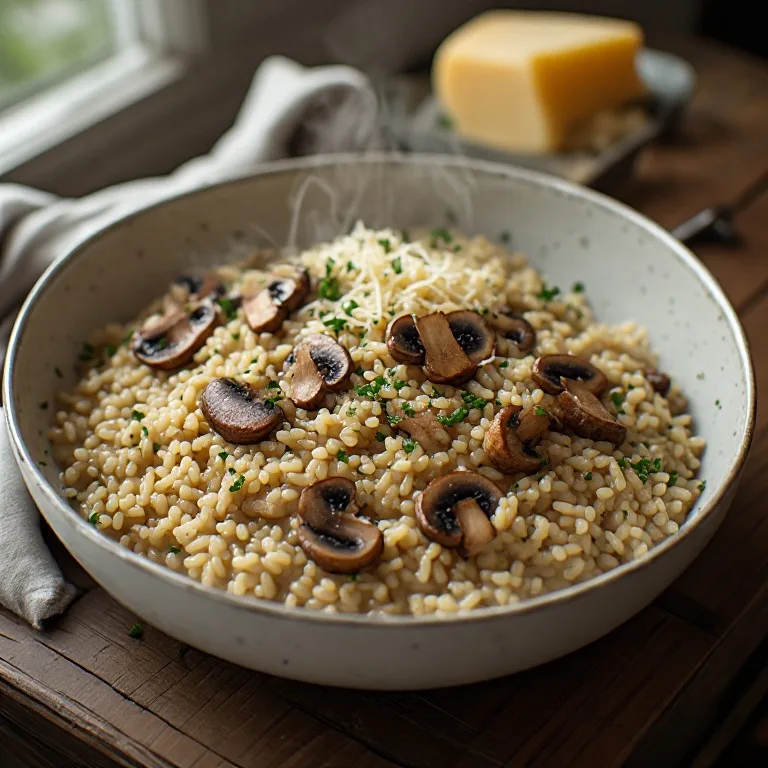
Yes — use the same restaurant technique as mushroom risotto. Cook the risotto through the stock-addition phase until the rice is 80% done (still with a firm center), then spread it thin on a parchment-lined baking sheet and refrigerate for up to 24 hours. Make the shell stock up to 2 days ahead (refrigerate or freeze it). At service, reheat the risotto in a pan with 1 to 2 ladles of hot stock, cook the final 4 to 5 minutes until just al dente, then execute the mantecatura. Cook the lobster in tarragon butter only at service — the entire lobster-cooking step takes 5 minutes and cannot be done ahead without quality loss. This approach limits active service cooking to under 10 minutes, which is entirely manageable while guests are at the table.

Love this recipe? Share it!

Free PDF: our 12 most-wanted copycat recipes — instant download.

Made it? Buy us a coffee

Every recipe here is free, with no paywalls. If this one was a hit at your table, a small tip keeps new copycats coming.

$

Ratings & Reviews

—
No ratings yet

Rate this recipe

Click a star to rate

Leave a Review

0/500

CS

Copycat Spices Editorial

Researched + fact-checked. Every recipe on Copycat Spices is built from published sources — official ingredient lists, brand-published recipes, interviews and food-science references — and fact-checked before it goes live, then written as clear, step-by-step instructions for home cooks of all skill levels.

Learn more about our mission →