


Pin It

Grandma Brown's Home Baked Beans

Grandma Brown's Home Baked Beans
Jump to Recipe
Prep 20 min (plus overnight soak) Cook 5 hours Serves 8
Quick answer: Copycat Grandma Brown's baked beans: soak 1 lb dried navy beans overnight, then drain and parboil for 20 minutes. Layer the par-cooked beans with 4 oz diced salt pork (or 4 strips thick-cut bacon) and 1 diced onion in a Dutch oven or deep covered baking dish. Stir together ½ cup dark brown sugar, ¼ cup molasses, ¼ cup ketchup, 1 tablespoon yellow mustard, 1 tablespoon apple cider vinegar, 1 teaspoon kosher salt, and ½ teaspoon black pepper; pour over the beans and add 3 cups of water. Cover tightly and bake at 300°F for 4 to 4½ hours, checking every hour and adding water to keep the beans just covered. Uncover for the final 30 to 45 minutes so the top glazes and deepens. Total active time: about 30 minutes. Beans improve the next day — make them ahead.

Shop the tools

Gear matched to this recipe. These are Amazon affiliate links — we may earn a small commission if you buy, at no extra cost to you.

As an Amazon Associate, Copycat Spices earns from qualifying purchases. Product images are generic illustrations, not the exact item listed.

Grandma Brown's Home Baked Beans

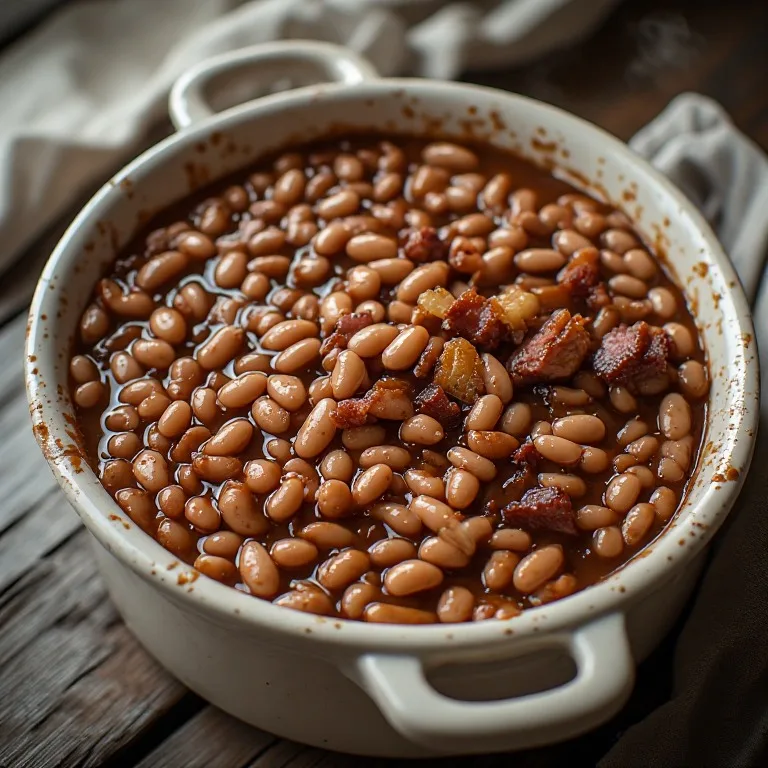
Copycat recipe for Grandma Brown's baked beans — the beloved upstate New York brand that disappeared from shelves in 2021. Navy beans baked low-and-slow in a molasses-brown sugar sauce with salt pork and onion. The oven-baked method is what made the original so different from canned beans.

Easy Prep: 20 min (plus overnight soak) Cook: 5 hours Total: 5h 20m8 servings ~$4.50/serving
Prep20 min (plus overnight soak)
Cook5 hours
Total5h 20m
Servings
8
At home~$4.50/serving
vs
Restaurant~$20.25/serving
You save ~78%

The Story Behind the Recipe

Grandma Brown's Home Baked Beans was a New York institution for more than 80 years. Lulu "Grandma" Brown began selling her baked beans out of open pans at a local grocery store in Mexico, New York (Oswego County, north of Syracuse) in the 1930s — a Depression-era hustle that turned into a regional empire. The brown-and-yellow cans, marked by Grandma Brown's illustrated portrait, became a fixture on upstate New York tables at Thanksgiving, church suppers, and summer cookouts. By the mid-2000s, the brand distributed throughout New York, Connecticut, Massachusetts, Vermont, New Hampshire, and Pennsylvania. Production stalled during the pandemic and the beans largely vanished from shelves by 2021; despite talk of a restart, the cans never reliably returned, leaving a loyal customer base with a lot of nostalgia and nothing to open.

The defining feature of Grandma Brown's — the quality that separated them from every other canned brand — was the method. The beans were genuinely oven-baked at low heat for hours, not pressure-cooked or quick-processed. That slow oven bake gives navy beans a creamy, almost silky interior with no grainy texture, a sauce that concentrates and caramelizes rather than staying thin and sweet, and a lacquered top where the molasses catches and deepens. At a Thanksgiving table, a side of baked beans from a quality restaurant costs $8–12. A batch of eight servings costs about $3.50 in dried beans and pantry staples. The only investment is time — and the beans are genuinely better the next day.

Nutrition Facts

Per serving (8 servings)
Calories285
Total Fat5g
Total Carbs50g
Dietary Fiber9g
Sugars19g
Protein12g
Sodium570mg

* Estimated values based on standard recipe preparation. Actual values may vary.

Ingredients

  • For the beans
  • For the sauce and protein

Instructions

💡
Pro tip: This recipe tastes even better the next day. The flavors need time to meld together in the fridge.
❄️
Storage: Keeps in an airtight container in the fridge for up to 2 weeks. Freezer-friendly for up to 3 months.
🦃 Free Thanksgiving cookbook — download now The Copycat Thanksgiving Cookbook A ready-made, photo-illustrated PDF of our best thanksgiving copycat recipes — free to download, no building required. Pay what you want to support if you love it.

Free PDF — instant download. We'll also send new seasonal copycat recipes now and then; unsubscribe anytime. Or just download it →

If you grew up in upstate New York, you know Grandma Brown’s baked beans. The brown-and-yellow cans — labeled with a hand-drawn portrait of Lulu “Grandma” Brown — were on the Thanksgiving table, at the church potluck, and beside every summer hot dog. When the brand stopped production around 2021, Oswego County forums lit up with people mourning the loss. This copycat recipe is built to replace them — a slow oven-baked batch that actually tastes like the can you remember.

Why the oven method is non-negotiable

Grandma Brown’s beans were different because they were genuinely oven-baked — not pressure-cooked, not quick-processed. Low heat (300°F) for four to five hours gives navy beans a creamy, nearly silky interior that the pressure-cooking process can’t replicate. The sauce doesn’t just sweeten — it concentrates, the molasses darkens and deepens, and the ketchup and brown sugar caramelize into something richer than the sum of the parts. The final 30 to 45 minutes without the lid lacquers the top in a glossy molasses glaze that is the most distinctive quality of the original.

Make these the day before you need them. The flavors integrate overnight and the texture improves. For a Thanksgiving table, this is one of the few dishes that is genuinely better as a make-ahead.

The beans

Navy beans — also sold as pea beans — are the only correct choice here. Their small size and starchy interior absorb the sauce through the entire bean during the long bake, turning creamy and cohesive. Great Northern beans are a workable substitute (slightly larger, a touch less starchy); avoid kidney, pinto, or cannellini, which have very different textures and will turn mushy.

Do not skip the overnight soak and the 20-minute parboil. The soak hydrates the beans evenly; the parboil kicks off softening so the final oven bake can reach a truly creamy interior in 4 to 5 hours rather than 7 to 8.

The sauce

The sauce is a New England classic: dark brown sugar and molasses for depth and sweetness, ketchup for body and a mild tomato note, yellow mustard for a quiet tang, apple cider vinegar to balance the sweetness. Use unsulfured molasses (Grandma’s Brand or Brer Rabbit) — not blackstrap, which is too bitter, and not “mild” molasses, which is too thin to develop the right depth. Dark brown sugar matters here: it has more molasses than light, and that extra molasses is exactly what you’re building the sauce around.

A note on salt pork

Salt pork is the traditional choice — it adds pork richness and fat without smoke. If you can’t find it (it’s in the bacon section at most supermarkets, usually vacuum-sealed), thick-cut bacon works and adds a mild smoky note that, while not strictly authentic, is genuinely delicious. For a vegetarian version, omit the pork and add 1 tablespoon smoked paprika and 1 tablespoon butter — you get richness and a hint of smoky depth without animal protein.

Serving

Serve as a Thanksgiving side next to Gordon Ramsay’s Thanksgiving turkey and Cracker Barrel cornbread dressing, or take them to a summer barbecue beside Chipotle’s smoked brisket and a bowl of KFC coleslaw. They hold at room temperature for an hour and reheat well. The beans freeze perfectly in 2-cup portions for up to three months — a reasonable return on the 5-hour investment.
🥗

Make It Healthier

Love Grandma Brown's Home Baked Beans but want a lighter version? Try these simple swaps:

  • ✓Swap salt pork for turkey bacon (4 strips) — same smoky richness, about 60% less saturated fat per serving
  • ✓Reduce brown sugar to ¼ cup and add ½ teaspoon cinnamon — cinnamon amplifies perceived sweetness so the reduction is nearly invisible
  • ✓Use low-sodium ketchup (Heinz No Salt Added) to bring sodium down to roughly 380mg per serving without touching the flavor
  • ✓Make a double batch and freeze in 2-cup portions — the 5-hour oven bake amortizes perfectly, and the beans keep well frozen for up to 3 months

Frequently Asked Questions

What is the copycat recipe for Grandma Brown's baked beans?

Soak 1 lb dried navy beans in cold water overnight (at least 8 hours). Drain, put in a pot with fresh water covering by 3 inches, bring to a boil, and cook for 20 minutes. Drain again. In a Dutch oven or deep covered baking dish, combine the par-cooked beans with 4 oz finely diced salt pork (or 4 strips thick-cut bacon, chopped), 1 medium yellow onion diced, ½ cup dark brown sugar, ¼ cup molasses, ¼ cup ketchup, 1 tablespoon yellow mustard, 1 tablespoon apple cider vinegar, 1 teaspoon kosher salt, and ½ teaspoon black pepper. Add 3 cups water. Cover tightly and bake at 300°F for 4 to 4½ hours, adding water when the beans look dry. Uncover for the last 30 to 45 minutes to glaze the top.

What kind of beans did Grandma Brown's use?

Navy beans — sometimes called pea beans — which are small, oval white beans that turn creamy and tender with a long, slow cook. Navy beans are the classic New England baked bean: their size means they absorb sauce through the entire bean rather than just the exterior, and their starch content thickens the surrounding liquid into a saucy glaze rather than watery broth. Do not substitute kidney beans, pinto beans, or cannellini — the texture and cook time are wrong for a true baked bean. Great Northern beans are the closest substitute if navy beans are unavailable; they're slightly larger and a bit less starchy, so the result will be a touch less creamy.

What made Grandma Brown's baked beans different from other canned beans?

The method: they were genuinely oven-baked, not pressure-cooked. Commercial canned beans are typically processed at high pressure to achieve food safety and shorten production time — the beans become soft but can have a slightly grainy or mushy texture and the sauce stays thin. Grandma Brown's beans were slow-baked in real ovens at low heat, which gives the beans a creamier, more cohesive texture, allows the sauce to concentrate and caramelize over hours, and produces a lacquered, slightly crisp top layer where the molasses deepens. That combination — creamy interior, thick sauce, dark glazed top — is why generations of upstate New Yorkers remember them as tasting fundamentally different from every other can on the shelf.

Can I make Grandma Brown's baked beans in a slow cooker instead of the oven?

Yes, but the result won't be identical. A slow cooker on low for 8–10 hours (after overnight soaking and a 20-minute parboil) produces tender, flavorful beans with well-developed sauce. What you miss is the glazed, lacquered top that forms only when a lidless pan is exposed to dry oven heat for the final 30–45 minutes. If you're using a slow cooker, remove the lid for the last 30 minutes and switch it to high — some of the glaze effect comes through. The oven method is worth doing when you have the time because the caramelization in the top layer is the most distinctive quality of the original.

Do I need to soak dried navy beans overnight?

Yes, for this recipe — and both the overnight soak and the parboil step before baking are important. Dried navy beans are dense and require extended hydration before the oven can finish them in a reasonable time. Skipping the soak means the beans need 6 to 7 hours in the oven and are more prone to uneven texture (some burst, some remain grainy). The parboil — 20 minutes in boiling water after soaking — kicks off softening and shortens the final bake time without pre-cooking them through. If you're pressed for time, use the quick-soak method: bring beans and water to a boil, cook 2 minutes, turn off heat, and soak 1 hour. This works but doesn't hydrate as evenly as overnight; add 30 minutes to the final bake.

Can I use canned navy beans instead of dried?

You can, but the result is different in texture. Canned beans are already fully cooked; a 5-hour bake will make them very soft — almost mushy — which is not the target here. If using canned: skip the overnight soak and parboil entirely. Use three 15-oz cans of navy beans (drained and rinsed), reduce the water to 1 cup (the beans don't need to be covered), and bake at 300°F for 2 to 2½ hours covered, then uncover for 30 minutes to glaze. The texture will be softer than dried bean baked beans but the flavor is comparable. The longer bake with dried beans is worth it if you're making these for a holiday table.

What is salt pork and can I substitute bacon?

Salt pork is a cured (not smoked) cut from the fatty belly or back of pork, heavily salted as a preservative. It's the traditional enriching fat in New England baked beans — it adds richness and a subtle pork flavor without the smoke that bacon brings. Grandma Brown's original used pork fat as an enriching ingredient rather than a bold flavor statement. Thick-cut bacon is an easy and widely available substitute: use 4 strips, chop them into ½-inch pieces, and cook briefly in a skillet to render some fat before adding them to the beans (or add raw — they'll render in the oven). The beans will have a mild smoky undertone that's not authentic to the original but is deeply delicious. For a vegetarian version, omit the pork entirely and add 1 tablespoon of smoked paprika and 1 tablespoon of butter for richness.

Why do baked beans taste better the next day?

Two things happen overnight: the sauce penetrates further into each bean (osmotic diffusion continues as the beans cool and the sauce thickens), and the molasses and brown sugar flavors mellow and integrate with the bean starch. A freshly baked batch has a slightly sharper, brighter flavor with distinct notes of ketchup and mustard; after an overnight rest in the refrigerator, the flavors round out into a unified, deeply savory-sweet whole. Grandma Brown's beans were sold cooked in the can, which meant they had already gone through this integration time. Reheat slowly on the stovetop or covered in a 300°F oven, adding a splash of water if the sauce has thickened too much.

Love this recipe? Share it!

Free PDF: our 12 most-wanted copycat recipes — instant download.

Made it? Buy us a coffee

Every recipe here is free, with no paywalls. If this one was a hit at your table, a small tip keeps new copycats coming.

$

Grandma Brown's is a trademark of its owner, used here only to describe the dish this recipe recreates. This is an independent copycat written in our own words — Copycat Spices is not affiliated with, endorsed by or sponsored by Grandma Brown's.

Ratings & Reviews

—
No ratings yet

Rate this recipe

Click a star to rate

Leave a Review

0/500

CS

Copycat Spices Editorial

Researched + fact-checked. Every recipe on Copycat Spices is built from published sources — official ingredient lists, brand-published recipes, interviews and food-science references — and fact-checked before it goes live, then written as clear, step-by-step instructions for home cooks of all skill levels.

Learn more about our mission →