


Copycat Hardee’s Made From Scratch Biscuits
Prep time: 10 min Cook time: 14 min Servings: 8 biscuits
Hardee’s doesn’t make their biscuits from a frozen puck. Every morning, before the breakfast rush, employees in each restaurant mix and hand-pat biscuits from scratch using shortening, self-rising flour, and buttermilk. The chain has trademarked the name “Made From Scratch” because it is genuinely true — and it is the single biggest thing separating Hardee’s from the competition.
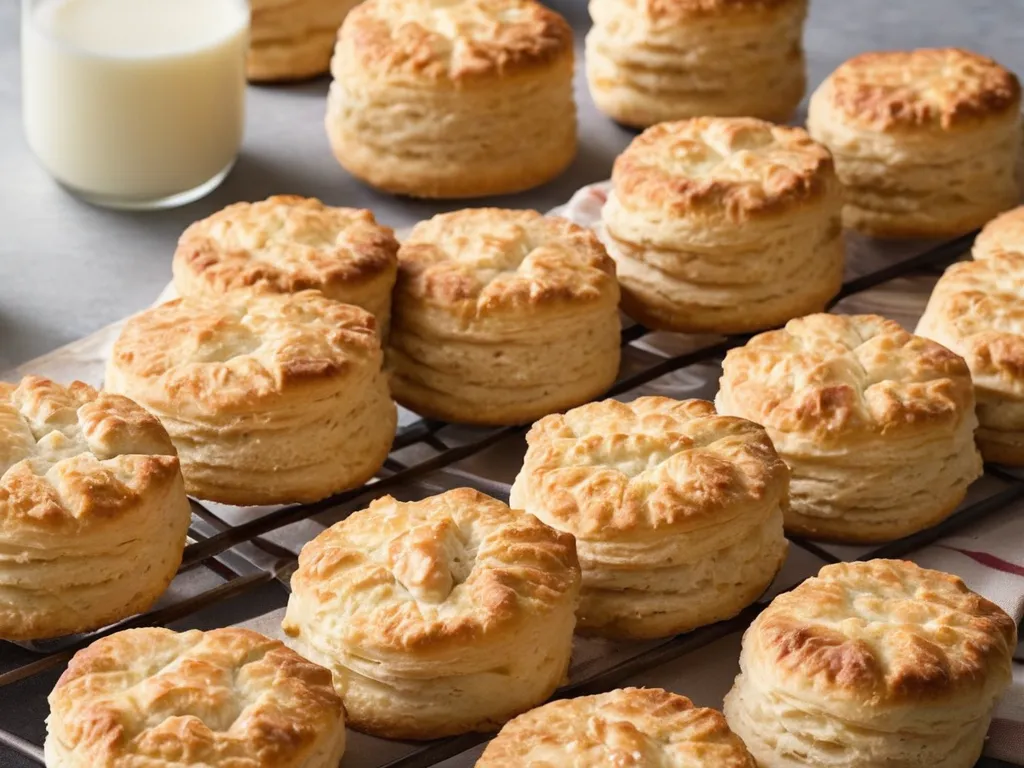
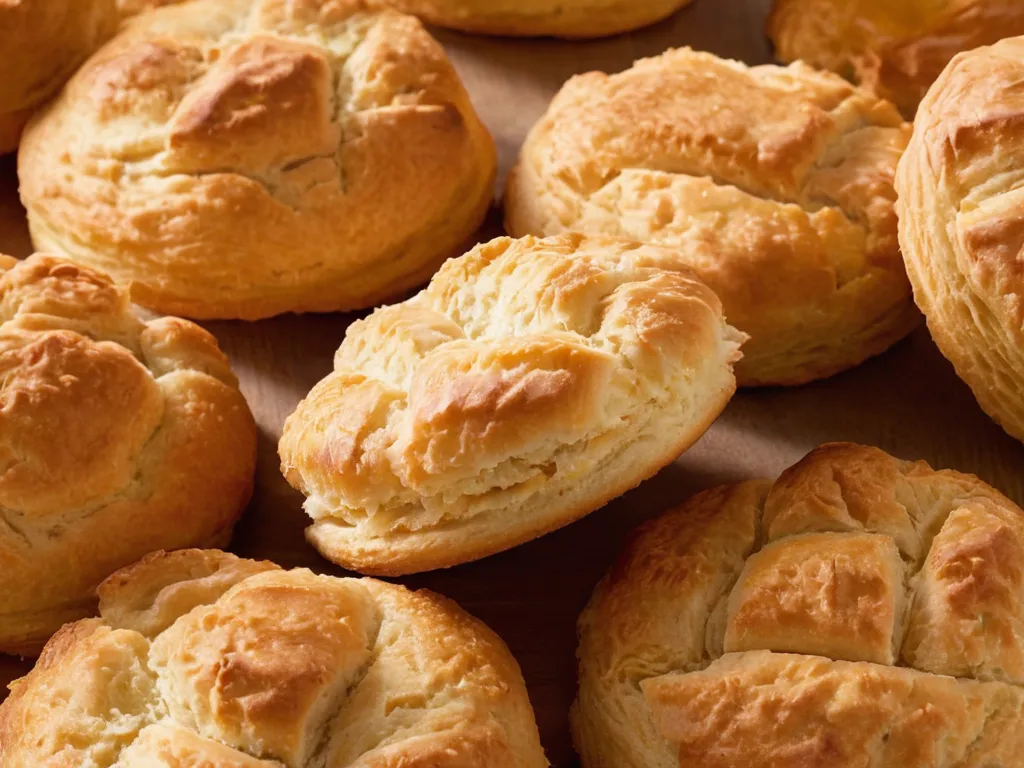
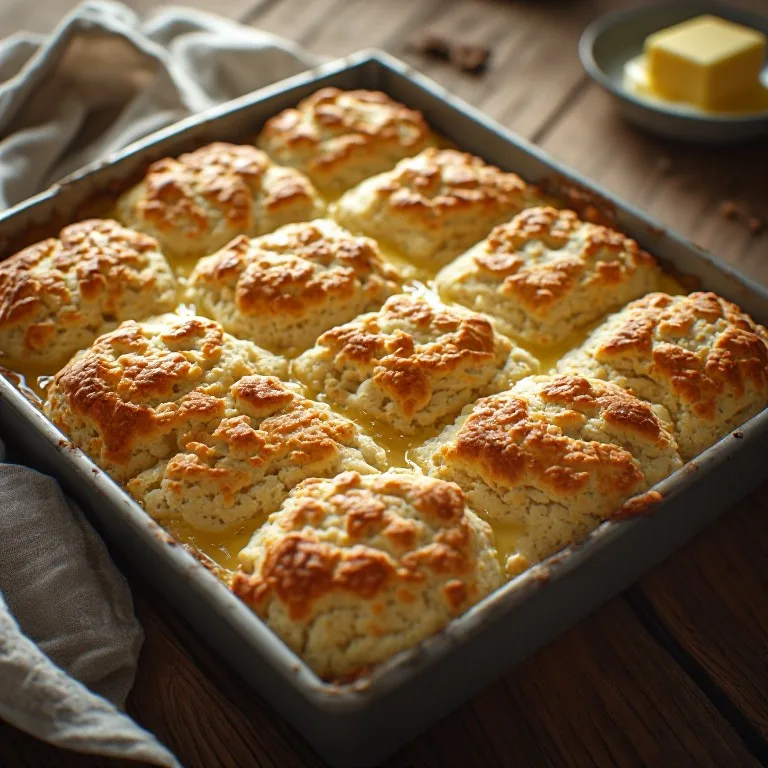
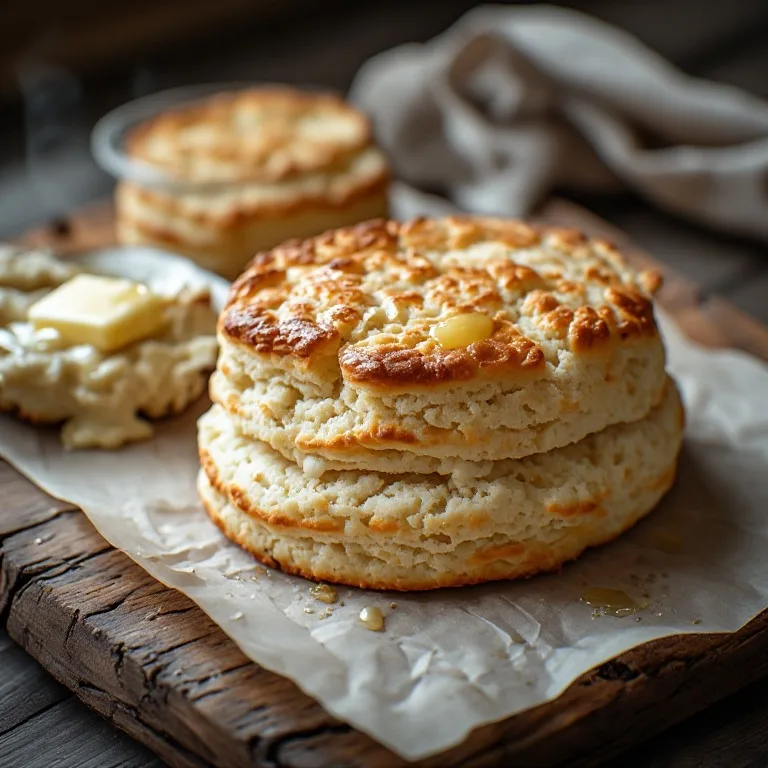
The result is a biscuit that is softer and more tender than a butter-laminated style. Shortening produces a different texture than butter: it does not create flaky layers, but it makes the interior exceptionally pillowy with a slight chew, and the exterior gets a clean golden crust without the richness of browned butter. These biscuits are built to hold a heavy breakfast filling — sausage, egg, bacon — without falling apart.
This recipe mimics that process exactly. No rolling pin. No laminating. Just a quick mix, a light hand-pat, and a hot oven.
The Shortening vs. Butter Difference
Most home biscuit recipes call for cold butter. Butter contains water, which converts to steam during baking and pushes the layers apart, creating the flaky, puff-pastry-like texture of biscuits like those at Cracker Barrel or a Southern diner. That is a great biscuit. It is not a Hardee’s biscuit.
Hardee’s uses vegetable shortening — Crisco or a commercial equivalent. Shortening is 100% fat with no water. It coats the flour proteins without creating steam layers, producing a biscuit that is dense in the best sense: tight-crumbed, soft, and sturdy. It is the same principle that makes pie crust made with Crisco more tender than a butter crust. The flavor is milder and cleaner, which lets the buttermilk tang come through without competition.
If you want to split the difference, you can use 1/2 cup shortening plus 2 tablespoons cold cubed butter. You get a biscuit that leans toward Hardee’s texture but with a slightly richer flavor. Both versions work.
Why Self-Rising Flour
Hardee’s uses a proprietary self-rising flour blend developed for consistent results across thousands of locations. At home, self-rising flour (which already contains baking powder and salt) is the closest match. The leavener ratio is calibrated for tender rise without any sourness, and the consistent protein content produces a predictable biscuit every time.
If you don’t have self-rising flour, substitute 4 cups all-purpose flour + 2 tablespoons baking powder + 1 teaspoon salt + 1/4 teaspoon baking soda. The baking soda adds a tiny bit of additional rise and reacts with the buttermilk for tenderness.
The Hand-Pat Technique
Hardee’s employees do not use a rolling pin. They pat the dough out by hand to an even thickness, then cut it with a round cutter. This matters because a rolling pin applies even, compressive pressure that can seal the top and bottom of the biscuit, inhibiting rise. Hand-patting is uneven and gentle, leaving air pockets throughout the dough.
At home, flour your hands generously and press the dough into a rough rectangle on a floured surface. It does not need to be perfect. Cut your rounds, re-pat the scraps once, and bake. The less you touch the dough, the better the biscuit.
What to Serve With These
Hardee’s biscuits are built for breakfast sandwiches. The Monster Biscuit — the chain’s most famous breakfast item — stacks two folded eggs, a sausage patty, two strips of bacon, and two slices of cheese (American and Swiss) inside one of these biscuits. It weighs in at 700+ calories and is exactly as satisfying as it sounds. At home, you can replicate the same build using two eggs cooked flat in butter and folded, a pork sausage patty, crisp bacon, and slices of American and Swiss cheese melted on while still in the pan.
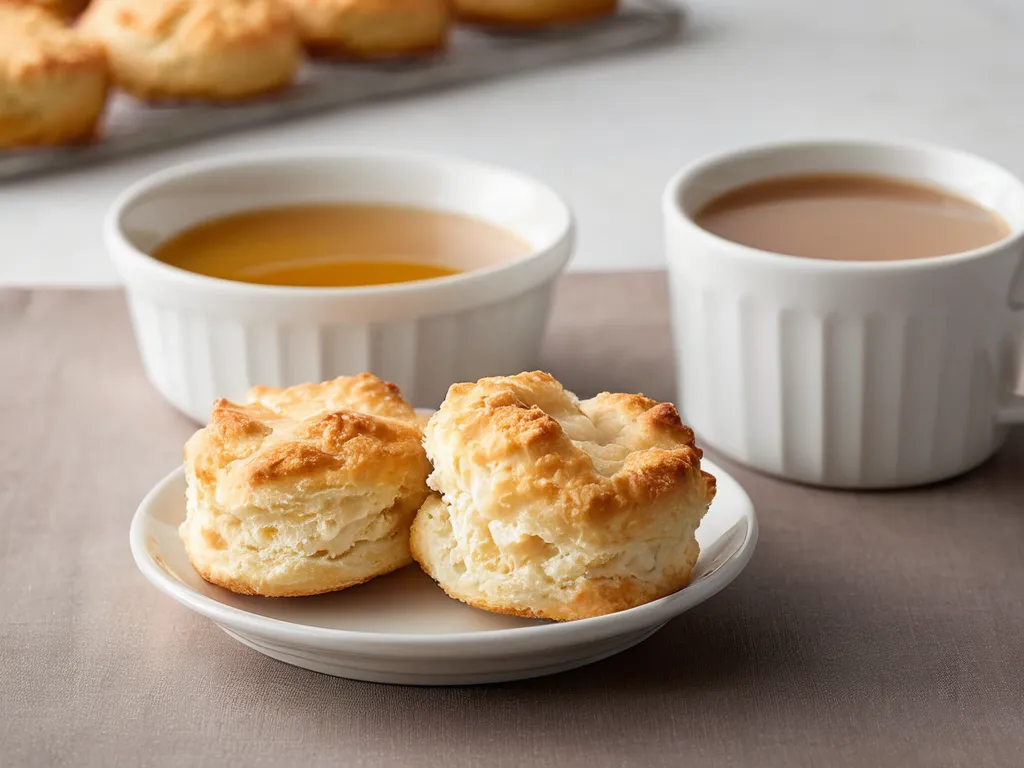
These biscuits are also excellent with Bob Evans Sausage Gravy — the shortening base absorbs thick, creamy gravy in a way that butter-laminated biscuits sometimes don’t, holding their shape rather than dissolving.
Tips & Variations
- Cold ingredients, cold hands. The entire premise of a good biscuit is cold fat that has not melted into the flour. Run your hands under cold water before working the shortening in, or use a pastry cutter the whole way to keep hand heat out of the equation.
- Don’t overmix. Fifteen strokes with a spoon is enough. The dough will look rough and shaggy and that is correct. A smooth, fully incorporated dough has already been overworked.
- Touch the scraps once. Pat the scraps together and cut one more round of biscuits from them. Handling them a second time will make the biscuits from those scraps noticeably denser — they are still good, but you will be able to tell the difference.
- Make biscuit sandwiches. These are the right size and structure to hold a fried egg and a sausage patty. The 3-inch cutter produces a large, restaurant-scale biscuit; a 2.5-inch cutter gives you something closer to a slider size.
- Gravy biscuits. Split hot biscuits in half, pour a ladleful of white sausage gravy over the bottom half, and rest the top half on the side. This is biscuits and gravy the fast-food counter way.
- Freeze unbaked. Cut the biscuits, arrange on a sheet pan, freeze solid, then transfer to a zip bag. Bake from frozen at 425°F for 18 to 20 minutes. The results are nearly identical to fresh.
Storage & Reheating
Baked biscuits keep at room temperature in an airtight container for 2 days or refrigerated for up to 4 days. They freeze well for 2 months — wrap individually in plastic wrap, then bag together.
To reheat, place in a 350°F oven for 5 to 7 minutes. Split and toasted cut-side down in a dry skillet over medium heat for 2 minutes is even better for a breakfast sandwich base — it crisps the interior and gives the biscuit structure. Avoid the microwave if possible; it makes the interior gummy.
More Biscuit Copycat Recipes
If you are working through the regional biscuit pantheon:
- Copycat KFC Biscuits — KFC’s biscuits lean buttery and slightly sweet with a tight crumb and golden top; they’re made with Bisquick-style mix and a heavy hand of shortening plus buttermilk.
- Copycat Popeyes Biscuits — Popeyes biscuits are butter-forward, slightly flaky, and heavily salted — a Southern Louisiana style that is richer and more layered than Hardee’s.
- Copycat Cracker Barrel Biscuits — the cold-butter, laminated style with that tall, flaky pull-apart texture; a different technique and a different outcome, but equally worth knowing.