
Pin It

Harry's Bar Beef Carpaccio (Cipriani's Original, Made at Home)

Harry's Bar Beef Carpaccio (Cipriani's Original, Made at Home)
Jump to Recipe
Prep 15 min (plus 30 min freezer) Cook 0 min Serves 4
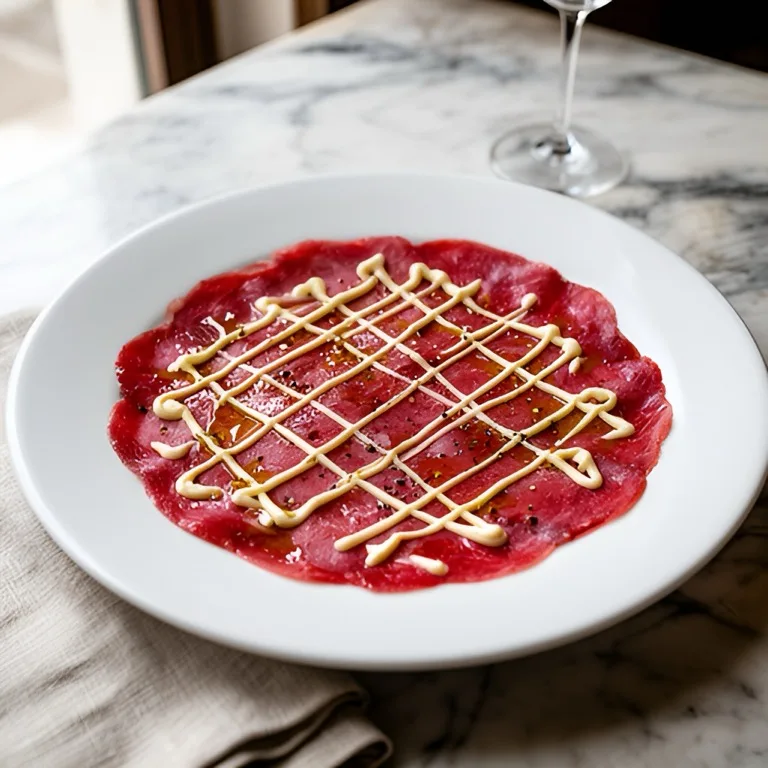
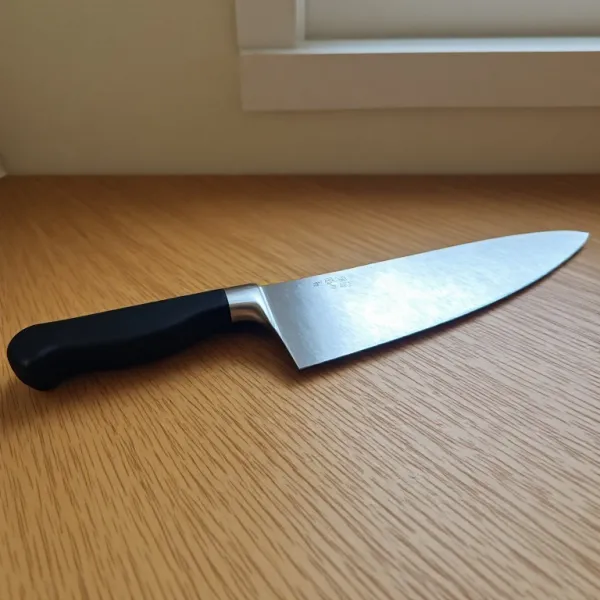
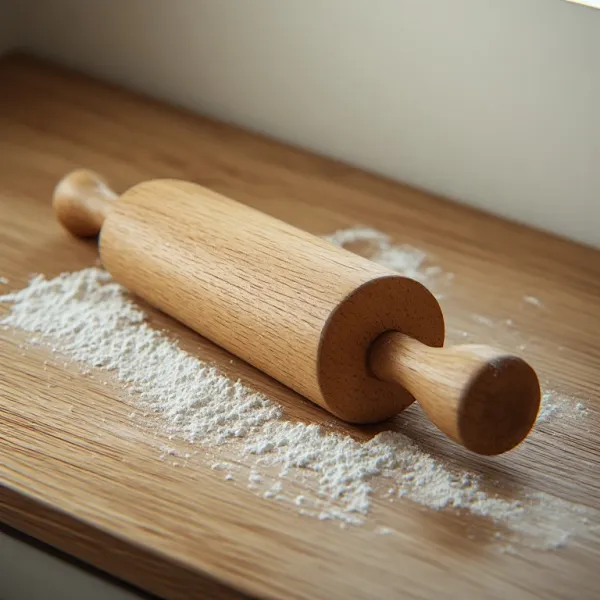
Quick answer: Wrap 12 oz (340g) of beef tenderloin in plastic wrap and freeze for 30 to 40 minutes until very firm but not solid — this is what makes clean paper-thin slicing possible. While the beef chills, make the Cipriani sauce: whisk together 3/4 cup of good-quality mayonnaise (Hellmann's works; homemade is better), 1.5 teaspoons of Worcestershire sauce, and 1.5 teaspoons of fresh lemon juice. Season with fine sea salt and freshly ground white pepper. Now add whole milk, one teaspoon at a time, whisking after each addition, until the sauce is thin enough to pour in a fine ribbon from a spoon tip — usually 3 to 5 teaspoons total. The sauce should be noticeably looser than standard mayonnaise. Refrigerate while you slice the beef. Remove the beef from the freezer and use the sharpest, thinnest knife you own — a long slicing knife, ideally — to cut across the grain into the thinnest slices possible, aiming for 1/16 inch or less. If a slice is uneven or too thick, place it between two sheets of plastic wrap and press flat with the smooth bottom of a skillet or a rolling pin, working gently from the center outward. Arrange the slices in a single layer, slightly overlapping, on four chilled plates. Drizzle the Cipriani sauce across the beef in thin, overlapping ribbons — this drizzle pattern, covering most of the beef's surface, is the visual signature of the original. Season lightly with fleur de sel and white pepper. Serve immediately with crusty bread, grissini, or plain crackers. The original 1950 Harry's Bar version has no garnishes. Modern versions add a small handful of young arugula, a few Parmesan shavings, or capers — all optional, none traditional.

Shop the tools

Gear matched to this recipe. These are Amazon affiliate links — we may earn a small commission if you buy, at no extra cost to you.

As an Amazon Associate, Copycat Spices earns from qualifying purchases. Product images are generic illustrations, not the exact item listed.

Harry's Bar Beef Carpaccio (Cipriani's Original, Made at Home)

The original beef carpaccio invented by Giuseppe Cipriani at Harry's Bar Venice in 1950 — paper-thin raw beef tenderloin with the classic Cipriani drizzle sauce of mayonnaise, Worcestershire, lemon, and milk. Four ingredients, no cooking, fifteen minutes. At Harry's Bar: €45. At home: about $5 a plate.

Easy Prep: 15 min (plus 30 min freezer) Cook: 0 min Total: 15 min4 servings ~$2.80/serving
Prep15 min (plus 30 min freezer)
Cook0 min
Total15 min
Servings
4
At home~$2.80/serving
vs
Restaurant~$12.60/serving
You save ~78%

The Story Behind the Recipe

In 1950 a Venetian countess walked into Harry's Bar with a problem. Amalia Nani Mocenigo had been advised by her doctor to eat only raw meat — and Giuseppe Cipriani, who had been running the bar since 1931, was not about to serve her a plate of plain steak tartare. He sliced a piece of beef paper-thin, laid it flat, and drizzled it with a sauce he improvised on the spot: mayonnaise loosened with milk, sharpened with Worcestershire and lemon. He named it carpaccio after Vittore Carpaccio, the 15th-century Venetian Renaissance painter whose canvases ran to deep, saturated reds and brilliant whites — the same colors as the plate in front of the countess.

Harry's Bar opened in 1931 when Cipriani lent £10,000 to Harry Pickering, a Boston socialite who had run out of money and been cut off by his family. Two years later Pickering walked in, repaid the loan with 40,000 lire extra, and suggested they open a bar together. The bar became a table for Hemingway, Orson Welles, Truman Capote, and Aristotle Onassis. In 2001 the Italian Ministry of Cultural Affairs declared it a national landmark — the only bar or restaurant in Italy to receive that designation in the previous century. Today a plate of carpaccio at Harry's Bar costs €40 to €50. At home, the four-ingredient Cipriani sauce takes three minutes to whisk together, and the only real skill is slicing the beef thin enough.

Nutrition Facts

Per serving (4 servings)
Calories340
Total Fat29g
Total Carbs2g
Dietary Fiber0g
Sugars1g
Protein22g
Sodium270mg

* Estimated values based on standard recipe preparation. Actual values may vary.

Ingredients

Instructions

💡
Pro tip: This recipe tastes even better the next day. The flavors need time to meld together in the fridge.
❄️
Storage: Keeps in an airtight container in the fridge for up to 2 weeks. Freezer-friendly for up to 3 months.
🎃 Free Halloween cookbook — download now The Copycat Halloween Cookbook A ready-made, photo-illustrated PDF of our best halloween copycat recipes — free to download, no building required. Pay what you want to support if you love it.

Free PDF — instant download. We'll also send new seasonal copycat recipes now and then; unsubscribe anytime. Or just download it →

Beef carpaccio was invented in 1950 because a Venetian countess had been told by her doctor to eat only raw meat. The dish that Giuseppe Cipriani improvised for her at Harry’s Bar — paper-thin beef, a thinned mayonnaise sauce drizzled across it in ribbons — has since become one of the defining appetizers of Italian-American fine dining and appeared on menus in more countries than almost any other single-dish invention of the 20th century. The recipe has four ingredients and requires no cooking.


  • Freeze beef tenderloin 30–40 minutes until very firm; this is what makes paper-thin slicing possible.
  • Make the Cipriani sauce: mayonnaise + Worcestershire + lemon + milk, thinned until it pours in a ribbon.
  • Slice as thin as you can; press between plastic wrap if uneven.
  • Drizzle sauce across the cold beef in ribbon lines. Serve immediately — do not sauce ahead.
  • The original 1950 version has no arugula, no Parmesan, no capers. Those are modern additions.

The origin: a countess, a doctor’s order, and a Venetian painter

In 1950, Harry’s Bar was already nineteen years old and carrying a reputation built on two facts: the Bellini cocktail (invented two years earlier, in 1948), and the long list of famous guests who had found their table here. Ernest Hemingway was the most famous regular — he wrote portions of Across the River and Into the Trees while drinking Montgomery martinis at the bar. Orson Welles, Truman Capote, and Aristotle Onassis all came regularly. The bar’s founder, Giuseppe Cipriani, had opened it in 1931 with money lent to him by a Boston socialite named Harry Pickering, who had been cut off by his family during a rough patch in Venice. Pickering repaid the loan two years later with a 40,000-lire thank-you on top, and the two opened the bar together on the Calle Vallaresso, fifty meters from the Grand Canal.

The carpaccio came from necessity. Countess Amalia Nani Mocenigo, a regular at the bar, arrived one afternoon with a medical directive to eat exclusively raw meat. Cipriani did not want to serve her a bowl of plain minced beef. He sliced a piece of sirloin as thin as he could manage — the thickness of a few sheets of paper — laid it across a plate, and created a sauce on the spot: mayonnaise, loosened with milk until it could be poured, sharpened with Worcestershire and a squeeze of lemon. He named the dish carpaccio after Vittore Carpaccio, the 15th-century Venetian Renaissance painter whose major works — The Legend of Saint Ursula, Hunting on the Lagoon — ran to vivid reds and brilliant whites. The colors of the plate matched the colors of the canvases.

The dish spread from Venice to Italian-American fine dining, then to every steakhouse and bistro in the Western world, then to fish and vegetables. The word “carpaccio” now names anything thin-sliced and raw. The original version — beef, Cipriani sauce, nothing else — remains the template.

Two things most recipes get wrong

The most common failure in home carpaccio is making the sauce too thick. The Cipriani sauce is designed to pour, not spread. It should fall from a spoon in a fine, slow ribbon. Standard mayonnaise straight from the jar is far too thick — it will sit in a lump on the beef rather than coating it in a thin film. The milk is not optional. Add it one teaspoon at a time and whisk thoroughly after each addition until you reach the drizzling consistency.

The second common failure is skipping the freezer step. Beef at refrigerator temperature is soft enough that even a sharp knife will compress it before cutting through, producing slices that are thicker in the middle than at the edges. Partially frozen beef — very firm but not solid — has muscle fibers rigid enough to slice cleanly. The thirty minutes in the freezer is what makes home carpaccio look like restaurant carpaccio rather than a ragged stack of uneven beef strips.

For a full Harry’s Bar evening at home, start with the Bellini cocktail — two ingredients, five minutes, invented here in 1948 — and the carpaccio as a first course. The combination covers both of the bar’s most famous inventions in a single meal.

What to serve it with

The original 1950 presentation at Harry’s Bar was strictly two components: the beef and the sauce. No arugula, no Parmesan shavings, no capers, no truffle. The modern restaurant version almost universally adds at least two of those garnishes, and they all improve the dish for contemporary palates — the arugula adds bitterness and texture, the Parmesan adds salt and umami depth, the capers add brine. None of them are traditional.

Serve carpaccio as a first course with crusty bread or grissini for the sauce. A glass of something cold and high-acid works well alongside — the Harry’s Bar Bellini if you want to stay in Venice, or a crisp, unoaked white wine (Pinot Grigio, Soave, Vermentino). The dish is light enough to precede a pasta or a main course without filling guests up.

If you are building a broader Italian fine dining meal at home, the carpaccio pairs naturally with the Lilia mafaldine with pink peppercorn sauce as a second course — both dishes are Italian-American classics centered on minimal ingredients and clean, precise flavors.

🥗

Make It Healthier

Love Harry's Bar Beef Carpaccio (Cipriani's Original, Made at Home) but want a lighter version? Try these simple swaps:

  • ✓Use eye of round instead of beef tenderloin — less fat, far cheaper ($5–$8 vs. $30–$45 per pound), and because it is so lean it slices cleanly when frozen; slice it as thin as possible and the result is nearly identical.
  • ✓Cut the sauce by half and replace the other half with a drizzle of extra-virgin olive oil and fresh lemon — this halves the calories while keeping the dish feeling rich.
  • ✓Skip the mayo entirely for a lighter 'modern carpaccio': just extra-virgin olive oil, fresh lemon juice, fleur de sel, and a few capers — zero-cook, 150 calories, still excellent.
  • ✓The beef portion is naturally lean and high-protein; the calories in this dish come almost entirely from the mayo-based sauce, so the easiest lever is just sauce quantity.

Frequently Asked Questions

Is it safe to eat raw beef at home?

Raw beef carries a small but real risk of bacterial contamination — primarily E. coli and Salmonella on the exterior of the meat. The safest approach for home carpaccio is to buy the freshest possible beef from a reputable butcher and ask specifically for meat intended for raw preparation. Whole muscle cuts like tenderloin have bacteria only on the exterior surface (unlike ground beef, where surface bacteria are mixed throughout); for carpaccio, briefly searing or blowtorching the exterior of the tenderloin before freezing and slicing destroys exterior bacteria while leaving the center completely raw — many restaurants do this. The second mitigation: partially freeze the beef before slicing, which firms the surface and reduces bacterial transfer during handling. If you are immunocompromised, pregnant, or serving older guests or young children, consult your doctor before serving raw beef or substitute very rare (but fully seared) beef.

What is the best cut of beef for carpaccio — tenderloin, sirloin, or eye of round?

All three work, and the choice depends on your priorities. Beef tenderloin (filet mignon roast) is the modern restaurant standard: no connective tissue, naturally very tender, slices cleanly, and has a mild, buttery flavor. It costs $30–$45 per pound. The original Harry's Bar version was made with lean sirloin (some accounts say tenderloin); both are well documented. Eye of round is the best budget substitute: extremely lean, economical ($5–$8 per pound), and it slices cleanly when frozen because it has almost no fat. The lean flavor is more intense than tenderloin, which some people prefer with a rich sauce. Sirloin tip is a middle-ground option — slightly more fat marbling than eye of round, still affordable. The one cut to avoid is ribeye or any heavily marbled cut; the fat veins make thin slicing difficult and the pieces fall apart. Whatever cut you choose, have your butcher trim it to a clean cylinder before you freeze it — removing every trace of fat, sinew, and connective tissue on the exterior.

What if I can't slice the beef thin enough at home?

A few practical solutions. The most reliable: ask your butcher to slice it. Many butchers with an electric meat slicer will do this for you, sometimes for free, and the results are far more uniform than hand slicing. If you are slicing at home, the key variables are sharpness of the knife and temperature of the beef — a dull knife on semi-frozen beef will tear; a razor-sharp knife on firmly frozen beef will glide. A long, thin-bladed slicing knife (a carving knife or Japanese nakiri) works better than a thick chef's knife. If slices are still too thick, the plastic-wrap-and-press method works well: lay each slice between two sheets of cling film and press flat with the smooth bottom of a heavy skillet, working gently from the center outward. Aim for translucency — when you hold a slice up to the window, you should be able to see light through it.

Can I make carpaccio ahead of time for a dinner party?

Yes, with one limit. The Cipriani sauce can be made up to 3 days ahead and refrigerated, covered. The beef can be sliced, laid on plates, covered tightly with plastic wrap, and refrigerated for up to 1 hour before serving — this actually helps, as the slices firm up slightly again after slicing and are easier to plate cleanly. What you cannot do is sauce the plates in advance: the acid in the sauce begins to 'cook' the surface of the beef within 15 to 20 minutes of contact (the same way ceviche works), turning the beef gray and changing its texture. Sauce the plates immediately before bringing them to the table. The order for a dinner party: slice and plate the beef up to 1 hour ahead (refrigerate covered), make the sauce up to 3 days ahead — then sauce and serve in the 30 seconds before each plate reaches the table.

What is the difference between carpaccio and beef tartare?

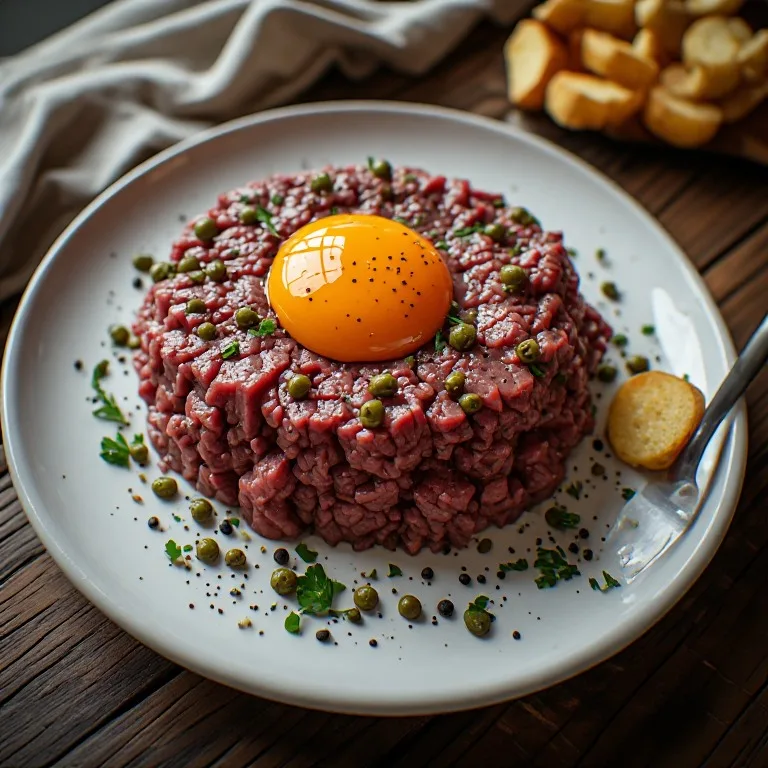
The preparation and the texture. Beef tartare is chopped or minced raw beef mixed with condiments — typically mustard, capers, shallots, raw egg yolk, Worcestershire, and hot sauce — producing a dense, chunky, room-temperature mixture served in a mound. Carpaccio is beef sliced paper-thin and laid flat on the plate, then dressed with a separate sauce that is drizzled on top rather than mixed in. The eating experience is entirely different: tartare has the texture of very loosely bound raw meat, while carpaccio is silky and almost melts at the touch. The flavors differ as well — tartare is aggressively seasoned (mustard, acid, hot sauce all mixed in), while carpaccio is subtly seasoned, letting the beef's natural flavor come through under the thin Cipriani sauce. Both are raw beef preparations, but they are distinct dishes with different French/Italian origins and different restaurant traditions.

Is the carpaccio on most restaurant menus the same as the original Harry's Bar version?

Almost never. The word 'carpaccio' has expanded far beyond its origin. Most restaurants today serve carpaccio with arugula, Parmesan shavings, capers, lemon, and olive oil — a version that developed in the 1970s and 1980s as Italian restaurants modernized the dish. Some serve it with balsamic glaze, truffle, or even citrus-cured beef. The term has also migrated to fish (salmon carpaccio, tuna carpaccio) and vegetables (beet carpaccio), none of which are beef at all. The original 1950 version at Harry's Bar is notably simpler: just thinly sliced beef and the four-ingredient Cipriani sauce, drizzled in ribbons. No arugula. No Parmesan. No capers. No olive oil. If you want to taste what the countess ate in 1950, this is it.

Why is the Cipriani sauce so much thinner than regular mayonnaise?

Because it is designed to be a drizzle sauce, not a spread. A thick mayonnaise applied to thin beef would overwhelm both the taste and the appearance — you would end up with a paste-covered plate rather than a dressed one. Cipriani thinned the mayo with milk until it could be poured in fine, consistent ribbons from a spoon or squeeze bottle, coating the beef with a thin, even film of flavor rather than a thick layer. The thinning ratio of 3 to 5 teaspoons of milk per 3/4 cup of mayo is specific — too little milk leaves it still too thick to drizzle cleanly; too much makes it watery and the sauce slides off the beef rather than clinging. The target consistency is a sauce that slowly falls off the edge of a spoon in a thin, unbroken ribbon rather than dropping in blobs. The Worcestershire and lemon are not just flavor additions — both are thin, water-based liquids that also help loosen the sauce, so the amount of milk you need depends on how much Worcestershire and lemon you add.

Love this recipe? Share it!

Free PDF: our 12 most-wanted copycat recipes — instant download.

Made it? Buy us a coffee

Every recipe here is free, with no paywalls. If this one was a hit at your table, a small tip keeps new copycats coming.

$

Harry's Bar is a trademark of its owner, used here only to describe the dish this recipe recreates. This is an independent copycat written in our own words — Copycat Spices is not affiliated with, endorsed by or sponsored by Harry's Bar.

Ratings & Reviews

—
No ratings yet

Rate this recipe

Click a star to rate

Leave a Review

0/500

CS

Copycat Spices Editorial

Researched + fact-checked. Every recipe on Copycat Spices is built from published sources — official ingredient lists, brand-published recipes, interviews and food-science references — and fact-checked before it goes live, then written as clear, step-by-step instructions for home cooks of all skill levels.

Learn more about our mission →