

Pin It

Brasserie Les Halles Steak Tartare (Anthony Bourdain's Recipe, Made at Home)

Brasserie Les Halles Steak Tartare (Anthony Bourdain's Recipe, Made at Home)
Jump to Recipe
Prep 20 min (plus 30 min chill) Cook 0 min (no cooking) Serves 4
Quick answer: Buy 1 1/4 pounds of fresh beef sirloin (or tenderloin) from a butcher you trust, asking specifically for beef to be eaten raw. Keep it very cold. Make the dressing: whisk 2 egg yolks in a bowl with 2 tablespoons Dijon mustard and 4 anchovy fillets (minced to a paste). Add 2 teaspoons ketchup, 1 teaspoon Worcestershire sauce, and a dash of Tabasco. Whisking constantly, drizzle in 1/4 cup neutral salad oil until the dressing emulsifies and thickens. Add 1 ounce (2 tablespoons) Cognac. Fold in 1 small shallot (finely minced), 2 ounces drained capers, 2 ounces finely chopped cornichons, and 4 sprigs of flat-leaf parsley, finely chopped. Work fast: trim any silver skin or sinew from the beef, then hand-chop it with a very sharp knife into a fine, even mince — never use a food processor. Add the chopped beef to the dressing and fold together gently with a spoon. Taste and adjust Tabasco, salt, and black pepper. Divide into four portions, shape each into a disk on chilled plates, and serve immediately with pommes frites or toasted bread, and a cornichon alongside.

Shop the tools

Gear matched to this recipe. These are Amazon affiliate links — we may earn a small commission if you buy, at no extra cost to you.

As an Amazon Associate, Copycat Spices earns from qualifying purchases. Product images are generic illustrations, not the exact item listed.

Brasserie Les Halles Steak Tartare (Anthony Bourdain's Recipe, Made at Home)

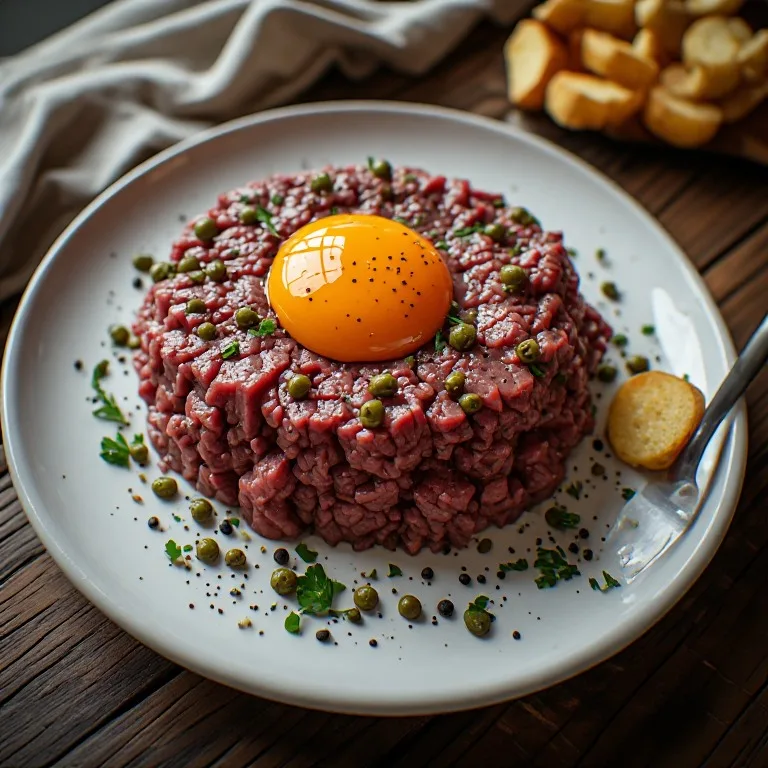
The Brasserie Les Halles steak tartare from Anthony Bourdain's cookbook: hand-chopped sirloin in a Cognac-Dijon-anchovy dressing with capers and cornichons. 4 servings, 20 minutes, no cooking required.

Medium Prep: 20 min (plus 30 min chill) Cook: 0 min (no cooking) Total: 20 min4 servings ~$4.50/serving
Prep20 min (plus 30 min chill)
Cook0 min (no cooking)
Total20 min
Servings
4
At home~$4.50/serving
vs
Restaurant~$20.25/serving
You save ~78%

The Story Behind the Recipe

Brasserie Les Halles opened in 1990 at 411 Park Avenue South in Gramercy, New York — a proper French brasserie serving steak tartare, moules marinières, and croque monsieur to a neighborhood that largely had none of that. Anthony Bourdain joined as executive chef in the late 1990s, and the kitchen became the setting for his 2000 memoir Kitchen Confidential: Adventures in the Culinary Underbelly. The book made him famous and the restaurant famous by association. In 2004 he published Anthony Bourdain's Les Halles Cookbook, in which the steak tartare recipe appears exactly as his kitchen served it — with one unusual addition that became his signature contribution: four anchovy fillets whisked into the egg-yolk dressing. The anchovy does not make it taste like fish. It dissolves completely and adds a layer of savory depth that distinguishes the Les Halles tartare from every other version.

Les Halles closed in August 2017 after filing for bankruptcy, undone by rising rents and the slow erosion that ends most New York restaurants eventually. Bourdain died in June 2018. People still leave flowers near the former Park Avenue South location. The recipe he left behind makes four servings and costs about $18 in groceries. He would have said that is the point.

Nutrition Facts

Per serving (4 servings)
Calories390
Total Fat26g
Total Carbs5g
Dietary Fiber1g
Sugars2g
Protein30g
Sodium680mg

* Estimated values based on standard recipe preparation. Actual values may vary.

Ingredients

  • Beef
  • Dressing
  • Mix-ins
  • To serve

Instructions

💡
Pro tip: This recipe tastes even better the next day. The flavors need time to meld together in the fridge.
❄️
Storage: Keeps in an airtight container in the fridge for up to 2 weeks. Freezer-friendly for up to 3 months.
🎃 Free Halloween cookbook — download now The Copycat Halloween Cookbook A ready-made, photo-illustrated PDF of our best halloween copycat recipes — free to download, no building required. Pay what you want to support if you love it.

Free PDF — instant download. We'll also send new seasonal copycat recipes now and then; unsubscribe anytime. Or just download it →

Copycat Brasserie Les Halles Steak Tartare (Anthony Bourdain’s Recipe, Made at Home)

Prep time: 20 minutes (plus 30 minutes to chill plates) Cook time: None Servings: 4

Brasserie Les Halles opened in 1990 on Park Avenue South in Gramercy. Anthony Bourdain worked there as executive chef in the late 1990s, wrote Kitchen Confidential from its kitchen, and in 2004 published the restaurant’s full cookbook. The book went out of print. The restaurant closed in 2017. Bourdain died in 2018. The steak tartare recipe is still here.

The dish is 20 minutes of knife work and mixing, no cooking required. Four ingredients separate the Les Halles version from generic steak tartare: anchovy paste dissolved into the dressing before anything else, a full ounce of Cognac, a Dijon-oil emulsion rather than a thin loose sauce, and — most critically — beef that has been hand-chopped with a sharp knife. Bourdain was clear about the last point in print and in conversation: a food processor destroys steak tartare.

The Beef: What to Buy and Why It Matters

Steak tartare is raw beef. What you buy, where you buy it, and how fresh it is are not decorative concerns.

Buy from a butcher you know, and tell them specifically that the beef will be eaten raw or that you are making steak tartare. A butcher cutting a fresh piece to order for you has far less surface exposure to potential contamination than pre-packaged supermarket beef that has been processed, wrapped, and refrigerated for unknown days.

The Les Halles Cookbook specifies sirloin. Center-cut sirloin tip — sometimes labeled sirloin tip roast or loin tip steak — is the cut: lean, moderately tender, with a clean beefy flavor that is not overwhelmed by excess fat or connective tissue. Beef tenderloin (filet mignon) is the other common choice for tartare, leaner and more expensive. Both work. Tenderloin is easier to hand-chop because it is softer and has no sinew to navigate; sirloin has slightly more flavor. At $8 to $12 a pound for sirloin versus $20 to $28 for tenderloin, this recipe costs roughly $12 to $16 in beef for four servings.

Keep the beef in the refrigerator until the knife hits it. Cold beef chops cleanly. Beef at room temperature is soft, and a soft protein mashed instead of cut produces paste.

The Dressing: Anchovy, Cognac, and a Real Emulsion

Most French steak tartare dressings are thin — a loose mixture of egg yolk, Dijon, Worcestershire, and Tabasco that coats the meat lightly. The Les Halles dressing is thicker: the oil is whisked in slowly, emulsified like a vinaigrette going toward mayonnaise, which gives it body and means it clings to each piece of chopped beef rather than pooling at the bottom of the bowl.

The anchovy is the signature. Four fillets, minced to a paste against the cutting board, whisked into the egg yolk with the mustard before any other ingredient. This is not intuitive — steak tartare does not conventionally contain fish — but the anchovy does not produce a fishy flavor. Dissolved into a fat-based emulsion, anchovy behaves as a flavor amplifier: it contributes glutamates that deepen the savory quality of the beef without announcing themselves. Remove the anchovy and you can taste the absence — the dressing works but is one layer flatter. Add the anchovy and you cannot tell what it is, only that something is correct.

The Cognac goes in last, after the oil is fully incorporated. One ounce carries flavor compounds that are only soluble in alcohol and bridges the minerality of the raw beef with the acid-rich dressing.

The Chop: Eight Minutes of Knife Work

This is the part that takes patience.

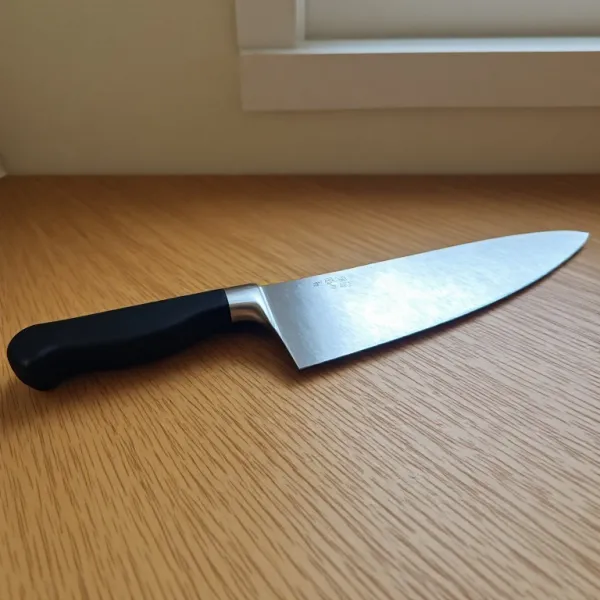
Place the cold, trimmed beef on a clean cutting board. Sharp knife — the sharpest you own. Use the tip of the knife as a pivot, rocking the heel up and down across the surface in smooth strokes. Work forward across the beef, then rotate the pile 90 degrees and repeat. Gather the mince back into a pile after every few passes and start again. The goal is a uniform, fine mince — pieces about the size of a small pea, with clean edges.

The whole process takes 7 to 8 minutes for 1 1/4 pounds of beef. It requires no unusual skill, only patience and a sharp knife. The result looks different from ground beef: there is visible texture, each piece has a distinct edge, and the color is a uniform bright red from cut cell edges rather than the brownish-pink of ground beef where cells have been crushed. That texture is what you are paying for when you order tartare at a restaurant.

Food Safety: What Bourdain Actually Said

Bourdain addressed the question of raw beef food safety directly and without a disclaimer: he was aware of the risks, considered them acceptable for healthy adults who sourced carefully, and chose to serve and eat steak tartare regardless. He was not dismissive of the concern. He was specific about risk management.

The practical version: buy from a trusted butcher, specify raw use, work with cold beef, serve and eat immediately, and keep raw beef away from other foods and surfaces. Beyond that — healthy adults who eat sushi, carpaccio, oysters, or rare steak are taking a comparable food safety position with every order. Pregnant women, immunocompromised individuals, the elderly, and children under 5 should not eat raw beef.

One caution worth stating plainly, because it circulates as kitchen folklore: freezing does not make raw beef bacterially safe. Freezing at 0°F for seven days is the FDA guideline for killing parasites in fish destined for sushi — it does not reliably kill E. coli O157:H7 or Salmonella, the surface bacteria that are the actual risk in beef. The only real controls are fresh sourcing, cold handling, and immediate service. If reducing surface bacteria matters to you, sear or blanch the outside of the whole muscle for a few seconds, trim the cooked layer away, and chop the interior — the inside of an intact cut is effectively sterile.

Cost Comparison: Les Halles vs. Homemade
Brasserie Les Halles (2017 prices)Homemade (4 servings)
Per order~$22–26—
4 orders~$88–104~$16–20
Per serving~$22–26~$4–5

The restaurant is gone. The recipe is in a cookbook, exactly as it was served.

Tips & Variations
  • The traditional tableside presentation: In French brasseries, steak tartare is sometimes assembled tableside — the server brings the dressing components and the chopped beef separately, combines everything at the table, and shapes it in front of the guest. At home, you can replicate this by preparing the dressing in advance and chopping the beef and mixing it fresh at the moment of service. It takes 3 minutes once the prep is done, and the theatrical element is real.
  • Add a raw egg yolk on top: Many classic French versions serve the tartare with an additional raw egg yolk placed in a small depression in the center of the disk. The guest mixes it in themselves at the table. This is entirely optional — the dressing already contains emulsified yolk — but it is traditional and adds richness.
  • Caper berries as a garnish: The recipe calls for capers (small buds) mixed into the tartare. Caper berries — the larger fruit of the same plant — make a distinctive garnish alongside the finished plate.
  • Spice adjustments: Bourdain’s recipe uses Tabasco as the heat element. Sriracha adds more garlic and vinegar; sambal oelek adds a fruitier heat. All three work; the quantity is always to taste.
  • For two servings: The recipe halves cleanly. Use just under 10 oz of beef, 1 egg yolk, 1 tablespoon Dijon, 2 anchovy fillets, and halve everything else. One large sirloin steak from a butcher is usually 10 to 12 oz — buy it, use it all, and make a slightly larger portion.
More French Brasserie Classics, Made at Home
🥗

Make It Healthier

Love Brasserie Les Halles Steak Tartare (Anthony Bourdain's Recipe, Made at Home) but want a lighter version? Try these simple swaps:

  • ✓Use center-cut beef tenderloin (filet mignon) instead of sirloin — it has slightly less saturated fat and the leanest fat profile of any steak cut, saving about 20 calories per serving while keeping all the tenderness.
  • ✓Reduce the oil in the dressing from 1/4 cup to 2 tablespoons and add 1 tablespoon of Greek yogurt to maintain emulsion and creaminess — cuts roughly 70 calories per serving without changing the texture noticeably.
  • ✓Serve on Belgian endive leaves (4 leaves per portion) instead of toasted baguette — you get a crunchy vessel with almost no calories, and the slight bitterness of the endive plays well against the rich tartare dressing.
  • ✓Skip the Cognac or replace with 1 tablespoon of unseasoned rice wine vinegar for the same brightness without the alcohol or calories — the sharpness complements the anchovy and Dijon similarly.

Frequently Asked Questions

Why does the Les Halles recipe have anchovy in the dressing?

Anchovy is the most distinctive thing about the Les Halles tartare, and it separates Bourdain's version from the French standard. Classic French steak tartare dressing relies on egg yolk, Dijon, Worcestershire, and Tabasco for flavor depth — all of which provide varying intensities of umami and acidity. Bourdain added four anchovy fillets, minced to a paste, whisked directly into the emulsifying egg-yolk dressing before anything else. The anchovy does not make the finished tartare taste like fish. When whisked smooth into an emulsion, it dissolves completely and contributes a layer of savory, mineral depth — glutamate-driven — that amplifies the beef's meatiness without any identifiable fishy note. The effect is subtle but structural: you would not be able to identify anchovy as an ingredient if you tasted the finished dish blind, but you would notice something was missing from a version made without it. It is the same principle behind Worcestershire sauce, which is itself built on fermented anchovy — the fish is never detectable as itself, but take it out and the whole flavor loses a layer.

What beef should I use, and how do I keep it safe?

Buy from a butcher you know and trust, and ask specifically for beef to be eaten raw or for steak tartare. Center-cut beef tenderloin (filet mignon) is the classic choice for steak tartare: it is the leanest, most tender cut, with the least connective tissue and sinew to navigate when hand-chopping. Sirloin tip (the cut Bourdain's recipe specifies) is equally safe and appropriate, slightly more flavorful, and less expensive — about $8 to $12 per pound versus $20 to $28 for tenderloin. Either works well. The food safety risks in beef tartare are real but manageable for healthy adults: contamination from E. coli and other pathogens occurs primarily at the surface of the beef during processing; the interior of a whole muscle cut is sterile until exposed. A butcher cutting a fresh piece for you to order minimizes surface exposure. Keep the beef refrigerated until the last moment — never leave raw beef at room temperature for longer than it takes to chop it. Work quickly. Buy the beef the same day you plan to serve it. Immunocompromised individuals, pregnant women, elderly, and children under 5 should not eat raw beef tartare. Do not rely on home freezing as a safety step: the bacteria that matter in beef — E. coli O157:H7 and Salmonella — live on the surface and survive freezing, so freezing a whole cut does not make it safe to eat raw (that is the guideline for killing parasites in fish, not bacteria in beef). The real controls are fresh beef from a trusted butcher cut to order, keeping it cold, and serving immediately. One restaurant technique that does reduce surface bacteria: sear or briefly blanch the outside of the whole muscle, trim it off, and chop the interior — but if you want to be sure, this dish is not the one to improvise on.

Why hand-chop the beef instead of using a food processor?

Bourdain was specific on this point and emphatic: a food processor destroys steak tartare. The difference is textural. A food processor's spinning blade smears and mashes the beef fibers — what you get is a homogeneous paste with the texture of ground meat, which is wet, dense, and loses the clean beefiness of fresh sirloin. Hand-chopping with a very sharp knife cuts cleanly through each fiber, leaving the cells intact. The result is a mince that has visible texture — individual pieces with clean edges — and a fresher, more mineral flavor because fewer cells have been ruptured. The knife motion is simple: place the cold beef on a clean cutting board, hold your non-knife hand flat across the top of the blade, and use a rocking motion from tip to handle to work across the surface in multiple passes, rotating the beef and repeating until the mince is fine and uniform. Use the sharpest knife you own. A dull knife tears and bruises the meat; a sharp knife slices cleanly. If you do not have a sharp chef's knife, use a heavy cleaver with the same rocking motion — it works well for cold beef. The chopping takes about 8 minutes for 1 1/4 pounds.

What does the Cognac do in this recipe?

The one ounce of Cognac in the Les Halles dressing serves two purposes. It provides a small amount of alcohol, which carries flavor compounds that are only soluble in alcohol — including some of the vanilla and floral esters in the brandy itself, and some of the bitter compounds from the Dijon and Tabasco that dissolve and distribute more evenly in the presence of ethanol. Second, and more importantly in terms of flavor, Cognac has a specific flavor profile — fruit-forward, slightly sweet, with aged oak and grape notes — that bridges the mineral flavor of raw beef and the acid-rich dressing without making the dish taste like a cocktail. One ounce per 1 1/4 pounds of beef is enough to taste if you know to look for it, but subdued enough not to be the dominant flavor. If you do not have Cognac, Armagnac is the closest substitute. Calvados (apple brandy) gives a different but interesting fruit note. A decent brandy labeled simply 'brandy' works at this quantity. Do not substitute whiskey — the peat or grain notes will fight the beef rather than complement it.

Can I make steak tartare ahead of time?

No — and this is not a hedging answer. Steak tartare is structurally a last-minute preparation. Once the chopped beef is dressed and mixed, two things happen: the acid in the dressing (from Dijon, ketchup, and Worcestershire) begins to denature the exterior proteins of the beef, changing the color from bright red to gray and slightly altering the texture toward something softer and mushier. Additionally, the osmotic effect of the salt in the dressing draws moisture from the beef cells over time, making the tartare gradually wetter and diluting the dressing. If you are serving four people, make the dressing up to 2 hours ahead and refrigerate it. Chop the beef and refrigerate it separately, covered, for up to 1 hour. Mix them together in the final 5 minutes before plating. You can also make the dressing and chop the beef up to 1 hour ahead for the most controlled mise en place. The dressing-only (without beef) will keep refrigerated for up to 24 hours, though the egg yolk will oxidize slightly and darken; this does not affect food safety, only appearance.

What do you serve with steak tartare at home?

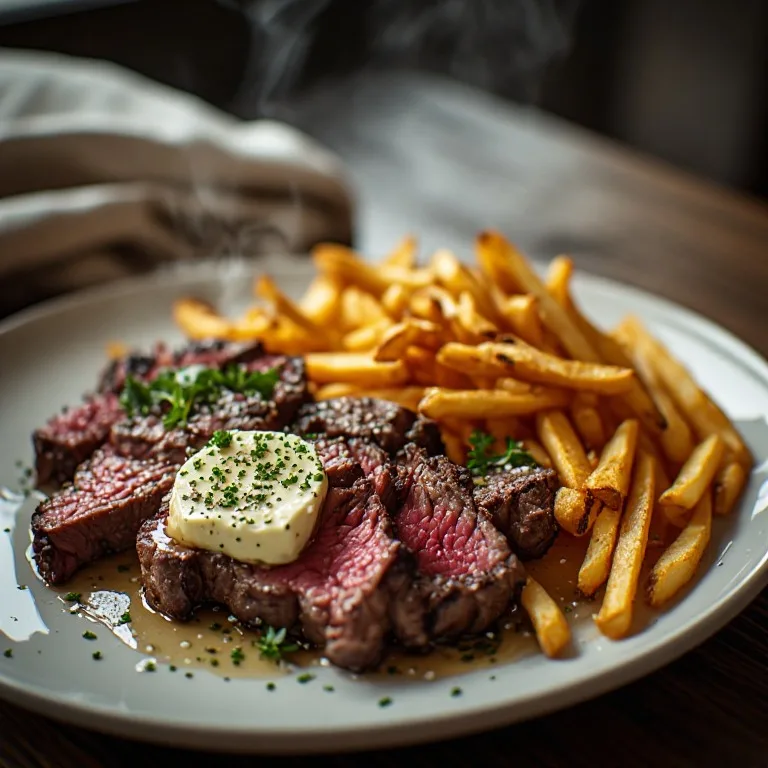
The Les Halles Cookbook serves steak tartare with classic pommes frites — double-fried steak frites. At home, the easiest accompaniment that matches what the restaurant actually served is toasted baguette slices or thin toasted bread, rubbed lightly with a cut garlic clove and drizzled with a little olive oil. The bread provides crunch, neutral flavor, and a delivery mechanism for the tartare, and it requires no additional mise en place. A small green salad with a sharp vinaigrette is the traditional accompaniment — the acid in the dressing cuts through the richness of the tartare. For a full brasserie recreation: frites require double-frying and an overnight starch soak. If you want to make frites, the Balthazar steak frites recipe on this site covers the full technique. If simplicity is the priority, toasted baguette + cornichons alongside is entirely appropriate and is what most Paris brasseries serve when eating at the bar.

What is Brasserie Les Halles and why is it so connected to Anthony Bourdain?

Brasserie Les Halles was a French brasserie at 411 Park Avenue South in Gramercy, New York, named after Les Halles — the historic central wholesale market in Paris that operated from 1183 until it was demolished in 1971. The restaurant opened in 1990 and served classic brasserie food: steak frites, moules marinières, soupe à l'oignon, croque monsieur. Anthony Bourdain joined as executive chef in the late 1990s and later as chef de cuisine while mostly devoting his time to writing. His 2000 memoir Kitchen Confidential used the Les Halles kitchen as its principal setting, describing in specific and unsparing detail how the restaurant business actually functions — the brigade culture, the economics, the personalities, the food safety questions no one was supposed to say out loud. The book became a genuine bestseller and cultural moment. In 2004 Bourdain published Anthony Bourdain's Les Halles Cookbook, laying out the restaurant's full menu in the form of a traditional French culinary education. Les Halles closed in August 2017 after bankruptcy proceedings. It had operated for 27 years. Bourdain died in Strasbourg, France, in June 2018.

Love this recipe? Share it!

Free PDF: our 12 most-wanted copycat recipes — instant download.

Made it? Buy us a coffee

Every recipe here is free, with no paywalls. If this one was a hit at your table, a small tip keeps new copycats coming.

$

Ratings & Reviews

—
No ratings yet

Rate this recipe

Click a star to rate

Leave a Review

0/500

CS

Copycat Spices Editorial

Researched + fact-checked. Every recipe on Copycat Spices is built from published sources — official ingredient lists, brand-published recipes, interviews and food-science references — and fact-checked before it goes live, then written as clear, step-by-step instructions for home cooks of all skill levels.

Learn more about our mission →