

Copycat Harry’s Bar Bellini (Cipriani White Peach Prosecco Cocktail)
Prep time: 10 min | Servings: 2 | Difficulty: Easy
The Bellini is two ingredients — fresh white peach purée and dry Prosecco — but it is one of the most copied and most often incorrectly made cocktails in the world. The recipe is not hard. What it requires is understanding why each choice matters: why white peaches and not yellow, why a sieve and not a blender, why Prosecco and not Champagne. Get those three things right and you have a cocktail that tastes like the terrace bar of the Gritti Palace. Get them wrong and you have something that tastes like peach juice with bubbles.
The Story Behind the Drink
Harry’s Bar opened at Calle Vallaresso 1323, near St. Mark’s Square in Venice, in 1931. Giuseppe Cipriani, a young bartender, had been helped out during a financial crisis by an American Yale student named Harry Pickering, who gave him $5,000 to open his own place. Cipriani named the bar after Pickering and spent the next four decades making it the defining bar of Venice — and, for American writers and artists living in Europe, something like a second home.
Ernest Hemingway is the most famous regular. He drank his Montgomery martinis at the bar, set scenes of Across the River and Into the Trees in the building, and is commemorated there with photographs. Orson Welles ran up legendary tabs. Truman Capote, Aristotle Onassis, Somerset Maugham, and Princess Diana all came. Katharine Hepburn and Sinclair Lewis both ate here regularly. In 1963 the Italian Ministry of Culture declared Harry’s Bar a national landmark.
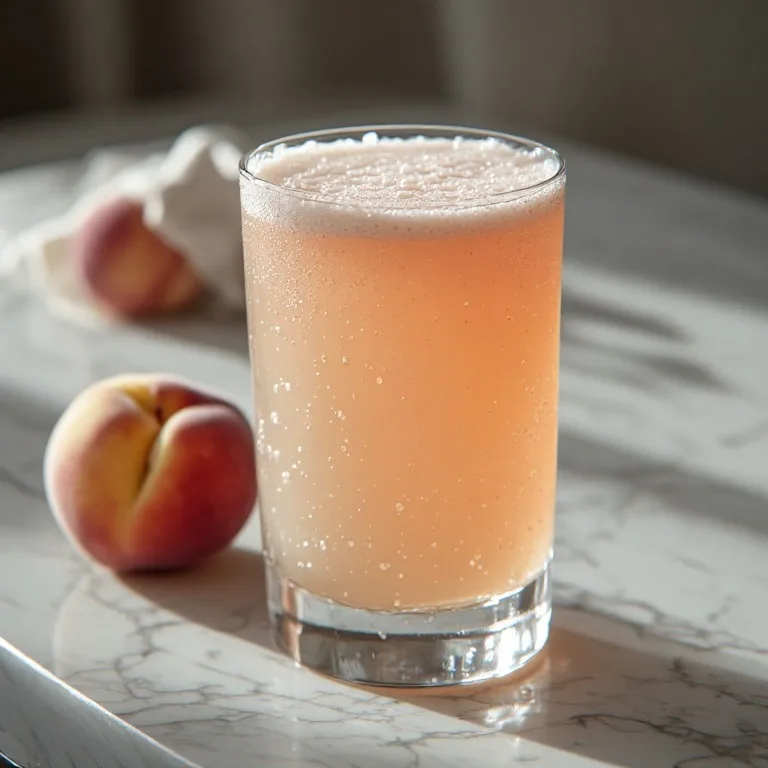
The Bellini was created in 1948. Giuseppe Cipriani named it after the 15th-century Venetian painter Giovanni Bellini, whose work was on exhibition at the nearby Doge’s Palace. Bellini’s altarpieces — particularly the figures of saints in pale pink togas — matched the specific color of white peach purée blended with Prosecco: a muted, soft, blush-pink that is entirely different from the orange-yellow a yellow peach would produce. Cipriani mixed the two, tasted the result, named it, and put it on the menu. It has never been removed.
The Three Things Most Bellini Recipes Get Wrong
1. Yellow peaches instead of white
This is the most common error and produces the worst result. White peaches — the Italian varieties Cipriani used, now grown in California, France, and New Jersey as well as throughout northern Italy — have a lower acid content and a more delicate, floral flavor than yellow peaches. When mixed with Prosecco, white peach purée integrates with the wine’s bubbles; the flavors find each other and blend into something that tastes unified. Yellow peach purée, with its sharper acid and more assertive tannins, competes with the wine. You get a cocktail where the peach and the Prosecco feel like two separate things sitting in the same glass.
The color difference is also significant. White peach purée is a pale blush — that’s the shade Cipriani was matching to the Bellini paintings. Yellow peach purée runs orange-amber. A correctly made Bellini should be the color of a pale sunset over the Laguna; an incorrectly made one looks like a mimosa.
2. Blending instead of pressing
A blender operates at thousands of rotations per minute and introduces a massive amount of air into whatever it processes. Fresh peach flesh that goes into a blender comes out as foam: aerated, pale, and full of tiny bubbles. When you pour Prosecco over that foam, the two foams interact unpredictably — the drink either overflows or arrives as a thick, frothy mixture that looks wrong and loses the delicate peach aromatics within minutes.
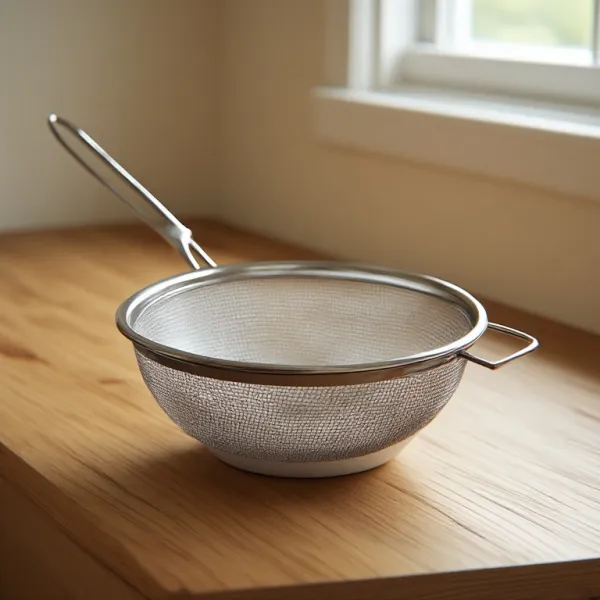
Giuseppe Cipriani pressed the peaches through a food mill. The food mill’s perforated plate extracts the juice and flesh while the blade presses it through under gravity and hand pressure — zero aeration. A fine-mesh sieve with a spoon is the home equivalent. The result is dense, smooth, slightly thick purée that sinks to the bottom of the glass, stays there until you stir it, and then blends cleanly with the Prosecco into a uniform, still-slightly-separated cocktail that you finish with one gentle stir.
3. Using Champagne or Cava instead of Prosecco
Prosecco is made by the Charmat method, in which secondary fermentation happens in large tanks rather than individual bottles. This produces large, soft, relatively short-lived bubbles with lower CO2 pressure than Champagne. The flavor profile is gentle: lightly fruity, low-acid, with minimal yeast character. This gentleness is what lets the white peach sit at the center of the cocktail.
Champagne uses the traditional method, with secondary fermentation in the bottle, producing fine, persistent bubbles with significantly higher pressure and more pronounced acidity and toasty, biscuity notes from extended contact with spent yeast. Those characteristics are exactly what make Champagne excellent as a standalone drink — and exactly what overpower the delicate white peach in a Bellini. The acidity cuts through the purée rather than complementing it.
Use a bottle of brut or extra-dry Prosecco DOC in the $15 to $20 range. There is no reason to spend more on sparkling wine for a cocktail that is primarily about the fruit.
Cost Comparison: Home vs. Cipriani
| Harry’s Bar Venice | Cipriani NYC | Homemade (per drink) | |
|---|---|---|---|
| Per glass | €22–30 ($24–$33) | $25–$35 | ~$2.50 |
| For two people | €44–60 ($48–$66) | $50–$70 | ~$5.00 |
| Approximate savings | — | — | $45–65 for two |
The cost at Harry’s Bar reflects the room: the same walls that held Hemingway and Onassis, the same bar where Cipriani poured the first Bellini in 1948, the same light from the Grand Canal filtering through the windows. At Cipriani NYC, you are paying for the name and the room, not the ingredients. Two ripe white peaches cost $3 to $5 in season. A bottle of Prosecco (half bottle works fine) costs $8 to $12. Total cost for two: under $10.
When to Make a Bellini
White peach season in North America runs from late June through early September. During that window, particularly in July and August when white peaches are at their sweetest and most fragrant, a properly made Bellini is extraordinary — light, fresh, and genuinely elegant. It is the correct aperitivo before any Italian dinner, works beautifully at brunch alongside eggs, and is the right thing to serve at summer parties because it scales easily and people who have never had a properly made Bellini are always surprised by how different it tastes from what they expected.
Outside of white peach season, use Cipriani brand purée (available at Eataly and Italian specialty grocers) or good-quality frozen white peach purée. Both produce excellent results. What you should never do is substitute yellow peaches or canned peach juice, which produce a cocktail that tastes like the idea of a Bellini rather than an actual one.
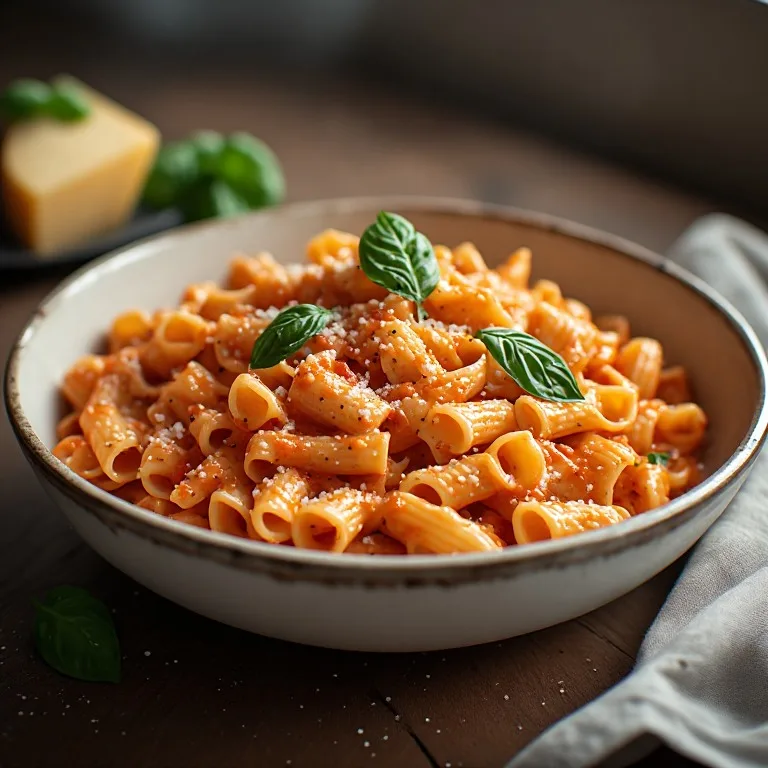
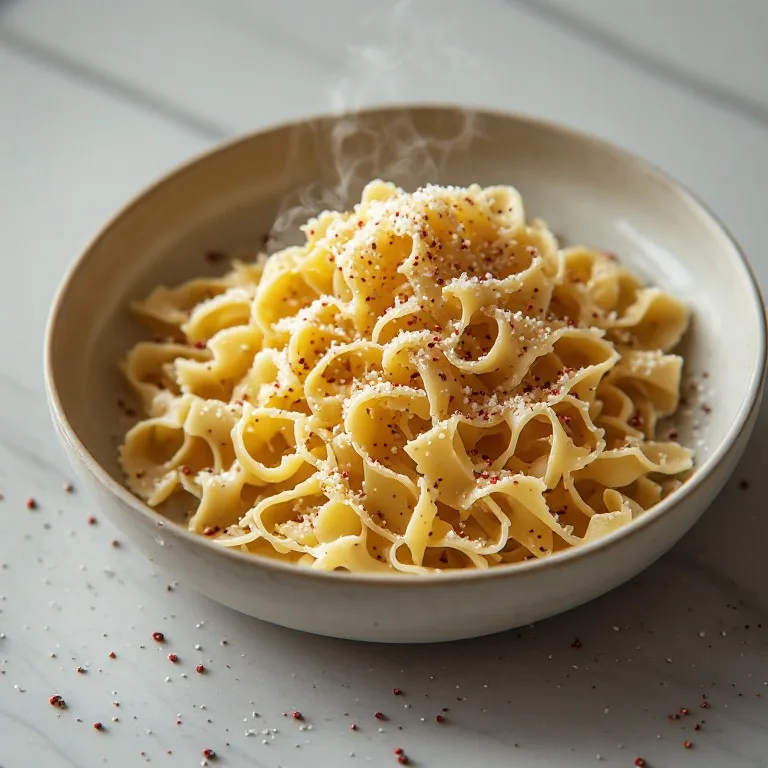
If you’re building an Italian aperitivo spread, serve the Bellini alongside a Hugo Spritz — the elderflower-and-Prosecco cocktail that has overtaken the Aperol Spritz across northern Italy — then move to the table with a plate of Carbone’s spicy rigatoni vodka or Lilia’s mafaldine with pink peppercorn. All three are on this site, and all three come from the same Italian playbook the Bellini does: a few perfect ingredients, handled correctly.