

I Sodi Lasagne al Sugo (Rita Sodi’s 25-Layer Meat Lasagna, Made at Home)
Prep time: 1 hr (plus 30 min pasta rest)
Cook time: 4 hrs 30 min
Servings: 8
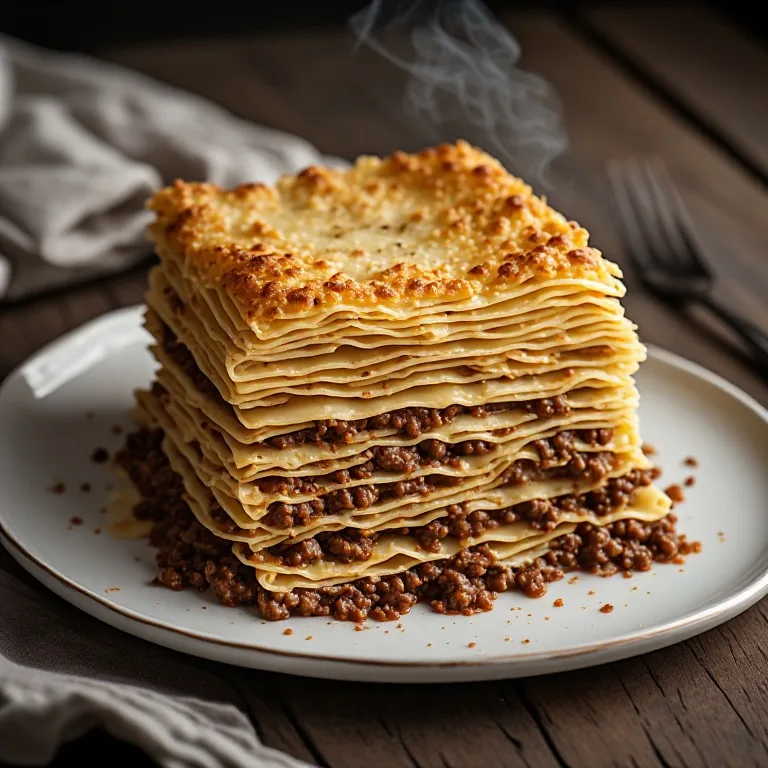
The first thing to say about I Sodi’s Lasagne al Sugo is that it will confuse you the moment it arrives at the table. Every American instinct about lasagna — thick, heavy, rich, substantial — is wrong here. The slice is tall and architectural, showing 20-something visible layers. But it is light. The pasta is nearly translucent. The ragù between each layer is a film rather than a coating. There is no ricotta anywhere. The whole thing weighs almost nothing on the fork, which is the thing about it that people mention first.
Rita Sodi, who grew up on a farm outside Florence, has been cooking this specific style of lasagna since she opened I Sodi in the West Village in 2008. It is not her invention — it is Florentine lasagna made exactly as Florentines have always made it — but hers is, by most assessments, the best version in New York.
This recipe makes a genuine home version. It is not fast — the ragù is a four-hour project — but each individual step is straightforward, and most of it can be done a day ahead.
Why This Is Not the Lasagna You Are Used To
American lasagna descends from the Neapolitan and Sicilian traditions that Italian immigrants brought to the United States in the late 19th and early 20th centuries: thick pasta layers, ricotta cheese, mozzarella, a meat-and-tomato sauce that is generous with spices. It is an excellent dish on its own terms.
Florence is in Tuscany, in northern Italy, and the Florentine tradition is its opposite in almost every way. No ricotta — béchamel takes its place, silkier and more neutral. No mozzarella — just Parmigiano-Reggiano, grated fine and used sparingly between layers. The pasta sheets are rolled thin enough to see through. The meat sauce — sugo di carne in Florentine dialect — is cooked for four hours until it is dark and concentrated and barely wet. The seasoning is minimal: salt, black pepper, a small amount of red pepper flakes, nothing else.
The result is a dish that is technically richer per layer than typical lasagna (béchamel is made with butter) but feels lighter because each layer is so thin and the pasta so delicate. This is the paradox at the center of the recipe: more layers, not fewer, produces a lighter dish.
The Ragù Is the Investment
Everything else in the recipe — the pasta, the béchamel, the assembly — is an hour of work. The ragù is four hours. You cannot rush it. Slow cooking at a low simmer drives off the moisture from the tomatoes and concentrates the beef’s flavor; quick cooking produces a sauce that is wet and thin and will make your lasagna soggy.
Two rules that make the difference:
Brown the meat until it is genuinely dry. Most recipes say “cook until no longer pink.” This one means something different: cook until the meat has released all its water, the liquid has evaporated completely, and the meat has started to brown and stick to the pot. This takes 15 to 20 minutes of active cooking over medium-high heat. The stuck bits at the bottom of the pot — the fond — carry more flavor than the meat itself; the wine deglaze recovers all of it.
Simmer at the lowest heat your stove can hold. The final three-plus hours should be a whisper, not a bubble. The top of the sauce should barely shiver. Stir every 20 to 30 minutes. The goal is a ragù so thick it barely moves when you tilt the spoon — dense and almost dry, with no standing liquid. This is what allows you to spread it in a thin, even film without it running between the pasta layers during assembly.
If you are making this on a weeknight, cook the ragù the night before and refrigerate it. Cold ragù is easier to spread thin. It also tastes better the next day.
Pasta Thinness Is Not Optional
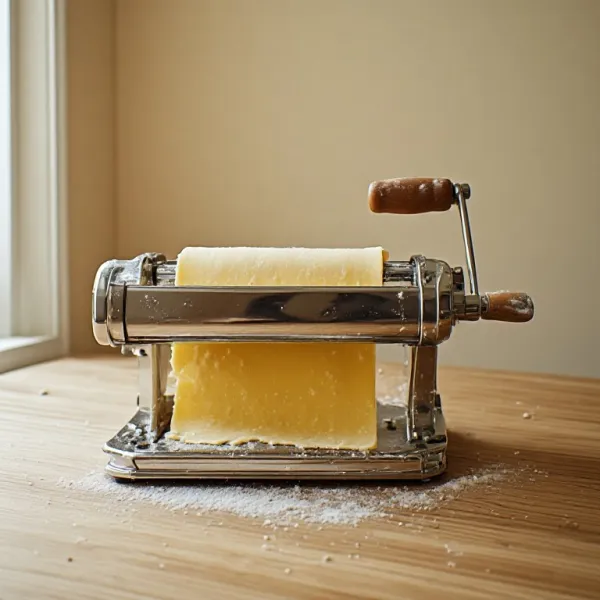
The pasta machine is essential here. You are targeting setting 6 or 7 on a standard machine — thin enough to be slightly translucent when held to light, firm enough not to tear during assembly. Setting 5 is too thick: you will get fewer layers, and each layer will dominate. Settings 8 or 9 are too thin for a beginner and may dissolve into the béchamel during baking.
At setting 6 to 7, one batch of dough (280g flour, 3 eggs) produces enough pasta for 14 to 16 layers in a 9×13 dish. Each layer is a thin film of pasta. This is what I Sodi is doing: more pasta layers, thinner per layer, rather than fewer thick layers with more filling between them.
Work quickly once the sheets are rolled. Fresh pasta dries faster than you expect; sheets left uncovered for more than 10 minutes will start to crack at the edges. Keep them under a clean kitchen towel as you work.
Béchamel, Loose and Pourable
Classic Italian béchamel for lasagna is made thinner than the typical cream sauce you might know — thin enough to pour easily, not stiff enough to stand on its own. If your béchamel is too thick, add warm milk a tablespoon at a time and whisk smooth. A thick béchamel will clump during assembly rather than coating the pasta in a uniform layer, and it will produce a heavy, gluey result after baking.
The nutmeg is small but important. Italian béchamel (besciamella) traditionally includes a light grating of nutmeg; it is subtle enough that most people cannot identify it, but the dish tastes flat without it. Don’t use pre-ground nutmeg from a jar — freshly grated from a whole nutmeg, a few passes on a Microplane, is worth it here.
Assembly: Thin Is Everything
The single most important technique in this recipe is how thinly you apply each component during assembly. A rubber spatula is the right tool — use it to spread each layer of ragù in a thin, even film, the way you would spread cold butter on toast: covering the surface completely but without any mound or depth. The béchamel smear over each ragù layer should be similarly thin — more a coating than a layer.
Start at the bottom with béchamel only (no ragù at the very base — the pasta needs béchamel to cook through without sticking). Then: pasta, ragù, béchamel, Parmigiano. Repeat until you run out of pasta or reach the top of your dish. Finish with pasta, béchamel, and a generous even dusting of Parmigiano for the top crust.
If at any point you feel the urge to add more ragù to any layer, resist it. The restraint is the recipe.
The Cut That Shows the Work
After 15 minutes of resting, cut the lasagna with a sharp knife in one decisive downward motion — don’t saw. Lift the portion cleanly with a flat spatula. If you have done the assembly correctly, the cross-section will show 14 to 16 or more distinct, clean, parallel layers. This is not just aesthetic: the layering is the point, and showing it is how you serve the dish the way it is served at I Sodi.
The lasagna is excellent on the day it is made and arguably better on day two, when the layers have fully compressed and the flavors have consolidated overnight. Reheat covered at 350°F for 25 minutes.