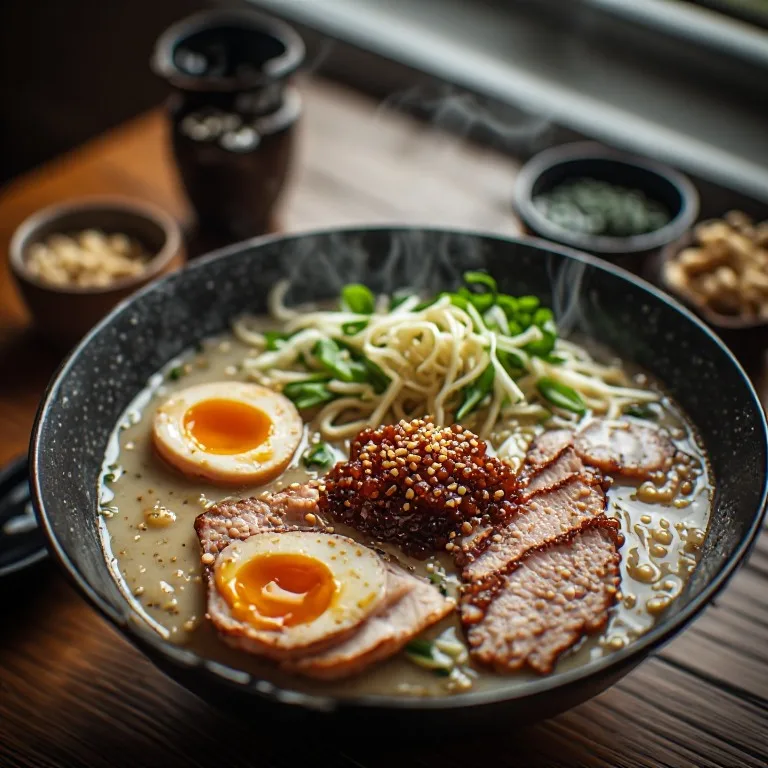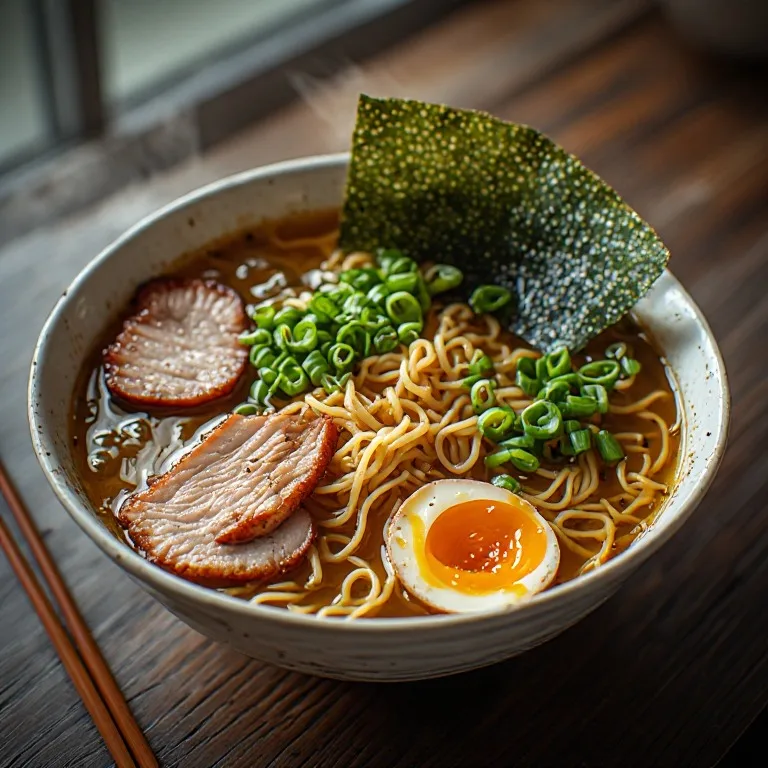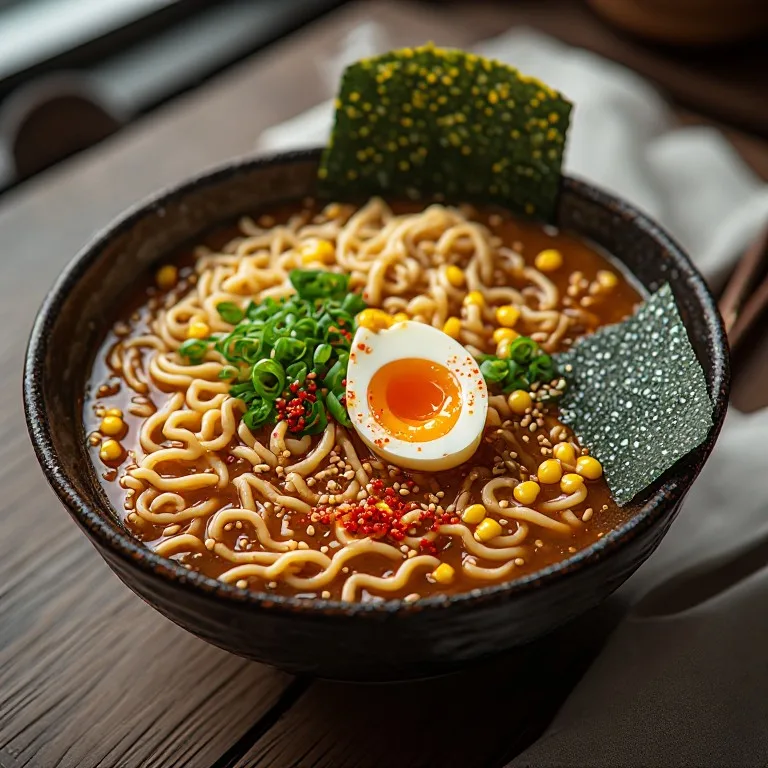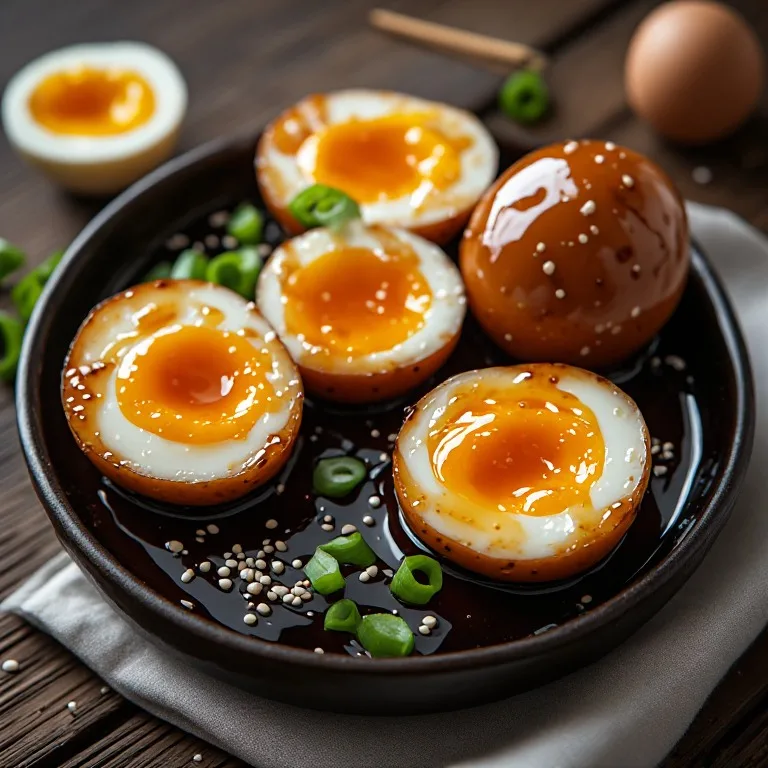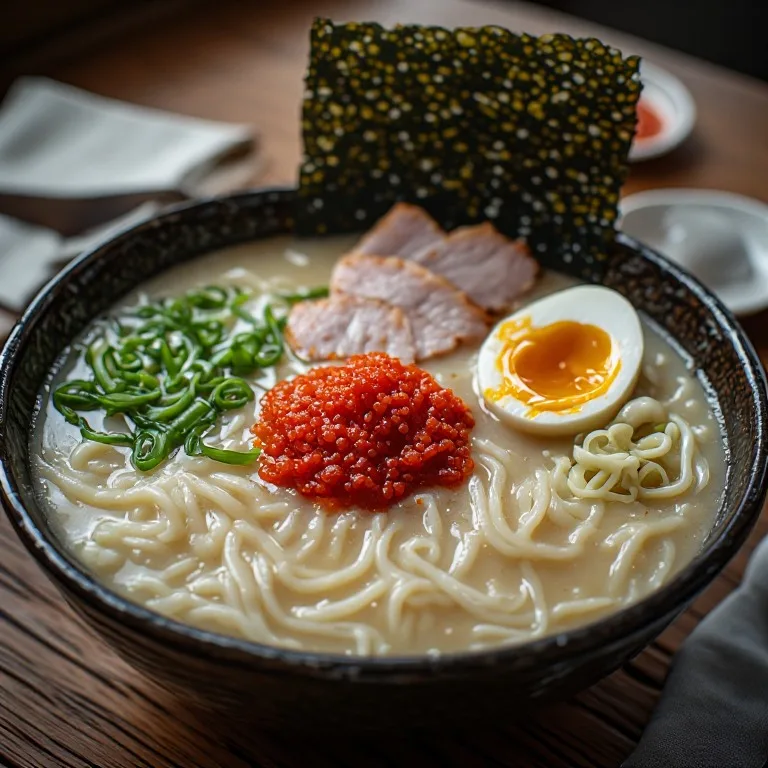


Ichiran tonkotsu ramen at home: a milky pork bone broth built on a 10-hour rolling boil, topped with a red chili-sesame-garlic sauce (an approximation of the hiden no tare that makes every Ichiran bowl distinct), slow-braised chashu belly, and marinated soft eggs. The broth technique and the red sauce are the two elements most home ramen recipes omit — and they are the entire point.
What Makes Ichiran Different From Other Tonkotsu
Ichiran’s position in the ramen world is almost paradoxical: it is the most famous ramen chain in Japan, operating in 60-plus locations, and it deliberately serves a bowl with fewer components than nearly any other restaurant. There is no Umami Dama paste (that is Ippudo’s innovation), no complex tare base, no garnish layering. The tonkotsu broth is meant to stand on its own — pure, milky, deeply savory — with the hiden no tare as the single add-in that the diner controls.
The solo booth concept enforces this philosophy architecturally. When the bamboo curtain closes, you are not managing a conversation, not sharing dishes, not multitasking. You have one bowl, one sauce to adjust, and no reason to look up. For Ichiran, the removal of distraction is as much a part of the recipe as the pork bones.
At home, a well-designed topping bar replicates this customization meaningfully — see the kaedama and order-form FAQ below.
The Hiden no Tare: Building the Red Sauce at Home
The hiden no tare sits as a thick red-orange dollop directly on the surface of the tonkotsu broth. It does not dissolve before you eat — it stays distinct, a concentrated hit of chili-sesame-garlic intensity that you stir in gradually, or eat in focused spoonfuls from a spot in the bowl where it has pooled into the broth. The effect is that a single bowl changes meaningfully from first spoonful to last.
The three load-bearing components of the version here: gochugaru for fruity Korean red pepper heat (the color is right; the heat is present but not aggressive); white miso for fermented depth that does not taste like a miso soup (it binds with the sesame oil into a paste rather than dissolving into the broth immediately); and garlic fried in sesame oil for the aromatic layer that makes the sauce smell like something dropped into hot fat, not something spooned from a jar. The sesame paste (tahini) is optional but rounds the sauce from sharp to round.
The sauce keeps in the refrigerator for two weeks and tastes significantly better on day two, once the garlic has mellowed into the miso.
Broth Science: Why the Rolling Boil Is Not Optional
The most important thing in this recipe is also the most counterintuitive instruction: do not simmer the broth. Every piece of stock-making knowledge a home cook carries — “a simmer is better than a boil for clear stock,” “high heat clouds the broth” — is the opposite of what tonkotsu requires.
Tonkotsu is not a stock. It is an emulsion. The milky white color comes from pork fat being mechanically broken into microscopic droplets by the turbulence of a sustained boil and dispersed throughout the water — the same process that turns butter into hollandaise or egg yolk into mayonnaise. A gentle simmer does not generate enough turbulence to achieve this. A rolling boil does. Ten to twelve hours of rolling boil produces a broth that is opaque white, viscous, and rich enough to coat a spoon. The same bones simmered gently for the same time produce a pale amber stock.
| Cooking method | Broth color | Texture | Time |
|---|---|---|---|
| Hard rolling boil, 10–12 hr | Milky white, opaque | Creamy, viscous | Long but mostly passive |
| Gentle simmer, 10–12 hr | Pale amber | Thin, clear | Same time, less useful result |
| Instant Pot high pressure, 3–4 hr | Off-white | Moderate body | Faster, close but not identical |
The stovetop broth freezes beautifully for up to three months. One 10-hour session covers four to six bowls over several weeks.
The Ichiran Order Form, Replicated at Home
Every seat at Ichiran comes with a small paper form: broth richness (light to rich), fat level (less to more), garlic intensity (none to extra), spice level for the red sauce (1 to 5), green onions (yes or no), chashu (yes or no), soft-boiled egg, nori, marinated bamboo shoots. The kitchen calibrates the bowl to spec.
At home, serve with a small board of adjustments: the hiden no tare jar, extra gochugaru for more heat, a small dish of minced raw garlic, pickled ginger for brightness, sesame seeds, and extra sliced scallions. Give each person a small empty bowl or ramekin — they add what they want to their bowl, as much as they want, when they want it. That is functionally what Ichiran’s form is: a written version of the conversation that would otherwise happen at a table.
The Ichiran bowl is very much a thing to eat alone, focused, without talking. If that is not how your household works, the food is still excellent with company.