

Copycat Ippudo Akamaru Modern Ramen (The Tonkotsu + Umami Dama Paste, Made at Home)
Prep time: 45 min active + 12 hr broth + overnight chashu Cook time: 12–13 hr (mostly unattended) Servings: 4 Difficulty: Advanced
TL;DR: Blanch pork femur and neck bones, then boil hard (a full rolling boil, not a simmer) for 10 to 12 hours until the broth turns milky white and viscous — that is the emulsified fat, and it is correct. Make the Umami Dama paste by frying whole garlic cloves until deeply golden, then whisking red miso + tobanjan + sesame oil into the hot garlic oil. Braise a rolled pork belly in soy/sake/mirin overnight; slice and sear before serving. Assemble: hot broth into a warmed bowl, drop a heaping teaspoon of Umami Dama in the center (do not stir it in), add chashu, jammy marinated egg, sesame kikurage, blanched bean sprouts, scallions, and a drizzle of garlic oil. The rolling boil and the paste are the two things most home recipes skip. Both matter.
When Ippudo opened its first New York location at 65 4th Avenue in the East Village in 2008, the waits started immediately. Two hours on a Tuesday night. Three hours on a Saturday. Lines down the block in cold weather. This was for a bowl of ramen — a Japanese noodle soup that most Americans in 2008 still primarily associated with the 25-cent packets they ate in college.
The waits were not a marketing stunt. People came because the bowl was genuinely different from anything that had existed in New York before.
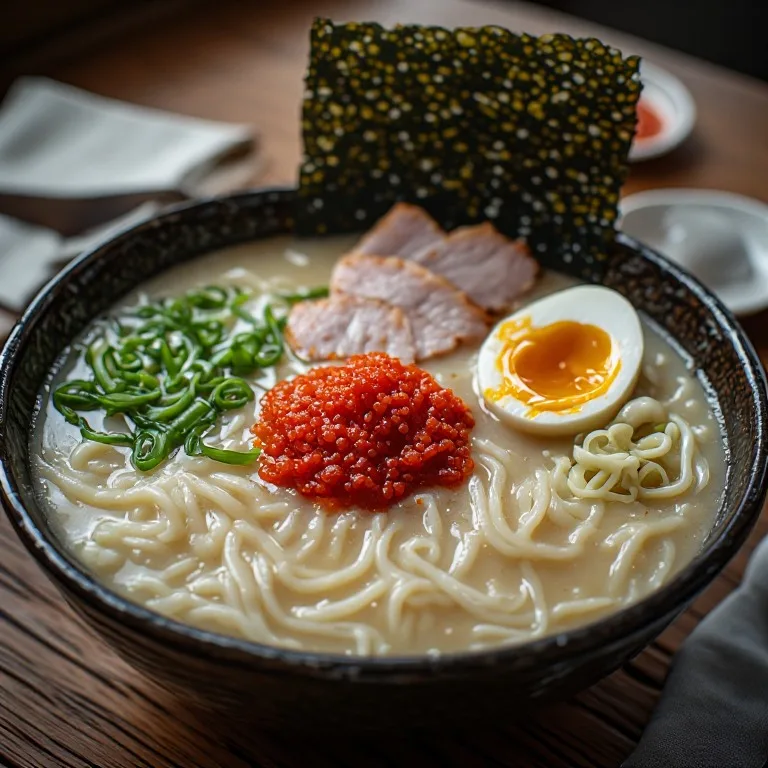
Ippudo was founded by Shigemi Kawahara in Fukuoka, Japan in 1985. Fukuoka — specifically the Hakata district — is where tonkotsu ramen originated: a milky pork broth with thin, straight noodles developed by ramen stall vendors outside Hakata Station in the post-war period. Kawahara’s version was the Shiromaru Classic (the white bowl) and the Akamaru Modern (the red bowl) — the same tonkotsu base, but the Akamaru augmented with a proprietary miso paste that became its signature.
The Akamaru Modern is what most people order first. It is the bowl this recipe is built around.
The Rolling Boil Is Not Optional
Tonkotsu broth is not pork stock. The distinction is not semantic — it is a different physical process.
When you make stock (French technique, classical method), you start with cold water and cold bones, bring everything up slowly, and keep the heat at a bare simmer — surface barely moving, temperature around 185°F. The objective is clarity. The fat floats to the top in large globules and you skim it off. The result is a pale, limpid liquid.
Tonkotsu requires the opposite. You bring the water to a full rolling boil and you hold it there for 10 to 12 hours. The violent agitation continuously breaks fat droplets off the bones and collagen into smaller and smaller particles, distributing them evenly throughout the liquid in suspension — emulsification. The broth turns opaque, then pale beige, then creamy white as more fat enters suspension. Collagen from the knuckles and trotters converts to gelatin, adding viscosity. After 12 hours of sustained boil, the broth is thick enough to coat the back of a spoon, milky white, and distinctly gelatinous when cold.
That is tonkotsu. Any recipe that tells you to simmer gently will not produce it.
| Technique | Temperature | Broth color | Broth body | Time |
|---|---|---|---|---|
| French stock simmer | ~185°F | Pale/clear | Thin | 4–6 hr |
| Vigorous simmer | ~200°F | Off-white | Medium | 8 hr |
| Rolling boil (tonkotsu) | ~212°F | Milky white | Thick/viscous | 10–12 hr |
The foam in the first hour is normal — skim it, keep the heat high. After the first hour, leave the pot alone.
The Umami Dama: What Makes the Akamaru Different
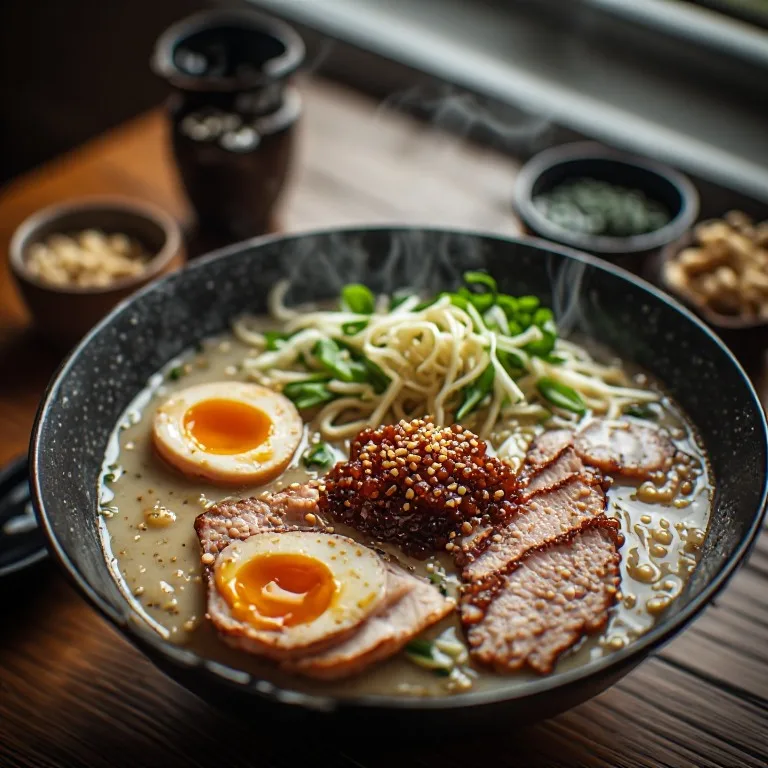
The Shiromaru bowl is clean, white, and relatively pure. The Akamaru adds two things: garlic oil drizzled on top and the Umami Dama — a rust-brown miso paste placed directly in the center of the broth at service.
The name means “umami ball” in Japanese. Ippudo uses it as a functional flavor device: the paste is not stirred in before it reaches you. It sits in the center of the bowl as a distinct mound, and as you eat you drag noodles and broth through it gradually. The bowl’s flavor shifts as you work through it — early bites are pure tonkotsu, middle bites pick up the fermented miso and heat, and by the end the broth has absorbed most of the paste.
The key to the paste is not the miso — it is the fried garlic oil the miso is made in. You fry whole garlic cloves in neutral oil over low heat for 10 to 15 minutes until they are deeply golden and fragrant, not just blonde. The garlic caramelizes and its pungency softens into something sweet and roasted. You then whisk the miso and tobanjan directly into that hot, garlic-infused oil with the browned bits still in the pan. The fat-soluble aromatic compounds from the garlic bind into the oil, and those end up in the paste. It is not the same as stirring miso into broth and adding garlic separately.
Tobanjan (doubanjiang in Chinese) — fermented broad bean and chili paste — adds the heat. Red miso (not white) adds the fermented depth. Together with the garlic oil and sesame oil, the paste has four distinct flavor vectors: sweet-savory, pungent-roasted, spicy-fermented, and nutty. Leaving any one of them out produces a paste that tastes unfinished.
Chashu Pork Belly: Low and Slow
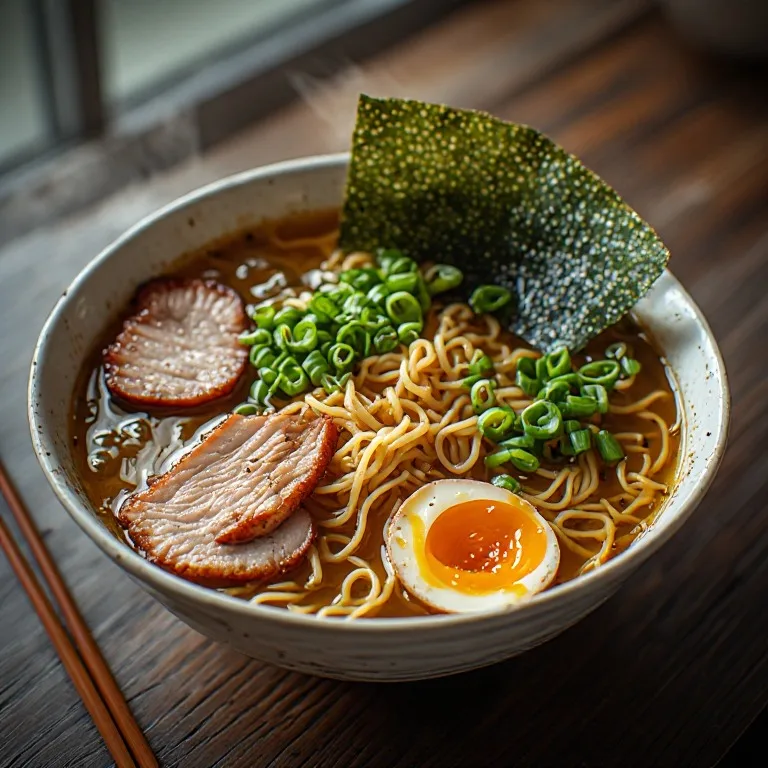
Chashu in the ramen context is not yakitori. It is pork belly braised in a sweet soy sauce until it collapses into something almost silky — tender enough to cut with the side of a spoon, with a lacquered mahogany exterior from the mirin.
The roll is important. Tying the belly into a log before braising means you slice rounds that show a cross-section of the layers — fat, meat, fat — which is both visually correct and functionally better (each slice has the full alternating texture). Searing the roll before braising builds the exterior color and develops flavor compounds that dissolve into the braising liquid.
Braising overnight in the liquid is not optional — it is how you get the chashu to stay together when sliced, and the overnight refrigeration in the liquid continues to season the meat as it cools.
The braising liquid becomes the marinade for the eggs. Nothing is wasted.
The Marinated Egg
Ajitsuke tamago — the jammy, soy-marinated soft egg — is the component that rewards the most attention to timing. Cook it 6 minutes 30 seconds at a full boil, immediately to an ice bath, then into the marinade. The window between an overcooked hard egg and an undercooked watery egg is narrow. A timer is mandatory.
The yolk at 6:30 is set but yielding at the center — not runny, but softly custardy, with an orange color that a fully hard-boiled egg never achieves. After 4 to 8 hours in the marinade, the white turns amber on the outside and the flavor penetrates inward. Cut the egg lengthwise when serving to show the yolk.
What It Costs at Ippudo vs. What It Costs at Home
A bowl of Akamaru Modern at Ippudo NYC runs $22 to $24. With tax, tip, and a beverage, a single lunch easily reaches $35 to $40. The waits, though less extreme than in 2008 with the Tock reservation system, still run 45 to 60 minutes on busy weekend evenings.
At home, the cost is mostly time. The bones — femur/knuckle and neck — cost $3 to $6 per pound at most Asian grocery stores; a 3-pound mixture is $10 to $18. Pork belly runs $4 to $8 per pound; 1½ lbs is $6 to $12. Noodles, eggs, and toppings add another $8 to $12. Total ingredient cost per bowl: roughly $8 to $12.
The 12-hour broth is the real investment, but it freezes perfectly in quart containers for up to 3 months. One batch produces 4 to 6 bowls. With broth in the freezer, weeknight assembly is a 20-minute project: defrost broth, slice chashu, boil noodles, assemble.
The chashu keeps 5 days refrigerated and also freezes well. The marinated eggs keep 5 days. Plan one cooking day per month to keep the freezer stocked and the weeknight bowl becomes routine.
For other aspirational Asian restaurant dishes worth making at home: Momofuku pork buns uses similar braised pork belly technique in a completely different application; Din Tai Fung soup dumplings covers the technique for hand-folding xiao long bao at home; Nobu black cod miso is another famous Japanese restaurant signature with a well-documented miso marinade technique; and Xi’an Famous Foods biang biang noodles is the other NYC cult-line noodle dish with a completely different flavor profile.