



Copycat Pastis Steak Frites (Hanger Steak with Maître d’Hôtel Butter, at Home)
Prep time: 30 min (plus 30 min soak for potatoes) Cook time: 30 min Servings: 2
Pastis opened in 1999 at 9 Little West 12th Street in the Meatpacking District — at the time still an actual meatpacking neighborhood, smelling of blood and sawdust after midnight. Keith McNally built a meticulous 1930s Parisian brasserie: zinc bar, mosaic tile floor, subway tiles, handwritten specials on vintage mirrors. The restaurant helped convert a working industrial block into one of the most expensive zip codes in Manhattan. It closed when the building was demolished in 2014. It reopened five years later at 52 Gansevoort Street with an $8 million renovation, a Stephen Starr partnership, and a reservation system that routinely books out within minutes of opening.
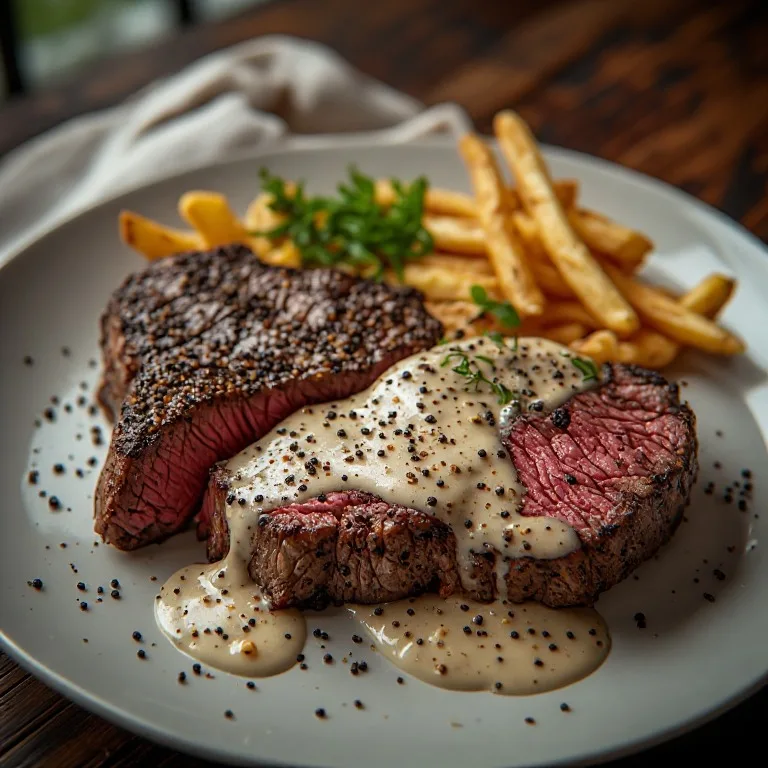
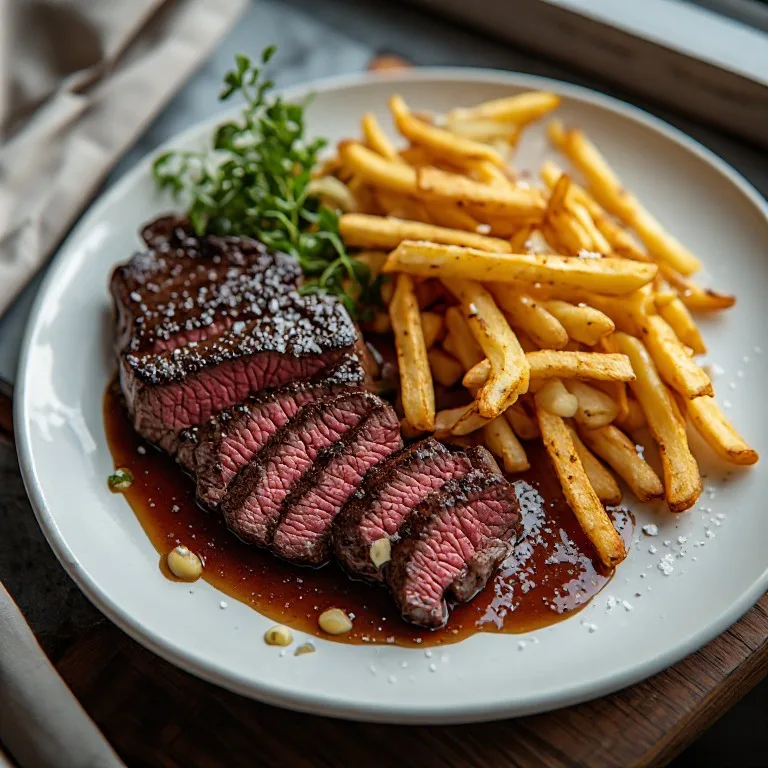
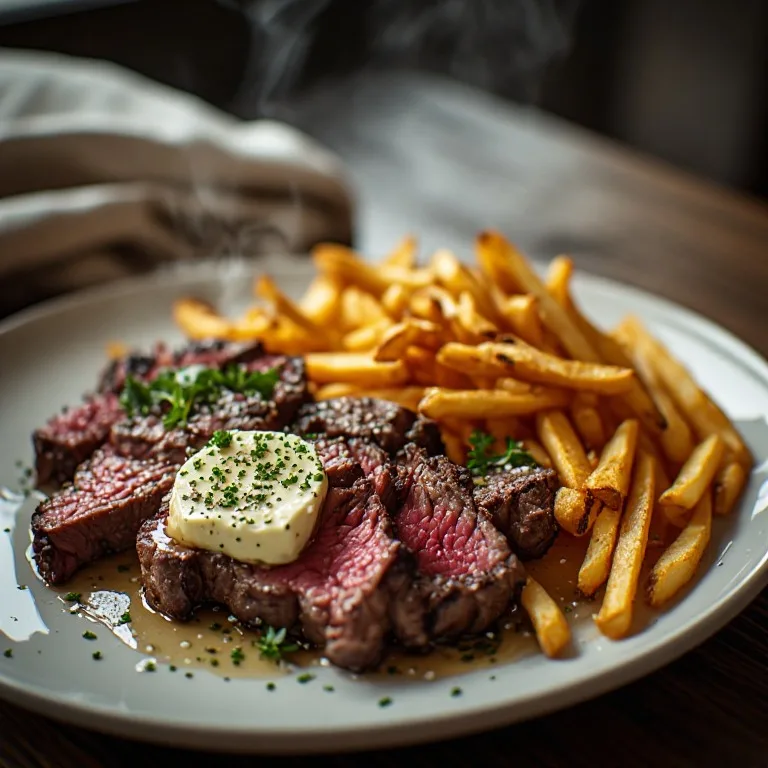
The steak frites is one of the dishes that defines it. At around $44 to $52 for the hanger steak version — with a coin of parsley compound butter melting over sliced beef and a pile of crisp, thin-cut frites alongside — it is unapologetically simple and unapologetically good. That simplicity is also what makes most home versions fall short. Three small failures, each easy to avoid once named.
The Three Things That Go Wrong
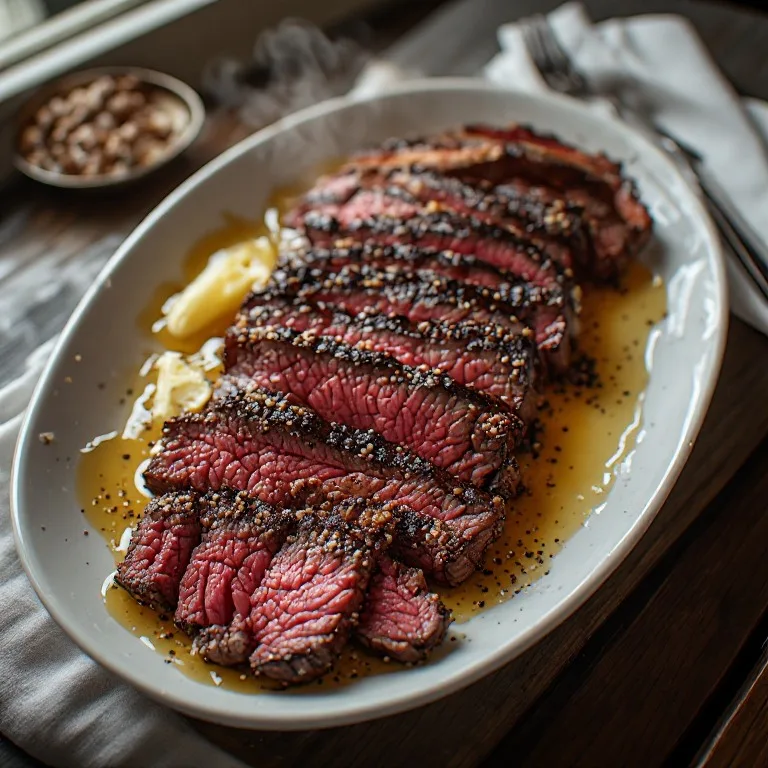
1. The wrong cut of steak. Most home cooks reach for a NY strip or sirloin when they think “steak frites.” French bistros use hanger steak — onglet. It has more beefy flavor per ounce than any loin cut, it cooks in under 5 minutes per side, and at around $8 to $12 per pound it costs a third of what a prime strip runs. The reason it stayed a secret for decades is that there is exactly one per animal, so butchers kept them for themselves. It has one flaw: the grain runs diagonally, and if you cut with the grain rather than against it, every bite feels like a rubber band regardless of how perfectly you cooked it. The fix is a 5-second assessment before slicing — identify the diagonal striations and cut perpendicular to them.
2. The steak cooked past medium-rare. Hanger steak is a working diaphragm muscle. At 125–130°F (medium-rare), the intramuscular fat has melted, the fibers are relaxed, and the texture is lush and beefy. At 140°F, the fibers contract. At 145°F, it chews like braised short rib that cooled down. The window is narrower than for a loin cut — about 10 degrees from excellent to regrettable. A thermometer solves this entirely.
3. The frites single-fried. One pass through hot oil produces frites that are either undercooked inside or greasy outside. The double-fry method separates the two jobs: the first fry at 325°F cooks the potato through and drives out interior moisture; the second at 375°F crisps the exterior. The potatoes come out with a crust that stays crisp for 5 to 7 minutes on the plate — long enough to eat. They also can be first-fried up to 24 hours ahead and held in the refrigerator, which makes dinner service a matter of minutes.
The Maître d’Hôtel Butter
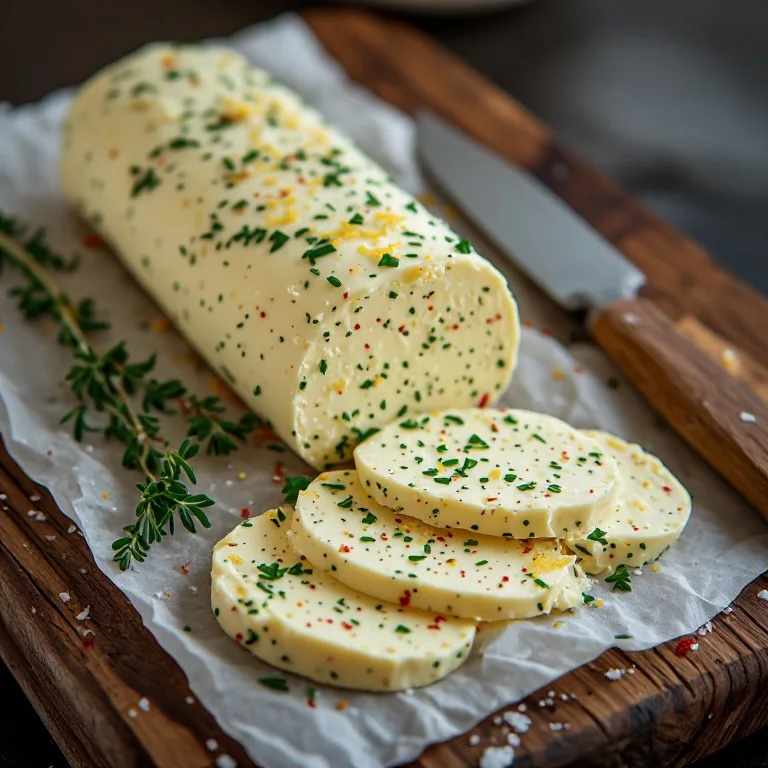
The butter comes together in 5 minutes and should be made at least 30 minutes ahead. Softened unsalted butter, very finely chopped flat-leaf parsley, minced shallot, fresh lemon juice, salt — beaten until green throughout, rolled into a log in plastic wrap, refrigerated until firm. A ½-inch coin goes on the hot sliced steak just before it reaches the table.
The appeal is partly practical — it can be made entirely in advance with no service pressure — and partly textural. Cold butter hitting the surface of hot sliced meat melts in a slow wave, creating a self-basting effect as you eat. The parsley adds color and a bright, grassy counterpoint to the richness of the beef. The lemon keeps it from feeling heavy. It is a better sauce for steak frites than anything that requires reducing in a pan, precisely because of its simplicity.
On the Frites
Cut the potatoes ¼ inch thick — not ⅛ inch (too thin, they overbrown before the interior sets), not ⅜ inch (too thick, the interior stays dense and starchy). Yukon Golds are the better choice: their waxy starch holds up through two frying stages and produces a frite that is fluffy inside without falling apart. Russets work and are more traditional; they can be slightly more brittle after the second fry but produce a slightly crispier exterior.
The soak matters. Thirty minutes in ice water pulls the surface starch off the cut faces of the potato; without it, the frites stick together in the oil and steam each other rather than frying. After soaking, dry them as thoroughly as you can — residual water in hot oil produces violent spattering and prevents crisping.
The first fry can happen well before dinner. Once the frites are blanched and pale, spread them on a rack and refrigerate them uncovered for up to 24 hours. The second 3-minute fry happens while the steak rests.
The Grain Direction
This is worth repeating because it is not intuitive. Strip steak has grain that runs roughly parallel to the long axis of the cut — you slice straight across, perpendicular to the length, and you are automatically cutting against the grain. Hanger steak’s grain runs diagonally. If you slice straight across the width of the steak, you will often be cutting with the grain or at a shallow angle to it, which produces long muscle fibers in each slice. Before you cut, look at the face of the steak: you will see striations running at an angle. Rotate your knife to cut perpendicular to those lines. The slices will be thinner and cut at an angle to the steak’s length — this is correct.
If you are not sure you have it right, the test is this: look at a cut slice. If you can see parallel lines running the length of the slice (the fibers), you cut with the grain. If the slice face looks relatively uniform with no obvious directionality, you cut against it. One wrongly-cut steak is a lesson you only need once.
What Pastis Actually Tastes Like
The restaurant charges close to $50 for the hanger steak frites. The plate that comes out is straightforward to the point of defying the price: six or seven slices of deeply flavored beef with a half-melted coin of parsley butter on top, a pile of thin, golden frites in a small metal bowl or stacked on the same plate. No sauce to speak of, no garnish beyond maybe a watercress sprig. The bistro lighting, the close-set tables, the noise that turns a date night into something more intimate than the setting has any right to produce — some of that is what you’re paying for.
The recipe below costs about $25 for two people and produces the dish as faithfully as the cut and technique allow. The ambiance, unfortunately, does not transfer.