

Lady M Mille Crêpe Cake (The Famous NYC One, Made at Home)
Prep time: 45 min (plus overnight batter rest) Cook time: 45 min Chilling: 2 hours minimum Servings: 10 slices
Why Most Homemade Crêpe Cakes Look Nothing Like Lady M’s
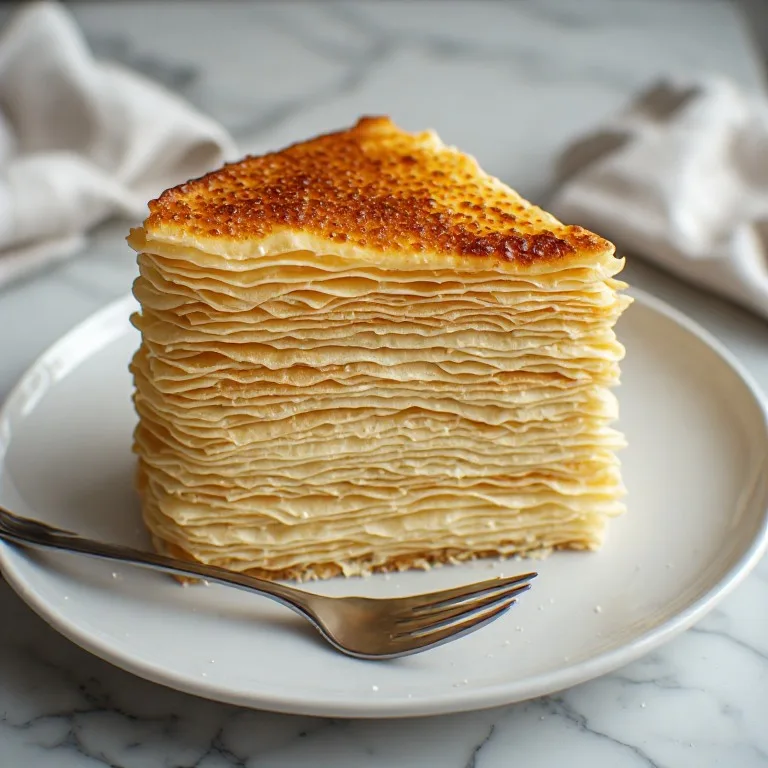
Lady M’s cake is immediately recognizable: when you slice it, the layers are almost translucent, each one impossibly thin, with a veil of cream in between so light it barely registers. Most homemade mille crêpe cakes look more like a thick stack of pancakes by comparison.
The gap comes down to three things: batter rested overnight (gluten relaxes → crêpes stretch paper-thin), pan temperature slightly cooler than expected (the batter spreads before setting), and diplomat cream kept cold throughout assembly (warm cream spreads too thick and becomes runny when sliced). None of these are hard — they are just precise.
The Crêpe: Rest, Strain, Cook Cool
The batter is the simplest part of the recipe and also where most attempts go wrong. Two rules:
Rest overnight. Flour absorbs liquid unevenly when first mixed. After 4 to 8 hours in the refrigerator, the flour is fully hydrated, the gluten has relaxed, and any air beaten in during mixing has risen to the surface. The resulting crêpes are dramatically thinner, more pliable, and less prone to tearing. Lady M’s crêpes look like they were painted onto the plate — that starts with a rested batter.
Cook at medium, not high, heat. High heat causes the batter to set on one side before you can swirl it thin. You want the batter to flow freely across the pan for about 2 seconds before it sets — this is only possible if the pan is warm enough to set it quickly but not so hot it seizes instantly. Medium heat with a thin butter film is the professional approach. Every crêpe should take about 75 seconds on the first side and 20 on the second.
The Cream: Keep Everything Cold
The diplomat cream — pastry cream folded with whipped cream — is what distinguishes Lady M’s filling from regular whipped cream or heavy pastry cream. It is lighter than standard pastry cream (the whipped cream aerates it) but more structured than whipped cream alone (the pastry cream base gives body so it holds between layers).
The single most important thing: the pastry cream must be fully cold before you fold in the whipped cream, and the assembled cake must be refrigerated before slicing. Warm pastry cream causes the whipped cream to deflate on contact. Cold cream + cold crêpes + refrigeration time = clean, defined layers.
Assembly: One Layer at a Time
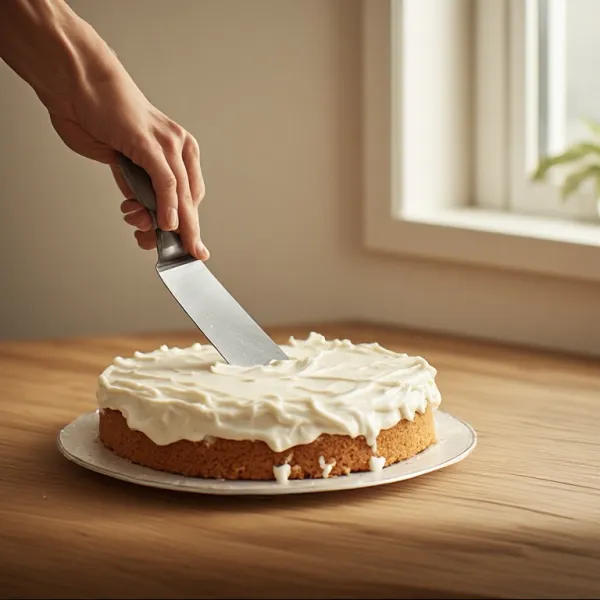
Work on a flat, chilled plate. Spread the cream with a light hand — about ¼ cup per crêpe is right, spread to within ¼ inch of the edge. Place each subsequent crêpe as flat as possible; any tilt compounds across 20 layers and produces a leaning tower. Work in a cool kitchen if possible. If the cream begins to look glossy and loose at any point, cover and refrigerate the cake for 10 minutes before continuing.
Twenty crêpes is the floor, not the ceiling — if your batter produces 24 good crêpes, use them all. The taller the stack, the more dramatic the cross-section.
The Brûlée: Do It Last
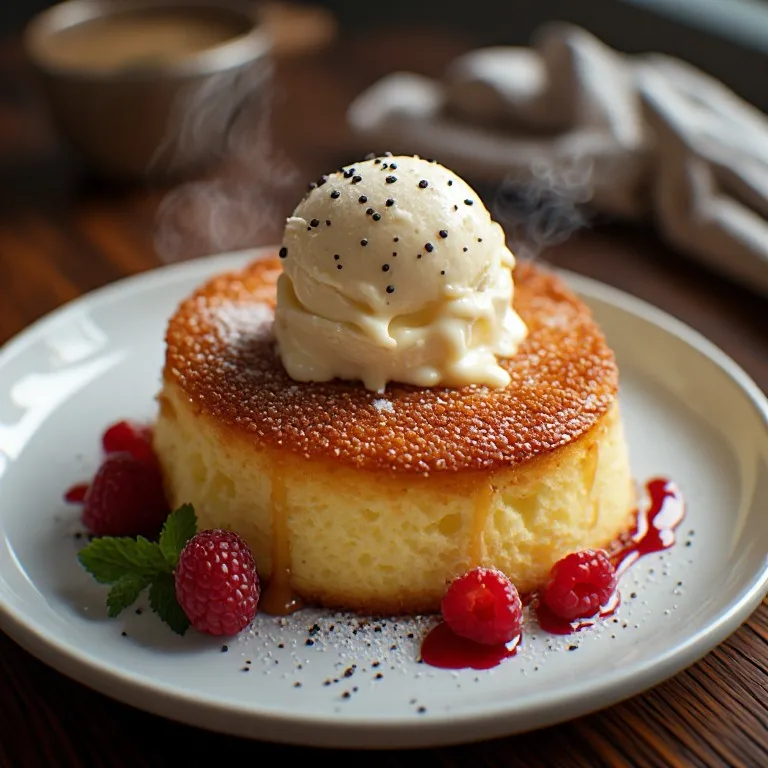
The caramelized sugar crust on top is Lady M’s signature visual — the amber shell cracks under the knife before the layers give way beneath it. Do this right before serving: the crust softens within an hour as moisture from the cream migrates up. Keep the torch moving in small circles, stop 2 seconds before you think it’s done (it keeps cooking), and let it harden for 30 seconds before slicing.
Storage
The assembled, un-brûléed cake keeps, refrigerated, for up to 2 days. After brûléeing, serve within 2 hours. Individual slices wrapped in plastic keep for 1 day but lose some of the cream’s delicacy.