

Lawry’s Spinning Bowl Salad
Prep time: 20 min | Cook time: 10 min | Serves: 4
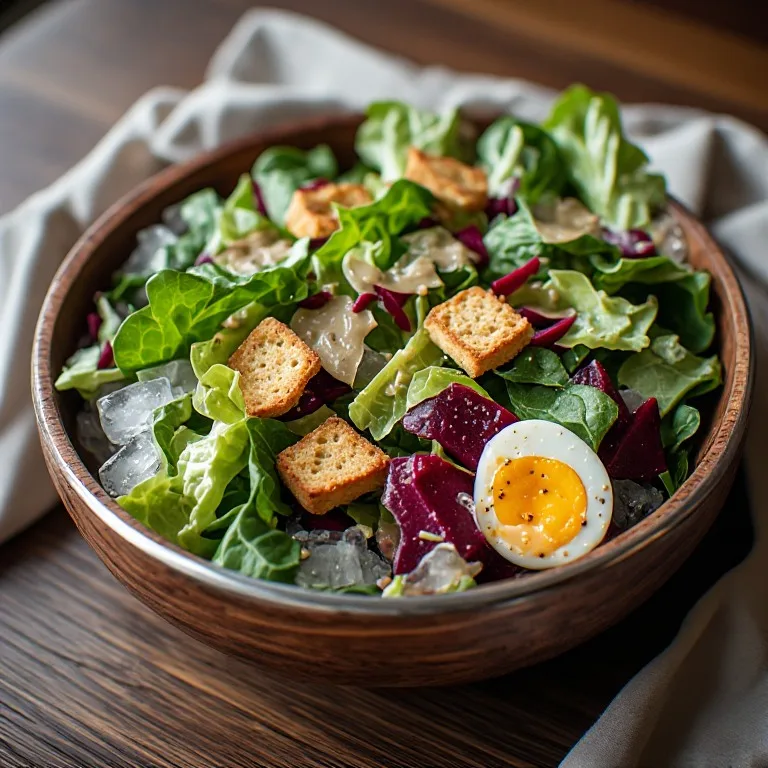
At Lawry’s The Prime Rib in Beverly Hills, the spinning salad is not a side dish — it is a ritual. A server appears with a two-bowl setup: a large wooden salad bowl seated inside a silver bowl packed with crushed ice. The greens, beets, egg, and croutons go in, the proprietary Classic Vintage Dressing is poured down the inside edge, and the whole thing is tossed while the inner bowl spins continuously on the ice. By the time the salad reaches your plate, it is cold, evenly coated, and composed with the kind of formal care that makes an $85 entrée feel justified. The spinning salad has been served this way since the restaurant opened in 1938.
The entrée price — $41 to $59 per person — includes the spinning salad alongside the famous standing rib roast. This home version of the salad costs a few dollars per serving and takes 20 minutes. The key variables are the same ones the restaurant depends on: completely dry greens, a dressing that is emulsified before it goes on the leaves, and a cold bowl.
The Dressing — and Why Applesauce Is in It
Lawry’s Classic Vintage Dressing is not published or sold at retail (bottles turn up occasionally at the restaurant itself). The best-documented reconstructions converge on the same core: Lawry’s own Seasoned Salt, apple cider vinegar, Worcestershire sauce, and unsweetened applesauce, loosened with a little water and emulsified with oil. Several of the most-circulated versions also fold in a splash of dry sherry for extra depth. It is lighter than a Caesar and has no raw egg or anchovy — if a true Caesar is what you’re after, our Carbone Caesar salad is the one to make.
The applesauce is the unusual part. It acts as a natural emulsifier — the pectin in apple pulp keeps the oil and vinegar from separating the way a purely whisked vinaigrette would. The effect is a dressing that stays together without egg yolk, with a very faint background sweetness that balances the savory Worcestershire and the salt-sugar-paprika backbone of the Seasoned Salt. Add the optional splash of dry sherry and it reads as a nutty, savory note behind the acidity — a touch several longtime regulars insist belongs to the original. That combination — seasoned salt, Worcestershire, a clean fruit-acid base, and the applesauce holding it together — is what makes this dressing read as distinctly steakhouse rather than like any bottled vinaigrette.
The Spinning Technique — What It Actually Does
The spinning is not pure theater. Two things happen mechanically when the bowl rotates on ice while you toss:
The cold bowl firms the dressing the moment it contacts the surface. Chilled oil thickens and adheres to cold leaves more readily than room-temperature oil does — the same reason you dress a cold-from-the-fridge salad differently than a warm-from-the-grill one. At Lawry’s, the ice-chilled bowl keeps the dressing temperature low throughout the toss; by the time the salad reaches the table, the coating is already set against the leaves.
The circular motion of the bowl distributes the dressing differently than a straight toss. As the bowl rotates, the leaves at the outer edge travel faster than the ones at the center, creating a light centrifugal effect that keeps them moving through the dressing rather than stacking on top of each other. The result is a more evenly coated salad in fewer toss cycles — which matters at a restaurant table where you do not want to stand and toss for two minutes in front of guests.
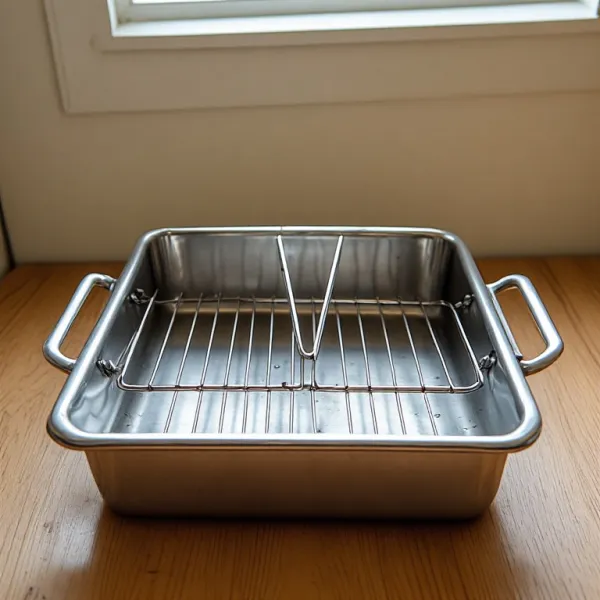
At home, you can replicate both effects with a 12-inch salad bowl set in a roasting pan of crushed ice. A flat-bottomed bowl rotates more predictably on ice than a round-bottomed one. Press it down so it grips; it should spin when you push the rim and stop when you let go.
The Beets and Egg — What They Contribute
Both go back to the 1938 original and both have a job beyond decoration.
Julienned canned beets add color — the deep red against pale romaine and white croutons is visually distinctive — but they also add a mild earthiness and sweetness that tempers the tangy dressing. Pat them completely dry before they go in; wet beets streak the dressing red within seconds and turn the whole bowl pink. Drained, dried beets hold their color separately and dot the salad rather than bleeding through it.
Hard-boiled egg adds richness and protein. Roughly chopped rather than sliced, the pieces distribute through the salad rather than sitting on top of it. The effect is more a composed wedge salad than a simple green salad — which is appropriate for a steakhouse designed around one large, rich roast.