
Lofthouse Frosted Sugar Cookies
Prep time: 20 minutes (plus 1 hour chill) Cook time: 10 minutes Servings: 24 cookies
David Stone started Lofthouse Foods in 1994 with $2,000 and a borrowed kitchen in Ogden, Utah. He named the company after his mother’s maiden name. By 2001 the company was doing $70 million a year, which is a remarkable number for a single type of cookie sold almost exclusively through grocery store bakery cases. Ralcorp acquired Lofthouse in 2002; ConAgra absorbed it in 2013 as part of the Ralcorp deal. The cookies now sell in nearly every major US grocery chain.
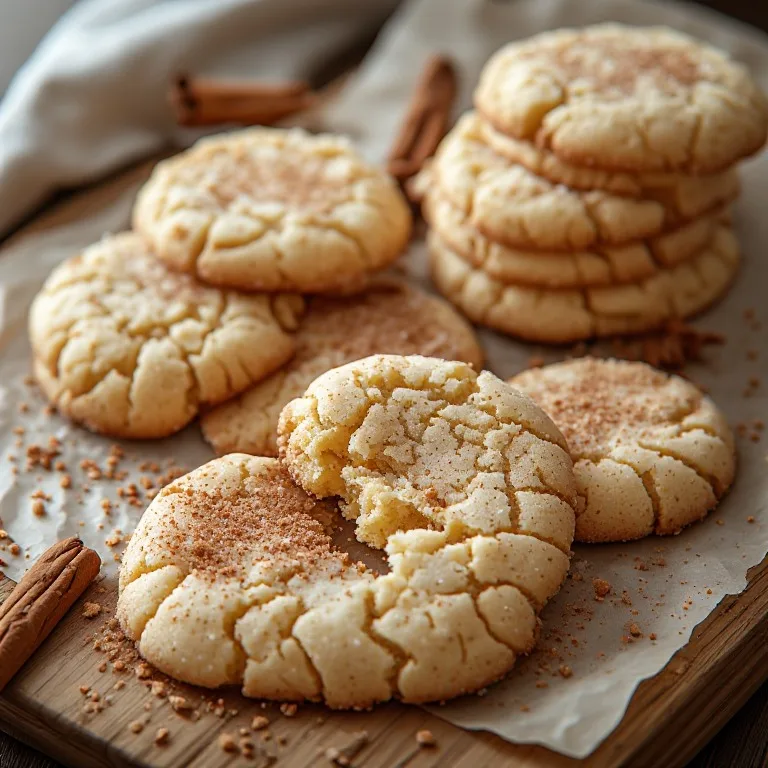
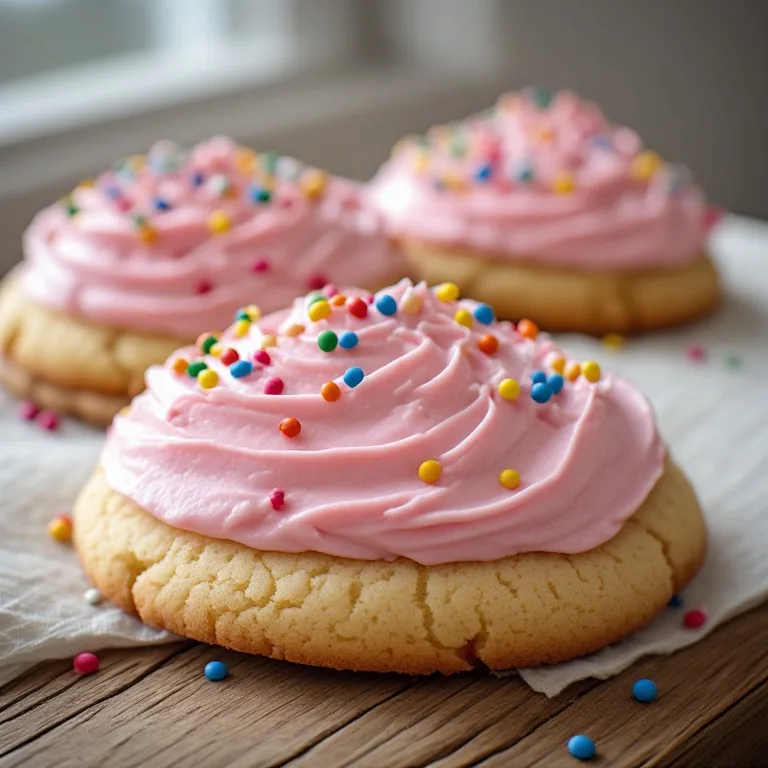
The distinctive feature isn’t the flavor — it’s the texture. Lofthouse cookies are cakey. They collapse into themselves when you bite them rather than snapping or pulling, which is exactly what makes them nostalgic.
Why Sour Cream Changes Everything
Most sugar cookie recipes use butter and egg as their only fat and moisture. Lofthouse-style cookies add sour cream — full-fat, not reduced-fat — and that changes the structure of the dough entirely.
Sour cream is an emulsion: fat suspended in liquid, acidified by lactic bacteria. The fat adds richness; the moisture makes the dough soft; the acid reacts with baking soda to produce CO2 that lifts the crumb as the cookie bakes. The result is a cookie that bakes up soft and slightly domed rather than flat and crispy. Think of it as a cookie with the engineering of a muffin.
The cornstarch in this recipe does something different: it dilutes the flour’s gluten network. Less gluten = a more fragile, tender crumb — the same reason many shortbread recipes use cornstarch or powdered sugar.
The Bake Timing Is Everything
Sugar cookies lie. They look underdone in the oven and overdone once you take them out — because carry-over heat from the hot baking sheet keeps cooking them for several minutes after the oven door opens.
Pull these at 10–11 minutes, when the edges look set but the tops still look slightly glossy in the center. The bottoms should be pale beige, not golden. If the whole surface looks uniformly dry, you’ve gone 2 minutes too long. The cookie will be edible, but it’ll be a standard sugar cookie, not a Lofthouse.
Let them cool for 5 full minutes on the pan before moving them. They’re structurally fragile when hot.
The Frosting
American buttercream is butter, powdered sugar, vanilla, and cream. It’s the simplest, sweetest frosting there is, and it’s the right one here — not Swiss meringue, not Italian meringue, not cream cheese. American buttercream sets at room temperature into a slightly firm shell (which is what gives Lofthouse cookies their characteristic snap when you break one in half through the frosting).
Use gel food coloring, not liquid. A pea-size amount of gel gives a soft pastel; add more for a more saturated shade. The classic Lofthouse color is a baby pink, which takes almost no colorant at all — start with a quarter pea-size and mix thoroughly before deciding you need more.
Nonpareils (the tiny round balls) over jimmies (the rod-shaped sprinkles) because they’re what you see on the grocery-store version. Both work.
If you like this cakey-soft style, the copycat Crumbl Pink Sugar Cookie is the same genre taken in a denser, almond-scented direction, and the copycat Crumbl cornbread cookie uses the same thick-and-tender approach with a different flavor base.
Cost Comparison
| Lofthouse (store) | Homemade | |
|---|---|---|
| Per cookie | $0.40–0.65 | ~$0.25 |
| 10-count pack equivalent | $4.00–6.50 | ~$2.50 |
| 24-count batch | not sold | ~$6.00 |
The homemade version uses real butter (the store version uses partially hydrogenated vegetable oil) and pure vanilla extract. The flavor difference is modest but real.
Storage and Make-Ahead
Dough: Make up to 3 days ahead and refrigerate. Bring to room temperature for 15 minutes before rolling if it’s very firm.
Unfrosted cookies: Bake and cool, then store in an airtight container at room temperature up to 3 days, or freeze up to 2 months.
Frosted cookies: Store covered at room temperature for 3–4 days. The cookies actually get slightly softer by day 2 as moisture redistributes between the frosting and the cookie. Freeze frosted cookies by placing on a baking sheet until the frosting is solid, then stacking with parchment in a sealed bag.