Quick answer: Poach 4 cold-water lobster tails (5 oz each) in 1½ inches of simmering water for 3 minutes until bright red; cool in an ice bath, shell, and cut into 1-inch chunks — reserve one-third for the top. Cook 1 lb cavatappi 3 minutes under al dente; drain and rinse cold. In a wide saucepan, cook 2 minced shallots in 2 tablespoons of butter over medium heat until soft (3 min), add ½ cup dry white wine, and reduce until nearly dry (2 min). Add 2 cups heavy cream and bring to a gentle simmer. Whisk in 8 oz freshly grated fontina first (it forms the base), then 4 oz freshly grated Gruyère, then 2 oz freshly grated Parmigiano-Reggiano — melt each before adding the next; keep heat low and never boil. Season with salt, white pepper, and a pinch of freshly grated nutmeg. Fold the cooked cavatappi and two-thirds of the lobster chunks into the sauce; transfer to a buttered 9×13-inch baking dish and arrange the reserved lobster on top. Mix ½ cup Panko, ½ cup freshly grated Gruyère, and 2 tablespoons melted butter; scatter over the surface. Bake at 375°F for 12 to 15 minutes until deeply golden on top and bubbling at the edges. Rest 5 minutes. The restaurant charges $28–$38 for this as a tableside side dish; the home version runs roughly $45 total for 6 generous servings.
Shop the tools
Gear matched to this recipe. These are Amazon affiliate links — we may
earn a small commission if you buy, at no extra cost to you.
As an Amazon Associate, Copycat Spices earns from qualifying purchases.
Product images are generic illustrations, not the exact item listed.
Mastro's Lobster Macaroni and Cheese, Made at Home
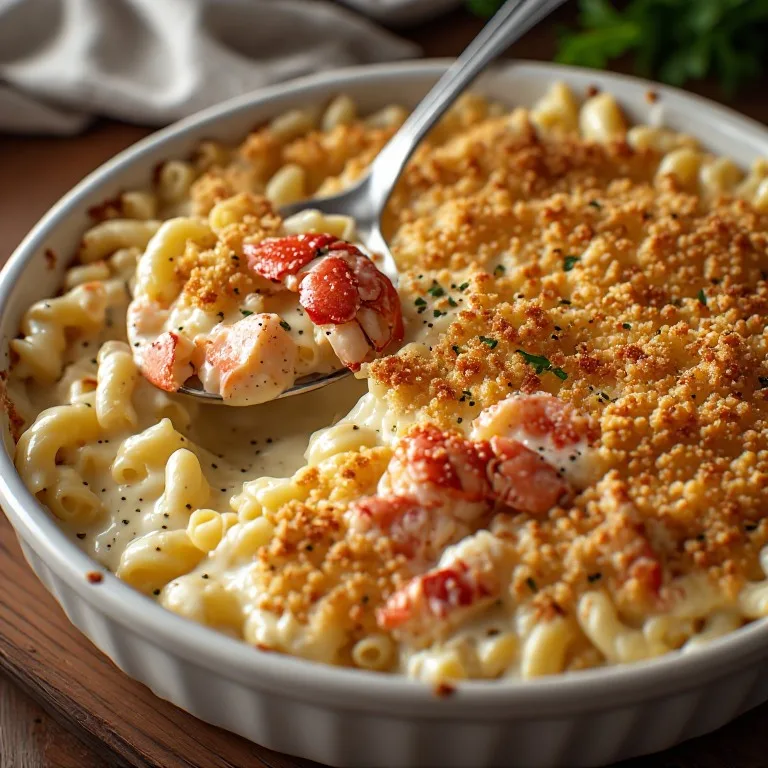
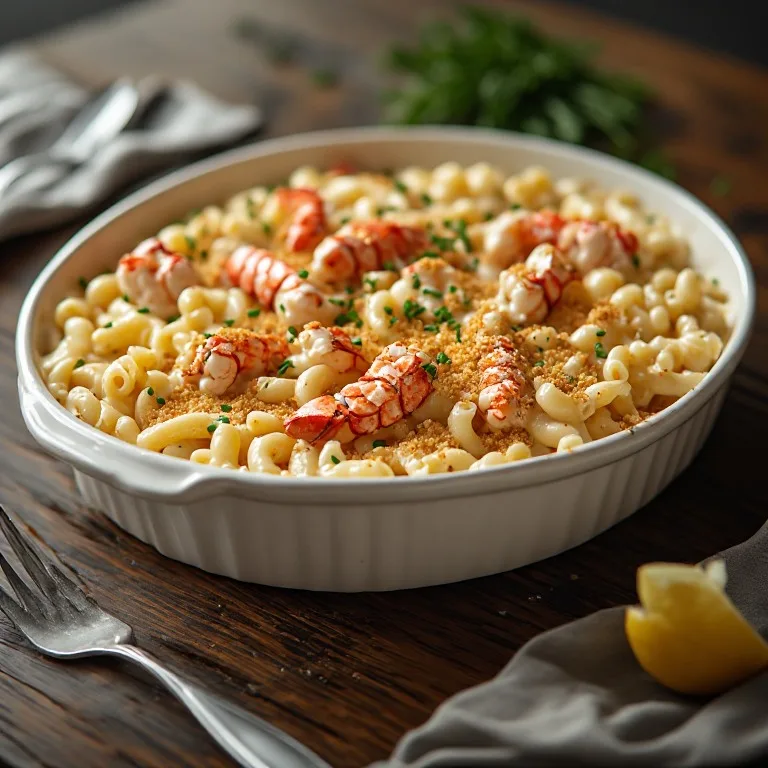
The Mastro's lobster macaroni and cheese copycat recipe that actually nails it: fontina-led cream sauce (no roux, no grainy texture), cavatappi pasta cooked short so it finishes in the oven, real Maine cold-water lobster throughout and on top, Gruyère-Panko crust. The side dish that upstages the steak, made at home for a fraction of the $35 restaurant price.
Medium
Prep: 20 min
Cook: 35 min
Total: 55 min6 servings
~$4.50/serving
Prep20 min
Cook35 min
Total55 min
Servings
6
At home~$4.50/serving
vs
Restaurant~$20.25/serving
You save ~78%
The Story Behind the Recipe
Mastro's opened in Scottsdale in 1999 and expanded into Beverly Hills, Chicago, New York, and a dozen other cities by becoming a specific kind of place: expensive, glamorous, loud with the low roar of a packed room, and very good at being exactly that. A table at Mastro's Beverly Hills or the Midtown New York location costs $200 to $300 per person before you order anything. The side dishes — macaroni and cheese, creamed spinach, potatoes au gratin — arrive at the table as shared platters that run $28 to $38 each. The lobster macaroni and cheese is the side dish people talk about the way they talk about the steaks. It is ordered at nearly every table.
The home version fails when cooks either use a roux-based sauce (which produces a thicker, starchier result with less of the pure dairy richness) or skip the melt order (dumping all the cheeses in at once makes the sauce grainy). The two things that make Mastro's version distinct are fontina as the base — it melts into a smooth, cohesive body with a faint sweetness — and cavatappi pasta, whose corkscrew ridges hold far more sauce per bite than elbows. The third key is undercooking the pasta by 3 full minutes before it goes into the oven; the sauce finishes the job, and the cavatappi absorbs it from the inside out during the bake.
Nutrition Facts
Per serving (6 servings)
Calories1040
Total Fat69g
Total Carbs65g
Dietary Fiber2g
Sugars6g
Protein44g
Sodium850mg
* Estimated values based on standard recipe preparation. Actual values may vary.
Ingredients
Pasta and lobster
Fontina cream sauce
Gruyère-Panko crust
Instructions
💡
Pro tip: This recipe tastes even better the next day. The flavors need time to meld together in the fridge.
❄️
Storage: Keeps in an airtight container in the fridge for up to 2 weeks. Freezer-friendly for up to 3 months.
🎃 Free Halloween cookbook — download now
The Copycat Halloween Cookbook
A ready-made, photo-illustrated PDF of our best halloween copycat
recipes — free to download, no building required. Pay what you want to support if you love it.
Free PDF — instant download. We'll also send new seasonal copycat recipes now
and then; unsubscribe anytime.
Or just download it →
🎉 Your Halloween Cookbook is ready!
It's free — but if it's worth something to you, you can pay what you want.
It keeps the recipes coming.
$
✓ Downloading your free Halloween Cookbook — check your downloads folder. Happy cooking!
CopycatSpices
Mastro's Lobster Macaroni and Cheese, Made at Home
The Mastro's lobster macaroni and cheese copycat recipe that actually nails it: fontina-led cream sauce (no roux, no grainy texture), cavatappi pasta cooked short so it finishes in the oven, real Maine cold-water lobster throughout and on top, Gruyère-Panko crust. The side dish that upstages the steak, made at home for a fraction of the $35 restaurant price.
mastros · lobster · mac-and-cheese · pasta
🕑Prep20 min
🍳Cook35 min
⏱Total55 min
🍽Serves6
⭐DifficultyMedium
Ingredients
Pasta and lobster
1 lb cavatappi pasta (also sold as cellentani; large shells or rigatoni work as substitutes)
4 cold-water lobster tails, 5 oz each (Maine, Canadian, or South African — not warm-water)
Fontina cream sauce
2 tablespoons unsalted butter
2 medium shallots, finely minced
½ cup dry white wine (Sauvignon Blanc or Pinot Grigio)
2 cups heavy cream
8 oz (about 2 cups grated) Italian fontina (Val d'Aosta if possible), freshly grated — NOT pre-shredded
4 oz (about 1 cup grated) Gruyère, freshly grated
2 oz (about ½ cup grated) Parmigiano-Reggiano, freshly grated
¾ teaspoon fine kosher salt, plus more to taste
¼ teaspoon freshly ground white pepper (or black pepper)
Pinch of freshly grated nutmeg
Gruyère-Panko crust
½ cup Panko breadcrumbs (Japanese-style; not Italian seasoned)
½ cup (about 2 oz) Gruyère, freshly grated
2 tablespoons unsalted butter, melted
Instructions
1.Poach the lobster tails. Fill a large saucepan or deep skillet with about 1½ inches of water and bring to a steady simmer over medium heat — not a rolling boil. Add the lobster tails shell-side down. Cover and poach for 3 minutes until the shells are uniformly bright red and the exposed meat is just opaque at the edges (still slightly translucent in the very center of the thickest part — this is correct). Transfer immediately to a bowl of ice water for 5 minutes to halt cooking. Shell the tails: using kitchen shears, cut down the center of the top shell from end to end; pull the shell apart and slide the meat out in one piece. Cut each tail into roughly 1-inch chunks. Reserve one-third of the chunks in a small bowl for the top; the rest go into the main batch.
2.Cook the cavatappi short. Bring a large pot of heavily salted water to a boil (it should taste like the sea). Cook the cavatappi 3 full minutes less than the package's al dente time — if the package says 10 minutes for al dente, cook for 7 minutes. The pasta should be firm, almost chalky in the center. It will finish cooking in the oven and absorb sauce from the inside out during the bake. Drain well, rinse with cold water to stop cooking, and set aside.
3.Build the aromatic base. In a wide, heavy saucepan or Dutch oven (at least 3-quart), melt 2 tablespoons of butter over medium heat until foaming. Add the minced shallots and cook, stirring frequently, for 3 to 4 minutes until completely soft and translucent — do not brown them. Add the white wine and cook, stirring, until almost completely evaporated, about 2 minutes. The bottom of the pan should be nearly dry. This aromatic foundation is what differentiates Mastro's version from simpler cream-only sauces.
4.Build the fontina cream sauce — melt order matters. Add the 2 cups of heavy cream to the shallot base and bring to a gentle simmer over medium heat. Reduce heat to medium-low — the cream should be steaming and barely bubbling at the edges, not boiling. Add the grated fontina in three to four additions, whisking each addition until completely smooth before adding the next. This step takes 3 to 4 minutes total. Once all the fontina is incorporated, add the Gruyère in two additions, again whisking smooth after each. Add the Parmigiano-Reggiano and whisk smooth. Season with salt, white pepper, and a pinch of nutmeg. Keep the heat at medium-low throughout — never let the sauce boil. The finished sauce should coat the back of a spoon and run off in a slow ribbon. Let it simmer gently for 2 minutes more, stirring occasionally. Taste and adjust salt.
5.Combine. Remove the sauce from heat. Fold the cooked cavatappi and the two-thirds lobster chunks into the sauce — work quickly while the sauce is hot so it clings to the pasta. If the sauce seems very thick, add a tablespoon or two of warm cream to loosen it; it should be fluid enough to flow between the pasta shapes, not stiff.
6.Assemble. Butter a 9×13-inch baking dish (or a 3-quart casserole dish). Transfer the pasta mixture into the dish in an even layer. Arrange the reserved lobster chunks across the top, distributing them evenly so every serving will have visible lobster on the surface.
7.Apply the crust. In a small bowl, combine the Panko breadcrumbs, grated Gruyère, and melted butter. Toss until the crumbs are evenly coated in butter and the Gruyère is distributed throughout. Scatter the mixture evenly over the entire surface of the casserole — do not press down; leave it loose and airy so it can toast freely and stay crunchy rather than becoming a dense, soggy cap.
8.Bake. Place the casserole on the center rack of a 375°F oven. Bake for 12 to 15 minutes until the crust is deep golden (not brown — pull at golden) and the sauce is visibly bubbling around the edges. The center may still look slightly fluid through the crust; it will set up during the rest. Remove from the oven and rest 5 minutes before serving. The rest allows the sauce to firm from molten-hot to a serving consistency that holds its shape on the spoon.
Notes
Mastro’s Lobster Macaroni and Cheese, Made at Home
Prep time: 20 min
Cook time: 35 min
Servings: 6
A side dish at Mastro’s costs $28 to $38. Most of those side dishes are things you have made at home before — creamed spinach, potatoes au gratin, green beans. The lobster macaroni and cheese is the one where people take a bite and quietly decide this is the reason the table got three of them instead of two.
The version here is not a shortcut. It uses the same pasta (cavatappi, specifically, because the corkscrew shape holds the sauce in a way elbows never will), the same cheese foundation (Italian fontina as the base, not cheddar), and the same logic the restaurant uses: shallots and white wine under the cream to build a foundation before the cheese ever goes in. If you’ve made the Capital Grille lobster mac and cheese, you’ll notice the difference immediately — that one is a pure five-cheese cream reduction with no aromatics, while Mastro’s builds a savory shallot-and-wine base underneath.
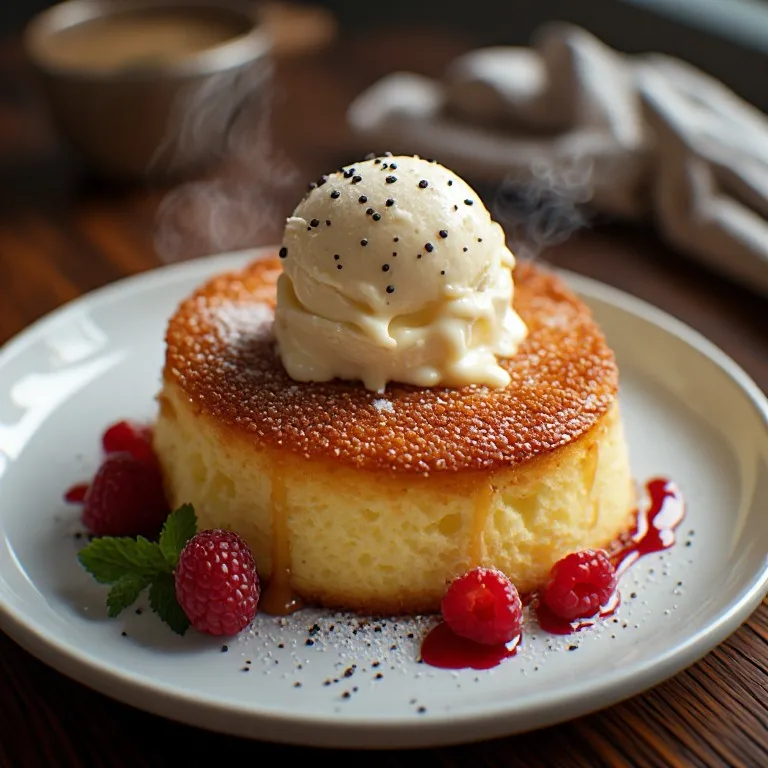
The price at Mastro’s for six servings of this dish would be $168 to $228. The home version, using real cold-water lobster tails and Italian fontina from a cheese counter, runs about $45 to $55 total — roughly $8 per serving for a dish that eats like a luxury item. Pair it with the restaurant’s other signature at home — the over-the-top Mastro’s warm butter cake — and you’ve rebuilt most of a Mastro’s table for the cost of one entrée.
Two things to get right before you start. First: grate all three cheeses from the block, not from a bag. Pre-shredded cheese contains anti-caking agents (usually cellulose or potato starch) that prevent the cheese from melting smoothly into a cream sauce; instead they cause graining and a chalky texture. Five minutes of grating matters here. Second: poach the lobster tails to just-underdone. They finish in the oven. A lobster tail that goes into the casserole fully cooked comes out overcooked.
🥗
Make It Healthier
Love Mastro's Lobster Macaroni and Cheese, Made at Home but want a lighter version? Try these simple swaps:
✓Replace 1 cup of the heavy cream with whole milk — the sauce will be slightly less rich but still cohesive, and you save roughly 300 calories across the full casserole (50 calories per serving). Add the whole milk after the cream has already come to a simmer so the temperature differential is smaller and the sauce is less likely to break.
✓Use 2 lobster tails instead of 4 — you still get visible lobster in most bites and on the surface, and the dish still tastes like the restaurant version, but you cut the protein cost roughly in half. Supplement with ½ lb of poached large shrimp if you want to keep the seafood volume up.
✓Stir 2 cups of frozen petite peas into the cavatappi-sauce mixture before transferring to the baking dish. They add fiber and a mild sweetness that actually works with the fontina, and they break up the richness visually and on the palate. No extra prep — fold them in frozen.
✓Use 6 oz fontina and 2 oz reduced-fat Neufchâtel in place of the full 8 oz fontina — Neufchâtel melts adequately in a cream sauce and cuts about 80 calories per serving while the fontina still provides the characteristic melt and body the sauce needs.
Frequently Asked Questions
What pasta does Mastro's actually use in their mac and cheese?
Cavatappi — also sold as cellentani or double-elbows — is the consensus among both restaurant-side reporting and serious home reconstructions. It is a tubular, corkscrew-shaped pasta with ridged exterior walls. Those ridges do two things: they hold sauce on the outside of each piece, and the hollow corkscrew interior traps a full pocket of sauce inside. Standard elbow macaroni has a smooth exterior and a simple tube; sauce drains off and pools in the bowl rather than clinging to the pasta. Cavatappi also holds its structure better than elbows through the double cooking (boil then bake), which matters when you're starting with underdone pasta. If you can't find cavatappi, large shells (conchiglie rigate) are the closest substitute — their cupped interior traps even more sauce. Rigatoni works in a pinch. Do not use thin pasta (spaghetti, linguine) or plain small elbows — neither holds the sauce through the bake.
Why use fontina as the base cheese rather than white cheddar or Gruyère?
Fontina Val d'Aosta — the Italian original, not the domestic block version — melts into a nearly perfect emulsion at moderate heat. Its fat content, moisture level, and protein structure make it uniquely well-suited to forming the smooth, cohesive body of a cheese sauce without breaking or going grainy. White cheddar is sharper and more acidic, which is good for flavor but more prone to graining in a cream sauce that isn't stabilized by a roux. Gruyère adds a specific nuttiness but has a lower moisture content that can make it finicky to incorporate smoothly. Mastro's uses fontina as the majority cheese precisely because it melts reliably and creates a creamy, slightly sweet base that lets the lobster be the foreground flavor rather than competing with a sharp or pungent cheese. The Gruyère and Parmigiano-Reggiano go in after as secondary flavors, in smaller quantities, after the fontina has already established the sauce structure. If you use domestic fontina (the red-waxed Danish or American block version), it works but is blander; Italian fontina in the green and gold wax is worth finding at a good cheese counter.
Can I use pre-cooked lobster from the seafood counter instead of raw tails?
You can, but the texture will be noticeably different. Pre-cooked lobster at grocery store seafood counters is typically boiled fully and then held cold — it has already been cooked past the point where the interior is just set, and when you add it to a 375°F oven for 12 to 15 minutes on top of a hot cream sauce, it overcooks further and becomes rubbery and dry. The method here deliberately poaches raw tails for only 3 minutes — leaving them just barely opaque at the surface but still translucent in the center — so they finish to perfect doneness during the oven stage. If you must use pre-cooked lobster, fold it into the sauce at the last moment just before the casserole goes into the oven, and bake for only 8 minutes rather than 12 to 15. Better: add half the pre-cooked lobster after baking, not before — scatter it over the just-baked mac and cheese when you pull it from the oven and let the residual heat warm it through without a second cooking.
My cheese sauce turns grainy or gritty — what went wrong and how do I fix it?
Cheese sauce breaks — becomes grainy or greasy with curds visible — for one of three reasons: the heat was too high, the cheeses were added all at once, or the sauce was made with cold cream and cold cheese. High heat causes the proteins in the cheese to seize and tighten, expelling the fat as a greasy puddle while the proteins clump into grains. Adding all the cheeses simultaneously means the cream must melt several pounds of cold cheese at once, which drops the temperature of the liquid and forces you to crank up the heat — which causes breaking. The fix for this recipe: make sure the cream is already gently simmering (not boiling) before any cheese goes in; add fontina in four or five handfuls and whisk each handful completely smooth before adding the next; keep the heat at medium-low throughout. If the sauce breaks mid-build, remove from heat immediately, add 2 tablespoons of cold cream, and whisk vigorously off-heat — this sometimes re-emulsifies a partially broken sauce. A sauce that is grainy all the way through cannot be fixed; start again. Prevention is easier than the fix.
How does Mastro's lobster mac compare to Capital Grille's version?
They are distinctly different dishes, even though both are premium steakhouse lobster mac and cheeses. Capital Grille uses a five-specialty-cheese sauce (Havarti, Grana Padano, mascarpone, white cheddar, Parmigiano-Reggiano) built on straight cream reduction with no aromatics — the sauce is very pure and silky, leaning toward restraint. Mastro's starts with shallots and white wine before the cream goes in, which adds a savory aromatic layer; the fontina base gives it a slightly richer, more cohesive body with a faint sweetness. Capital Grille uses campanelle pasta specifically; Mastro's uses cavatappi. The Capital Grille version is slightly more delicate and refined in flavor; the Mastro's version is slightly richer and more of a statement side dish. Both are excellent. If you've made Capital Grille's version and loved it, Mastro's will taste distinctly different rather than simply better — it is a different flavor profile, not a higher point on the same scale.
What does Mastro's lobster mac actually cost at the restaurant, and what does the home version cost?
Mastro's prices the macaroni and cheese as a tableside side dish at $28 to $38 depending on the location — Beverly Hills and New York run toward the high end; newer locations in other cities run closer to $28. Most tables share it, so the per-person cost drops to $5 to $10 when split four ways — but the side dish arrives in addition to steaks that run $65 to $90 each. The home version, using 4 cold-water lobster tails at roughly $10 to $14 each, Italian fontina, Gruyère, and Parmigiano-Reggiano, costs approximately $42 to $55 total for six generous servings. That is $7 to $9 per serving. The restaurant margin on this dish is significant: the same six servings would cost $168 to $228 at Mastro's prices.
Can I make this ahead for a dinner party?
Yes — this is one of the better make-ahead baked pasta dishes because the cream sauce actually improves slightly after resting. Assemble through Step 5 (casserole filled, reserved lobster arranged on top) and refrigerate, tightly covered, for up to 24 hours. Do not apply the Panko-Gruyère topping until immediately before baking — if applied the day before, it absorbs moisture and turns dense and soggy. Pull the casserole from the refrigerator 30 to 40 minutes before baking; do not put a cold casserole directly into a hot oven (the edges will overcook while the center is still cold). Apply the topping right before it goes in and add 5 minutes to the baking time. The lobster, having been poached but not fully cooked, will finish in the oven — this is fine since the cold casserole means less residual heat was pushing it along overnight. The finished result is 95% as good as made-to-order; the texture of the pasta is slightly softer.
What can I use instead of lobster to make this more affordable?
Large shrimp (21-25 count, peeled and deveined) are the closest substitute in texture and the most practical swap — use 1.5 lbs, sauté quickly in butter with salt and white pepper for 2 minutes per side (do not fully cook), then proceed exactly as the recipe directs for the lobster. The result is excellent. Jumbo lump crab is the most luxurious non-lobster alternative — fold it in very gently at the end and do not put it on top under the Panko, as crab breaks apart under direct oven heat. Sea scallops work well halved; poach for 1 minute rather than 3. If you want to eliminate the shellfish entirely, this sauce with roasted garlic, fresh thyme, and a pound of cavatappi makes a genuinely excellent baked pasta in its own right — not a Mastro's dish, but a good one.
Every recipe here is free, with no paywalls. If this one was a hit at your table, a small tip keeps new copycats coming.
$
💛 Support checkout is coming soon — the cookbook stays free either way.
Mastro's is a trademark of its owner, used here only to describe the dish this recipe recreates.
This is an independent copycat written in our own words — Copycat Spices is not affiliated with,
endorsed by or sponsored by Mastro's.
Researched + fact-checked. Every recipe on Copycat Spices is built from published sources — official ingredient lists, brand-published recipes, interviews and food-science references — and fact-checked before it goes live, then written as clear, step-by-step instructions for home cooks of all skill levels.
Before you go — grab The Copycat Halloween Cookbook 🎃
Our best Halloween copycat recipes in one photo-illustrated PDF. Free, instant download.
Free PDF — instant download. We'll also send new seasonal copycat recipes now
and then; unsubscribe anytime.
Or just download it →
✓ Downloading your free Halloween Cookbook — check your downloads folder. Happy cooking!
We use privacy-friendly analytics to understand what recipes people love. By continuing, you consent to our use of cookies. Learn more
🎃 Get The Copycat Halloween Cookbook — freeInstant PDF, no sign-in. Pay what you want only if you'd like to support us. One email a week, unsubscribe anytime.