
Copycat Mission Chinese Food Mapo Tofu (Danny Bowien’s Version, Made at Home)
Prep time: 30 min (plus 20 min mushroom soak) | Cook time: 30 min | Servings: 4
Danny Bowien was born in South Korea and adopted by an Irish-American family in Oklahoma City. He did not grow up eating Sichuan food. His culinary obsessions started after he moved to San Francisco in his early twenties, began eating his way through the Bay Area’s Chinese restaurants, and encountered mapo tofu at a Sichuan restaurant. He described the experience as something close to a revelation: a dish simultaneously numbing and burning, soft and rich, deeply savory and funky, that he could not stop thinking about.
Bowien first cooked with food journalist Anthony Myint at Mission Street Food, a roving pop-up Myint had started in 2008. In 2010 the two spun it into Mission Chinese Food, a pop-up subleased inside Lung Shan, a Chinese restaurant at 2234 Mission Street in San Francisco’s Mission District. The concept was a nightly sublease of roughly $10: serve intensely flavored food, pay rent, donate 75 cents from every meal to the San Francisco Food Bank. The name came from the neighborhood.
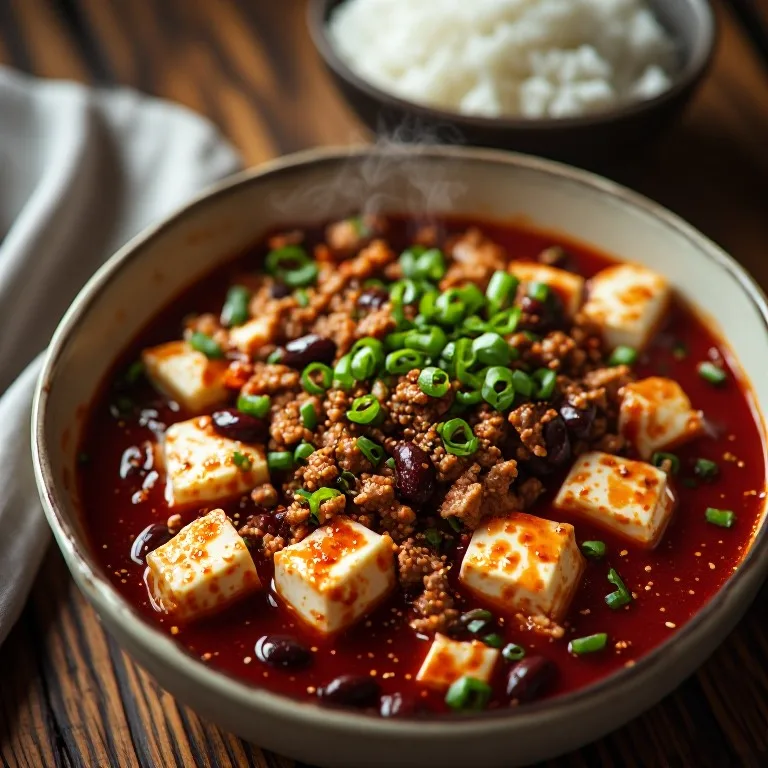
The mapo tofu was the dish. It looked like Sichuan-style mapo tofu — firm tofu, fermented chili bean paste, ground pork, Sichuan peppercorn — but it had been reworked in ways that no traditional preparation had. Bowien built a shiitake mushroom base, blended with doubanjiang and tomato paste, that gave the sauce an umami depth unlike anything available at a standard Chinese-American restaurant. He used a full bottle of beer in the braise. He used fifteen garlic cloves. He said he had tweaked the recipe approximately one hundred times before settling on the version in his cookbook.
New York Times restaurant critic Pete Wells reviewed Mission Chinese Food in 2012, calling it “gloriously unhealthy Sichuan cooking.” Danny Bowien won the James Beard Award for Rising Star Chef of the Year in 2013. The mapo tofu introduced mala — the numbing-and-spicy sensation of Sichuan peppercorn plus fermented chili — to an American audience that had eaten at Chinese restaurants for years without ever fully encountering it.
The recipe below follows the version documented in the Mission Chinese Food Cookbook (Danny Bowien and Chris Ying, 2013), adapted for a standard home kitchen.
The Mushroom Base: The Technique That Changes Everything
Most mapo tofu is built from a straightforward sequence: doubanjiang bloomed in oil, aromatics added, ground pork browned, stock poured in, tofu added. It is quick and it works.
Mission Chinese’s version begins differently. Before any cooking, Bowien rehydrates dried shiitake mushrooms in hot water, then blends the softened mushrooms with the doubanjiang, tomato paste, and soy sauce into a single concentrated paste. This mushroom base is the structural difference between this recipe and every other mapo tofu.
Dried shiitake mushrooms are one of the richest sources of umami compounds in the culinary world — they contain both glutamic acid and guanylate (5’-GMP), a nucleotide that dramatically amplifies the savoriness of any glutamate it sits alongside. Tomato paste is itself concentrated glutamate: ripe tomatoes are among the highest free-glutamate foods in nature, and cooking them down multiplies it. Blending shiitake guanylate, tomato glutamate, and the already-fermented doubanjiang creates a layered umami foundation — the glutamate-plus-nucleotide synergy — that individual additions in sequence cannot match.
The mushroom soaking liquid — dark, intensely flavored, almost broth-like — replaces stock as the braising medium. Every drop of it goes into the wok.
What “Mala” Actually Means
Mala (麻辣) is the defining characteristic of Sichuan cuisine: “ma” (麻) for numb, “la” (辣) for spicy.
The numbing comes from Sichuan peppercorns, which contain hydroxy-alpha sanshool — a compound that activates the same nerve fibers responsible for detecting gentle vibration and light touch. Researchers at University College London confirmed in 2013 that the sensation activates at approximately 50 hertz, which is why your lips and tongue buzz, as if lightly electrified. This is not an analogy; it is a specific, measurable nerve response.
The spicy comes from the capsaicin in the doubanjiang and chili crisp. When both sensations arrive simultaneously, the numbing mutes the burning slightly while the burning amplifies the numbing. Neither overwhelms the other.
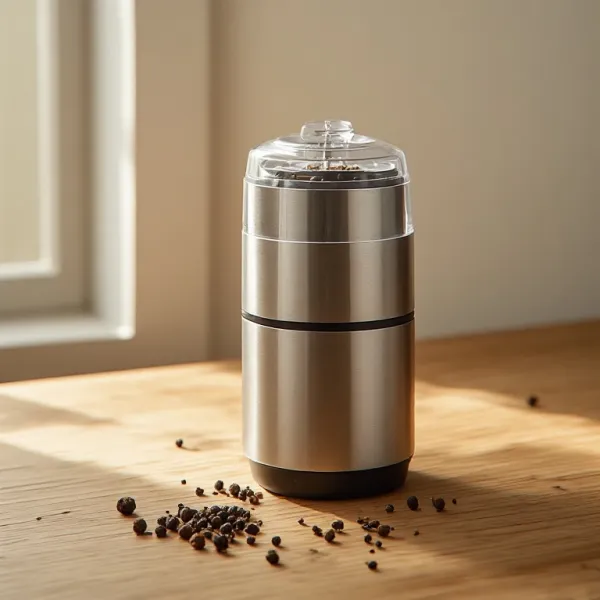
To maximize the mala sensation from this recipe: buy whole Sichuan peppercorns from an Asian grocery with high turnover — they should smell intensely floral and citrusy when you open the bag. Toast them fresh, grind them fresh, and use them the same day. Pre-ground peppercorn from a jar that has been open for months will produce little to no numbing effect because hydroxy-alpha sanshool degrades quickly once exposed to air.
Why a Full Bottle of Beer
The beer was not a traditional Sichuan ingredient. Bowien added it as a specific departure from the classic — a Western element that cuts the richness of the heavily oil-based mushroom paste and introduces a slight bitter-sweet complexity that no Chinese pantry ingredient provides in the same way.
When the beer hits the hot wok after the pork browning, it deglazes the pan and lifts all the caramelized bits from the mushroom base and the browned pork into the liquid. It then braises into the sauce over high heat, its alcohol evaporating while its malt character remains as a gentle background note.
Use a basic lager — Tsingtao is the obvious choice for cultural alignment, but Budweiser, Modelo, or Heineken all work. Avoid hoppy IPAs: hop bitterness amplifies at high heat and can make the finished dish taste harsh. Avoid dark stouts: they will color the sauce too aggressively.
The Garlic: Fifteen Cloves
This is documented in the cookbook and it is not an error.
Garlic cooked in oil at medium-high heat for one to two minutes loses most of its raw allicin sharpness and develops a sweet, deeply savory, almost nutty character that integrates invisibly into a bold sauce. In the context of 1/2 cup of doubanjiang, 1/4 cup of fermented black beans, 1/3 cup of chili crisp, and a mushroom base, fifteen minced garlic cloves are not garlic-forward — they are a structural element, contributing sweetness and body to a sauce that could otherwise skew harsh and one-dimensional.
If fifteen feels like too much to start with, use ten. Below eight, you start to notice the garlic’s absence.
Comparison: Mission Chinese vs. Traditional Mapo Tofu
| Mission Chinese Version | Traditional Sichuan | Average Chinese-American | |
|---|---|---|---|
| Sauce foundation | Mushroom + doubanjiang base | Doubanjiang only | Doubanjiang or substitute |
| Braising liquid | Mushroom soaking liquid + beer | Stock or water | Stock or water |
| Garlic | 15 cloves | 3–5 cloves | Variable |
| Fermented black beans | 1/4 cup | 1–2 tbsp | Rare |
| Chili crisp | 1/3 cup | Not traditional | Not used |
| Tofu type | Firm | Silken | Firm |
| Mala intensity | Very high | Moderate–high | Low to none |
| Fat | High (intentionally) | Moderate | Variable |
The Mission Chinese version is not a simplified home-cook adaptation of the Sichuan original — it is a restaurant reworking that builds on the same flavor logic but pushes every element harder and adds techniques (the mushroom base, the beer, the chili crisp) that have no classical precedent.
More Famous Restaurant Dishes to Make at Home
If you are building a repertoire of iconic restaurant dishes at home:
- Copycat Nobu Black Cod Miso — the Saikyo miso marinade, applied 2 to 3 days ahead
- Copycat Din Tai Fung Soup Dumplings — the most requested dumpling in the world, made at home
- Copycat XiAn Famous Foods Biang Biang Noodles — the hand-pulled belt noodles from NYC’s cult-favorite
- Copycat Momofuku Bo Ssam — David Chang’s slow-roasted pork shoulder with rice and kimchi
- Copycat Din Tai Fung Cucumber Salad — the $9 side dish that outperforms almost everything else on that menu