


Nobu Crispy Rice with Spicy Tuna
Prep time: 30 min (plus 2 hours or overnight chill) Cook time: 10 min Servings: 4 (about 12–16 pieces) Difficulty: Medium
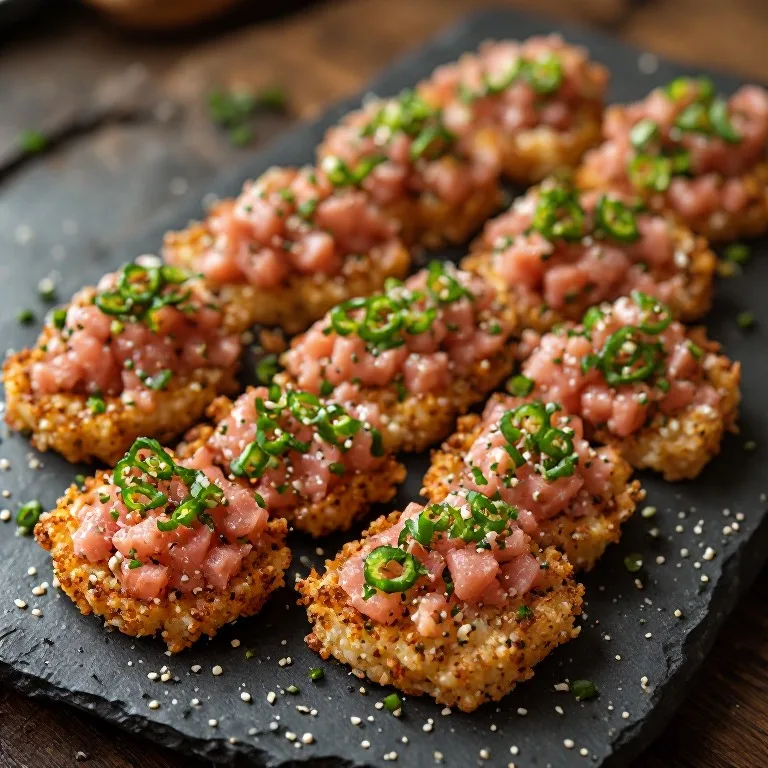
Sushi rice pressed into a block, deep-fried until the shell shatters, topped with cold Kewpie-dressed spicy tuna and jalapeño. The most-copied appetizer Nobu ever put on a menu — at a fraction of the $28–37 per order it runs at the restaurant.
What Is Nobu’s Crispy Rice?
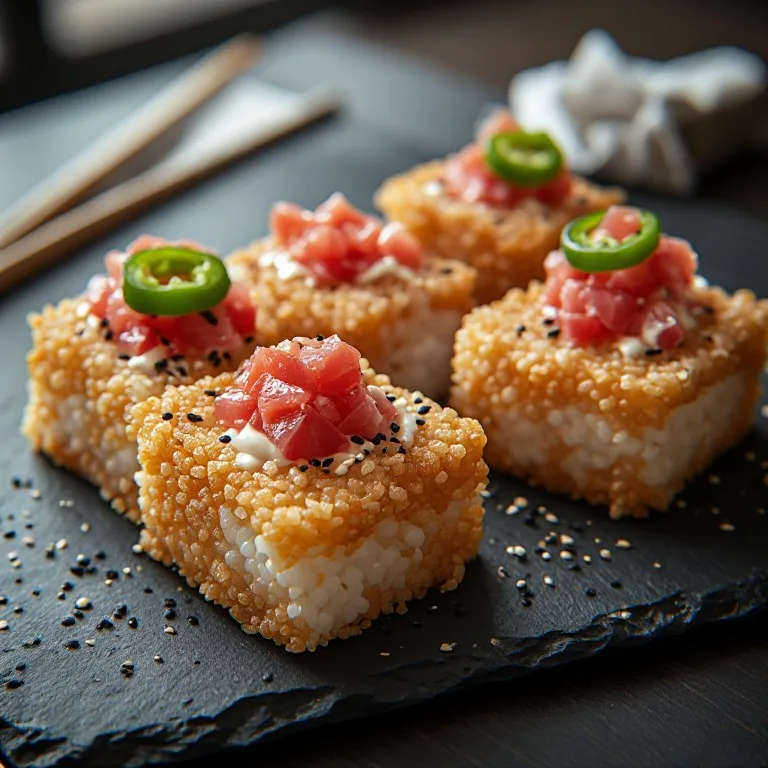
Nobu’s crispy rice is a composed appetizer: compressed sushi rice, deep-fried until the exterior forms a thin, hard, golden crust around a warm, soft center, then topped with cool spicy tuna and a jalapeño round. It sounds simple. The execution is what separates the restaurant version from home attempts — specifically the deep-fry, which creates a textural contrast no other cooking method replicates.
The dish appears on the menu as “Crispy Rice with Spicy Tuna, Salmon, or Yellowtail.” Yellowfin tuna (ahi) is the most common ordering choice and what most copycat versions are designed around.
The Two Things That Matter Most
Deep-fry, not air-fry or pan-fry. The shell on Nobu’s crispy rice is thin and hard — it cracks when you bite through it, the way a fried wonton wrapper does. That crack requires full oil immersion at 350°F. Air fryers and pan-frying create a browned exterior, but the crust is soft and yielding rather than shattering. If you want the Nobu texture, the deep-fry is not optional.
Hand-dice the tuna, never process it. Kewpie and sriracha, folded into roughly 1/4-inch tuna cubes, produce a topping with genuine chew and fish flavor. Processed into paste, the same ingredients produce something closer to a dense spread — the texture is gone and the flavors blur together. Dice cold; fold gently; serve immediately.
Why Kewpie and Not Regular Mayo?
Kewpie is made with rice vinegar (mild, slightly sweet) and only egg yolks (richer than whole eggs), plus a small amount of MSG. The result is a mayo that is very creamy, subtly sweet, and less tangy than American mayo. In spicy tuna, it coats the fish without competing with it. Regular American mayo is tangier and slightly sharper — it works in a pinch, but the difference is noticeable in a preparation this simple.
Kewpie is available at most Asian grocery stores and increasingly at mainstream supermarkets in the Asian foods aisle. The distinctive red-and-white squeeze bottle is the reference.
Cost: Restaurant vs. Home
| Nobu NYC | Homemade | |
|---|---|---|
| Order size | ~4 pieces | 12–16 pieces |
| Price per order | $28–37 | ~$14 total |
| Price per piece | $7–9 | ~$1 |
| Tuna quality | Sushi-grade yellowfin | Sushi-grade yellowfin |
The largest cost at home is the tuna. Sushi-grade yellowfin runs $20–28 per pound at Japanese grocery stores. The 8 oz in this recipe costs about $10–14 and produces significantly more pieces than a single Nobu order.
Make-Ahead Guide
- Rice block: press and refrigerate up to 24 hours ahead (actually better than just 2 hours — the starch has more time to set)
- Spicy tuna: prepare up to 2 hours before serving, refrigerated
- Fried rice: do not fry ahead — it softens within 15 minutes
- Assembly: assemble immediately before serving
For a dinner party, press the rice the night before. Mix the tuna 30 minutes before guests arrive. Fry in batches just before you plate.
Frequently Asked Questions
What makes Nobu’s crispy rice different from the TikTok viral version? Deep-frying at 350°F creates a shattering shell no air fryer can replicate. The tuna is hand-diced (never processed into paste), and Kewpie mayo is creamier and less sharp than American mayo. The TikTok versions are good; this is a different texture entirely.
Why does my rice fall apart when frying? Three causes: the rice was not pressed firmly enough, it was not cold all the way through when it went into the oil, or the oil was below 325°F. Press very hard, chill for the full 2 hours minimum, and use a thermometer.
Can I pan-fry instead of deep-frying? Yes. Two tablespoons of oil in a cast-iron skillet over medium-high, 3 minutes per flat side. The texture is softer — no shattering shell — but the flavor is there. It is a different dish.
How do I know if tuna is sushi-grade? Buy from a fishmonger or Japanese grocery store that explicitly sells it for raw consumption. Ask when it arrived. “Sushi-grade” is not a regulated term in the US; what matters is the freshness, cold chain, and whether the fish was flash-frozen to kill parasites per FDA guidance.
Can I make this ahead? Press and refrigerate the rice up to 24 hours ahead. Prepare the tuna up to 2 hours ahead. Do not fry ahead; fry just before service.