

Pappadeaux Stuffed Shrimp with Alexander Sauce (The Famous Copycat, Made at Home)
Prep time: 20 min Cook time: 25 min Servings: 4
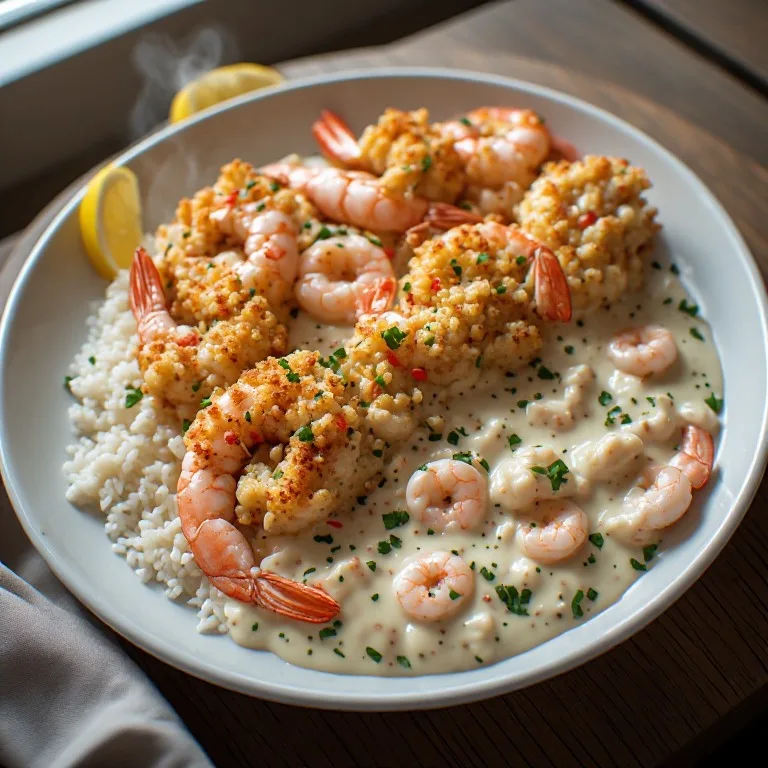
Pappadeaux’s stuffed shrimp is the dish people from Texas, Georgia, and the Gulf South remember most clearly and search for most persistently once they’ve moved away from Pappadeaux territory. Colossal shrimp butterflied and loaded with a crab stuffing, baked until golden, and finished with a ladleful of Alexander sauce over rice — it is a Gulf Coast steakhouse meal in a single plate. The restaurant charges $34 to $42; this version lands at about $22 and takes 45 minutes start to finish.
There are two techniques that actually matter here. First, in the crab stuffing: do not overmix. You want visible chunks of lump crab in every bite — if you fold aggressively you shred the crab into paste. Second, in the Alexander sauce: cook the flour in the butter for a full 2 minutes before adding any liquid. Less than 2 minutes and the finished sauce will have a faint raw-starch taste on the back of the palate that cream and seasoning cannot hide.
What Is Alexander Sauce?
Alexander sauce is Pappadeaux’s house cream seafood sauce — clam juice and heavy cream built on a butter-flour roux, seasoned with white pepper and cayenne, and finished with small shrimp and lump crab meat. It is not a beurre blanc, not an Alfredo, and not a bisque; it is its own Gulf Coast cream sauce. The clam juice is what sets it apart from a simple cream sauce. It contributes a concentrated oceanic brininess that keeps the sauce from tasting purely rich and fatty — there is real shellfish depth in every spoonful. One 8-ounce bottle of clam juice (Bar Harbor, Snow’s, and Doxsee are the common brands, all equivalent in the canned fish aisle) is exactly what this recipe needs.
The sauce is built on protein twice: small shrimp go in first because they need 2 to 3 minutes of heat to cook through; lump crab goes in last, off the heat, because it is already cooked and only needs to warm — additional heat breaks the crab apart and turns it stringy.
The Crab Stuffing
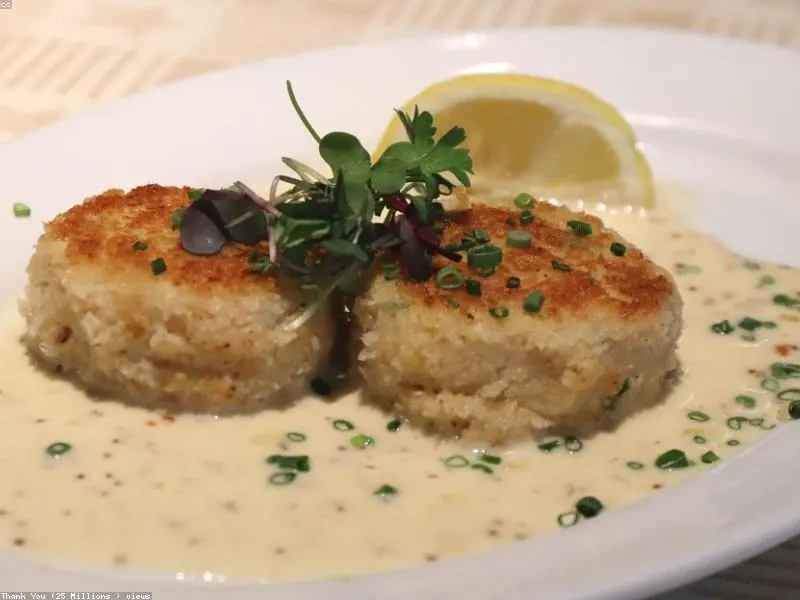
Pappadeaux’s crab stuffing is a seafood-forward riff on a classic crab cake: lump crab, crushed crackers for binding, scallions and red bell pepper for color and brightness, mayo for moisture, Old Bay for seasoning. The key is restraint with the binders — the stuffing should taste like crab with some textural interest from the crackers, not like crackers with some crab in them.
The cracker-to-crab ratio is approximately 1:2 by volume (half a cup of crushed crackers to 8 ounces of crab). If you want a slightly crisper, drier stuffing, reduce to 1/3 cup crackers. If you want a softer, moister stuffing that soaks up more of the Alexander sauce when it is ladled over, increase to 2/3 cup. The stuffing firms up significantly when refrigerated for 15 minutes before mounting — skip the refrigeration step only if you are confident it holds together at room temperature.
Getting the Stuffing to Stay On
The two failure modes are loose stuffing (too much mayo, not enough crackers, or the crab is very wet from thawing) and stuffing that slides off before it has a chance to brown. Both are fixable:
- If the stuffing is too wet: Fold in another 2 tablespoons of crushed crackers and refrigerate 10 more minutes before using.
- If the stuffing slides off: Press a thin smear of extra mayo along the butterfly channel before mounting the stuffing — it acts as an adhesive. Make sure every shrimp is completely flat on the pan before you put it in the oven; even a slight tilt causes the dome to slide as it heats up.
The stuffing should hold a mound shape when pressed — if it falls apart in your hands, it will not survive baking. Test one shrimp: if the stuffing holds its shape out of the oven for 30 seconds, the rest will too.
Tips for Perfect Results
Pick crab carefully. Lump crab comes in tubs in the refrigerated seafood section (Phillips, Chicken of the Sea, and store brands). Open the tub and run your fingers through the meat before using — commercial crab processing misses shells occasionally, and biting into a shell in the stuffing is a jarring experience. 30 seconds of picking before you fold everything together is worthwhile.
White pepper in the sauce, not black. The classical French mother-sauce tradition uses white pepper in cream sauces because it disappears into the pale sauce without speckling it dark. In this recipe, white pepper also has a slightly different, slightly more floral heat than black pepper — correct for a Gulf Coast cream sauce. If you only have black pepper, use it sparingly.
Serve the Alexander sauce with genuine generosity. The sauce is meant to pool at the base of the plate and soak into the rice below the shrimp. If it looks like you’re saucing sparingly, add more. The ratio at the restaurant is roughly equal volumes of sauce and rice at the base of the bowl.
What to Serve With It
The dish is a full meal on its own, so keep sides simple and bright. Pappadeaux classically pairs it with hush puppies, which balance the cream sauce with a fried, slightly sweet corn element. A simple green salad with a vinaigrette cuts the richness well. Crusty French bread for sauce-mopping is essential if you are not serving hush puppies. Skip additional starches — the rice at the base of the plate already handles that role.
Storage and Reheating
Leftovers: Store the stuffed shrimp and Alexander sauce separately. Shrimp: refrigerate in a covered container up to 2 days. Sauce: refrigerate up to 3 days. Do not freeze — the cream sauce separates and the stuffed shrimp turn watery on thawing.
Reheating: Rewarm the stuffed shrimp on a wire rack over a sheet pan in a 300°F oven for 8 to 10 minutes — the stuffing stays somewhat crispy and the shrimp heats through without turning rubbery. Reheat the sauce in a saucepan over low heat, stirring gently; if it has thickened in the fridge, add 2 to 3 tablespoons of cream or milk and stir until smooth. Do not microwave the stuffed shrimp; microwaving steams the stuffing and makes it soggy.