

Pin It

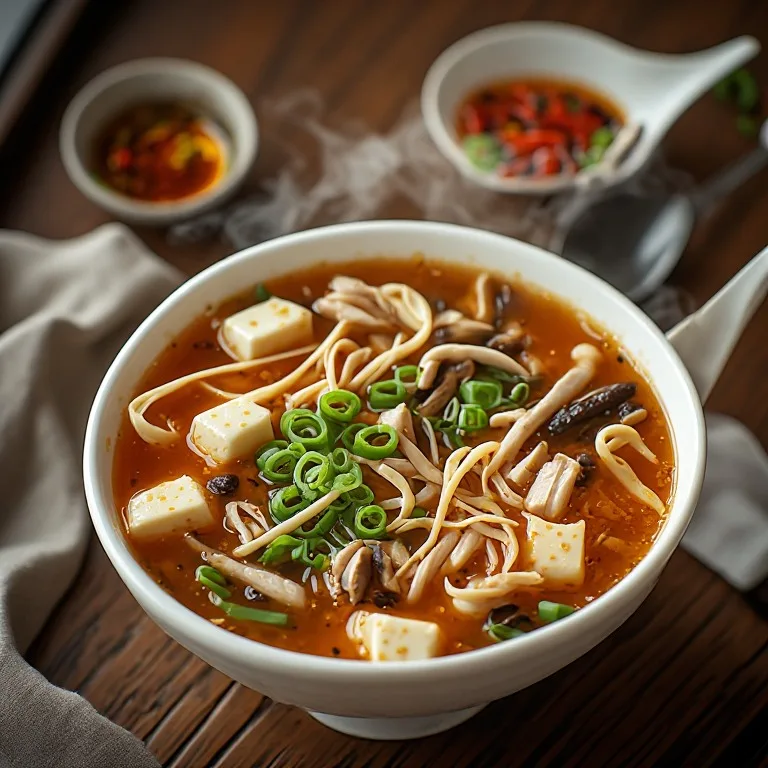
P.F. Chang's Hot and Sour Soup

P.F. Chang's Hot and Sour Soup
Jump to Recipe
Prep 15 min (+ 20 min mushroom soak) Cook 20 min Serves 6
Quick answer: P.F. Chang's Hot and Sour Soup gets its heat from white pepper (not black, not chili) and its sour from rice wine vinegar added off-heat. Bring chicken broth to a simmer, add chicken strips, wood ear mushrooms, and bamboo shoots, thicken with a cornstarch slurry, then — off heat — stir in the vinegar and white pepper. Back on low heat, drizzle beaten egg in a slow, steady stream in one direction to form silky ribbons. Fold in silken tofu last, so it holds its shape. One bowl at the restaurant costs about $11; this version makes six for around $12 total.

Shop the tools

Gear matched to this recipe. These are Amazon affiliate links — we may earn a small commission if you buy, at no extra cost to you.

As an Amazon Associate, Copycat Spices earns from qualifying purchases. Product images are generic illustrations, not the exact item listed.

P.F. Chang's Hot and Sour Soup

Make P.F. Chang's Hot and Sour Soup at home in 35 minutes — chicken strips, wood ear mushrooms, silken tofu, and egg ribbons in a tangy white-pepper broth for about $2 per bowl.

Medium Prep: 15 min (+ 20 min mushroom soak) Cook: 20 min Total: 35 min6 servings ~$4.50/serving
Prep15 min (+ 20 min mushroom soak)
Cook20 min
Total35 min
Servings
6
At home~$4.50/serving
vs
Restaurant~$20.25/serving
You save ~78%

The Story Behind the Recipe

P.F. Chang's was founded in 1993 at Scottsdale Fashion Square, Arizona, by Paul Fleming (the "P.F.") and Philip Chiang — son of Cecilia Chiang, the restaurateur who introduced authentic Chinese cuisine to American diners through The Mandarin in San Francisco. The chain built its reputation on wok-cooked Chinese-American dishes served in an upscale setting, and the Hot & Sour Soup has been one of its most-ordered starters since day one.

A bowl runs about $11.29 at the restaurant, which for a single serving of soup feels like a lot. The home version uses the same wood ear mushrooms, silken tofu, and egg ribbons for around $2 per bowl — and the technique is simpler than it looks. The one thing every copycat recipe misses: vinegar and white pepper go in after the heat is off. Cooking them destroys the bright, sharp flavors that define the dish.

Nutrition Facts

Per serving (6 servings)
Calories155
Total Fat4g
Total Carbs11g
Dietary Fiber2g
Sugars2g
Protein14g
Sodium820mg

* Estimated values based on standard recipe preparation. Actual values may vary.

Ingredients

Instructions

💡
Pro tip: This recipe tastes even better the next day. The flavors need time to meld together in the fridge.
❄️
Storage: Keeps in an airtight container in the fridge for up to 2 weeks. Freezer-friendly for up to 3 months.
🎃 Free Halloween cookbook — download now The Copycat Halloween Cookbook A ready-made, photo-illustrated PDF of our best halloween copycat recipes — free to download, no building required. Pay what you want to support if you love it.

Free PDF — instant download. We'll also send new seasonal copycat recipes now and then; unsubscribe anytime. Or just download it →

P.F. Chang’s Hot and Sour Soup

P.F. Chang’s Hot and Sour Soup is one of the most-ordered starters at the chain — a tangy, savory broth with silken tofu, chicken strips, wood ear mushrooms, and delicate egg ribbons, at about $11 a bowl. This copycat version takes 35 minutes and costs around $2 per serving.

The recipe is not complicated, but two things kill most home versions: adding the vinegar and white pepper too early (heat destroys the flavors that make this soup work), and adding eggs to a thin broth (they clump instead of forming ribbons). Follow the order of operations below and you’ll get the restaurant result.

What Makes P.F. Chang’s Version Different

The restaurant’s version is Chinese-American style, not Sichuan style — a clean chicken-broth base, rice wine vinegar (not the deeper, funkier Chinkiang black vinegar), and no chili oil. The “hot” is quiet and comes from white pepper only. The broth is generously thickened, more substantial than thin restaurant egg drop soups.

Three details distinguish it from generic versions: wood ear mushrooms instead of shiitake (chewier, more neutral, slightly slippery — they absorb the broth), silken tofu cut in matchsticks so it holds its shape in a thickened broth, and a measured hand with the cornstarch so the soup coats the spoon without becoming gluey.

The Three Mistakes That Kill Hot and Sour Soup

Mistake 1: Using black pepper. White pepper is not the same thing as black pepper ground fine. White pepper is made from fully ripe berries with the outer husk removed, which changes the flavor: sharper, cleaner, slightly earthy. Black pepper is smokier and coarser. Hot and sour soup made with black pepper tastes like a generic broth. Use white, and use 1½ teaspoons of it.

Mistake 2: Adding vinegar to a simmering pot. Rice wine vinegar’s brightness is volatile — it cooks off within minutes of simmering. Soup that simmered with the vinegar in it tastes muted and flat. The fix is simple: remove the pot from the burner, then add the vinegar and white pepper into the residual heat. The flavor is preserved completely.

Mistake 3: Adding eggs before the cornstarch. Beaten egg forms delicate ribbons only in a thickened broth that catches and sets each strand as you pour. In a thin broth, the egg spreads into flat sheets and then scatters. Let the cornstarch slurry cook for two full minutes before you touch the eggs.

Building the Flavor

The foundation is straightforward: low-sodium chicken broth simmered with soy sauce for savory depth, and good white pepper for the heat. The chicken cooks directly in the broth — no pre-searing — because the soup is a braise, not a stir-fry. Three minutes is enough for thin strips.

The vinegar and white pepper are added last, off-heat, in quantities that make the sour and hot punch obvious. Start with the amounts in the recipe, taste, and adjust — the soup should taste distinctly tart. Most home cooks under-vinegar because they’re cautious; P.F. Chang’s isn’t.

What to Serve With It

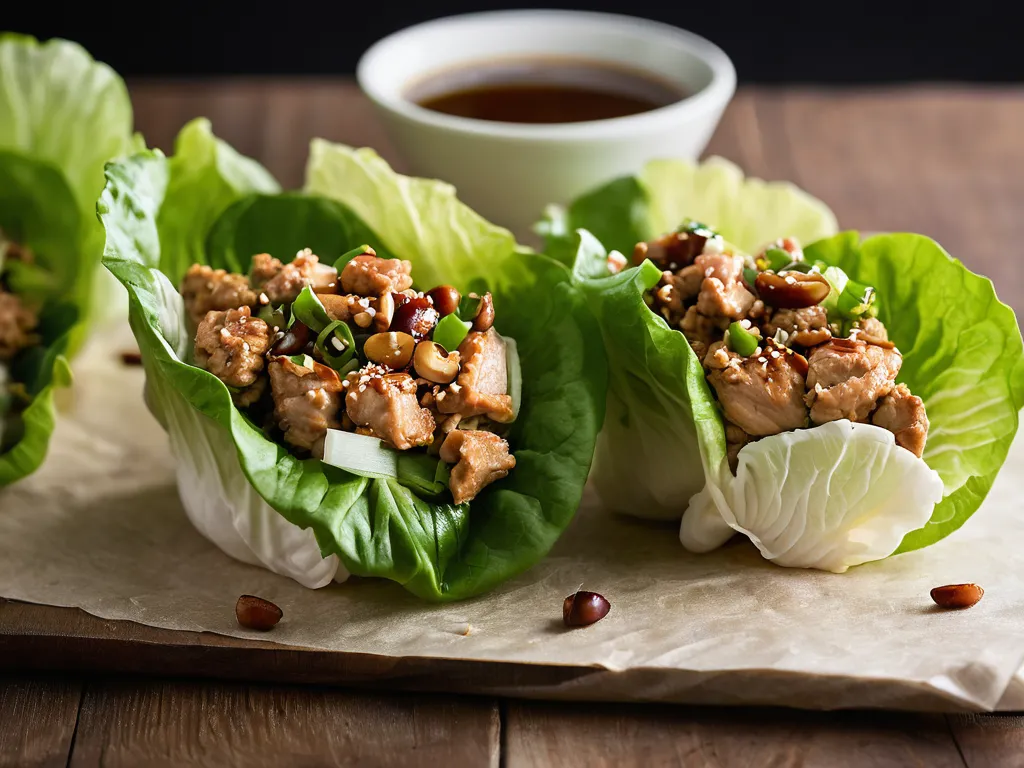
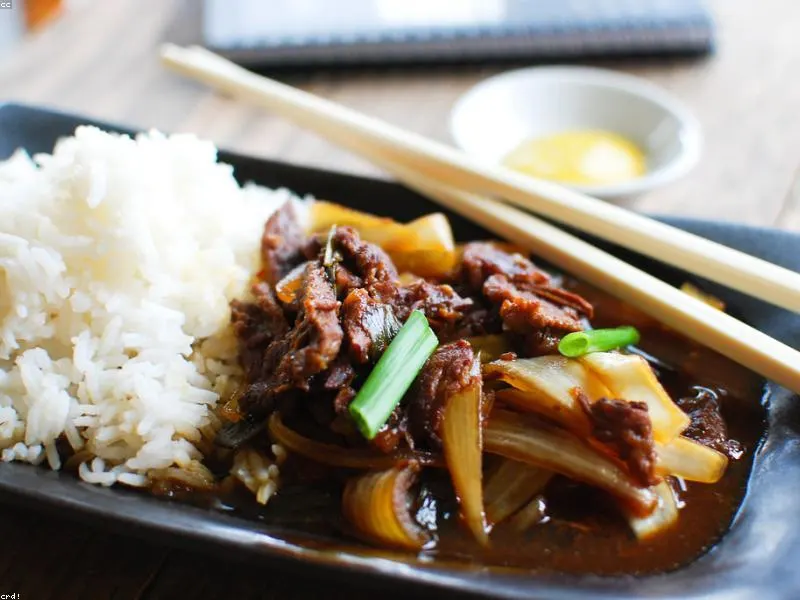
At the restaurant, hot and sour soup comes before the Chicken Lettuce Wraps or Mongolian Beef. At home, a bowl with steamed rice makes a complete light meal; the protein (chicken + tofu + egg) is substantial enough for dinner. For a fuller spread, add the Kung Pao Chicken — it’s the restaurant’s most-ordered entree and takes about the same amount of time as this soup.
🥗

Make It Healthier

Love P.F. Chang's Hot and Sour Soup but want a lighter version? Try these simple swaps:

  • ✓Use low-sodium chicken broth (already in the recipe) and reduce soy sauce from 3 tbsp to 2 tbsp to cut sodium by ~150mg per serving.
  • ✓The recipe already uses no added oil. The sesame oil finish (1 tsp total / 6 servings) adds less than 1g fat per bowl — it's load-bearing for flavor; don't skip it.
  • ✓Silken tofu is already low-fat (about 3g fat per 3 oz serving). For extra protein without calories, increase the chicken from 3/4 lb to 1 lb.
  • ✓Serve with brown rice instead of white to add fiber without changing the soup itself.

Frequently Asked Questions

Why does P.F. Chang's hot and sour soup use white pepper instead of chili?

White pepper is the traditional Chinese source of heat in hot and sour soup. It delivers a clean, sharp, slightly earthy punch that's entirely different from the smoky heat of black pepper or the fruity burn of chili oil. P.F. Chang's version — like most Chinese-American hot and sour soups — is not a spicy dish; the 'hot' is subtle and builds at the back of the throat. If you substitute black pepper, the flavor profile shifts noticeably and the soup loses its signature character. Use white pepper and use more of it than feels right: about 1½ teaspoons for a full-flavored pot.

What is the difference between P.F. Chang's version and Sichuan hot and sour soup?

P.F. Chang's serves Chinese-American hot and sour soup: chicken broth base, rice wine vinegar, generous cornstarch thickening, no chili oil, wood ear mushrooms, bamboo shoots, chicken, and silken tofu. Sichuan-style hot and sour soup uses pork bone broth, Chinese black (Chinkiang) vinegar for a deeper, funkier sour, dried chilies or chili oil for real spice, and a thinner consistency. The P.F. Chang's version is milder, cleaner, and sweeter — built for the American palate. Either is good; they're genuinely different dishes.

Why do my eggs turn into clumps instead of ribbons?

Two causes: the broth wasn't thick enough, or you poured too fast. Egg ribbons form correctly only in a thickened, moving broth — the cornstarch slurry needs to go in and cook for a full two minutes before the eggs. If the broth is still thin, the eggs spread out and set in flat sheets or clumps. And the pour must be slow and steady: hold the beaten egg cup over the pot and let it fall in a thin thread while you stir in one direction. Stirring in circles creates ribbons; pouring in a blob creates clumps.

Can I make this vegetarian?

Yes. Swap the chicken broth for vegetable broth and omit the chicken strips — the wood ear mushrooms and tofu carry plenty of flavor and texture. For extra umami, add a tablespoon of soy sauce and a teaspoon of sesame oil. The egg ribbons remain; for vegan, you can skip them and get a slightly thinner, simpler soup. Many Chinese restaurants make a vegan version this way.

Where do I find wood ear mushrooms?

Any Asian grocery store carries them dried — look in the dried goods aisle near dried shiitake. They're also widely available online. Dried wood ear mushrooms reconstitute in hot water in about 20 minutes; their volume expands dramatically. If you can't find them, dried shiitake mushrooms are the closest substitute and work nearly as well (stronger flavor, slightly less rubbery texture). Do not use fresh button mushrooms — they're the wrong texture entirely and go soft before the soup is done.

What does 'off-heat' mean for the vinegar and white pepper?

It means removing the pot from the burner before you add these two ingredients. High heat drives off the sharp, volatile compounds in rice wine vinegar and cooks away the clean bite of white pepper — both become dull and flat if they simmer for more than a minute or two. Adding them off-heat, with only residual warmth, preserves the bright sour punch and the clean pepper heat that define the dish. Taste the soup before and after adding them — the difference is immediate.

Love this recipe? Share it!

Free PDF: our 12 most-wanted copycat recipes — instant download.

Made it? Buy us a coffee

Every recipe here is free, with no paywalls. If this one was a hit at your table, a small tip keeps new copycats coming.

$

P.F. Chang's is a trademark of its owner, used here only to describe the dish this recipe recreates. This is an independent copycat written in our own words — Copycat Spices is not affiliated with, endorsed by or sponsored by P.F. Chang's.

Ratings & Reviews

—
No ratings yet

Rate this recipe

Click a star to rate

Leave a Review

0/500

CS

Copycat Spices Editorial

Researched + fact-checked. Every recipe on Copycat Spices is built from published sources — official ingredient lists, brand-published recipes, interviews and food-science references — and fact-checked before it goes live, then written as clear, step-by-step instructions for home cooks of all skill levels.

Learn more about our mission →