

Copycat Pizzeria Mozza Butterscotch Budino (Nancy Silverton’s Famous LA Dessert, Made at Home)
Prep time: 20 min Cook time: 25 min Servings: 8 Chilling time: 4 hours minimum (best overnight)
Pizzeria Mozza opened in 2006 at 641 N. Highland Avenue in Hollywood. Nancy Silverton — who built La Brea Bakery and helped reintroduce real sourdough to American supermarkets, then co-founded Campanile, then won the James Beard Outstanding Chef award in 2014 — opened it alongside a pizzeria that took a Michelin Bib Gourmand within a few years. Next door, Osteria Mozza holds one full Michelin star.
The butterscotch budino has been on the dessert menu since the restaurant opened. It was created by pastry chef Dahlia Narvaez, who was working at Jar in Los Angeles before Mozza launched. At Jar, she tasted a butterscotch pudding finished with caramel and sea salt — she and Silverton refined it into the version that became one of the most-replicated restaurant desserts in Los Angeles. Nancy Silverton contributed the rosemary-pine nut shortbread cookies served alongside. The price is about $16 per cup. The recipe is published in The Mozza Cookbook (Knopf, 2011) and through the James Beard Foundation.
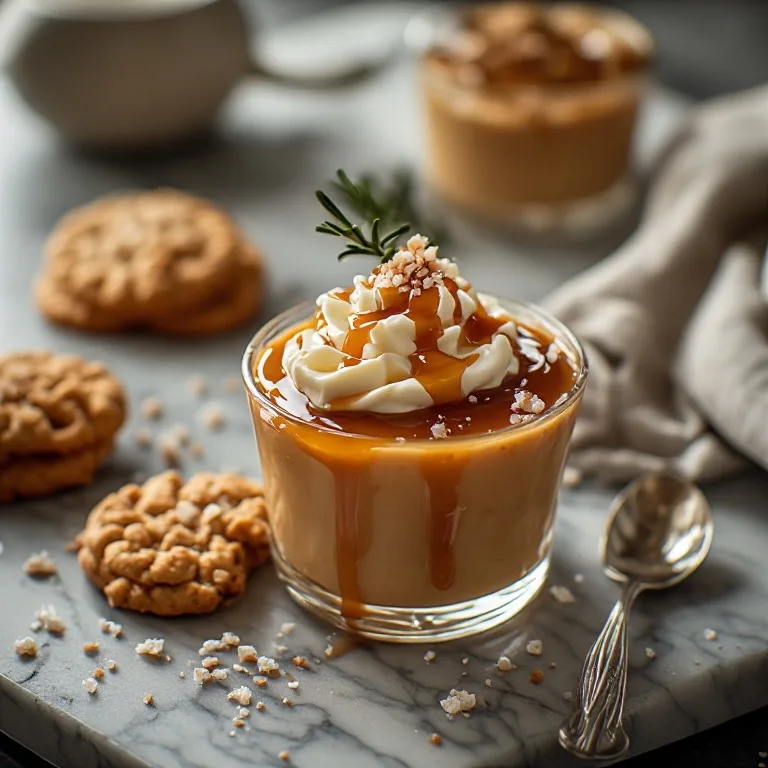
The dessert has three distinct components: a dark-caramel pudding, a separate caramel sauce poured on top, and a crème fraîche-based whipped topping. The finishing pinch of Maldon salt and the rosemary-pine nut cookies are the final two elements. None of them are optional to the experience of the actual dish.
What “Budino” Means — and Why the Method Matters
Budino is the Italian word for pudding. This version is a stove-top, cornstarch-thickened pudding — not baked, not gelatin-set, not a crème brûlée. The texture is denser and silkier than American instant pudding, and firmer than a sauce but looser than a baked custard. It is spoonable rather than sliceable, and it holds its shape in a cup without jiggling.
The method has two irreducible steps. First: the caramel must go genuinely dark — past the golden-amber stage where most home cooks stop, into the smoking-mahogany territory where butterscotch flavor actually lives. Second: the cornstarch-egg mixture must be cooked to a full, sputtering boil and held there for two minutes. Both steps are where most home versions go wrong.
Cost Comparison: Home vs. Restaurant
| Pizzeria Mozza | Homemade | |
|---|---|---|
| Per serving | ~$16 | ~$2.50–3 |
| Full batch (8 cups) | ~$128 | ~$20–24 |
| Savings per serving | — | ~$13 |
The most expensive ingredient at home is the crème fraîche, which runs $4 to $5 for a tub. Everything else — dark brown sugar, cream, eggs, butter — is grocery staples. The pine nuts for the cookies are the only specialty purchase; the cookies keep for a week.
The Three Things Most Copycat Versions Get Wrong
1. The caramel stops at light amber instead of dark
This is the most consequential mistake and the one most copycat recipes make implicitly by saying “cook until amber” without specifying how dark. Light amber caramel — the color of honey — produces a sweet pudding with a mild caramel flavor. That is not butterscotch.
Butterscotch requires that the sugar keeps going: past light amber, past the stage where it turns golden-orange, all the way to deep mahogany-brown where a slight wisp of smoke appears and the smell shifts from sweet to bittersweet. The sugar is beginning to burn — in a controlled, intentional way. The compounds that form at this stage are what give butterscotch its distinctive flavor: complex, slightly bitter, with depth that lighter caramel cannot replicate.
The moment the cream hits the pan, the temperature drops and the caramelization stops. Your window is a few seconds. Watch for color and smoke, trust your nose, and move quickly.
2. The topping is plain whipped cream instead of crème fraîche
The finishing topping at Mozza is not whipped cream. It is three parts crème fraîche to one part heavy cream, whipped together to soft peaks. The crème fraîche adds a tangy, slightly sour dairy note — the opposite of sweet — that cuts through the richness of the caramel pudding and the caramel sauce and prevents the dessert from being cloying.
When you put three rich, sweet layers in one cup (caramel pudding, more caramel on top, heavy cream on top of that), the result is often too much. The crème fraîche resolves this. The slight sourness gives your palate a reset between bites. Without it, the dessert is still good; it just loses the dimension that makes it exceptional.
3. Serving it straight from the refrigerator
Cold suppresses aroma and flavor. Butterscotch is particularly volatile — the molasses notes, the caramel complexity, the rum — and those compounds are much more pronounced at 50°F than at 40°F. A budino pulled directly from the refrigerator and served immediately tastes muted, primarily sweet, with the structure of the dessert more prominent than its flavor.
Ten minutes at room temperature before serving makes a measurable difference. The pudding softens slightly, the caramel loosens and becomes more fluid under the sauce, and the flavor opens. This is how Mozza serves it.
Tips & Variations
- Use muscovado instead of dark brown sugar for more depth. Muscovado is an unrefined cane sugar with a much higher molasses content than commercial dark brown sugar — it produces a more complex, molasses-forward pudding that is closer to old-fashioned butterscotch candy. Available at Whole Foods and most specialty grocers. Use the same quantity.
- The cookies are a weekend project worth doing. The rosemary-pine nut shortbread takes 15 minutes of active time and keeps for a week. The herbal-savory contrast with the sweet caramel pudding is not accidental — it is one of the reasons the dish is interesting across all 8 bites rather than becoming monotonous. Make a double batch and serve them with coffee.
- The caramel sauce keeps for weeks. Make a large batch (double or triple) and refrigerate it. It is excellent on ice cream, over warm pound cake, and stirred into coffee. The fleur de sel in the sauce makes it better than most commercial caramel sauces.
- Press plastic wrap directly on the pudding surface to prevent a skin. The skin that forms as the pudding cools is harmless and dissolves under the caramel sauce, but if you want the surface to be perfectly smooth, press plastic wrap gently onto it before refrigerating. Remove before adding the caramel.
- For parties: make in Mason jars and transport sealed. The budino sets firmly enough to transport. Add the caramel sauce and crème fraîche topping on-site. This is how to bring it to a dinner party.
- The rum is not optional. Several copycat versions suggest the rum can be skipped. It cannot, not and produce the same dessert. Dark rum adds both alcohol (which carries flavor compounds) and its own molasses-and-barrel complexity to the caramel base. The amount is small — 1.5 tablespoons — and the alcohol cooks off if you stir the hot pudding for 30 seconds off heat. What remains is flavor. The version without rum tastes flat by comparison.