Copycat Spago Smoked Salmon Pizza (Wolfgang Puck’s 1982 Signature Dish, Made at Home)
Prep time: 20 min Cook time: 10 min Servings: 2 to 3
In 1982, Wolfgang Puck opened Spago in West Hollywood, and almost immediately it became the restaurant where you went if you were anybody in Los Angeles. The clientele was Hollywood: studio executives, directors, actors, the press that followed them. The kitchen was open — then a radical concept — and Puck was cooking in front of the room.
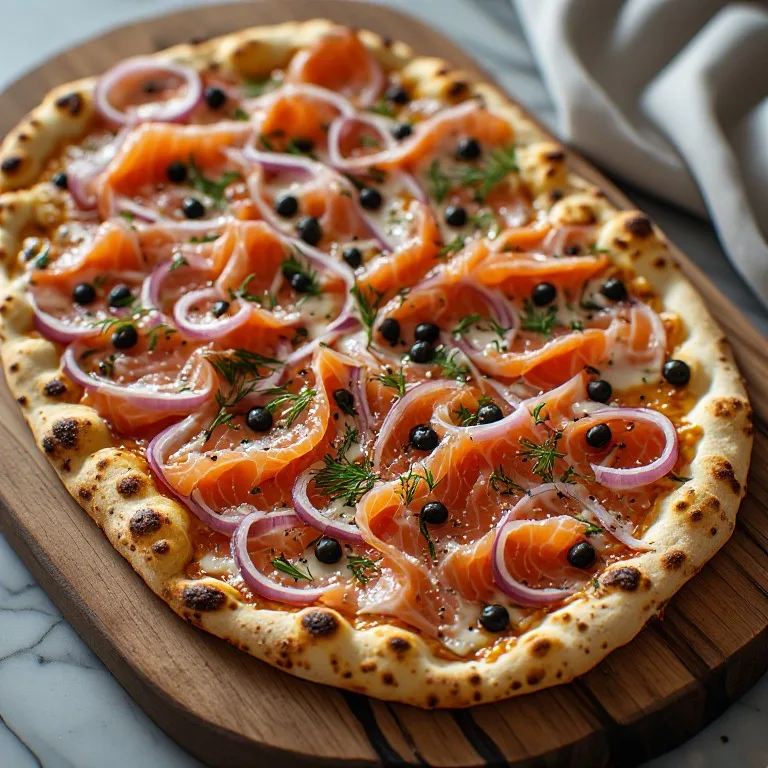
One night, a customer at the bar ordered smoked salmon with brioche. The kitchen was out of brioche. Puck, rather than turn the order away, took a round of freshly baked pizza dough and improvised: dill crème fraîche spread over the crust, cold-smoked salmon laid across the top, a few capers and red onion rings, a spoonful of caviar. The customer ordered it again. Within weeks it was on the menu. Within a year, it was being described as one of the most influential dishes in American restaurant history.
The Joan Collins origin story is the one that has stuck — some accounts name the customer, some simply describe the incident. What matters historically is not who ordered it but what the dish started: a decade of California pizza, designer toppings, and open kitchens that eventually influenced everything from CPK to every artisanal pizza concept that came after. Spago served the pizza to Hollywood, Hollywood photographed it, food writers wrote about it, and the idea of gourmet non-tomato pizza became mainstream.
Puck still serves it at the Academy Awards Governors Ball every year.
The Central Rule: The Salmon Is Never Cooked
This is the fact most people miss when they try to make this at home. The pizza crust bakes bare at 500°F or higher — just dough, olive oil, and heat. The crème fraîche goes on cold immediately after baking. The smoked salmon goes on cold, over the crème fraîche, in the seconds after.
Cold-smoked salmon (lox-style) has been cured and smoked at low temperature — it is not raw in the traditional sense, but it is not cooked either. Its texture is silky and moist, its flavor is delicate smoke and cured fish. Put it in a 500°F oven for 8 minutes and you will get something flaky, dry, and fishy — a very different product. The entire character of the dish depends on treating the assembled pizza as you would a composed salad or a sushi platter: everything comes together cold, except the crust.
At Spago, they cure and smoke their own salmon over four days using cloves, bay leaves, parsley, thyme, and brown sugar — a serious operation. At home, buy the best cold-smoked salmon you can find at the counter.
The Dill Crème Fraîche
Crème fraîche is not the same as sour cream or cream cheese, and the substitution matters. Crème fraîche has higher fat content (28 to 35 percent versus 18 to 20 percent in sour cream) and a milder, rounder tang. It spreads without running, holds its shape on a warm crust without weeping, and does not overpower the salmon with acidity. The dill, shallot, and lemon turn it into something genuinely flavored rather than a neutral base.
Make it at least 30 minutes ahead. Make it the night before if you can — the dill infuses more fully and the shallot loses its raw edge.
Getting the Crust Right
The crust is the structural element. It needs to be paper-thin and fully rigid before any topping touches it. If the center of the crust bends, the assembled pizza will be floppy and the toppings will slide. If the crust is properly cooked — stiff, snapping when tapped — it holds the weight of the crème fraîche and salmon without collapsing.
This requires three things: rolling the dough thinner than feels right (1/8 inch), a properly preheated pizza stone (45 minutes minimum at maximum oven temperature), and resisting the urge to pull the crust before the center has gone fully golden. Edges browning first is normal — the center lags. Wait for the center.
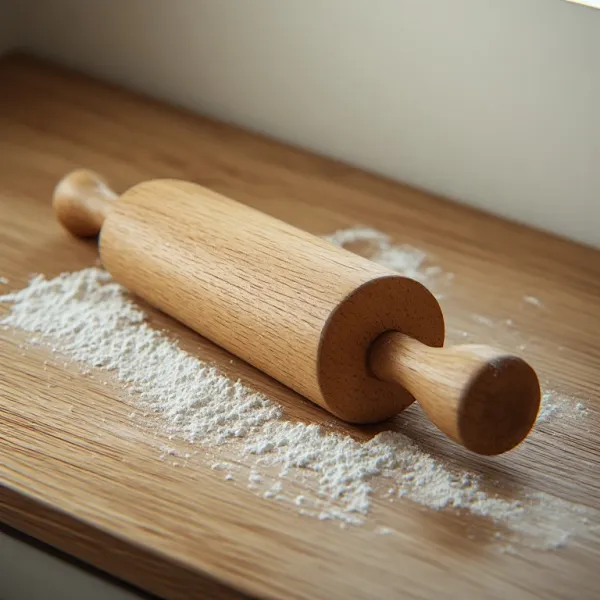
Store-bought pizza dough is a completely legitimate shortcut here. The dough quality matters less than the rolling and the oven temperature. Let cold dough rest at room temperature for 20 minutes before rolling — it relaxes the gluten and becomes dramatically easier to stretch thin.
The Assembly Window
The gap between the crust coming out of the oven and a properly assembled pizza is about 90 seconds. Have the crème fraîche out of the refrigerator and pre-stirred. Have the salmon, onion, capers, and chives staged next to the oven, ready to go. Have a large enough cutting board or peel waiting to receive the crust.
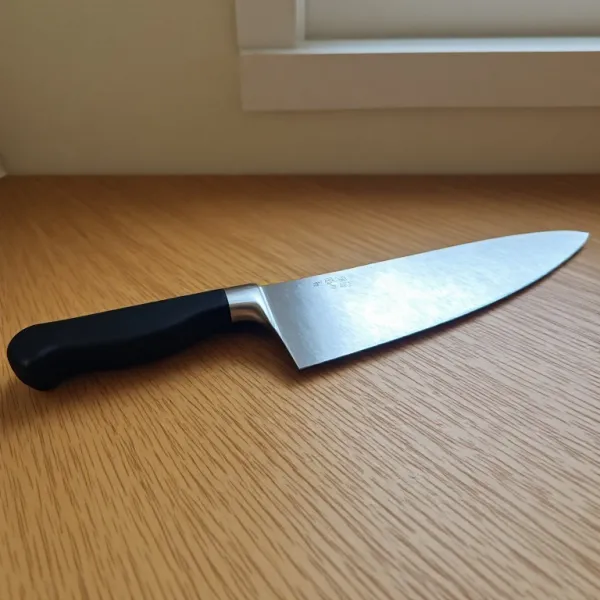
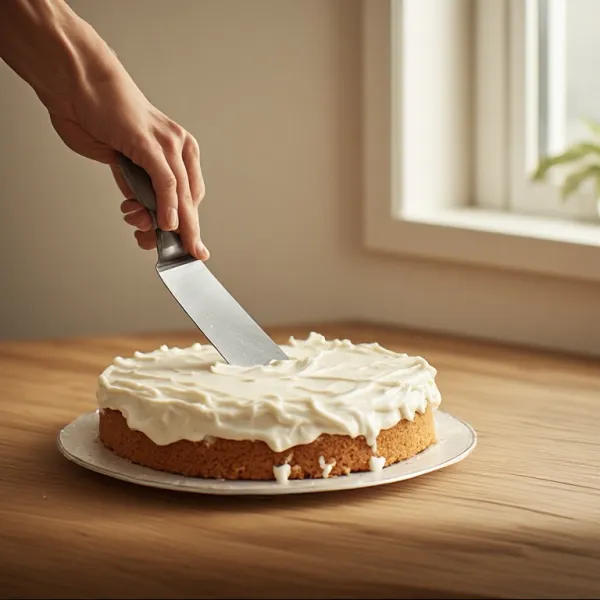
The crème fraîche goes on first while the crust is still hot — it softens slightly on contact, which is correct. Then the salmon. Then the garnishes. Then the drizzle and the lemon. Then the knife, immediately. Within 3 to 4 minutes, the base will begin to soften where the crème fraîche and salmon juices have soaked in. The first slice should be perfect; the fourth will be slightly softer. This is the nature of a cold-topped hot crust: serve it fast.
Wolfgang Puck still serves it at every Academy Awards Governors Ball. This recipe makes it at home in 30 minutes.