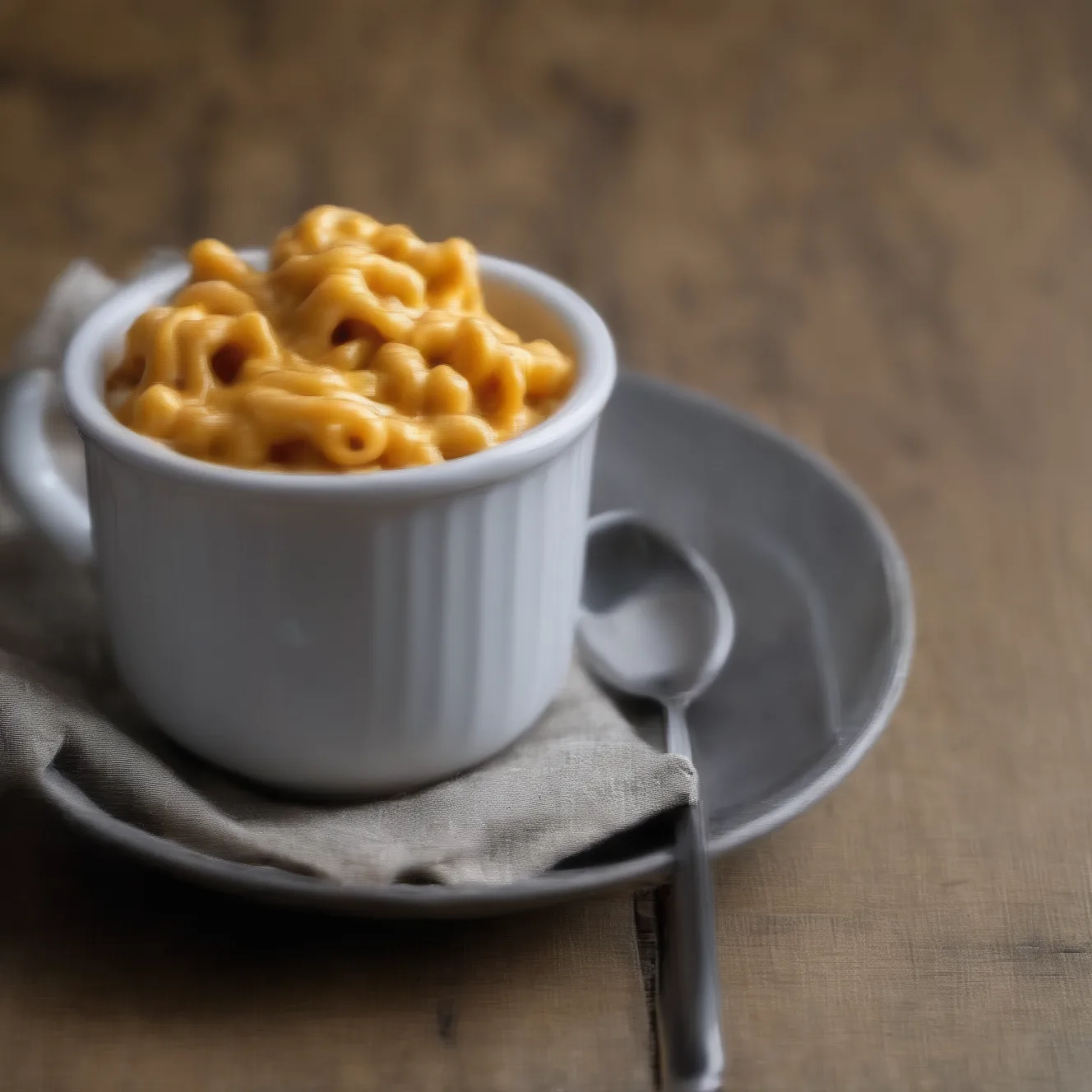
TL;DR: Popeyes Homestyle Mac & Cheese is baked — the golden broiled crust on top is the whole point, and most copycat recipes miss it entirely. Use American cheese in the sauce (cheddar alone breaks into a grainy mess), sharp cheddar on top for the crust, season mildly with paprika and garlic powder (not Cajun), and finish under the broiler for 2–3 minutes. That’s the recipe.
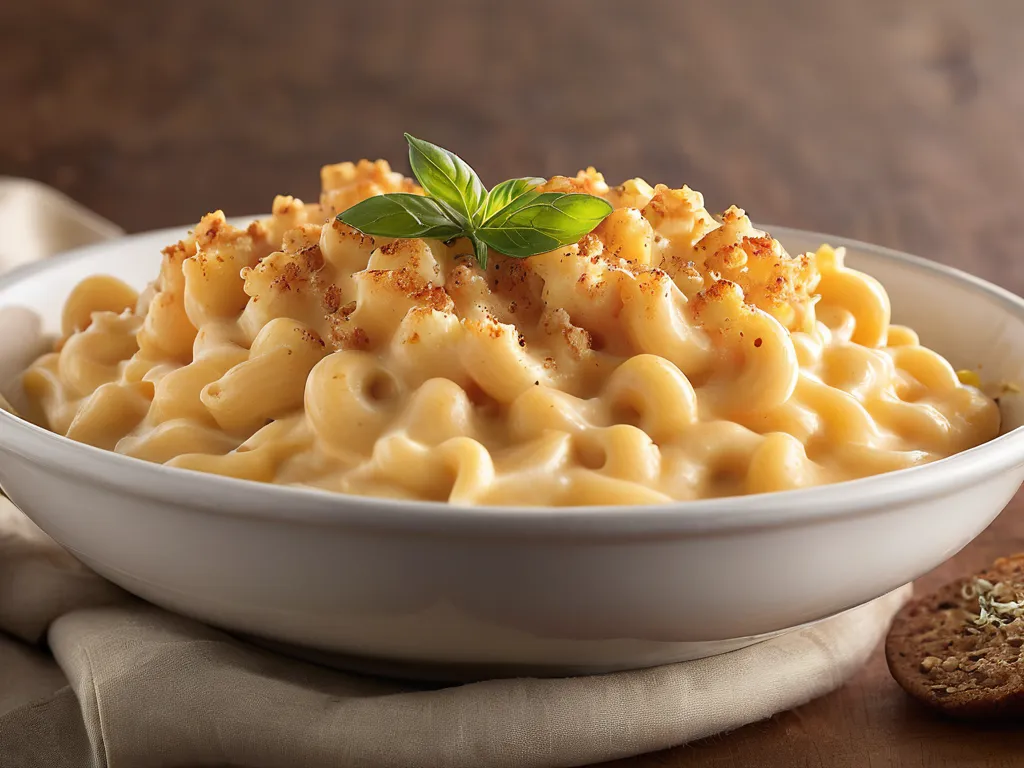
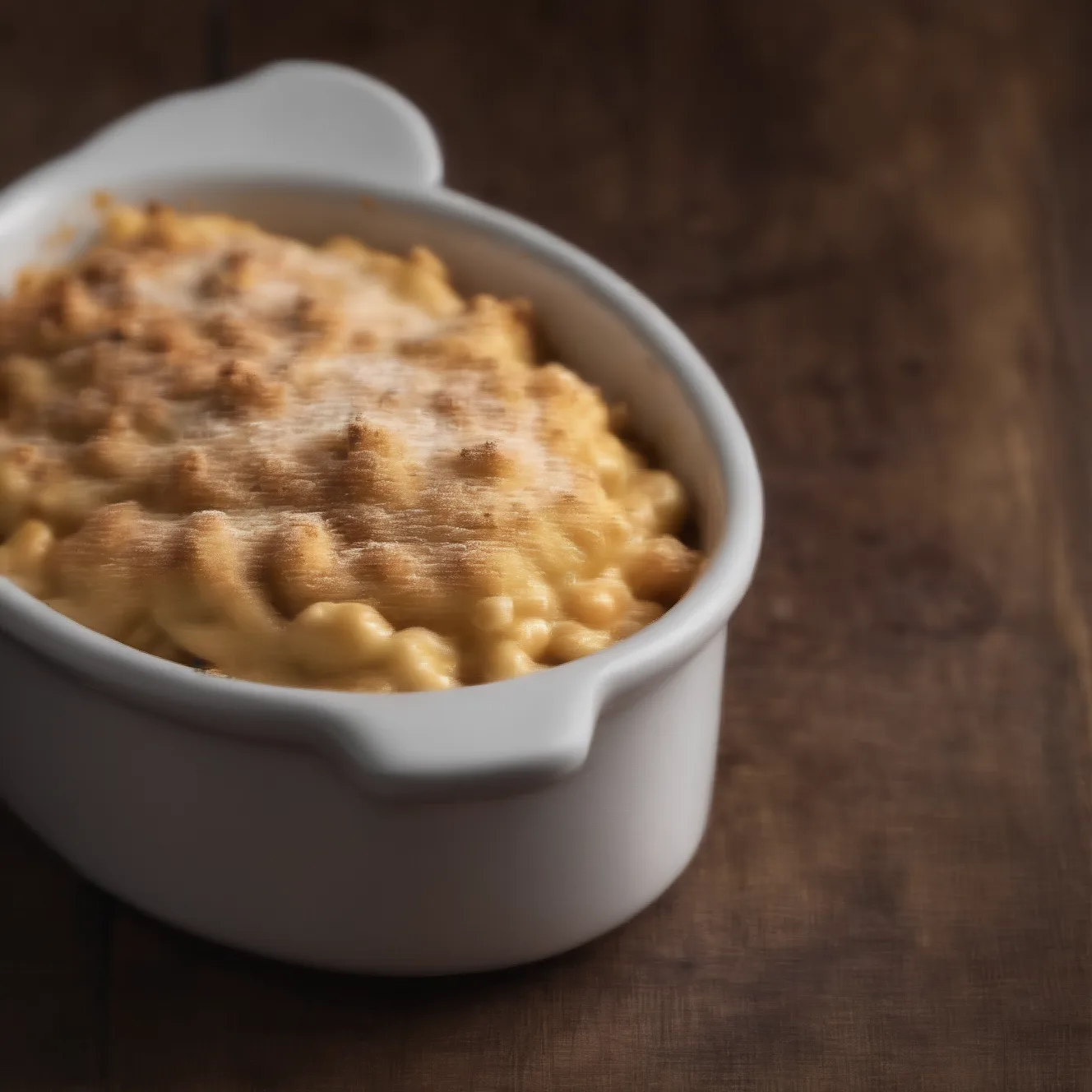
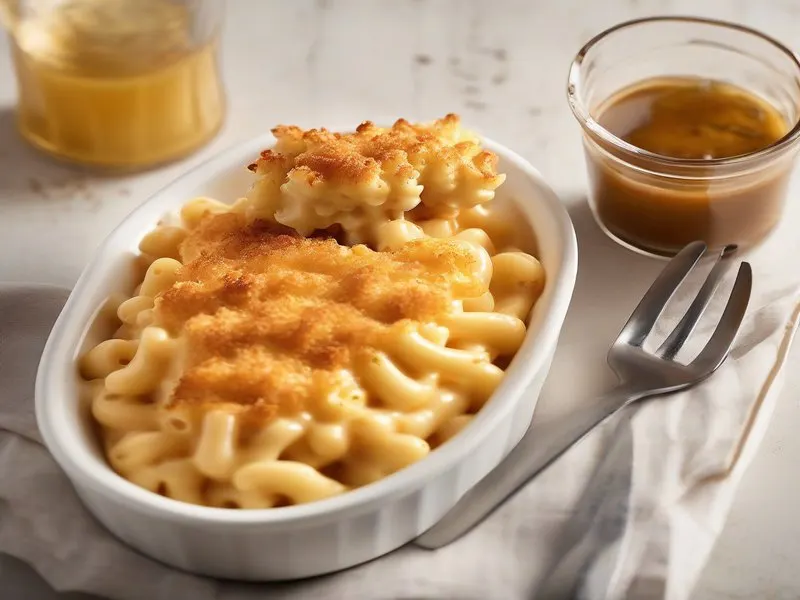
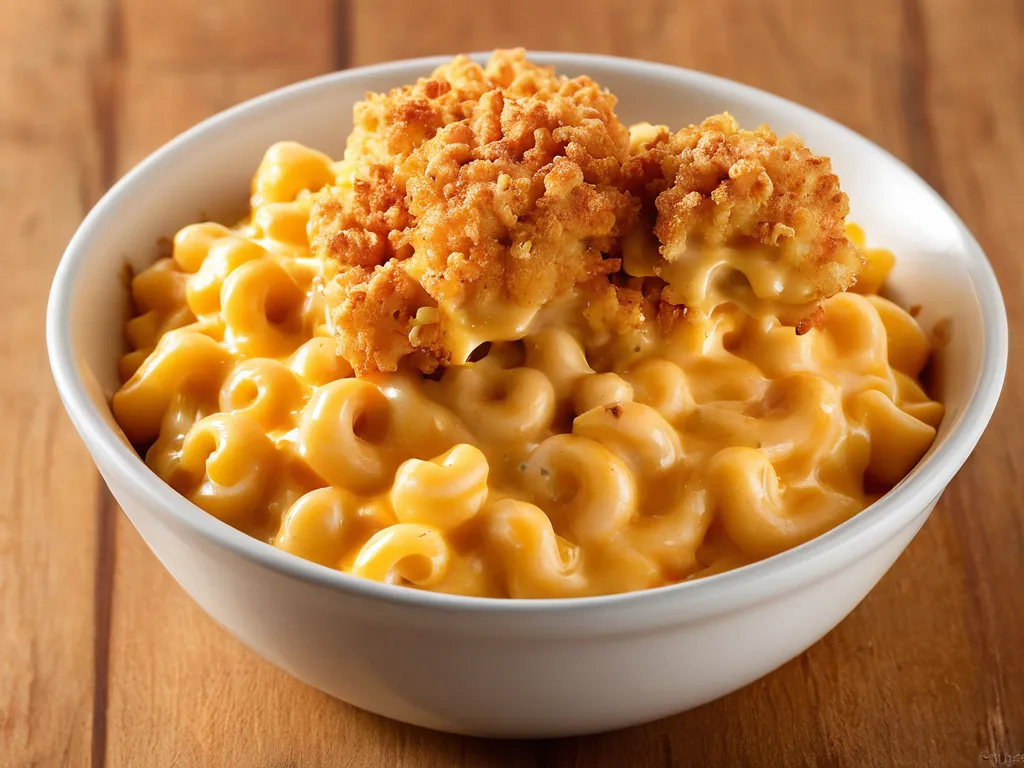
Popeyes has a lot of sides. Most of them are good — the Cajun fries, the mashed potatoes, the red beans and rice each do something specific well. But when Popeyes launched their Homestyle Mac & Cheese, they made a genuinely unusual choice: they baked it. Not steam-table. Not stovetop. Oven-baked, with a golden cheddar crust that you can see through the side of the container when you get your order.
That one decision explains why this dish has a better reputation than any other fast-food mac and cheese on the market, and why every home copycat attempt that produces stovetop mac and calls it Popeyes is missing the point.
What Most Copycat Recipes Get Wrong
Search “copycat Popeyes mac and cheese” and you’ll find three recurring problems:
1. They stop at the stovetop. The sauce is made, the pasta goes in, it gets plated warm. No crust, no bake, no broil. The dish tastes fine — maybe even good — but it tastes like mac and cheese, not like Popeyes. The golden crust on top isn’t decoration. It’s a textural event: slightly concentrated, lightly caramelized cheese over a creamy interior. Skipping it produces a fundamentally different eating experience.
2. They use only cheddar. A cheese sauce made entirely from sharp cheddar will break under heat. The proteins in cheddar tighten and separate from the fat as the sauce cooks, leaving a grainy, slightly oily result. The fix has been understood in food science for decades: an emulsifying agent keeps the fat and protein locked together. American cheese (not processed cheese product — actual deli-counter American) contains sodium citrate, which does exactly this job. Popeyes’ sauce is smooth and pulls into strings because of the American cheese, not despite it.
3. They add Cajun heat. People see “Popeyes” and reach for cayenne and Tony Chachere’s. The Homestyle Mac & Cheese has neither. It’s seasoned with salt, pepper, paprika, and garlic powder — mild, familiar, comforting. That’s intentional: the dish sits next to spicy fried chicken, and its job is to be the rest stop, not another assault.
Why American Cheese Is the Right Call
This is the part of the recipe that food-minded cooks push back on. American cheese has a reputation as a non-food — processed, plasticky, not real cheese. That reputation is mostly deserved for the individually wrapped squares that melt into an oil puddle on a burger. But deli-counter American (Land O’Lakes, Boar’s Head, or equivalent) is a different product: real dairy, real emulsifiers, real mild cheddar flavor, and a melting behavior that no block cheese can match.
The technical explanation: American cheese contains sodium citrate, which acts as an emulsifying salt. When you add it to a hot milk sauce, it coats the fat globules and creates a stable, homogeneous suspension. You can heat the sauce to boiling and it stays smooth. You can cool and reheat it and it stays smooth. The sodium citrate does what stabilizing starches do in boxed mac and cheese, but without the starchy texture.
Cheddar melts beautifully at low temperatures. At sauce temperatures — 180°F and above, sustained for several minutes — the proteins in aged cheddar tighten and begin to separate from the fat. The result is gritty, the texture described as “broken sauce.” This is why your from-scratch mac and cheese sometimes tastes grainy even when you did everything else right: no emulsifier, too much heat, or too long on the stove.
The fix: Use American in the sauce for emulsification, then use sharp cheddar only on the top crust, where it melts briefly under high broiler heat and produces the golden surface. Each cheese does the one job it’s suited for.
| American Cheese | Sharp Cheddar | |
|---|---|---|
| Role in this recipe | Sauce base — smooth emulsification | Top crust — flavor + browning |
| Melting behavior | Silky, stable at high temps | Excellent flavor, can break in sauce |
| Flavor contribution | Mild, creamy, slightly salty | Sharp, complex, pronounced |
| Contains emulsifier | Yes (sodium citrate) | No |
The Broil Step — Two to Three Minutes, Constant Watching
The broiler is the least forgiving tool in the kitchen. At full blast, the distance from pale cheddar to burnt cheddar is under 90 seconds. Here’s how to manage it:
Position the rack at 6 inches from the broiler element. Too close (4 inches or less) and the cheese darkens before the interior warms through. Too far (8+ inches) and you get more bake than broil — the surface color develops slowly and the pasta dries out before the crust forms properly.
Pull at golden-brown patches, not uniform golden. Cheese under a broiler doesn’t color evenly — the edges go faster than the center, and individual shreds of cheddar brown at different rates. You want most of the surface golden with a few darker spots at the edges. Uniform pale golden means you pulled too early. Uniform dark means you went too far.
Give it two minutes after pulling. The crust continues to set as it cools slightly. It looks soft when it comes out; after two minutes of rest, it firms into the texture you get at the restaurant.
Building the Full Popeyes Lineup at Home
This mac and cheese pairs with Popeyes spicy chicken tenders or the Popeyes chicken sandwich the same way it does in the restaurant — the mild, creamy mac against the heat of the chicken. Round out the spread with Popeyes biscuits and you have the core of the menu at home.
For a mac and cheese comparison across chains, see KFC mac and cheese (stovetop, smoother) and Chick-fil-A mac and cheese (stovetop, slightly sweeter) — both good, neither baked.
Variations
Four-Cheese Version (Richer, More Complex): Add 2 oz of cream cheese to the sauce alongside the American cheese, and substitute ½ cup of Gruyère for half the sharp cheddar on top. Gruyère has better browning behavior than cheddar under the broiler and a more complex flavor. The sauce will be slightly thicker.
Spicy Version (What Popeyes Doesn’t Do): If you want to push the Cajun angle the restaurant deliberately avoids, add ¼ teaspoon of cayenne to the seasoning and ½ teaspoon of hot sauce (Crystal or Tabasco) to the sauce. A sprinkle of Tony Chachere’s on top before broiling adds heat and color. This is better than Popeyes’ version by some measures — just not a replica.
Make-Ahead: Prepare the sauce and combine with pasta, but stop before the broil step. Cover and refrigerate up to 2 days. Before serving, let it come to room temperature for 30 minutes, top with fresh cheddar, and broil as directed. The broil step is best done fresh.
Popeyes Regular vs. Large: Nutrition Comparison
Popeyes officially sizes their mac and cheese in Regular and Large. The jump is dramatic:
| Regular | Large | Home Recipe (¼ batch) | |
|---|---|---|---|
| Calories | ~300 | ~900 | ~590 |
| Fat | 22g | 65g | 32g |
| Carbs | ~15g | ~46g | 50g |
| Protein | 11g | 33g | 26g |
The restaurant’s regular side is relatively modest — 300 calories for a side dish. The large is effectively a meal. The home recipe runs higher per serving — roughly double the regular side — because home portions are more generous and the from-scratch cheese sauce uses more whole milk and freshly shredded cheese than the commercial version. If you’re watching calories, split a batch into six servings instead of four; that lands each portion close to the restaurant’s regular size.
Storage
Refrigerate leftovers covered for up to 4 days. The pasta absorbs the sauce overnight — add 2 tablespoons of whole milk per serving when reheating and warm over medium-low heat on the stovetop, stirring gently, until creamy. For the closest-to-fresh result, re-broil after warming to restore some surface texture. The revived crust won’t match the original, but it’s meaningfully better than microwave-only.
Freeze: the mac freezes reasonably well for up to 2 months. The sauce may separate slightly on thaw — add milk when reheating and whisk gently to re-emulsify. The American cheese’s sodium citrate still does its job on the reheat.