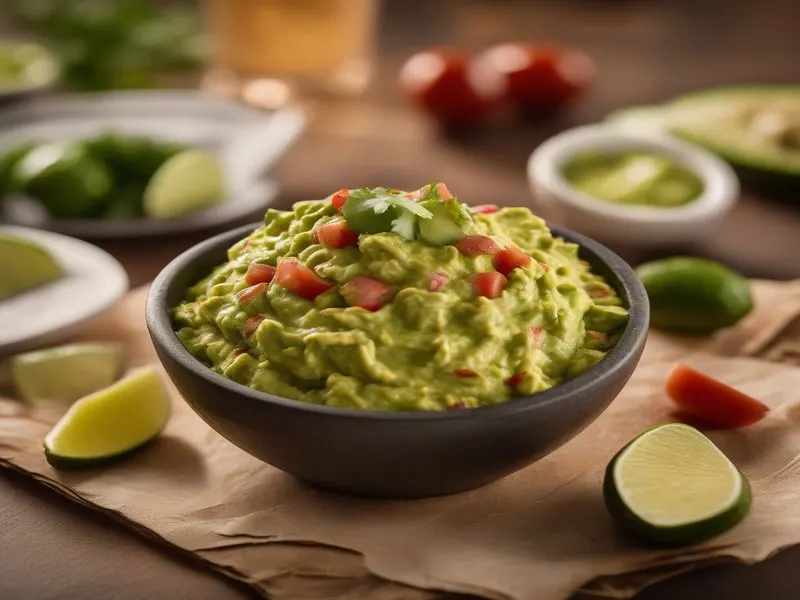


Rosa Mexicano Tableside Guacamole en Molcajete
Prep time: 10 min Servings: 4 No cook time
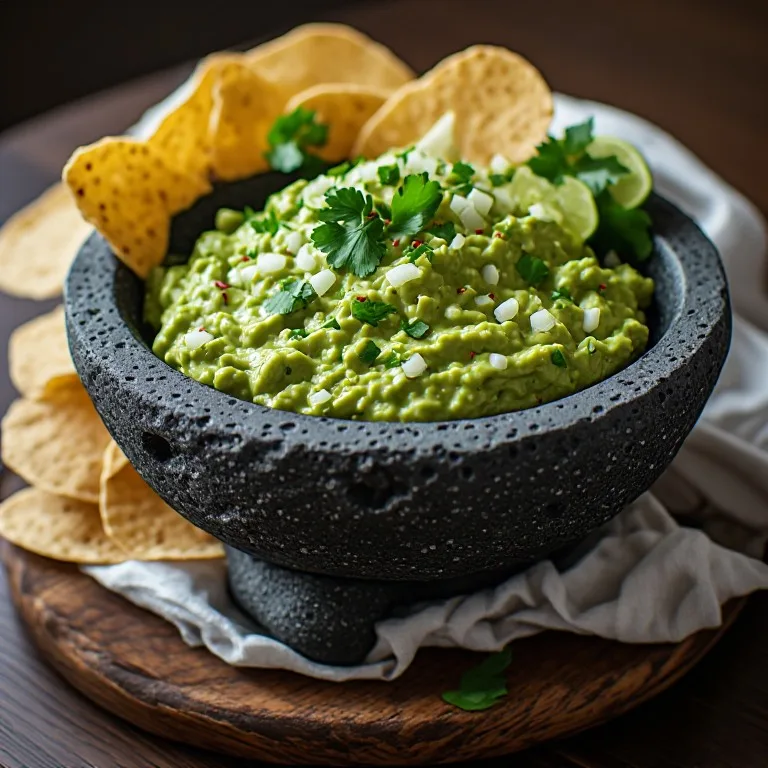
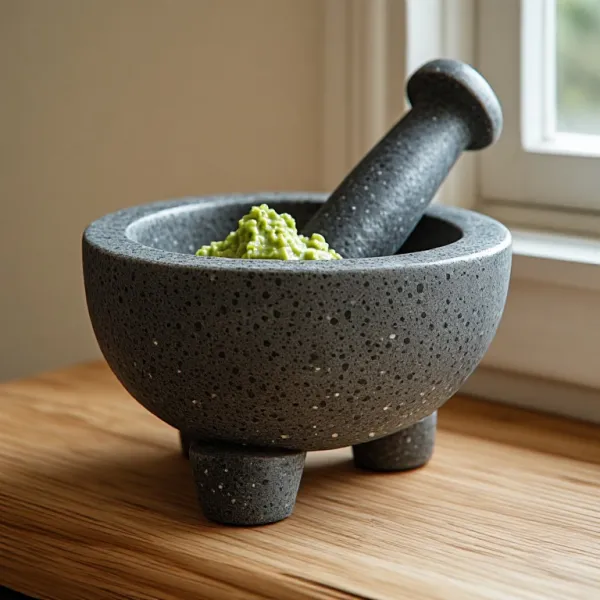
In 1984, Josefina Howard opened Rosa Mexicano at 1063 First Avenue on the East Side of Manhattan, near the United Nations. Born in Cuba to Spanish parents and raised in Asturias, she had lived in Mexico for more than twenty years and wanted New York to understand that Mexican cooking was far more than the combo plates the city already knew. The restaurant’s signature was the tableside guacamole: a server wheels a cart to the table, sets a volcanic basalt molcajete in front of you, grinds the serrano and onion and cilantro into a paste while you watch, asks how hot you want it, then folds in the avocado. The entire preparation takes under four minutes. The guacamole is eaten immediately.
That ritual launched something. Over the next four decades, dozens of upscale Mexican restaurants across the country added their own tableside guacamole service, and “made-fresh, in the molcajete” became the benchmark home cooks now measure their own guacamole against. None of the imitators owned it the way Rosa Mexicano did.
Getting a reservation and paying $20 for one portion is still entirely worth the experience. But the home version is something different: made precisely to your specification of heat, eaten immediately at your own table, and available any time you have ripe avocados and a serrano in the house.
The One Thing Most Copycat Recipes Miss
The paste-first method.
Every generic guacamole recipe tells you to mash avocado in a bowl and stir in the aromatics afterward. Rosa Mexicano does the opposite. The serrano pepper, onion, salt, and cilantro stems are ground together in the molcajete until they form an integrated, fragrant paste — and that paste becomes the base into which avocado is folded.
Why it matters: when you stir raw aromatics into mashed avocado, each ingredient remains in its own zone. You get bites that are mostly avocado, and bites where the heat is concentrated near a serrano piece. When you grind first and fold second, the paste coats every piece of avocado evenly — the capsaicin from the serrano, the sulfur compounds from the onion, and the volatile oils from the cilantro distribute throughout the bowl. The result is brighter, more cohesive, and more complex than any stir-in version, even when both use identical ingredient lists.
This is the technique worth learning.
The Serrano Question
Almost every copycat recipe substitutes jalapeño for serrano. The two are not the same pepper.
Serrano peppers are thinner and hotter (typically two to three times the Scoville rating), but more importantly they have a different capsaicin profile: the heat hits the front and sides of the tongue with a citrus-adjacent brightness, rather than the back-of-throat burn of jalapeño. For a tableside guacamole built around freshness and bright acidity, serrano is the correct choice. Jalapeño produces a competent guacamole. Serrano produces the one you remember.
If serranos are unavailable, use the freshest jalapeños you can find and accept the difference. Do not substitute habanero (too fruity, wrong flavor) or canned peppers of any kind.
The Fall Variation
Rosa Mexicano is known for rotating seasonal guacamoles through the year, and a fall version is a natural fit: char a poblano over an open flame, peel it, and fold diced poblano and fresh sweet corn kernels into the finished guacamole. The smoky char from the poblano plays against the raw brightness of the serrano paste, and the corn adds a sweet pop and textural contrast. A scatter of pomegranate seeds (in season through December) turns the bowl visually striking — deep red seeds against bright green avocado.
The base method is identical. After folding in the raw onion and cilantro at the finish step, add 3 tablespoons of diced roasted poblano and 3 tablespoons of corn kernels (fresh, roasted, or from a leftover cob). Garnish the top with pomegranate seeds.