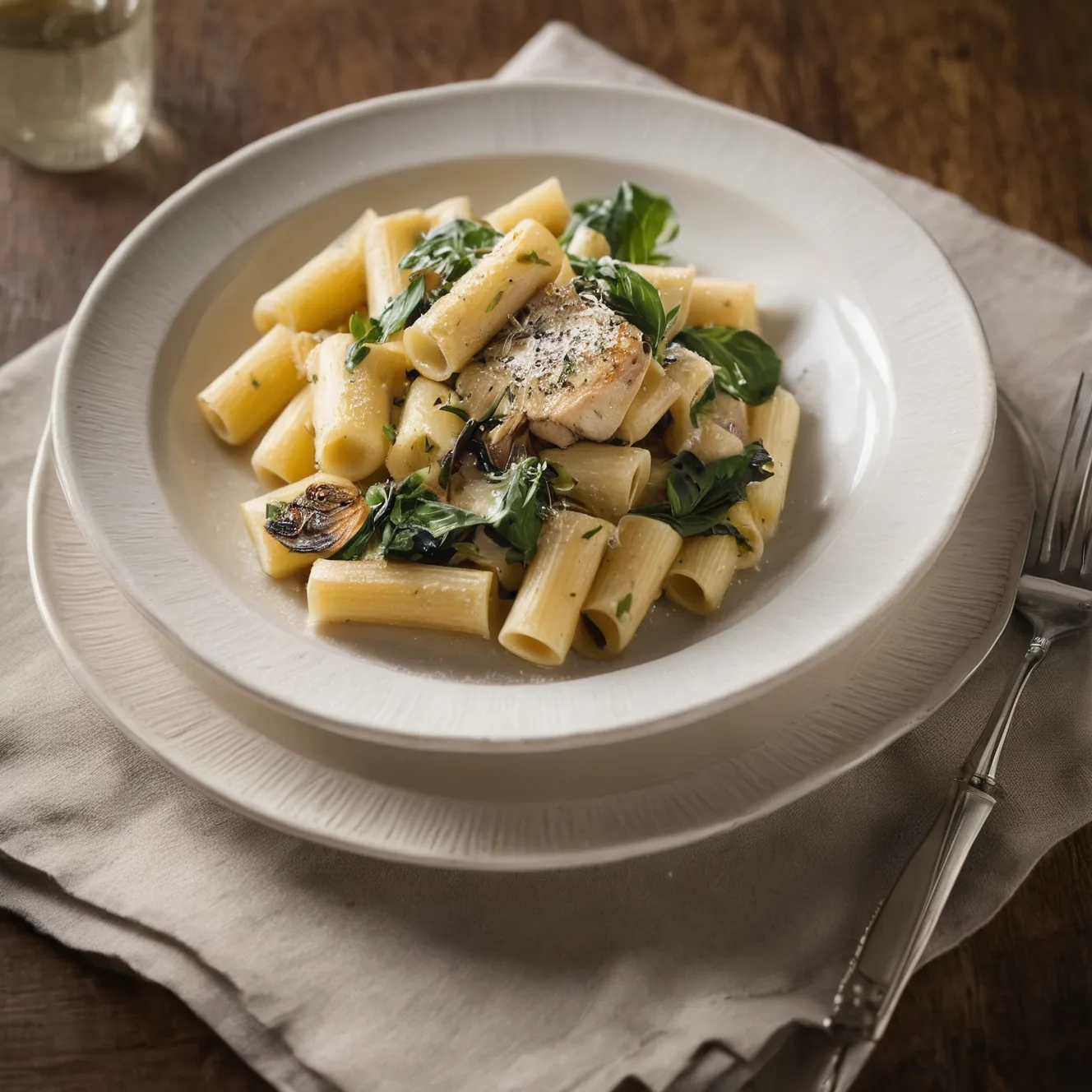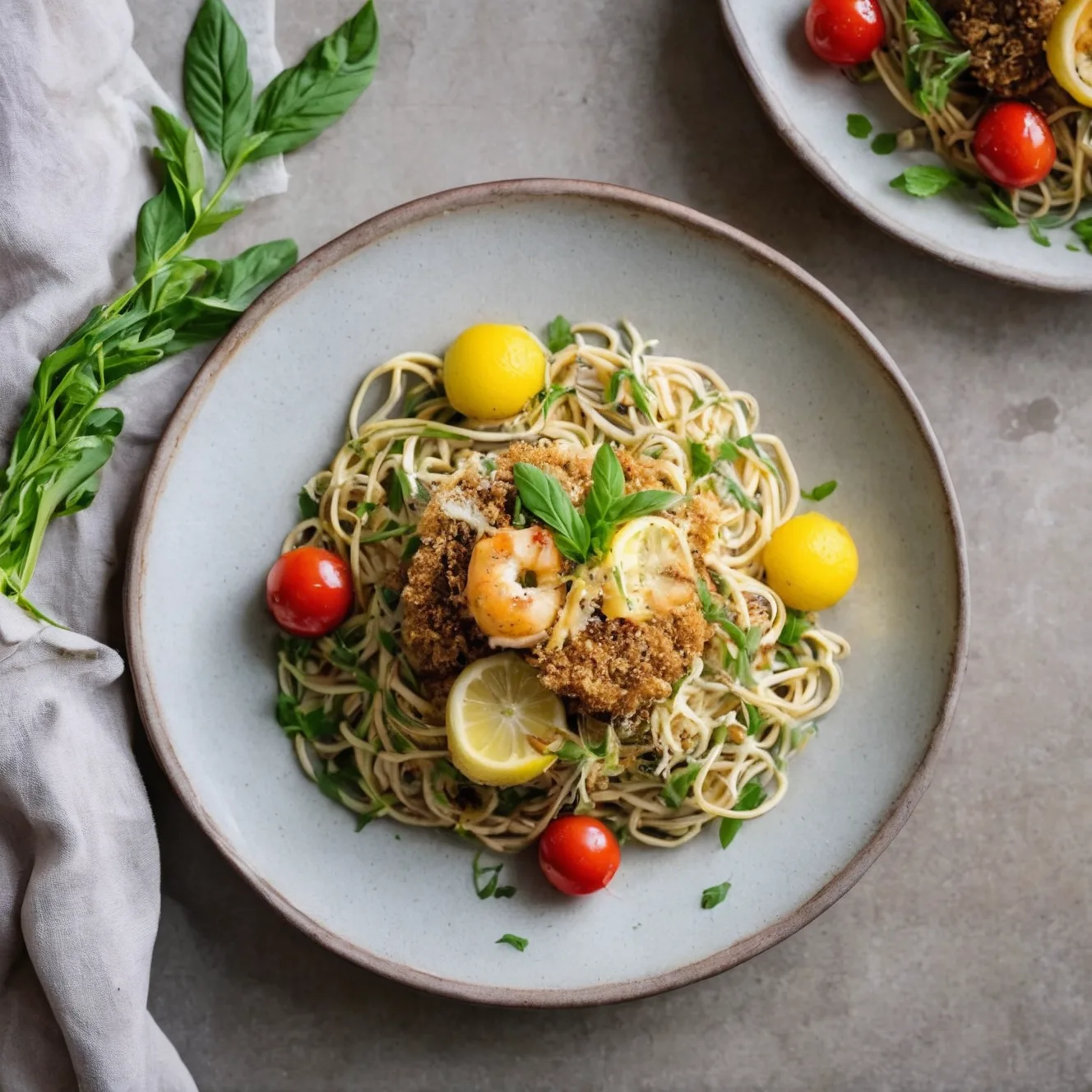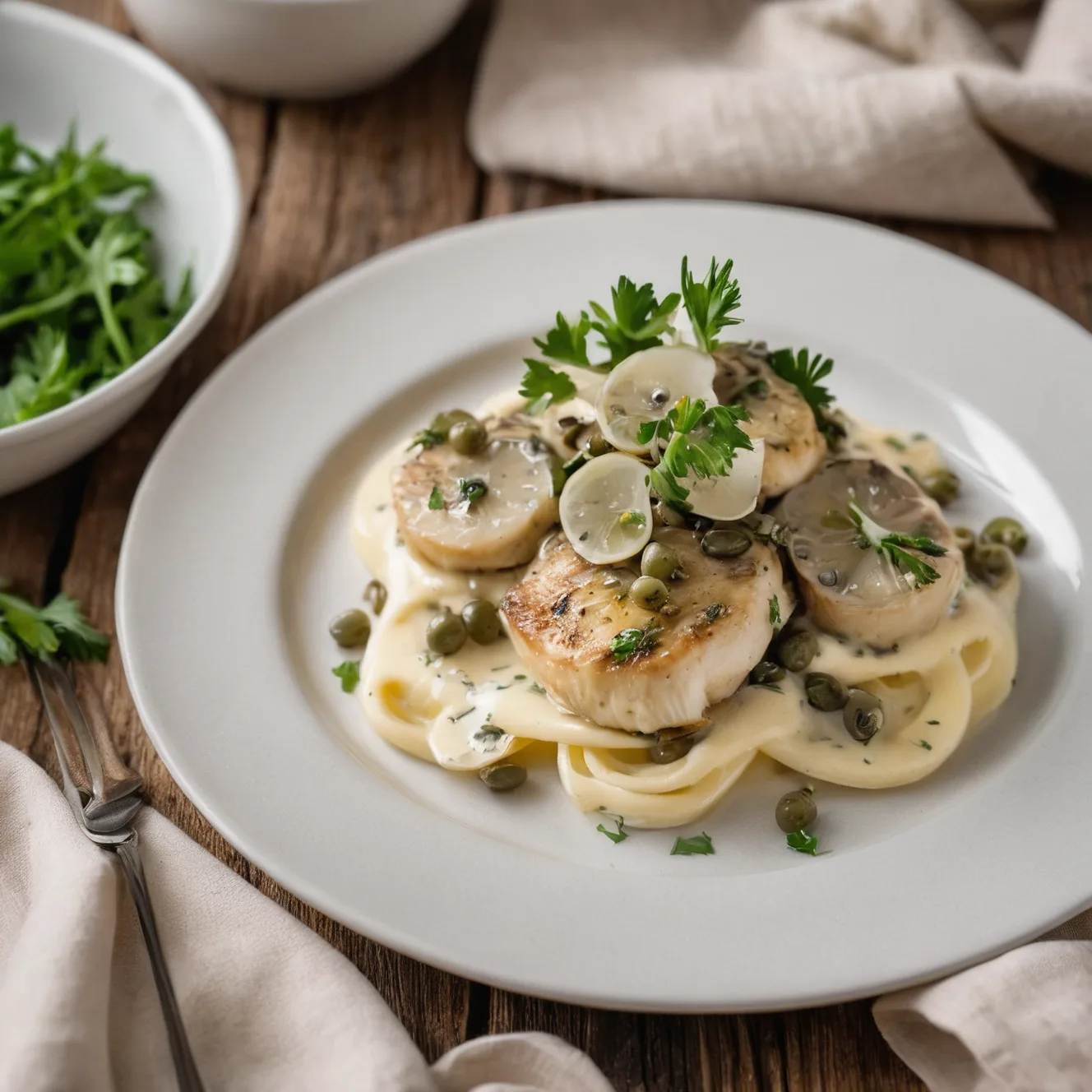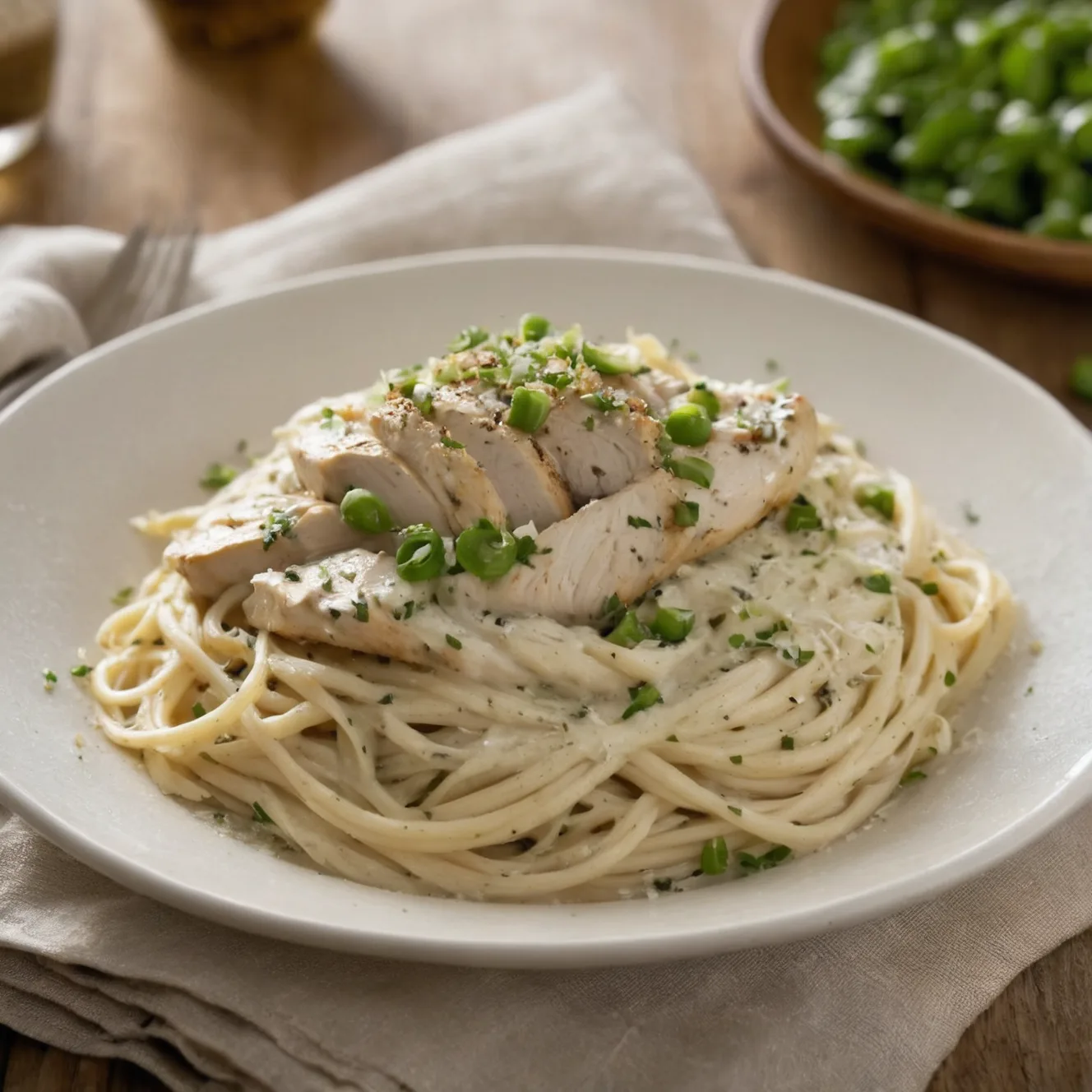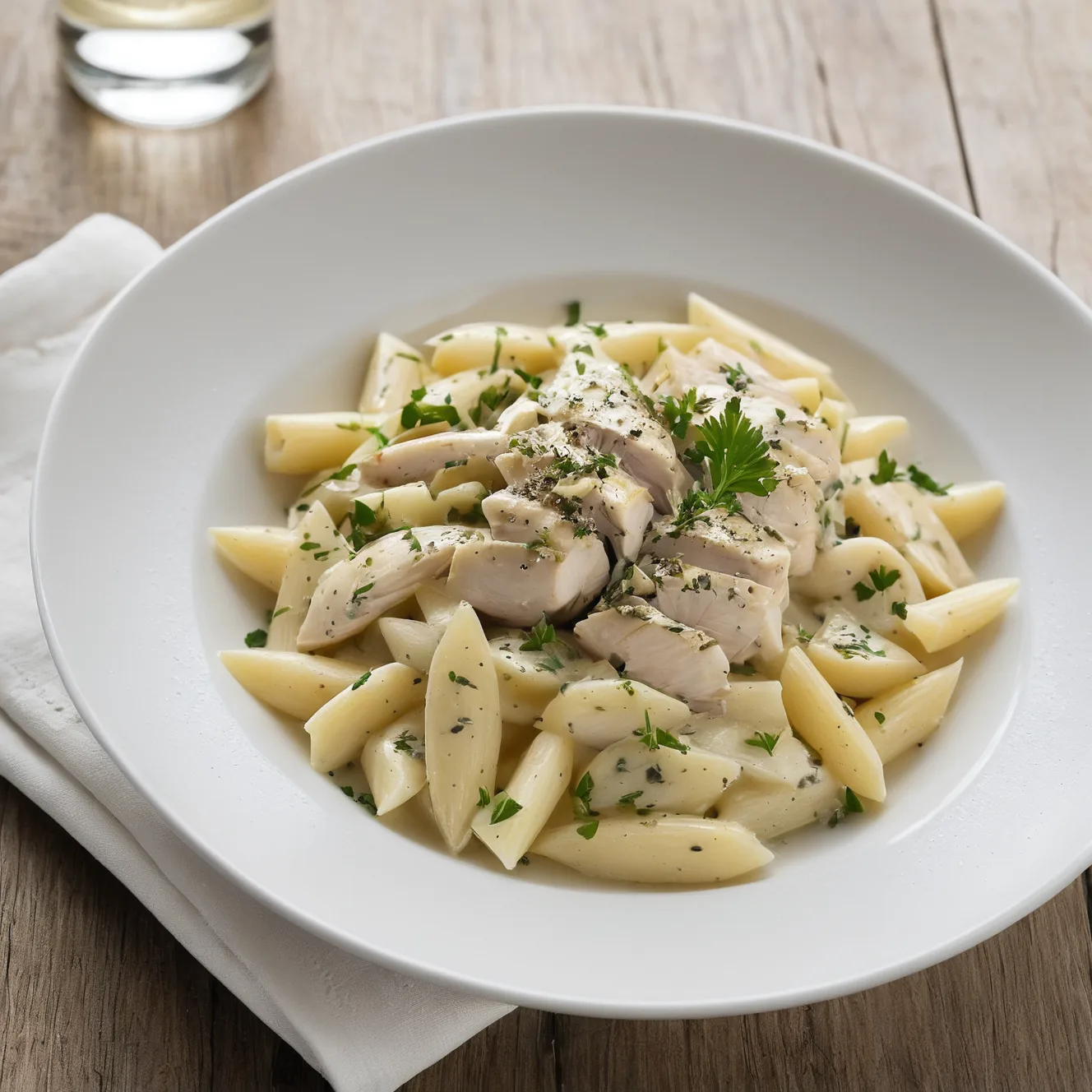
Ruby Tuesday’s Parmesan Chicken Pasta earned loyal regulars not because it was technically ambitious — it’s a cream sauce and grilled chicken — but because the sauce had a specific texture that no generic Alfredo recipe quite matched: thick, sticky, and clingy enough that the last forkful was as coated as the first. Most copycat attempts miss this because they reach for the standard Alfredo formula (butter, Parmesan, maybe a splash of cream) and end up with a sauce that looks right but pools at the bottom of the bowl by the time the plate is halfway through.
The fix is cream cheese. Two tablespoons of softened cream cheese, fully whisked into the reduced cream before the Parmesan goes in, transforms the sauce’s behavior. The cream cheese binds fat and water together more stubbornly than butter alone, and it provides the slightly tangy undertone that keeps the rich, heavy sauce from becoming monotonous across an entire serving. The Parmesan brings flavor and body. The cream cheese brings structure. Together they produce the sauce that actual Ruby Tuesday regulars remember.
Why fresh-grated Parmesan is non-negotiable here
In many cream pasta recipes, pre-shredded Parmesan is an acceptable shortcut. This is not one of them. The sauce is built around the Parmesan’s ability to fully melt into the cream and cream cheese emulsion — pre-shredded Parmesan contains cellulose powder and potassium sorbate that prevent the cheese from clumping in the bag, but those same additives prevent it from dissolving cleanly into hot cream. The result is a grainy, slightly gritty sauce with visible unmixed cheese particles instead of a smooth emulsion.
Buy a wedge of Parmigiano-Reggiano (or domestic Parmesan) and grate it yourself on the large holes of a box grater, or use a Microplane for a finer texture that melts even faster. Either works. The fresh-grated Parmesan is also noticeably sharper and more complex than the pre-shredded equivalent — which matters in a dish where the cheese is the dominant flavor note.
The chicken’s role: contrast, not complexity
The chicken in this dish is intentionally simple. Italian seasoning, garlic powder, salt, pepper, olive oil — then grilled or seared until the exterior has real color and char. The char marks aren’t decorative: the slightly bitter, smoky edge of well-cooked chicken provides the only contrast to an otherwise rich, creamy, uniform sauce. A pale, steamed-looking chicken breast sitting in cream sauce is texturally and visually flat. Even if you’re cooking indoors on a stovetop skillet, use medium-high heat, don’t crowd the pan, and let the chicken sit undisturbed long enough to develop an actual crust before flipping.
The rest (5 minutes minimum, covered loosely with foil) is not optional. Slicing immediately into a hot chicken breast releases the juice that should redistribute back into the muscle while resting — skip this and the chicken will be noticeably drier.
Getting the sauce thickness right
The cream reduces first — about 4 to 5 minutes at a steady simmer, uncovered, until you can see it starting to coat the back of a spoon. Then the cream cheese goes in off heat, whisked until smooth. Then the Parmesan, in three additions, also off heat or on the lowest possible setting. Then the pasta finishes in the sauce over medium-low, with pasta water added as needed to keep the sauce fluid.
The pasta water step is the most common place where home cooks end up with a sauce that’s either too thick (pasta absorbed the sauce and there’s nothing left to coat new pieces) or too thin (they added too much water trying to fix it). Start with one tablespoon of pasta water at a time. The starch in the water doesn’t thin the sauce the way plain water does — it keeps the sauce emulsified and fluid without washing out the flavor. If the sauce looks fine when you add the pasta but then becomes dry and clingy after a minute of tossing, you need pasta water. If it looks right from the start and stays that way, skip the water addition entirely.
Compared to similar restaurant cream pasta
| Dish | Sauce base | Texture | Distinguishing move |
|---|---|---|---|
| Ruby Tuesday Parmesan Chicken Pasta | Reduced cream + cream cheese + Parmesan | Thick, sticky, clings to the last bite | Cream cheese stirred in before the Parmesan |
| Olive Garden Chicken Alfredo | Butter + Parmesan, cream splash | Lighter, more fluid when hot | Butter emulsion, no cream cheese |
| Chili’s Cajun Chicken Pasta | Cream + Cajun spice + bell peppers | Loose and spiced | Bold Cajun seasoning, not a mild cream sauce |
| Cheesecake Factory Four Cheese Pasta | Four-cheese blend | Richest and heaviest | Multiple cheeses layered for complexity |
Olive Garden’s Chicken Alfredo uses a butter-heavy sauce with egg-yolk richness and a lighter Parmesan application — it’s thinner and more fluid, with a golden color from the butter. Chili’s Cajun Chicken Pasta takes a completely different direction — a spiced, cream-based sauce with Cajun seasoning and bell peppers, deliberately bold and spicy. The Cheesecake Factory’s Four Cheese Pasta is richer than RT’s version, with a blend of four cheeses creating a more complex and heavier sauce. Ruby Tuesday’s sat in the middle: simpler than the Cheesecake Factory’s version, more body than Olive Garden’s.
The Ruby Tuesday Ham & Pea Pasta Salad from the Fresh Garden Bar was the cold counterpart — a ranch-dressed rotini that most regular customers paired with an entree like this one.
Storage and reheating
Cream-based pasta sauces with Parmesan do not freeze well — the emulsion breaks and the cheese becomes grainy. Refrigerate leftovers for up to 3 days. To reheat: add the pasta to a skillet with 2 tablespoons of heavy cream or milk per serving, then warm over medium-low heat, stirring constantly, until the sauce reconstitutes around the pasta. Microwave reheating also works, but stir halfway through and add a splash of cream if the sauce has broken or looks oily. The cream cheese in the sauce makes it more stable than standard Alfredo during reheating, but it’s not immune to separation from aggressive heat.