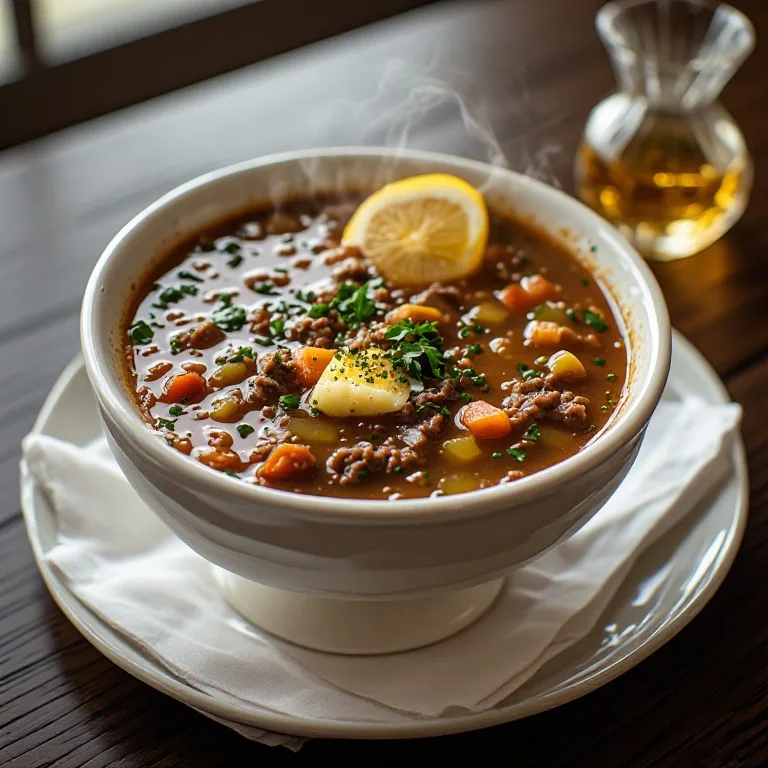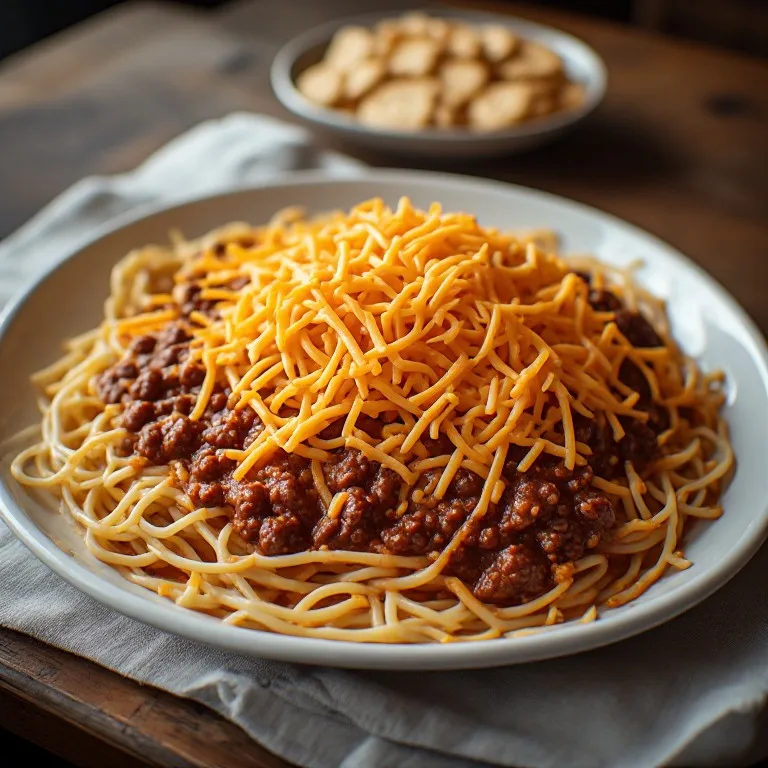


Ask someone from Cincinnati what makes their city’s food famous and the answer isn’t a steakhouse or a fine-dining institution — it’s a plate of spaghetti covered in a fine-grained, cinnamon-scented meat sauce under a snowdrift of shredded cheddar. Skyline Chili has been serving exactly this since 1949, and anyone who grew up eating it will tell you it’s the dish they miss most when they leave.
This copycat recipe gets the two things most versions get wrong: the raw-beef technique that produces the signature smooth texture, and the spice balance that makes Cincinnati chili taste unlike any other American chili. One bowl and you’ll understand why Cincinnatians have strong opinions about it.
What Is Cincinnati Chili?
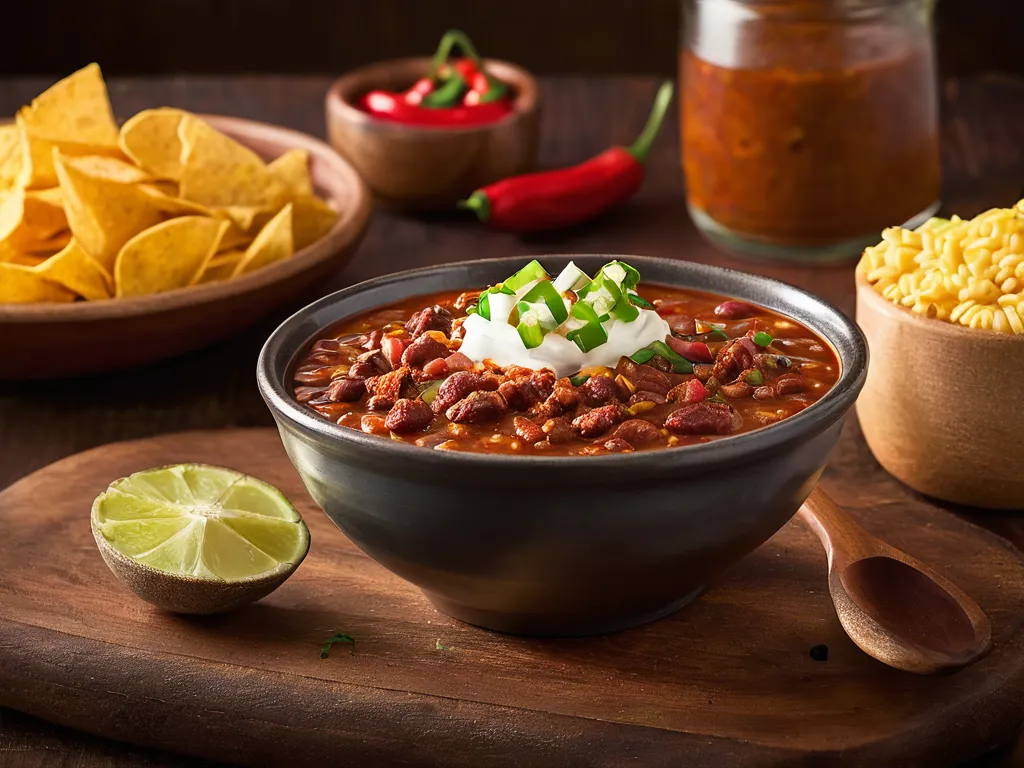
Cincinnati chili is not a bowl of chili with beans. It’s a finely-ground meat sauce made with a warm-spiced blend that includes cinnamon, allspice, and cloves — a flavor profile descended from Macedonian-Greek meat preparations — served over spaghetti and covered with a large mound of very finely shredded mild cheddar. It looks like a pasta dish, tastes like nothing else you’ve had, and has a devoted regional following. If you’re used to a thicker, bean-and-tomato bowl, our Copycat Wendy’s Chili is the opposite end of the American chili spectrum — worth tasting side by side.
The “ways” system is how regulars order:
- 2-way: Spaghetti covered with chili.
- 3-way: Spaghetti + chili + mound of finely shredded cheddar. The most ordered item.
- 4-way: Add diced raw white onion (4-way onion) OR drained kidney beans (4-way bean) to a 3-way.
- 5-way: All of it — spaghetti + chili + cheddar + onion + beans.
- Cheese Coney: Steamed hot dog in a soft bun, topped with chili, yellow mustard, and fine-shredded cheddar.
Start with a 3-way. That’s the correct introduction.
The One Technique That Matters
Every Cincinnati chili recipe lives or dies on a single decision: do not brown the ground beef first.
Standard American cooking intuition says to brown ground meat before adding liquid. Browning creates the Maillard reaction — those flavorful, browned bits that develop at high heat. That’s correct for most applications. But it’s wrong here.
Breaking raw ground beef into cold water before any heat is applied lets the meat cook slowly as the liquid comes to a simmer. The proteins release gradually, and the fat distributes throughout the sauce. The result is an almost impossibly fine, smooth texture — closer to a Bolognese’s ground meat consistency than anything you’d call “chili.” You cannot achieve this by browning the beef first and then adding liquid. The texture will be coarser. It will still taste good, but it won’t be Skyline.
Use a whisk or potato masher to break the beef into the water before you turn on the stove. Take your time with it. The beef should look like very wet, fine breadcrumbs — no pieces larger than a lentil.
Why the Spices Taste Like This
The cinnamon is the signature. When first-timers taste Cincinnati chili, they often can’t place what’s different about it — they know something is unusual, but the cinnamon reads more as a warm-savory note than as a dessert spice in this context. That’s because it’s balanced by strong chili powder, cumin, and the salt and meat flavor of the beef. The allspice and cloves deepen the warm quality. The cocoa powder rounds out the bitterness of the chili powder and adds a subtle background richness.
This spice profile comes directly from Macedonian-Greek immigrant cooking traditions, where ground meat (kima) is commonly seasoned with cinnamon and allspice in preparations like moussaka and pastitsio. The founders of Cincinnati’s chili restaurants — including Nicholas Lambrinides, who opened Skyline in 1949 — brought this tradition from the Balkans and adapted it to the American diner format. It’s the same warm-spice logic that separates a spiced meat sauce from a straight-ahead chili like Texas Roadhouse’s chili.
The Overnight Rest Is Not Optional
Or rather, it’s optional — but the chili you eat on day one is noticeably inferior to the chili you eat on day two.
Cinnamon, allspice, and cloves are fat-soluble flavor compounds. They need time, heat, and contact with fat to fully release and distribute. After three hours of simmering, most of this release has happened, but not all. Overnight refrigeration completes the bloom. The spices become more integrated, the sauce tastes more cohesive, and the edge of raw spice flavor disappears.
There’s also a practical benefit: refrigerating the finished chili lets the fat solidify into a removable cap. Lift it off before reheating and you’ve skimmed away most of the excess fat cleanly, with no hot-liquid skimming required.
Cheese Notes
Skyline uses mild cheddar, and the shred size matters. The cheese should be very fine — almost like orange shredded paper — so that it mounds high (a proper 3-way has about 2 oz of cheese piled an inch thick) and partially melts into the hot chili on contact without becoming a solid mass or a greasy puddle.
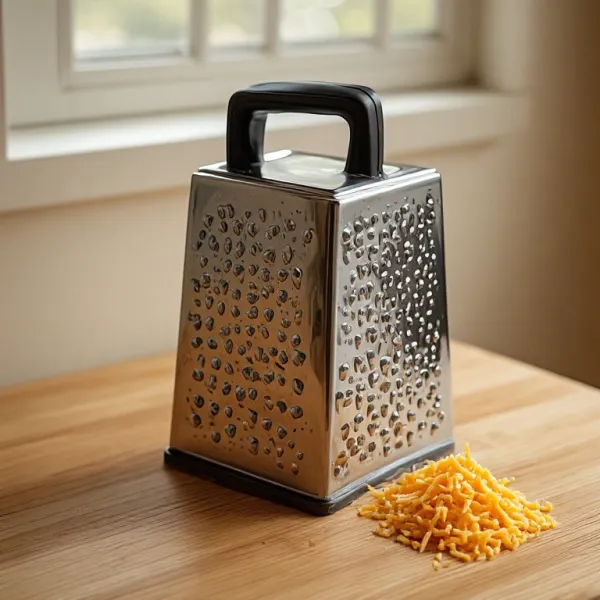
Do not use pre-shredded cheese. The cellulose anti-caking agents in pre-shredded cheese interfere with melting. Buy a block of mild or medium cheddar and use the finest holes on a box grater. Refrigerate the block for 30 minutes first — cold cheese shreds cleanly and doesn’t clump.
Serving and Storage
Warm the chili over medium-low heat. Cook the spaghetti al dente — Cincinnati chili plates have bite to them; overcooked pasta turns soggy under the wet chili quickly. Serve on warmed plates if you have them.
The chili keeps 5 days refrigerated and 3 months frozen. Freeze in 1–2 cup portions. It reheats identically to fresh.
More Copycat Comfort Food
- All Skyline Chili copycat recipes
- Copycat Wendy’s Chili — the classic bean-and-tomato American chili, for contrast
- Copycat Texas Roadhouse Chili — a smoky, beefy Texas-leaning bowl
- Copycat Cracker Barrel Chicken and Dumplings — another regional comfort-food icon made at home
- Copycat Bob Evans Sausage Gravy — Midwestern diner comfort in one skillet