


Pin It

Spotted Pig Roquefort Burger (NYC's Most Famous Gastropub Burger, Made at Home)

Spotted Pig Roquefort Burger (NYC's Most Famous Gastropub Burger, Made at Home)
Jump to Recipe
Prep 30 min Cook 20 min Serves 4
Quick answer: Mix 1 lb of ground brisket with 8 oz of ground chuck and 8 oz of ground sirloin. Divide into four 8-ounce patties, formed loosely — do not compact. Refrigerate 20 minutes. Meanwhile, make the Roquefort sauce: mash 3 oz of crumbled Roquefort with 3 oz of crème fraîche, 1 small minced garlic clove, 2 tablespoons of white wine vinegar, and 2 tablespoons of olive oil until a thick, spreadable paste forms. Season with black pepper; it will not need salt. Get a grill or cast iron grill pan ripping hot. Season the patties generously on both sides with kosher salt and cracked black pepper. Grill the first side for 2 minutes, rotate 45 degrees for another 90 seconds (creating a cross-hatch), flip, and repeat on the second side — total cook time 6 to 7 minutes for medium-rare (125°F internal). In the last 90 seconds, place 1.5 oz of crumbled Roquefort on each patty, close the grill lid or tent with foil, and let the cheese begin to melt for 1 minute. Remove and rest 4 to 5 minutes — the Roquefort will continue melting during the rest. Toast brioche bun halves on the grill or in a dry pan. Spread the Roquefort crème fraîche sauce on both bun halves. Add the patty. No mayo. No onions. No lettuce. Serve with a pile of peel-on shoestring fries alongside. The Spotted Pig charged around $26 for this burger in its final years. Made at home: roughly $11 to $14 per serving depending on your Roquefort source.

Spotted Pig Roquefort Burger (NYC's Most Famous Gastropub Burger, Made at Home)

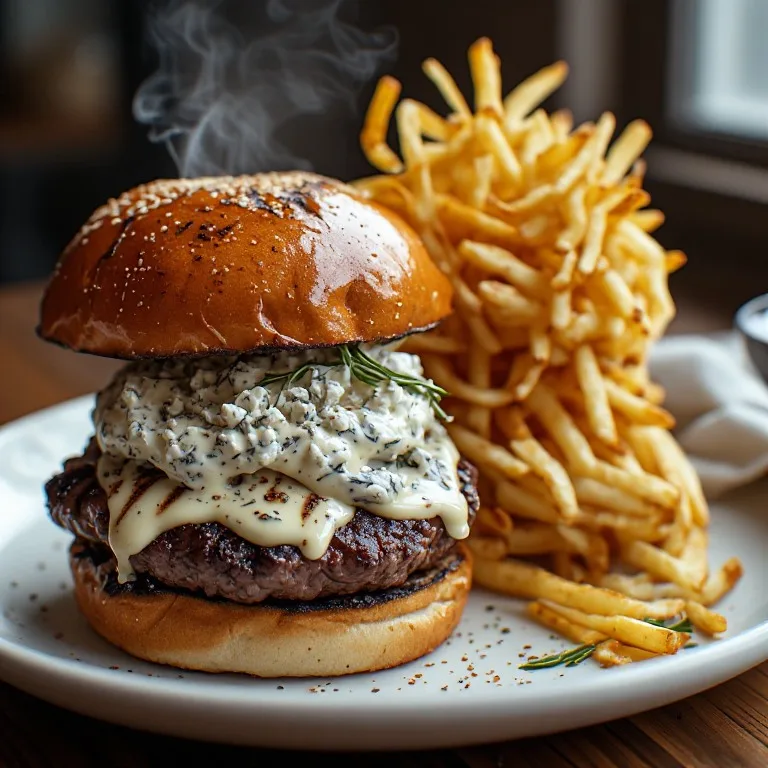
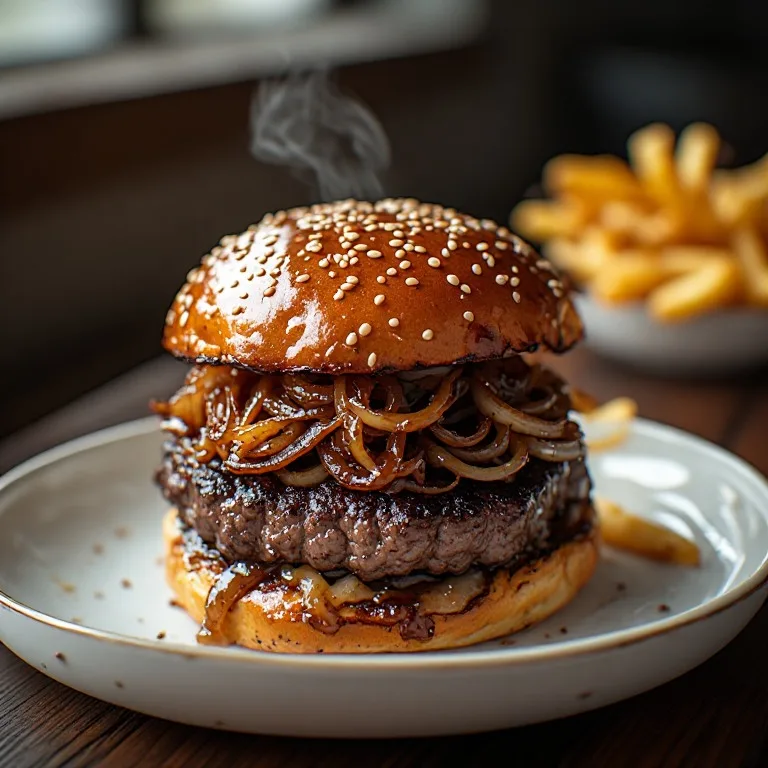
The Spotted Pig's chargrilled Roquefort burger: a three-way brisket, chuck, and sirloin blend, chargrilled with a cross-hatch crust, topped with melted Roquefort and crème fraîche sauce, on a brioche bun — with peel-on shoestring fries. The full recipe at home.

Intermediate Prep: 30 min Cook: 20 min Total: 50 min4 servings ~$4.50/serving
Prep30 min
Cook20 min
Total50 min
Servings
4
At home~$4.50/serving
vs
Restaurant~$20.25/serving
You save ~78%

The Story Behind the Recipe

The Spotted Pig's chargrilled Roquefort burger: a three-way brisket, chuck, and sirloin blend, chargrilled with a cross-hatch crust, topped with melted Roquefort and crème fraîche sauce, on a brioche bun — with peel-on shoestring fries. The full recipe at home.

Nutrition Facts

Per serving (4 servings)
Calories1180
Total Fat72g
Total Carbs72g
Dietary Fiber4g
Sugars6g
Protein54g
Sodium1240mg

* Estimated values based on standard recipe preparation. Actual values may vary.

Ingredients

  • Meat blend
  • Roquefort crème fraîche sauce (for the buns)
  • Burger topping
  • Assembly
  • Peel-on shoestring fries

Instructions

💡
Pro tip: This recipe tastes even better the next day. The flavors need time to meld together in the fridge.
❄️
Storage: Keeps in an airtight container in the fridge for up to 2 weeks. Freezer-friendly for up to 3 months.
🎃 Free Halloween cookbook — download now The Copycat Halloween Cookbook A ready-made, photo-illustrated PDF of our best halloween copycat recipes — free to download, no building required. Pay what you want to support if you love it.

Free PDF — instant download. We'll also send new seasonal copycat recipes now and then; unsubscribe anytime. Or just download it →

Copycat Spotted Pig Roquefort Burger (NYC’s Most Famous Gastropub Burger, Made at Home)

Prep time: 30 min Cook time: 20 min Servings: 4

The Spotted Pig opened on West 11th Street in the West Village on a February night in 2004. It was a single narrow room with low ceilings, bare wooden tables, and a British chef most New Yorkers had never heard of. April Bloomfield had trained at the River Café in London, staged at Chez Panisse, and been recruited across the Atlantic by restaurateur Ken Friedman with the specific brief to open something that did not exist in New York yet: a real gastropub.

She put a chargrilled burger on the menu. It was made from brisket, chuck, and sirloin, chargrilled to medium-rare, and topped with a piece of Roquefort — the French sheep’s-milk blue cheese from the caves of southern France. A mound of peel-on shoestring fries came alongside. The burger cost something like $14. The two-hour wait to get one started immediately.

By 2005, the 2005 Michelin Guide to New York — the first time Michelin had ever published a New York guide — had given the Spotted Pig one star. A pub. With a Michelin star. That told the city what kind of restaurant this was going to be.

The burger went on to appear on nearly every best-of list in New York for the better part of two decades. Jay-Z ate here. Bono ate here. Anthony Bourdain ate here repeatedly and wrote about it. The waitlist on a Friday night stretched past midnight. The restaurant sold more than 75,000 burgers in a single year. None of that changed the menu. The burger stayed exactly as April Bloomfield had conceived it — the same three meats, the same Roquefort, the same shoestring fries, the same no-mayo rule — until the restaurant finally closed in 2020.

The Three Meats and Why Each One Is There

Standard American burger blends center on ground chuck, which runs about 80 percent lean and 20 percent fat. The fat percentage is high enough to keep the patty juicy on high heat without supplementation, and chuck has a forward, mineral beef flavor. It is a reasonable choice. It is not what the Spotted Pig used.

Bloomfield’s blend runs approximately half ground brisket. Brisket comes from the chest of the animal — a group of muscles that support the majority of the animal’s body weight and therefore contain substantially more connective tissue and intramuscular fat than the shoulder cuts used in standard chuck. When brisket is ground, that intramuscular fat distributes through the patty the way marbling works in a steak: it renders during cooking into a rich, deeply beefy liquid that keeps the interior moist and adds flavor in a way that simple fat trim does not. A brisket-heavy burger tastes richer and has a different, more complex character than a standard patty. You can distinguish it even if you do not know what you are tasting.

The chuck adds structure and the specific ‘burger’ quality — the slightly mineral, front-of-the-palate beefiness — that straight brisket, which can taste heavy or unctuous on its own, needs for balance. The sirloin (sold in the US as ground sirloin or ground round) contributes leanness and a clean, bright beef flavor that cuts through the richness of the brisket. The three meats are not interchangeable components; they are performing different functions in the blend.

For home cooks: ask your butcher to grind these three cuts together in the ratios above, or ask them to grind brisket alone if the three-way blend is too involved. The patty should be formed and kept cold until the moment it hits the grill.

What Makes Roquefort the Right Cheese

April Bloomfield could have used Gorgonzola, which is milder and creamier. She could have used domestic blue, which is sharper and more acidic. She used Roquefort — specifically, a French sheep’s-milk Roquefort aged in the limestone caves of Combalou — because of how it behaves on hot meat.

Roquefort has a specific combination of properties: it is moist enough to begin softening from residual heat without fully liquefying, so it holds its form on the patty through the rest period rather than running off the sides. It is salty enough to season the top of the patty without additional condiments. And it carries a pronounced fungal note — the penicillium roqueforti mold that creates its blue-green veining also produces the specific sharp, funky character — that is strong enough to stand up to chargrilled brisket. A milder cheese would disappear. A drier blue would crumble off. Roquefort sits correctly.

The Roquefort crème fraîche sauce on the bun plays a different role than the cheese on the patty. The sauce is an emulsion: Roquefort mashed with crème fraîche, white wine vinegar, garlic, and olive oil until it becomes a spreadable paste with the consistency of aioli. It replaces mayonnaise as the bun’s moisture element — which is why mayo is forbidden. The sauce already provides creaminess, acidity, and fat. Mayonnaise would make the sandwich heavier without adding anything the Roquefort sauce is not already doing.

Cost: What the Burger Cost at the Restaurant vs. at Home

The Spotted Pig’s chargrilled burger ran roughly $25 to $26 in its final years (it started around $14 when the restaurant opened in 2004).

Spotted PigHomemade (4 servings)
Per burger~$26—
Full batch (4 burgers)~$104~$44–56
Per serving~$26~$11–14
Savings per burger—~$12–15

The Roquefort is the largest per-recipe expense. The recipe calls for 9 oz total across the sauce and the patties, so budget for a little over half a pound — roughly $18 to $27 depending on the retailer. The brisket blend adds another $14 to $18 depending on your butcher. The fries and buns are minimal cost. The total batch cost is substantial, but the per-serving economics make it worthwhile — you are making a restaurant-quality burger for roughly half of what it cost at the Spotted Pig itself.

Three Details Most Copycat Versions Miss

1. The cross-hatch is a technique, not just aesthetics

Multiple positions on a hot grill do more than create marks — they maximize surface contact and therefore maximize the Maillard browning that creates crust. A patty placed once and never moved develops a sear only on its footprint. Two positions on each side mean more total crust per cook time. The technique also manages heat distribution, since moving the patty exposes different parts to the hottest zones of the grill.

At home, a cast iron grill pan with ridges can create the cross-hatch. A flat cast iron skillet cannot — but it produces a superior overall crust, which is the more important outcome. Choose the tool based on whether you want the look or the crust. You cannot have both at the same level of quality on a home stove.

2. Roquefort goes on during the last 90 seconds, not at the end

Common versions add the cheese after pulling the patty from heat and rely on residual heat to melt it. This produces cheese that softens slightly on the surface but does not fully integrate with the crust. At the Spotted Pig, the Roquefort went on with 60 to 90 seconds of grill time remaining, then the grill lid closed to trap heat. The brief exposure to live heat starts a real melt — the exterior of the Roquefort liquefies and adheres to the patty’s crust. The rest period finishes the job. The result is cheese that feels bonded to the burger rather than sitting on top of it.

3. The shoestring fries need a double fry

Single-fry shoestring fries — cut thin, dropped into oil, pulled when golden — develop color and exterior crunch but remain slightly soft in the center. Double-frying drives out the interior moisture on the first pass (at lower temperature, 325°F) and then crisps both the interior and exterior on the second (at 375°F). The result is a fry that is uniformly crispy throughout rather than crispy outside and soft in the middle. The Spotted Pig’s shoestring fries were famous enough that regulars ordered second baskets after the burger was gone. That level of repetitive ordering requires a fry that holds its texture for several minutes — which only a proper double-fry achieves.
🥗

Make It Healthier

Love Spotted Pig Roquefort Burger (NYC's Most Famous Gastropub Burger, Made at Home) but want a lighter version? Try these simple swaps:

  • ✓Use a 6-ounce patty instead of 8 ounces — the Roquefort and the sauce are intensely flavored, so the burger holds up at a smaller size. Saves roughly 150 calories per serving.
  • ✓Bake the fries instead of frying: toss the matchstick-cut potatoes in 1 tablespoon of olive oil, spread in a single layer on a wire rack over a sheet pan, and roast at 425°F for 25 to 30 minutes, flipping once. They will not be as thin-crispy as deep-fried, but the flavor is excellent. Saves roughly 200 to 250 calories per serving.
  • ✓Use 1 oz of Roquefort per burger instead of 1.5 oz — even at two-thirds of the original portion, the funky salinity reads clearly. The cheese is so intense that reducing it by a third is not noticeable on the palate.
  • ✓Serve on a potato roll instead of a brioche bun to save about 50 calories and reduce sweetness — the potato roll's mild flavor stays out of the way of the beef and Roquefort, which is arguably more correct.

Frequently Asked Questions

What is Roquefort and how is it different from other blue cheeses?

Roquefort is a French blue cheese made exclusively from the raw milk of Lacaune sheep, aged in the caves of Combalou in the village of Roquefort-sur-Soulzon in southern France. It has AOC (Appellation d'Origine Contrôlée) protection — cheese labeled Roquefort can only come from those specific caves. It is sharp, intensely funky, salty, and notably moist and crumbly, with a creaminess that distinguishes it from drier blue cheeses. The dominant brands you will find in the US are Société and Papillon; both are real Roquefort. Substitutes work but change the character: Gorgonzola dolce is milder and creamier, Fourme d'Ambert is less sharp, domestic blue cheeses like Maytag Blue or Point Reyes are good but lack the specific sheep's-milk funk. April Bloomfield chose Roquefort specifically for the way it melts — it softens rather than fully liquefying, holds its texture on the patty, and its salinity balances the fatty richness of the brisket blend. If you use Gorgonzola, the burger is still excellent. If you use Roquefort, it is the burger.

Why does this burger use a three-meat blend instead of just chuck?

Standard burger blends use 80/20 ground chuck because it has enough fat (20 percent) to stay juicy on high heat and enough collagen in the chuck muscle to develop good flavor. The Spotted Pig's blend goes further: roughly 50 percent brisket, 25 percent chuck, and 25 percent sirloin (rump). Brisket is the fatty, intensely beefy cut from the chest of the animal — it has more intramuscular fat than chuck and a deeper, richer flavor because the muscle does more sustained work. Adding brisket to a burger blend raises the fat content and the beefy depth. The chuck adds structure and the specific 'burger' character that straight brisket lacks on its own. The sirloin brings leanness and a clean beef flavor that prevents the patty from tasting heavy or greasy. The result is a burger that is visibly richer — the patty looks glossy, feels weightier in the hand, and has a more complex finish than a standard all-chuck patty. Ask your butcher to grind these three cuts together; most will do it. An easier approximation: 70/30 ground brisket from a good butcher, alone.

What made the Spotted Pig significant beyond the burger?

The Spotted Pig opened in February 2004 at 314 West 11th Street in the West Village, making it New York City's first gastropub — a concept that had taken off in London but had no real equivalent in Manhattan. The gastropub model centers on the idea that a neighborhood pub can serve food as serious as a destination restaurant, without the formality of either a fine-dining room or a standard bar menu. April Bloomfield, who trained at the River Café in London and staged at Chez Panisse, brought that sensibility directly to New York. The 2005 Michelin Guide to New York — the first Michelin Guide ever published for the city — awarded the Spotted Pig one star. A pub, with a Michelin star, on its first year in the guide. That distinction, more than any other, announced what the restaurant was.

Why was there always a two-hour wait at the Spotted Pig?

The restaurant did not take reservations. All 100 or so seats were walk-in only, and the Spotted Pig quickly developed a following that the dining room could not absorb. The combination of Michelin recognition, an impossibly good burger, and a casual-feeling space that attracted both downtown regulars and food world celebrities created a permanent capacity problem. Jay-Z, Bono, Mario Batali, Anthony Bourdain, and various celebrity chefs were documented regulars. Word spread that the burger was worth waiting for. It was. Most people did not regret the two hours, which does not happen often with restaurants.

Why is mayonnaise forbidden on this burger?

April Bloomfield built the Spotted Pig's burger around two flavors: charred, fatty beef and funky Roquefort. Both are strong, fatty, intensely flavored components. Mayonnaise is also rich and fatty, and in Bloomfield's view it dilutes the clarity of the beef-Roquefort pairing. The Roquefort crème fraîche sauce plays the role that mayonnaise usually fills — it adds creaminess and moisture to the bun — but with a flavor that actively participates in the dish rather than just adding lubrication. The no-mayo rule was enforced at the restaurant. Lou Reed, a regular from the neighborhood, is the only documented exception — he once asked for onions and a server accommodated the request while Bloomfield was away from the kitchen. According to the restaurant's lore, he was the only person ever allowed onions. It is not clear whether he also got mayonnaise.

How do I get the cross-hatch grill marks at home?

Cross-hatch marks require a grill or grill pan with raised ridges, and a two-position sear on each side. Place the patty on the hot grill at a 45-degree angle to the ridges. Sear for 90 seconds to 2 minutes without moving it. Then rotate the patty 90 degrees (keeping the same side down) and sear for another 90 seconds. The two positions create the diamond cross-hatch pattern. Flip once and repeat on the second side. The marks are cosmetic but the technique has a real purpose: multiple contact points with the grill surface create more Maillard browning per unit of cooking time than leaving the patty in one position. For cast iron without ridges, the cross-hatch is not achievable, but the crust will be superior — a flat cast iron develops a more even, deeper sear than any ridged pan. Choose: better crust or better marks.

What are the shoestring fries at the Spotted Pig like, and how do I make them?

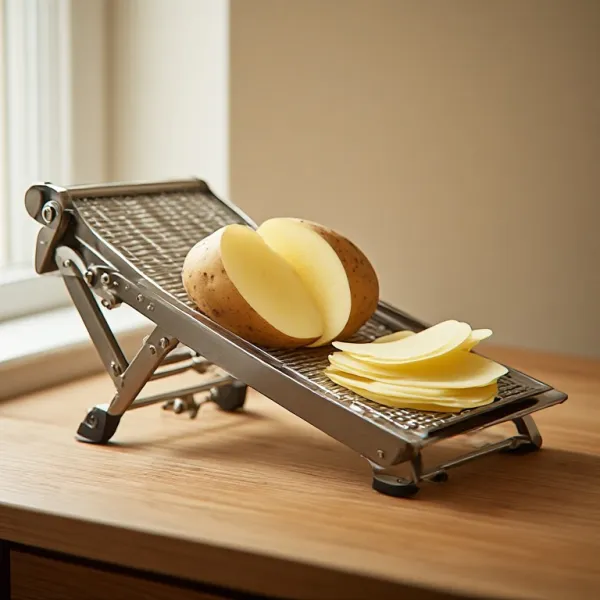
The Spotted Pig's shoestring fries are the thinnest possible fries — matchstick-thin cuts of russet potato, left with the skin on, deep-fried until crispy throughout. They are not steak fries or wedge fries; they are closer to a restaurant-quality version of the thin, crispy fries that come in a paper bag from certain diners. Peel-on is essential to the texture — the skin provides a slightly chewy edge that keeps them from feeling purely ethereal. At the restaurant, the fries were as famous as the burger; regular customers would order a second basket. At home: cut russet potatoes into 1/8-inch matchsticks with a mandoline (or very careful knife work), rinse in cold water for 10 minutes, pat completely dry, fry at 325°F for 3 minutes, rest for 10 minutes, then fry again at 375°F for 2 to 3 minutes until golden and crispy throughout. Season with fleur de sel immediately out of the oil.

Where can I buy Roquefort in the United States?

Roquefort is widely available at Whole Foods (typically Société brand), Murray's Cheese (in-store and online), specialty cheese shops, and most grocery stores with a decent cheese counter. Société and Papillon are the two main labels — both are authentic Roquefort with AOC certification. A quarter-pound wedge (4 ounces) costs roughly $8 to $12 depending on the store. That is more than you would spend on domestic blue cheese but less than the cost of the restaurant burger. If the cheese counter at your grocery store carries only a generic 'blue cheese' with no country of origin listed, it is not Roquefort. For the closest domestic approximation, Maytag Blue from Iowa and Point Reyes Original Blue from California are both excellent American blues with enough sharpness to approximate the effect.

Love this recipe? Share it!

Free PDF: our 12 most-wanted copycat recipes — instant download.

Made it? Buy us a coffee

Every recipe here is free, with no paywalls. If this one was a hit at your table, a small tip keeps new copycats coming.

$

The Spotted Pig is a trademark of its owner, used here only to describe the dish this recipe recreates. This is an independent copycat written in our own words — Copycat Spices is not affiliated with, endorsed by or sponsored by The Spotted Pig.

Ratings & Reviews

—
No ratings yet

Rate this recipe

Click a star to rate

Leave a Review

0/500

CS

Copycat Spices Editorial

Researched + fact-checked. Every recipe on Copycat Spices is built from published sources — official ingredient lists, brand-published recipes, interviews and food-science references — and fact-checked before it goes live, then written as clear, step-by-step instructions for home cooks of all skill levels.

Learn more about our mission →