Strip House's Brooklyn Blackout Cake
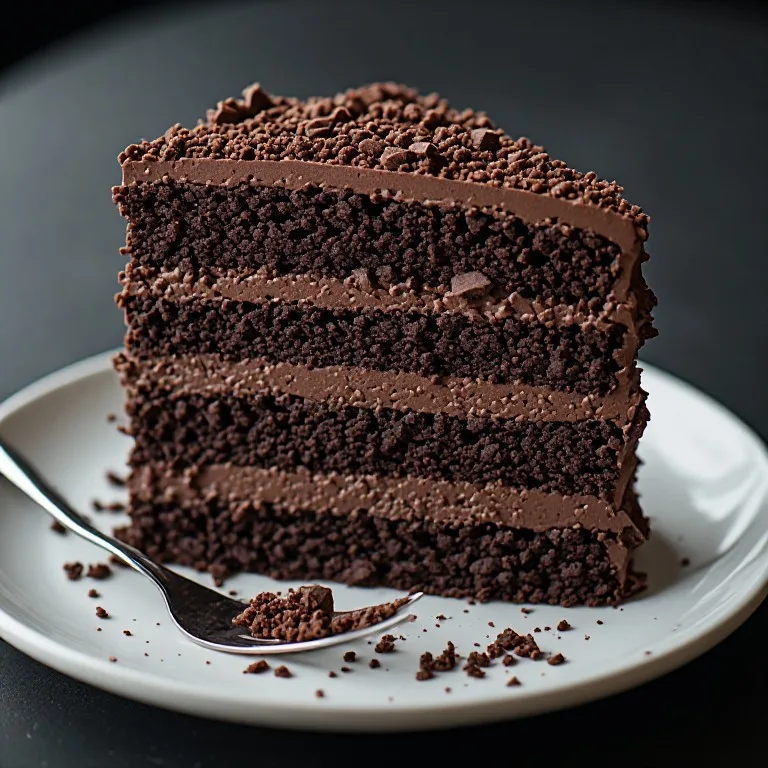
Quick answer: Make a double batch of devil's food cake in three 9-inch rounds. Slice each round horizontally into 2 thin layers = 6 layers total. Make a thick chocolate pudding filling and refrigerate overnight until firmly set. Make dark chocolate ganache and cool to a pourable-but-not-runny consistency. Crumble one of the 6 layers into fine crumbs. Stack 5 layers with a generous 1/4-inch layer of pudding between each. Refrigerate the stacked cake 2 hours until firm. Coat the entire exterior with ganache, smoothing it thin. Working quickly while the ganache is still tacky, press handfuls of chocolate crumbs all over the top and sides until the cake is completely obscured in crumbs. Refrigerate 1 hour before slicing.
Shop the tools
Gear matched to this recipe. These are Amazon affiliate links — we may earn a small commission if you buy, at no extra cost to you.
 Illustrative imageLodge 10.25" Cast Iron SkilletThe restaurant-grade sear most copycats depend onCheck price on Amazon →
 Illustrative imageInstant-Read Digital ThermometerNail fry-oil and doneness temps every timeCheck price on Amazon →
 Illustrative imageNordic Ware Half Sheet PanCommercial-quality aluminum, bakes dead evenCheck price on Amazon →
As an Amazon Associate, Copycat Spices earns from qualifying purchases. Product images are generic illustrations, not the exact item listed.
Strip House's Brooklyn Blackout Cake
Strip House's legendary Brooklyn Blackout Cake made at home: thin devil's food layers stacked with thick chocolate pudding, wrapped in dark ganache, and pressed all over with chocolate crumbs. About $32 per slice at the restaurant — under $4 per serving at home.
Medium
Prep: 45 min
Cook: 35 min
Total: 1h 20m12 servings
~$4.50/serving
At home~$4.50/serving
vs
Restaurant~$20.25/serving
You save ~78%
The Story Behind the Recipe
Strip House opened at 13 East 12th Street in Manhattan's Greenwich Village in 2000, a creation of restaurateurs Jeff and Roxanne Chodorow. The name is a double entendre: strip steak, the house specialty, and the walls lined floor-to-ceiling with vintage burlesque photographs from the 1920s and 1930s. The room is small and dark, lit mostly by flickering candles — exactly the kind of place where you feel like you should order something dangerously indulgent for dessert. They serve USDA Prime dry-aged beef tableside and charge what it costs. In 2026, dinner for two runs $250 before wine. The Brooklyn Blackout Cake, sliced tableside, is $32 a slice. It's ordered almost universally.
The cake's history begins in WWII Brooklyn, not at Strip House. Ebinger's Bakery, a German-immigrant family bakery that opened in Flatbush in 1898, invented the Brooklyn Blackout Cake in the 1940s. The name referenced the coastal blackout drills that blanketed the New York Harbor in darkness to prevent German U-boats from silhouetting ships. Ebinger's made theirs with two rounds of devil's food cake — one sliced in half to form the base and top, the second crumbled to coat the outside — with a dense chocolate pudding filling and the whole thing covered in the crumbled cake pieces so no frosting showed at all. When Ebinger's filed for bankruptcy in 1972 and shuttered, New Yorkers mourned the loss of this cake the way they mourned the Dodgers. Strip House brought it back as their own theatrical centerpiece, adding ganache beneath the crumbs and multiplying the layers into something that borders on absurd. The result is worth every one of the 32 dollars.
Nutrition Facts
Per serving (12 servings)Calories820
Total Fat44g
Total Carbs98g
Dietary Fiber5g
Sugars74g
Protein9g
Sodium400mg
* Estimated values based on standard recipe preparation. Actual values may vary.
Ingredients
- For the Devil's Food Cake Layers (makes 3 rounds — 6 layers total + crumble)
- For the Chocolate Pudding Filling
- For the Dark Chocolate Ganache
Instructions
Pro tip: This recipe tastes even better the next day. The flavors need time to meld together in the fridge.
Storage: Keeps in an airtight container in the fridge for up to 2 weeks. Freezer-friendly for up to 3 months.
Free PDF — instant download. We'll also send new seasonal copycat recipes now and then; unsubscribe anytime. Or just download it →
🎉 Your Halloween Cookbook is ready!
It's free — but if it's worth something to you, you can pay what you want. It keeps the recipes coming.
$
✓ Downloading your free Halloween Cookbook — check your downloads folder. Happy cooking!
Make It Healthier
Love Strip House's Brooklyn Blackout Cake but want a lighter version? Try these simple swaps:
- ✓Use dark chocolate (70% or higher) for the ganache instead of semisweet — you get deeper flavor with less sugar, and can cut the ganache quantity by a quarter without affecting the look.
- ✓Swap half the all-purpose flour in the cake layers for whole wheat pastry flour — it's undetectable against all that cocoa and it adds a small fiber boost.
- ✓The pudding filling is the calorie engine; use 2% milk instead of whole and skip the extra butter at the end — the pudding still sets thick and chocolatey.
- ✓Slice thinner pieces: this is one of those cakes where a 3/4-inch slice hits 500 calories but delivers just as much dramatic flavour impact as a 1.5-inch wedge.
Frequently Asked Questions
What exactly is a Brooklyn Blackout Cake?
A Brooklyn Blackout Cake is a specific style of chocolate layer cake invented by Ebinger's Bakery in Brooklyn during World War II. Its defining features are devil's food cake layers (dark, moist, very chocolatey), a thick chocolate pudding filling between the layers rather than buttercream, and — most distinctively — the entire exterior of the finished cake is covered in crumbled chocolate cake pieces instead of frosting. The original had no visible frosting at all; the crumbled cake creates a rough, darkly dramatic appearance. Strip House added dark chocolate ganache beneath the crumbs and multiplied the number of layers. The name comes from WWII coastal blackout drills, when Brooklyn was regularly plunged into darkness so harbor ships wouldn't be silhouetted against city lights for German submarines.
Why is my pudding filling too runny?
The chocolate pudding filling must be refrigerated overnight (minimum 8 hours, preferably 12) before you assemble the cake — this is the most commonly skipped step and the most important one. Freshly made pudding, even after an hour in the fridge, is far too loose to hold between cake layers. After a full overnight rest, it should be very thick — nearly the consistency of a firm chocolate mousse — and hold its shape when scooped. If you're assembling and the pudding looks liquid or barely sets, return it to the refrigerator and wait. A pudding that's too loose will compress all the layers together, squeeze out the sides, and give you a dense, muddy slice instead of visible distinct layers.
Can I make the Strip House Blackout Cake ahead of time?
Yes — this cake is actually designed to be made in stages over 2 days, and it holds beautifully. Day 1: bake the cake rounds and make the pudding; cool completely before refrigerating. Day 2: assemble the cake layers with pudding, refrigerate 2 hours, coat with ganache, press on crumbs, refrigerate overnight. Slice and serve Day 3. The assembled cake keeps in the refrigerator for up to 5 days — the layers compress slightly over time, which actually improves the texture. Serve at room temperature for 30 minutes before slicing for the cleanest cuts and best flavour. The cake does not freeze well after assembly (the pudding weeps on thawing), though the unfilled cake rounds freeze fine for up to 1 month.
How do I get the crumb coating to stick?
Timing is everything. Apply the crumbles to the ganache while it's still slightly tacky — not fully set. The ideal window is 10–15 minutes after applying the ganache coat, when it looks matte and set on the surface but still has a little give when pressed. If the ganache has fully hardened, the crumbs won't adhere. If it's still runny, the crumbs will absorb into it and disappear. Gently press handfuls of crumbs into the ganache using a flat hand (not pressing hard — just enough contact to embed them), working your way from the bottom of the sides up and then across the top. The goal is full coverage: no visible ganache should show through. Use more crumbs than you think you need — the excess just falls off cleanly when you slice.
What's the best way to slice a blackout cake cleanly?
A hot, dry serrated knife is the only tool that cuts a layered cake without tearing or dragging the crumb coating. Run the blade under hot water, wipe it completely dry with a clean towel, then make one smooth slice per cut — do not saw. Wipe the blade dry between every slice. The crumb coating makes clean slicing slightly more challenging than a ganache-only cake, but as long as the cake has been refrigerated until fully firm and your knife is hot and dry, the slices come out intact. If the crumbs are shearing away, the cake is too warm — refrigerate 30 minutes more before continuing.
Can I use a box of devil's food cake mix?
Yes, and it works well. Use two boxes of devil's food cake mix (each box typically makes two 9-inch rounds), following the box directions but substituting hot brewed coffee for the water called for — this is the one upgrade that matters, as coffee intensifies the chocolate flavour dramatically without tasting like coffee. Bake in three 9-inch rounds rather than two so the layers are thin. Do not skip the scratch pudding filling and scratch ganache — those are what make this a Strip House Blackout Cake rather than a box-mix cake. The box shortcut saves about 30 minutes of active time and is genuinely a fine choice for a home version.
How is this different from regular chocolate layer cake?
Three things separate a Brooklyn Blackout Cake from a standard chocolate layer cake. First, the filling: it's a thick, cornstarch-set chocolate pudding — not buttercream, not whipped cream, not mousse. The pudding is denser, fudgier, and much more aggressively chocolate-flavoured. Second, the exterior: the cake is coated in chocolate cake crumbs rather than frosting (in Strip House's version, there's ganache under the crumbs, but the visual effect is still all crumbs). Third, the specific type of cake layer: devil's food uses cocoa powder and chemical leavening in a specific ratio that gives it a very dark, slightly spongy crumb with a pronounced chocolate-bitterness that holds up against the rich pudding without getting lost.
Love this recipe? Share it!
Made it? Buy us a coffee
Every recipe here is free, with no paywalls. If this one was a hit at your table, a small tip keeps new copycats coming.
$
💛 Support checkout is coming soon — the cookbook stays free either way.
Strip House is a trademark of its owner, used here only to describe the dish this recipe recreates. This is an independent copycat written in our own words — Copycat Spices is not affiliated with, endorsed by or sponsored by Strip House.
Ratings & Reviews
Rate this recipe
Click a star to rate