


Superiority Burger (The Famous NYC Vegetarian Burger, Made at Home)
Prep time: 30 min active Cook time: 45 min (quinoa + roasting; most of it is hands-off) Servings: 4 burgers
Brooks Headley opened Superiority Burger in June 2015 on East 9th Street in Manhattan — a 300-square-foot counter in the East Village, serving a vegetarian burger from a tiny kitchen where he had previously tested recipes after closing Del Posto at night. He had just won the James Beard Award for Outstanding Pastry Chef for his work at Del Posto, one of New York’s most decorated Italian restaurants. The trade he made — from tasting-menu desserts at a white-tablecloth institution to a $8 burger on a paper tray — became one of the more talked-about moves in New York food that decade.
David Chang ate one and said it was the best veggie burger he had ever had. Cate Blanchett brought the burger to Jimmy Fallon on national television and said it was “the best goddamn burger you will ever have in your life.” The New York Times critic Pete Wells gave the reopened restaurant three out of four stars in June 2023 — up from the two stars he awarded the original counter. Michelin named it a Bib Gourmand in its 2025 New York guide. A W.W. Norton cookbook followed in 2018 with the full recipe, which is what this page is based on.
Why the Patty Works
Most veggie burgers fail because they are built like a salad — vegetables and grains combined wet, then cooked in a way that steams everything rather than searing it. The Superiority Burger patty works because it treats each component as a separate ingredient cooked to its best individual state before combining.
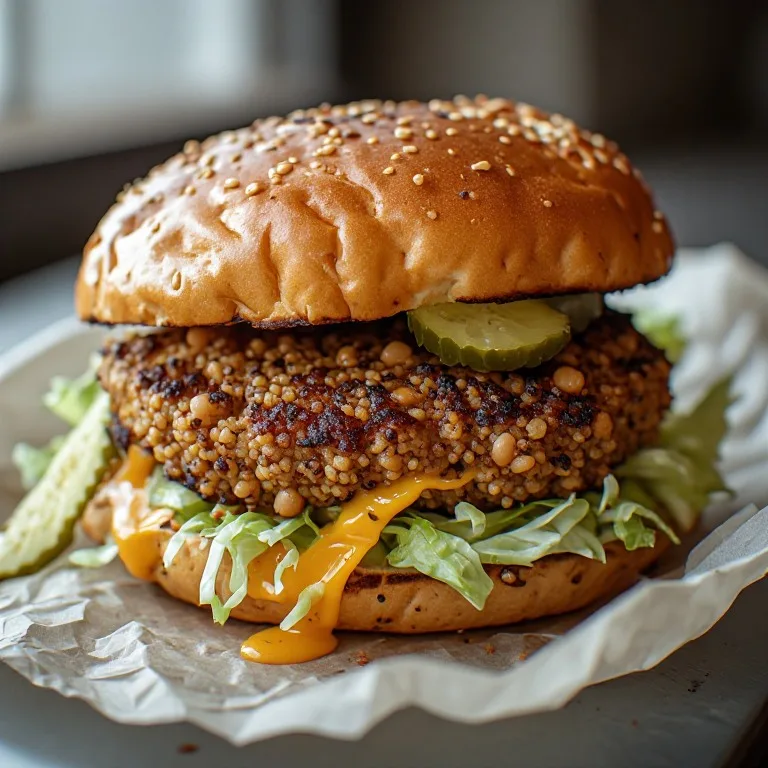
The quinoa provides structure — individual grains that hold their shape in the patty, visible in cross-section, not a paste. The carrots are roasted at high heat until the edges darken and caramelize; that is not overcooking, it is the technique. A boiled or steamed carrot adds sweetness without any depth; a roasted one adds sweetness plus the savory Maillard compounds that usually belong to meat. The chickpeas and onion are cooked together and partially smashed into a binding paste that holds the other elements together while also contributing the legume’s protein structure.
The fennel seed is the bridge: toasted and freshly ground, it ties the sweetness of the carrots and chickpeas to something more savory, and it is the flavor most food writers identify when they try to describe what makes this burger taste like something deliberate rather than assembled.
The potato starch slurry is the binder, replacing eggs in a technique borrowed from Chinese cooking. Mixed into the cold patty mixture and then chilled, it sets at cold temperature and then gelatinizes rapidly when it hits a hot pan, forming a gel network that holds the patty together and produces crisp edges. Do not skip the chilling step: warm, unset starch produces a fragile patty that breaks on the flip.
The Special Sauce
The cookbook’s special sauce uses a house-made aquafaba mayo — an emulsion built on chickpea cooking liquid instead of egg yolk, which makes the sauce fully vegan. For this recipe, any good mayo (or store-bought vegan mayo) produces a functionally identical result at the table. The flavor components that actually matter are the hot sauce, the roasted tomato or roasted pepper, and the red wine vinegar, which together make the sauce bright and spicy and genuinely useful against the earthy, dense patty. See the FAQ for the full aquafaba mayo method if you want to go the cookbook route.
Assembly and the Cost Comparison
The canonical toppings at the restaurant: Muenster cheese, shredded iceberg lettuce, roasted tomato, pickle slices, mustard under the patty, and the special sauce on the top bun. The iceberg matters more than it looks like it should — the cold, crunchy shreds provide texture against the soft patty and cheese, and their near-neutral flavor lets the sauce and fennel do their jobs. A heartier green (arugula, spinach) changes the flavor balance and competes.
At the restaurant, the burger is about $16. Made at home with good pantry ingredients, the cost per burger is approximately $4, including the bun and toppings. The cooking time is about 1.5 hours total — most of it passive, while quinoa cooks and carrots roast — making this a realistic weeknight project if you batch-prep the patties on the weekend. Formed patties freeze well between parchment sheets for up to one month and cook from frozen in about 8 minutes per side.