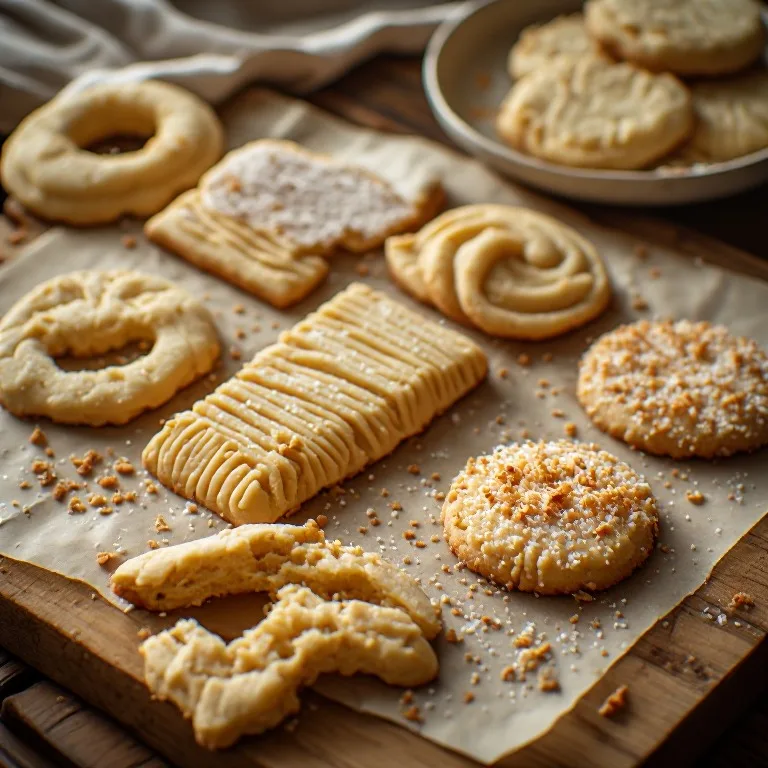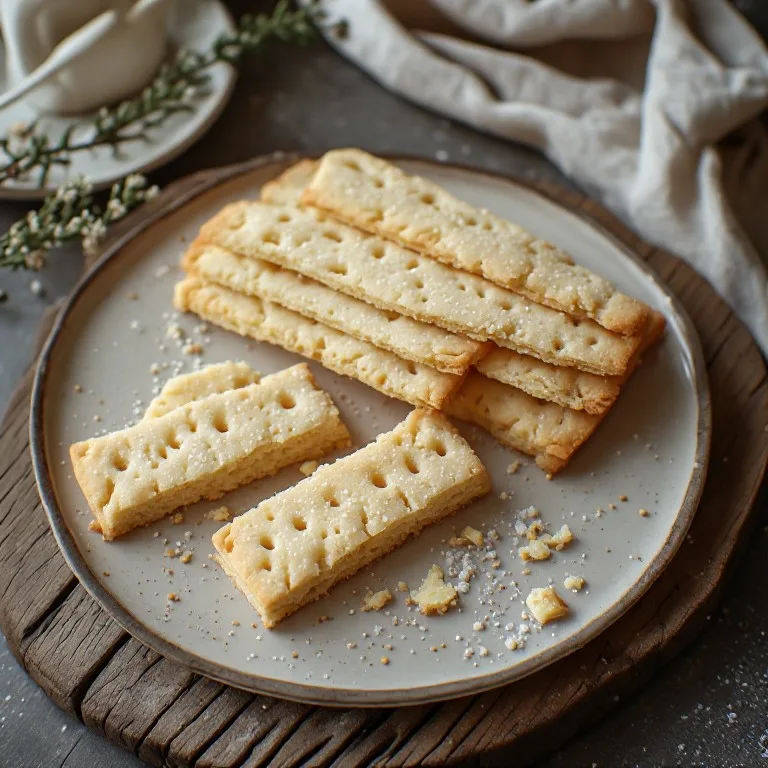
Walkers Shortbread — the one in the red tartan tin — has been made with the same four-ingredient recipe in the Scottish Highlands since 1898. Made at home, a batch of 24 fingers costs about $3 in ingredients and takes under 45 minutes from bowl to wire rack.
What Makes Walkers Shortbread Different
The answer is the ratio: 1 part sugar : 2 parts butter : 3 parts flour by weight. Scottish bakers have used this formula for centuries because it produces the specific texture that defines real shortbread: dense, sandy, and crumbly with a clean snap, not soft or chewy like a sugar cookie. The amounts below — 100g sugar, 225g butter, 300g flour — use two full sticks of butter for convenience, which runs marginally richer than a strict 1:2:3 (a true 1:2:3 against 300g flour would be 100g sugar and 200g butter). The extra butter only makes the shortbread more tender, which is why it’s worth keeping.
Walkers adds one more thing: they use only real butter, with no vegetable shortening. That seems obvious, but many grocery-store shortbread recipes cut the butter with shortening to save money or to make the dough more workable. Shortening produces a different texture — slightly crisper but less flavorful — and a noticeably blander taste. The pure butter version is richer, more aromatic, and melts differently on the tongue.
The four ingredients are:
- Unsalted butter — the star. Use the best you can afford; European-style butter (Kerrygold, Plugrá) with 82–84% butterfat gives a slightly more tender result, but any good unsalted butter works.
- Caster sugar (superfine sugar) — finer than granulated, it dissolves cleanly into the butter without leaving gritty pockets.
- All-purpose flour — spooned and leveled, never scooped; too much flour is the #1 mistake in homemade shortbread.
- Fine sea salt — just enough to amplify the butter.
The Bake Temperature Matters More Than You Think
Most home ovens bake shortbread at 350°F. Walkers-style shortbread needs 325°F (160°C). The lower temperature matters because shortbread has no eggs or leavening to set its structure quickly — only the flour-butter matrix slowly drying from the inside. At 350°F, the butter starts to brown before the interior has dried through, which creates a toasted flavor (pleasant in its own way, but not Walkers) and a slightly sandy-greasy rather than clean texture. At 325°F, the shortbread dries slowly and evenly, and the surface stays pale straw rather than golden.
The shortbread will feel soft when you take it out of the oven. That is normal — it firms completely as it cools and should not be moved until it does.
Getting the Fingers Right
Score the unbaked dough into 1×3-inch fingers before it goes in the oven, then re-score immediately when it comes out hot. The second scoring, while the shortbread is still malleable, is what lets you break it apart cleanly later. Cold, fully-set shortbread crumbles at the edges when cut.
For the gift-tin look, stack the fingers in alternating rows in a small tin lined with parchment. A batch of 24 fits a standard 8×5-inch rectangular tin with room for a folded piece of parchment on top.
See also: Royal Dansk Danish Butter Cookies for another pure-butter cookie-tin classic, Pepperidge Farm Milano Cookies for a bakery-style tin cookie, and Lindt Lindor Truffles or Godiva Dark Chocolate Truffles for chocolate to tuck alongside the shortbread tin.